

Jordan takes steps to address youth not in employment, education or training under ILO regional initiative
National workshop held in Amman under the ILO’s Y-NEET initiative, with funding from the European Union, to analyse youth statistics and identify policy priorities
14 October 2025
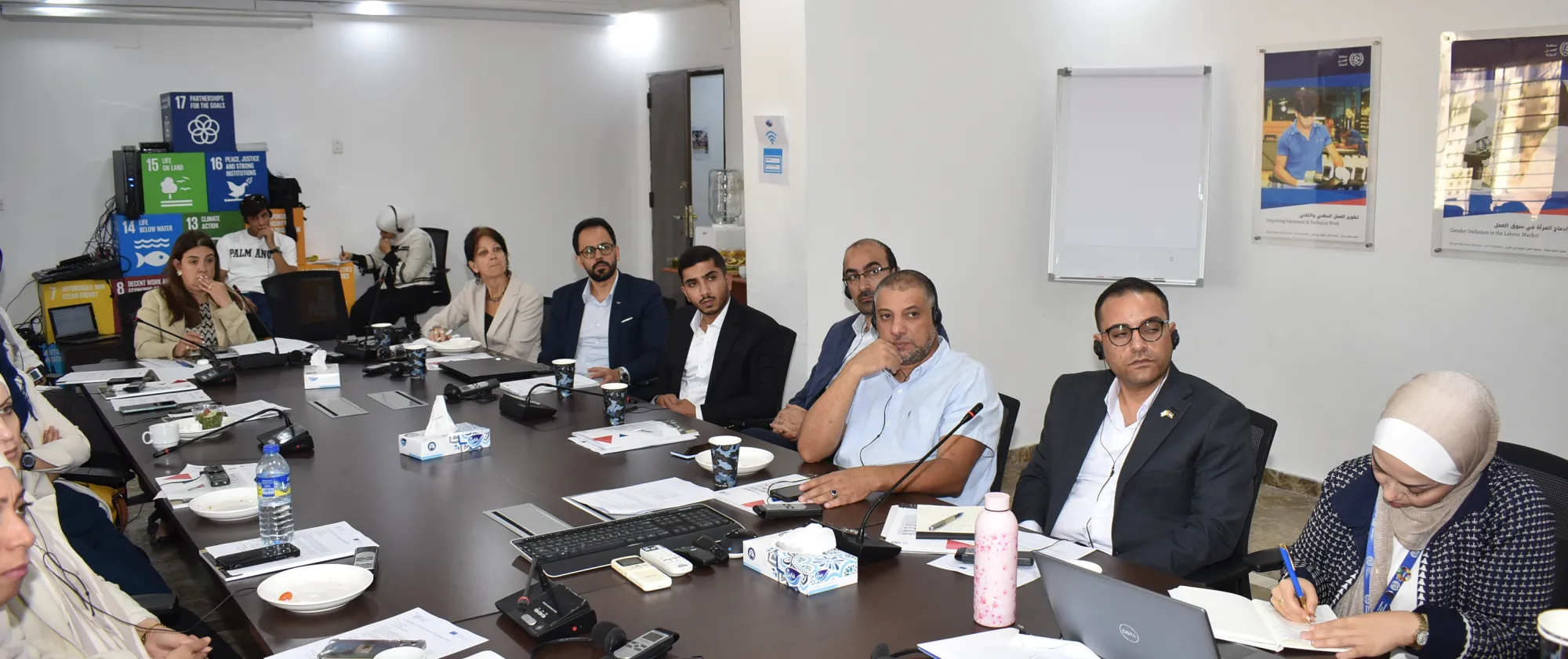
AMMAN (ILO News) - A national workshop was held in Amman to examine the situation of young people in Jordan who are not in employment, education or training (NEET) and to validate data presented in the national statistical profile. Organized within the framework of the regional Y-NEET initiative, funded by the European Union (EU) and implemented by the International Labour Organization, the workshop brought together representatives of government institutions, social partners, civil society, youth groups, academia and development partners. Participants discussed key findings, identified priority actions and explored practical steps to support the reintegration of NEET youth into the labour market and education system.
The workshop also served as a preparatory step for future regional technical workshops, aimed at facilitating peer learning and the exchange of successful practices among the Ministry of Labour, Public Employment Services and the ILO, with the objective of developing joint and effective solutions to support NEET youth in Jordan.
Discussions highlighted that the NEET rate among youth aged 15–19 reached 35.3 per cent in 2023, calling for urgent measures to re-engage young people in employment, training or education. Participants also underlined the importance of addressing gender disparities and promoting inclusion, particularly in areas in Jordan such as Mafraq, Aqaba, Zarqa and Ma’an where NEET rates are high. Persistent structural challenges, including skills mismatches and weak school-to-work transitions, were noted, alongside the need to move from data collection to concrete implementation through tailored interventions targeting specific groups. The workshop stressed the importance of cross-sectoral collaboration among all stakeholders to build consensus around strategic priorities.
The European Union Delegation emphasised its awareness of the challenges facing youth in Jordan, noting that the country has one of the highest NEET rates in the region. To address this, participants highlighted the importance of identifying areas for technical support, ensuring strong institutional commitment, and developing specialized programmes to build youth capacities. Collaboration and shared responsibility among all actors were strongly encouraged.
The workshop also reviewed the experience of eight countries in the region, with reference to existing policies, analyses, capacity-building initiatives and the EU Youth Guarantee model. Data from countries such as Morocco, Algeria, Jordan and the State of Palestine were compared, and the need for reliable statistics, tailored policy design and technical support from the ILO was stressed. Participants discussed the importance of training statistical experts, and additional questions for future surveys were proposed, with reference made to the valuable data already available at the Department of Statistics.
Data from the Ministry of Labour and the Department of Statistics revealed that the largest share of NEETs in Jordan are married individuals, women and higher-educated youth, particularly in rural areas. The lowest rates were found among those with intermediate education. Despite a slight overall decline between 2017 and 2023, the gender gap remains significant, especially among inactive and older women. Participants stressed the need to identify labour market needs and support both unemployed youth and those who lost their jobs.
The workshop also examined the criteria used to classify individuals as NEET, based on labour force survey standards: not working, available for work, actively seeking work and able to work. It was noted that trained enumerators are necessary to accurately apply these criteria. The issue of low-wage replacement was raised, including the tendency of some sectors to hire women at lower wages. The importance of including NEET-related questions in upcoming annual surveys (starting February) was emphasized.
Participants identified core challenges such as the mismatch between skills and labour market demand, limited opportunities for new graduates, inadequate transportation and childcare services, and the absence of innovation and knowledge economy indicators. Specific barriers facing women were highlighted, including the lack of safe and affordable transport, clear childcare policies and parental leave arrangements. To address these challenges, the need to understand the different needs of individuals, identify sectors that can absorb youth and strengthen vocational training pathways was underlined.
To reduce NEET rates, participants recommended strengthening data collection and reporting systems, engaging youth in decision-making, providing targeted skills and employment programmes, involving vocational training experts, addressing the shortage of decent jobs in remote areas, and improving employment data on persons with disabilities.
Participants stressed the need to link universities, training centres and employers, design programmes based on labour market needs, and analyse unemployment factors using accurate data. Investment in human capital was identified as essential.
The workshop brought together representatives from government institutions (Ministry of Labour, the General Statistics Department, and the Social Security Corporation), as well as the social partners for the ILO, the General Federation of Jordanian Trade Unions & the Jordan Chamber of Industry, the European Union. All parties agreed on the importance of cross-sectoral collaboration, rather than placing the burden on a single sector.
Participants positively evaluated the quality and relevance of the report presented by the ILO, noting that the data were clear, coherent and ready to be used for implementation, with clear indicators and next steps. They emphasised that addressing the NEET phenomenon requires a holistic and integrated approach, combining effective public policies, private sector engagement, civil society participation and investment in education, vocational training and decent jobs. This will help build a more inclusive and prosperous future for all youth in Jordan.
Finally, the workshop called for follow-up meetings with the Employment Directorate to define operational mechanisms, analyse actual data, prepare an initial draft for consultation, and provide necessary translation. Participants also recommended developing policy measures for job creation, changing negative perceptions of vocational training, introducing new programmes aligned with labour market needs, and organising childcare support schemes. Additional priorities included identifying emerging job opportunities, delivering practical training programmes, fostering partnerships between universities, training centres and employers, and aligning services between public and private sectors. The importance of updating social protection data, reviewing existing evaluations and upgrading tools to meet modern labour market requirements was also stressed.
Related content

Y-NEET project
Empowering Youth NEETs in the Southern Mediterranean Region
Relevant projects
Y-NEET project
Empowering Youth NEETs in the Southern Mediterranean Region