

World Day for Safety and Health at Work 2025
Indonesia welcomes the latest ILO report on the transformation of AI and digitalization to occupational safety and health
Indonesia values the latest ILO report on AI and digitalization, recognizing it as a crucial opportunity to align the country’s inspection and preventive measures with the changing dynamics of the modern workplace.
24 April 2025
JAKARTA, Indonesia (ILO News) – A new report from the International Labour Organization (ILO) explores how artificial intelligence (AI), digitization, robotics and automation are reshaping occupational safety and health (OSH) in workplaces around the world.
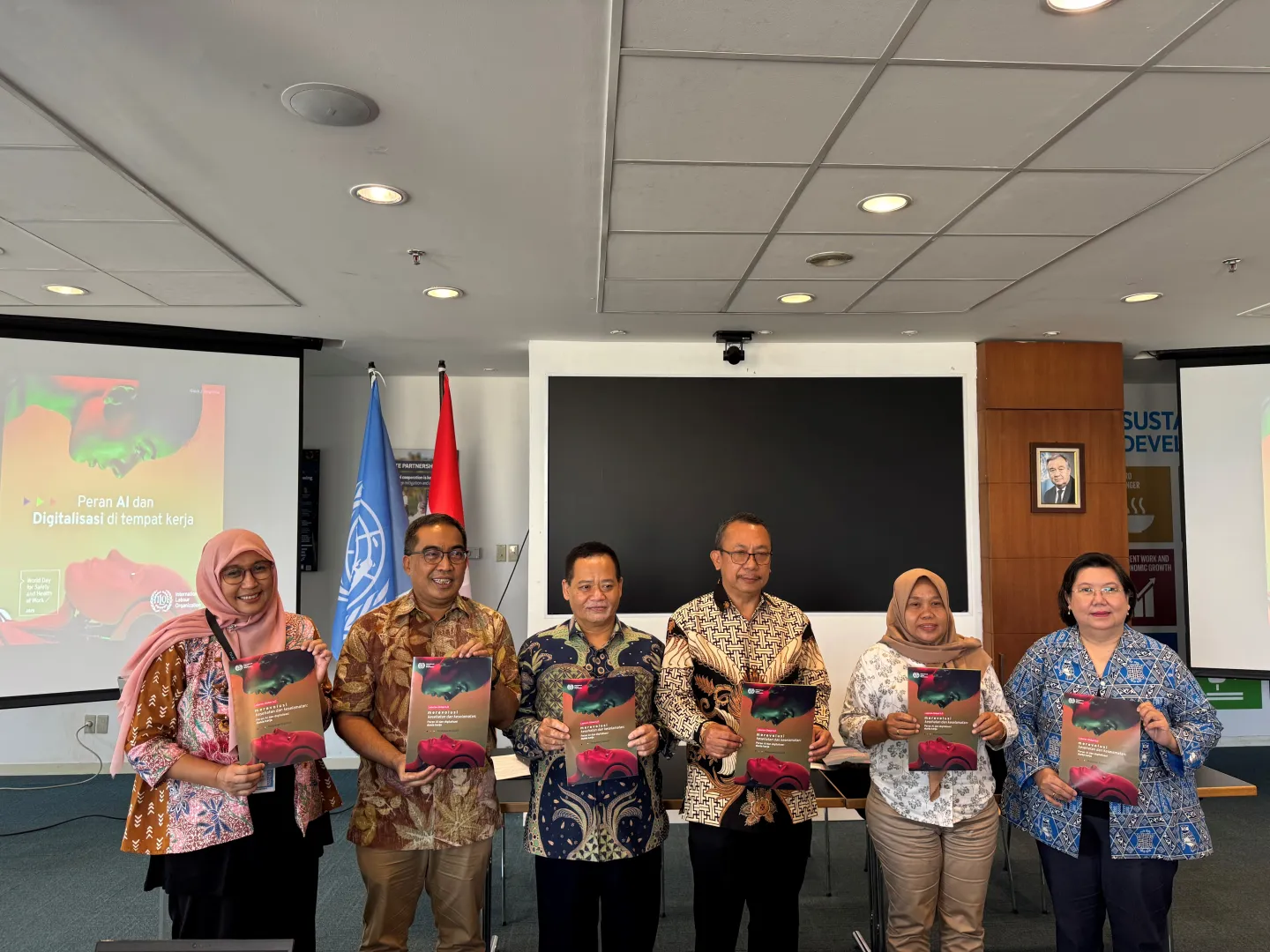
The report, titled Revolutionizing Health and Safety: The Role of AI and Digitalization at Work was launched on April 24 in Jakarta together with representatives from the Ministry of Manpower, the Indonesian Employers Association (APINDO) and trade unions. The launch follows a global launch in Geneva on April 23.
This report highlights how these emerging technologies are improving workers' health and well-being while highlighting the need for proactive policies to address new risks. AI-powered systems are improving safety and health monitoring at work, as well as streamlining tasks and operations, easing workloads and driving innovation-including in traditionally low-tech sectors. However, the report emphasizes the need for proactive policies and regulations to ensure these technologies are implemented safely and fairly.
M. Fachrurozi, S.H, M.A, Director General of Labor Inspection and OSH Development, expressed his appreciation for the ILO's latest global report on OSH, released in celebration of World Day for Safety and Health at Work 2025, observed annually on April 28. He emphasized that the report serves as an important opportunity to reaffirm inspection and preventive measures that align with current conditions and needs.
“Digitalization offers a viable solution. Accordingly, the Ministry of Manpower is preparing to launch a digital complaint system to ensure that complaints from across Indonesia are promptly and efficiently distributed and addressed by regional inspectors,” stated Fachrouzi.
The Ministry of Manpower is currently undertaking revisions to various laws and regulations, including Law No. 1 of 1970 concerning Occupational Safety in Indonesia. This particular revision is being handled independently and will not be incorporated into the amendments to Law No. 13 of 2003 on Manpower.
Digitalization offers a viable solution. Accordingly, the Ministry of Manpower is preparing to launch a digital complaint system to ensure that complaints from across Indonesia are promptly and efficiently distributed and addressed by regional inspectors.
M. Fachrurozi, S.H, M.A, Director General of Labor Inspection and OSH Development
From the employer's representative perspective, Rima Melati as the Chairperson of the National OSH Committee of the Indonesian Employers Association (APINDO), emphasized the importance of integrating AI into all areas of labour, including OSH. In addition to increasing efficiency, AI can also improve accuracy, reach and compliance, which are important values for the world of work.
However, on the other hand, Rima reminded about the importance of skills development for human resources to keep up with current technological developments. “Reskilling and upskilling are important so that the workers can master AI well and adapt to future technology-based jobs,” she said.
Meanwhile, Sulistri, Secretary General of the Trade Union Federation for Food, Beverage, Tourism, Restaurant, Hotel and Tobacco (FSB KAMIPARHO), said that currently, the trade union has conducted various mappings of working conditions affected by AI. She noted that in the palm oil sector, fertilization tasks involving chemicals are now carried out by machines, replacing the manual labour previously performed by female workers.
“Trade unions engage in socialization and advocacy as part of our efforts to address various developments in the world of work that may impact workers' OSH, including issues associated with a fair transition,” she said.
Technology’s impact on safety and health
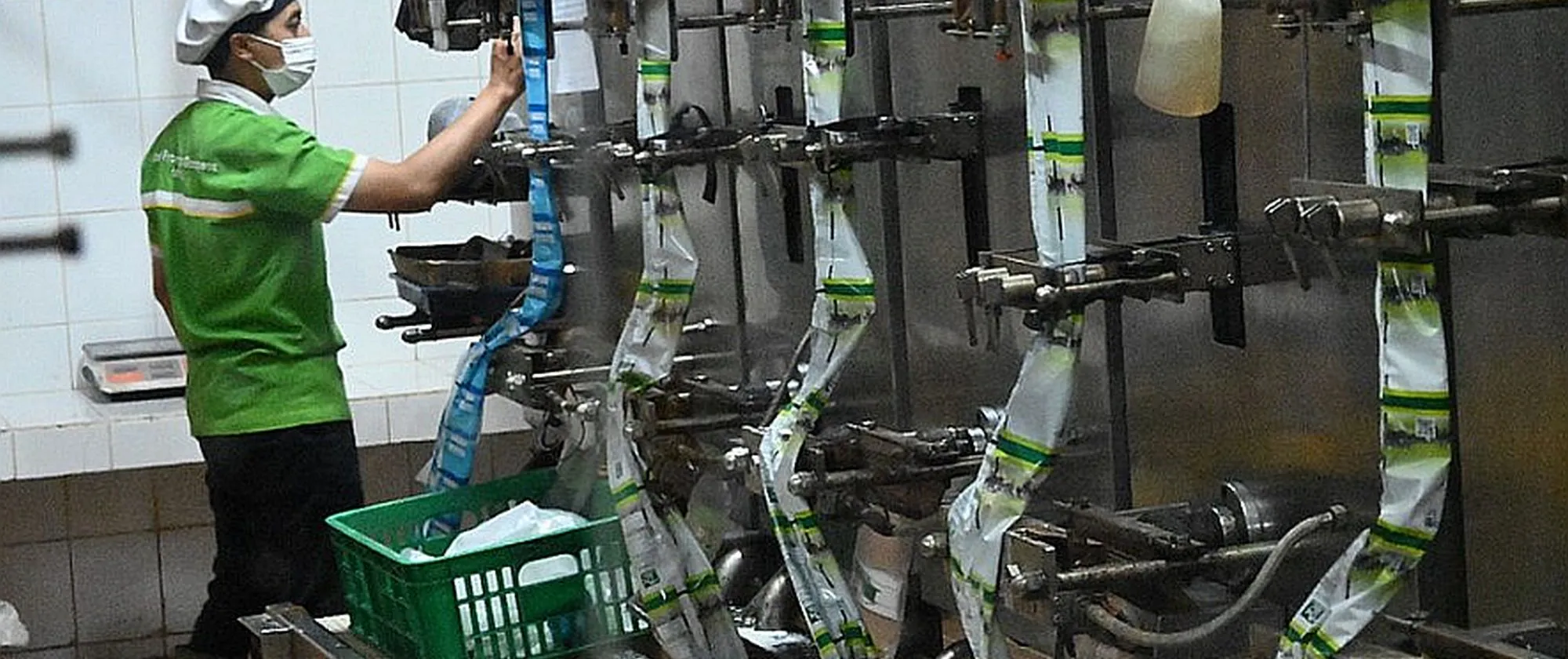
The report highlights that advanced robotics and automation, the use of virtual and extended reality, as well as new tools such as smart wearable devices that provide real time risk detection or environmental sensors that track air quality, are transforming safety and health by preventing accidents and reducing hazardous exposures. Furthermore, digitalization is leading to the rise of hybrid and remote work arrangements that are creating flexibility and improving mental health.
However, these advancements may also bring in new risks. While robots effectively take on hazardous tasks, workers who maintain, repair, or collaborate with these machines may face new dangers. Unpredictable robotic behaviours, system failures, or cyber threats can compromise safety. Ergonomic risks may arise from human-robot interaction, as well as from the use of wearables and exoskeletons that lack proper fit, usability, or comfort.
Digitalization offers immense opportunities to enhance workplace safety. Robots can replace workers in hazardous ‘3D jobs’, which can be dirty, dangerous, and demeaning. Automation can reduce repetitive tasks, such as in factory production lines or in administrative work, allowing workers to take on more challenging tasks.
Manal Azzi, Team Lead on OSH Policy at the ILO
The study highlights that over-reliance on AI and automation may reduce human oversight, which would, in turn, increase OSH risks, while algorithm-driven workloads and being continuously connected can contribute to stress, burnout, and mental health issues.
The report also exposes safety and health risks faced by workers across the digital supply chain, from those in extraction processes to those powering AI, as well as workers handling electronic waste.
“Digitalization offers immense opportunities to enhance workplace safety. Robots can replace workers in hazardous ‘3D jobs’, which can be dirty, dangerous, and demeaning. Automation can reduce repetitive tasks, such as in factory production lines or in administrative work, allowing workers to take on more challenging tasks,” said Manal Azzi, Team Lead on OSH Policy at the ILO. “But for us to fully benefit from these technologies, we must ensure they are implemented without incurring new risks.”
Global policy response and the role of the ILO
The report highlights regulatory gaps in managing OSH risks linked to digitalization and calls for stronger global, regional, and national policies. The ILO’s OSH Conventions (Nos. 155 and 187) provide a foundation for ensuring the right to a safe and healthy workplace in the digital era. For this reason, worker engagement is important at every stage of technology adoption. Training and awareness-raising initiatives are key to ensuring the safe use of new technologies. Further research is needed to explore understanding the long-term impact of OHS on digital transformation.
For more information, please contact:
Gita Lingga
ILO Senior Information and Communications Management Assistant
[email protected]
Related content

World Day for Safety and Health at Work 2025
Empowering university students to champion workplace safety and health

World Day for Safety and Health at Work 2025
Indonesia first to adapt updated ILO code of practice on safety and health in forestry work

World Day for Safety and Health at Work 2025
Transforming Indonesia’s workplace health and safety through AI innovation

Our impact, their voices
From isolation to empowerment: Mama Abu and the rise of the Tuna Besty Group