

World Day for Safety and Health at Work 2025
Transforming Indonesia’s workplace health and safety through AI innovation
The fourth ILO artificial intelligence (AI) and the world of work forum aims to explore how AI and digitalization reshaping occupational safety and health in workplaces worldwide.
7 May 2025
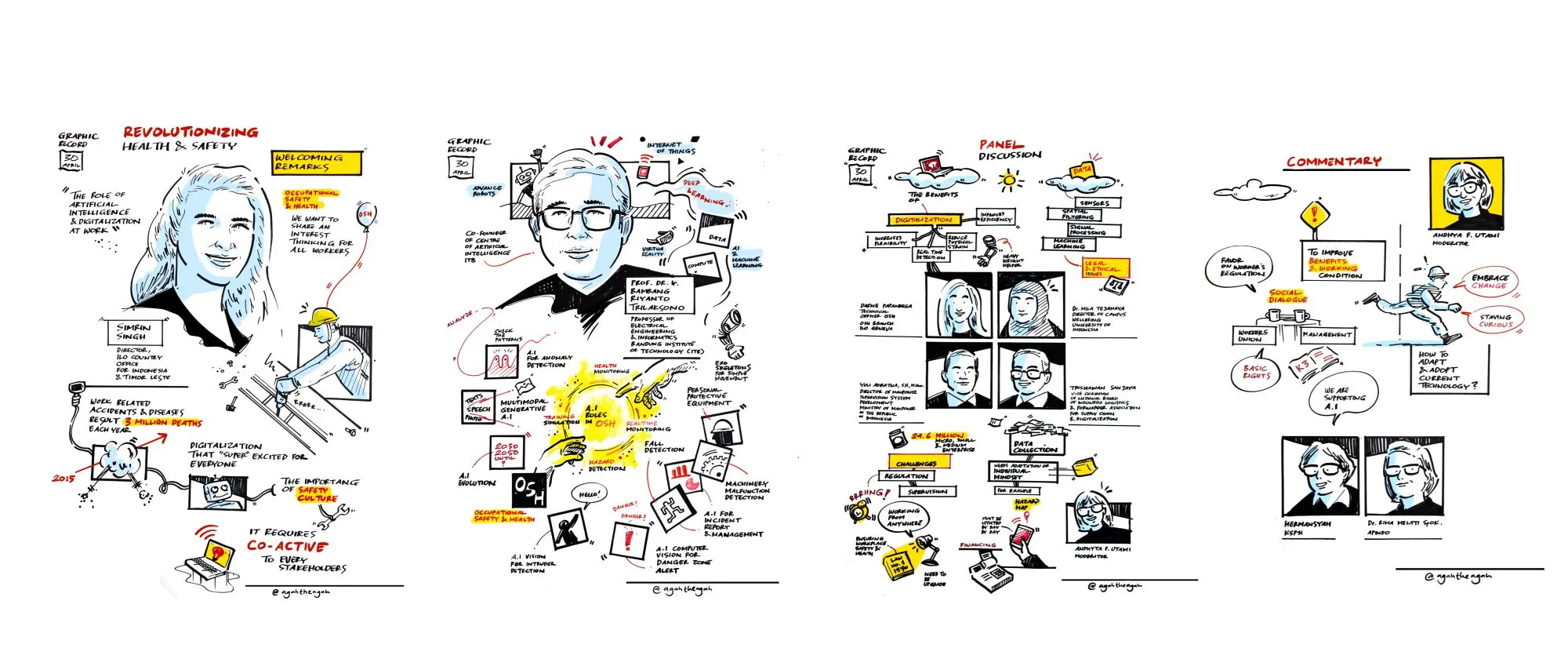
JAKARTA, Indonesia (ILO News) - To mark the World Day for Safety and Health at Work, the ILO hosted a forum in Jakarta on 30 April, featuring discussions aligned with its latest report on occupational safety and health (OSH) and Artificial Intelligence (AI), titled Revolutionizing Health and Safety: The Role of Artificial Intelligence and Digitalization at Work. The event explored how emerging technologies are enhancing worker health and well-being while emphasizing the importance of proactive policies to mitigate new risks.
The forum, marking the fourth session in the ILO’s series on AI and the world of work, featured Prof. Dr. Ir. Bambang Riyanto Trilaksono, Professor of Electrical Engineering and Informatics at Bandung Institute of Technology (ITB), as the keynote speaker. He explored the concept, development, and implementation of AI, with a particular focus on occupational safety and health (OSH), addressing key areas such as hazard detection, health monitoring, real-time surveillance, training and simulation programs, and incident investigation and reporting.
Highlighting the key findings of the new ILO OSH report, Dafne Papandrea, OSH Technical Officer at ILO Geneva’s OSH Branch, explained about key benefits and potential risks on the OSH transformation through digitalization. “Robots can replace workers in hazardous ‘3D jobs’, which can be dirty, dangerous and demeaning. Automation can reduce repetitive task. But for us to fully benefit from these technologies, we must have a strong safety culture, active worker participation and collaborative approach to shape safety and more responsive work environment.”
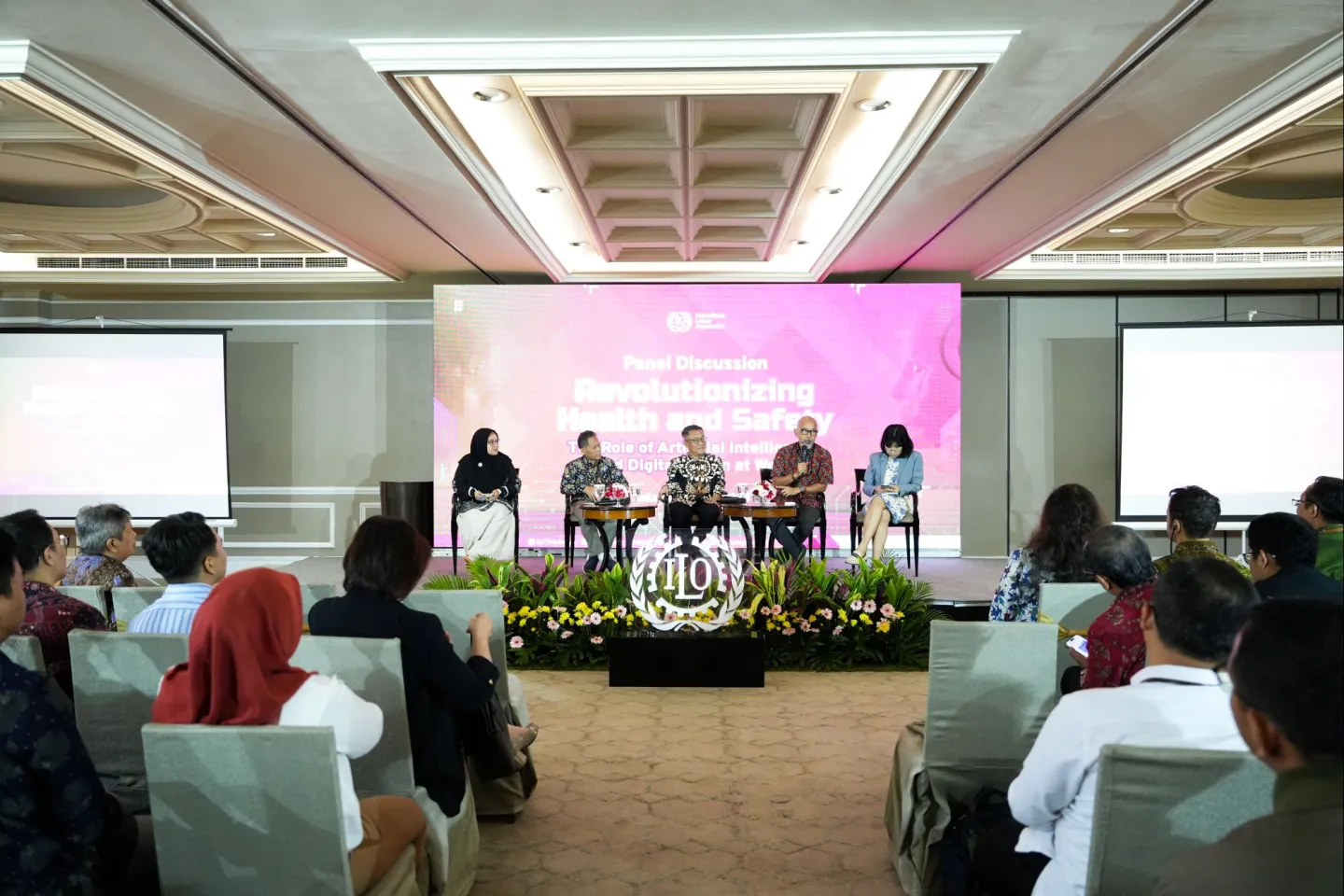
Moderated by Andhyta F. Utami, Founder and CEO of Think Policy, the forum featured invited panellists, including Dr. Mila Tejamaya, Director of Campus Wellbeing at the University of Indonesia; Yuli Adiratna, Director of the Labour Inspection System at the Ministry of Manpower; and Trismawan Sanjaya, Vice Chairman of the National Board of the Indonesia Logistics & Forwarder Association for Supply Chain and Digitalization. They discussed and highlighted the role of AI in enhancing working conditions and productivity, the challenges of implementing AI in OSH, government initiatives to better protect workers in today’s digital era and lessons learned from AI utilization in OSH.
"Technology is not a substitute for human expertise, but a powerful tool that enhances our capabilities. In the workplace, AI and smart innovations can improve health and safety, preventing risks and protecting lives while working alongside human judgment," remarked Simrin Singh, ILO Country Director for Indonesia and Timor-Leste.
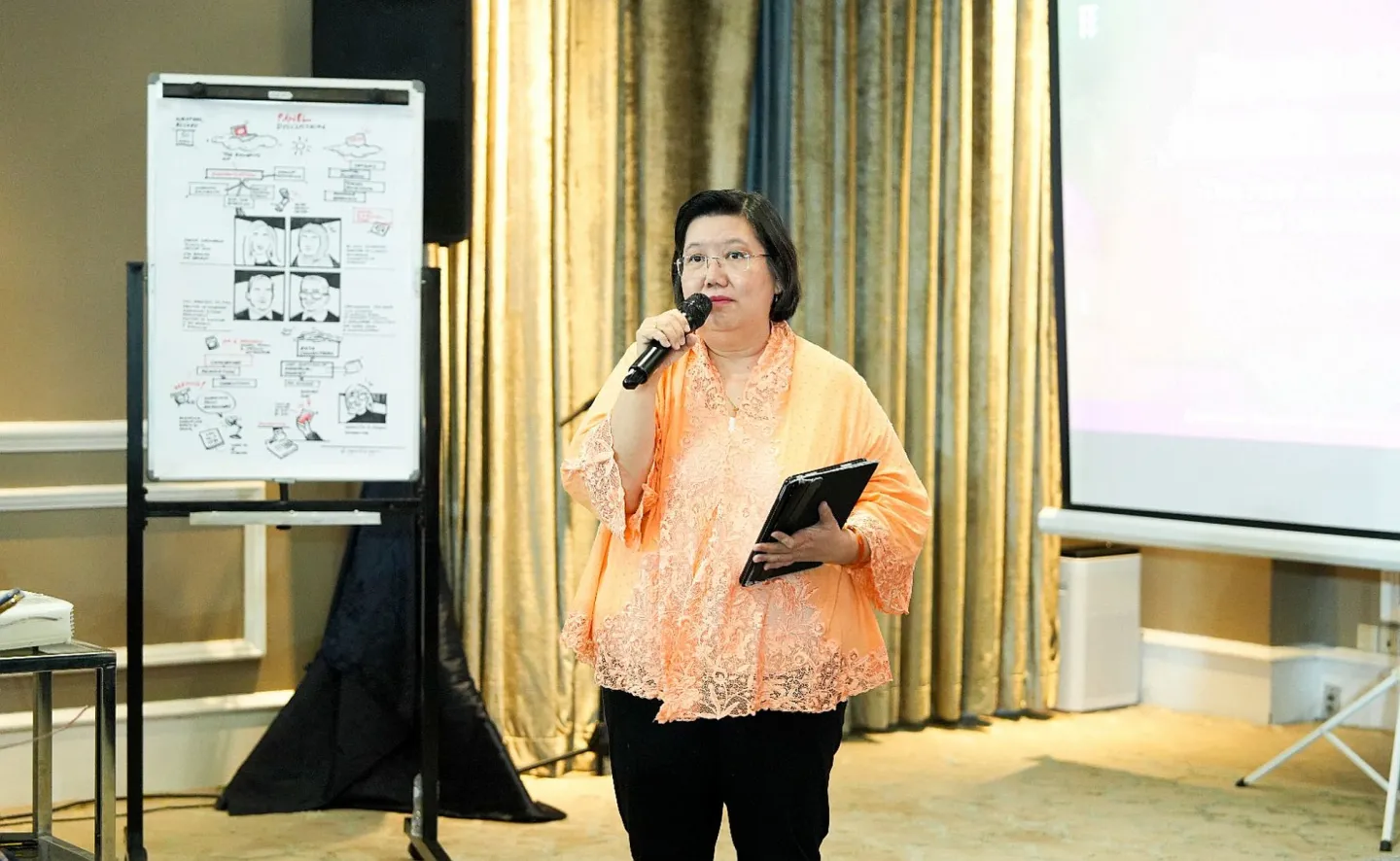
Speaking from an employer's perspective, Rima Melati, Chair of the OSH Committee of the Indonesian Employers’ Association (Apindo), emphasized the government's crucial role in reassessing existing regulations and policies. She highlighted the need to ensure their relevance in an evolving work environment shaped by rapid technological advancements, particularly in safeguarding the rights of new forms of employment such as platform workers.
Meanwhile, Hermansyah, representing the Confederation of All Indonesia Workers Union (KSPSI), underscored the importance of reinforcing tripartite collaboration and fostering social dialogue on AI implementation in the workplace. He emphasized the need to safeguard fundamental OSH labour rights and strengthen regulations to ensure comprehensive worker protection and legal certainty in the evolving landscape of AI-driven employment.
With over 580 participants joining both online and in person, the fourth ILO AI Forum marks the first such gathering of 2025 after three previous AI forums held throughout the year of 2024 on the implications of AI for the Indonesian labour market, the role of AI in driving economic growth and innovation within Indonesia’s micro, small and medium enterprises and how AI can improve farming productivity and efficiency for food security and decent work.
The forum was broadcast live via ILO TV Indonesia.
Related content
World Day for Safety and Health at Work 2025
Empowering university students to champion workplace safety and health

World Day for Safety and Health at Work 2025
Indonesia first to adapt updated ILO code of practice on safety and health in forestry work

World Day for Safety and Health at Work 2025
Indonesia welcomes the latest ILO report on the transformation of AI and digitalization to occupational safety and health

Our impact, their voices
From isolation to empowerment: Mama Abu and the rise of the Tuna Besty Group