

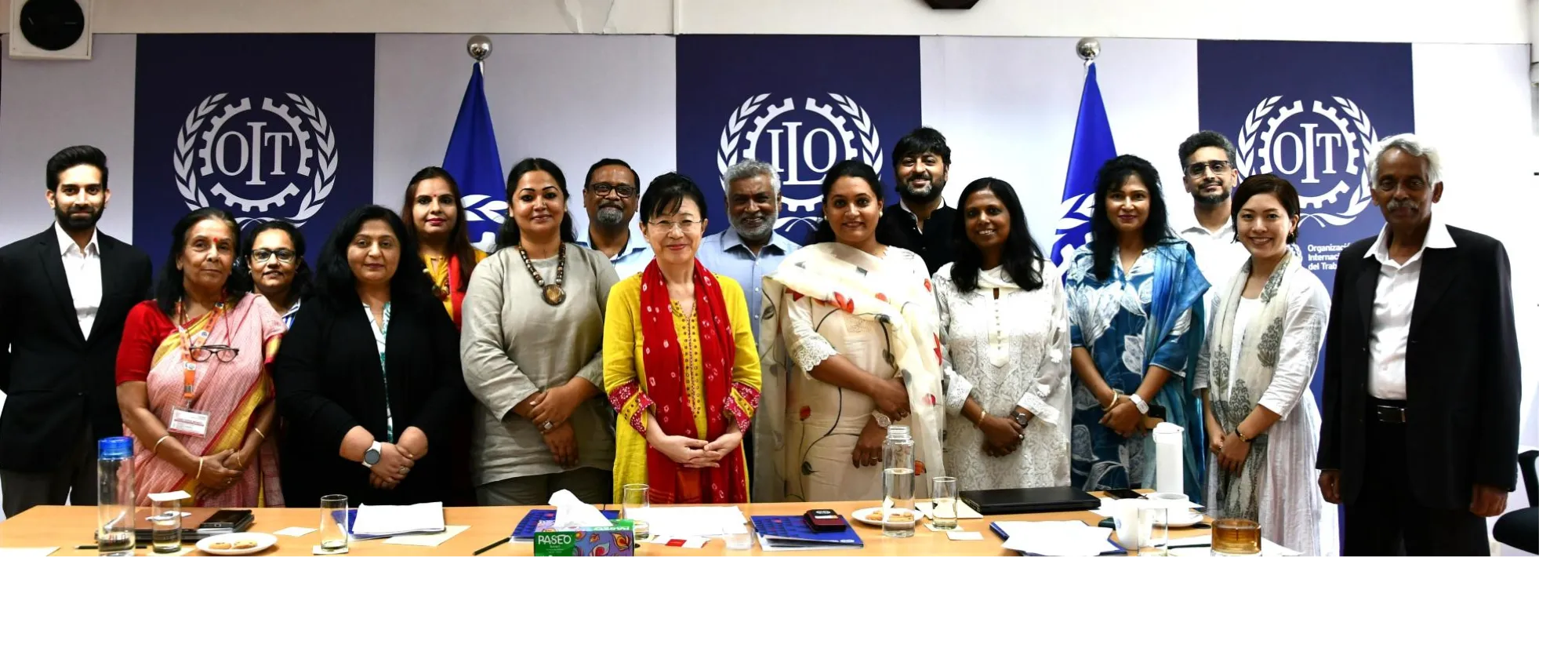
Indian employers’ organizations take the lead on Responsible Business Conduct (RBC) amidst the growing global momentum
Eleven employers' and industry organizations deliberated pathways for operationalizing RBC principles across India's value chain tiers through sectoral proactive approaches and integrated capacity-building for employers and workers.
9 July 2025
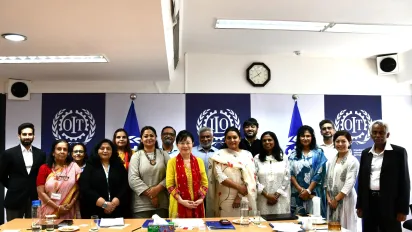
New Delhi witnessed a significant ILO workshop on Wednesday, 9 July 2025, bringing together a total of 11 employers and sectoral industry organizations at the ILO Office. The day unfolded in two key segments, delving into the concept of Responsible Business Conduct (RBC) and their practical application. Participants explored the distinction between RBC, Corporate Social Responsibility (CSR), and Environmental, Social, and Governance (ESG), emphasizing the shift to mandatory disclosures through India's National Guidelines for Responsible Business Conduct (NGRBC) and Business Responsibility and Sustainability Reporting (BRSR) frameworks for top listed companies, reflecting a global trend towards Human Rights Due Diligence (HRDD). Employers' Organizations were recognized as critical actors for the operationalization of RBC and HRDD.
Discussions revealed key implementation challenges - the contrast between "paper compliance" audits and "surprise physical audits," the cost of Occupational Safety and Health (OSH) compliance, and scalability of RBC practices for Micro, Small, and Medium Enterprises (MSMEs) and lower supply chain tiers. Participants also noted a need for a joint platform for sharing of "good" practices and challenges among peer enterprises.
A strong consensus emerged for a sectoral approach to RBC, seen as more practical than a general one. The afternoon session had experts from the Indian Institute of Corporate Affairs (IICA) and held a consultation on adaptation of the NGRBC for the automotive sector, focusing on Principle 3 (Employee Well-being) and Principle 5 (Respect and Promote Human Rights). Key proposed adaptations included ensuring regulatory compliance across all supplier tiers (OEMs to Tier 3), promoting freedom of association and collective bargaining, explicitly prohibiting child and forced labour down the supply chain, advocating for healthy and safe working conditions (including mental health), ensuring timely payment of wages, promoting fair treatment of apprentices, and provision of welfare entitlements to workers.
Given the important role of workers in ensuring that HRDD is effective and meaningful, it was felt that an overall phased approach should be adopted for building the capacity of both employers and workers towards better preparedness for adopting RBC principles in their operations. The employers were particularly clear that they would prefer a ‘pro-active’ approach over a ‘reactive’ one as global frameworks tighten requirements for mandatory HRDD in supply chains.
This collaborative effort marks a significant step, aiming to transition from mere compliance to fostering a proactive culture of responsible business conduct. The industry representatives shared their expectations of the government and ILO’s support for capacity building for MSME supply chain entities, development of RBC "self-check up" lists, and fostering peer-to-peer learning to drive widespread adoption. The ultimate goal is to cascade RBC effectively through the sectoral value chains, ensuring sustainable practices down to lower tier suppliers.
A strong commitment to RBC across all tiers of a supply chain acts like the intricate gear system of an engine, where each component’s responsible operation is vital for the entire machine to run smoothly and sustainably.
This event was held as part of the ILO’s project 'Building Responsible Value Chains in Asia through the Promotion of Decent Work in Business Operations (Phase II)', funded by the Ministry of Economy, Trade and Industry of Japan. The project aims to promote inclusive, responsible and sustainable enterprises and decent work in supply chains through capacity-building programmes for enterprises and ILO’s constituents - government, employers and workers - in four Asian countries including India.
Related content

Project
Building Responsible Value Chains in Asia through the Promotion of Decent Work in Business Operations (Phase II)
Supporting enterprises in Pune to promote Responsible Business Conduct in supply chains

Launch of India Component and Technical Workshop for “Building Responsible Value Chains in Asia through the Promotion of Decent Work in...

From Compliance to Commitment: Industry Leaders gathered to promote Responsible Business Conduct in New Delhi
Trade unions as key enablers of effective Responsible Business Conduct in India

Exploring ground realities and opportunities to drive Responsible Business Conduct in India’s Automobile Sector
Indian employers’ and workers’ organizations forge a joint roadmap for responsible business conduct
Enterprises
India’s social partners present bipartite roadmap to promote responsible business conduct
Indian employers’ organizations take the lead on Responsible Business Conduct (RBC) amidst the growing global momentum

Multi-stakeholder dialogue marks launch of historic bipartite roadmap on responsible business conduct for decent work in India
Advancing Responsible Business Conduct in India: Key Insights from the capacity building workshop held with the UN Global Compact Network...

ILO and ACMA conduct multi-city workshops to strengthen Responsible Business Conduct capacity amongst India’s automotive sector enterprises

ILO and Karnataka Employers' Association (KEA) support Karnataka Manufacturers strengthen Responsible Business Practices