

Tripartism and social dialogue
ILO mentorship programme strengthens responsible business and due diligence in Thailand’s auto sector
The pioneering programme prepares the industry for evolving transitions and requirements, including human rights due diligence (HRDD).
30 September 2025
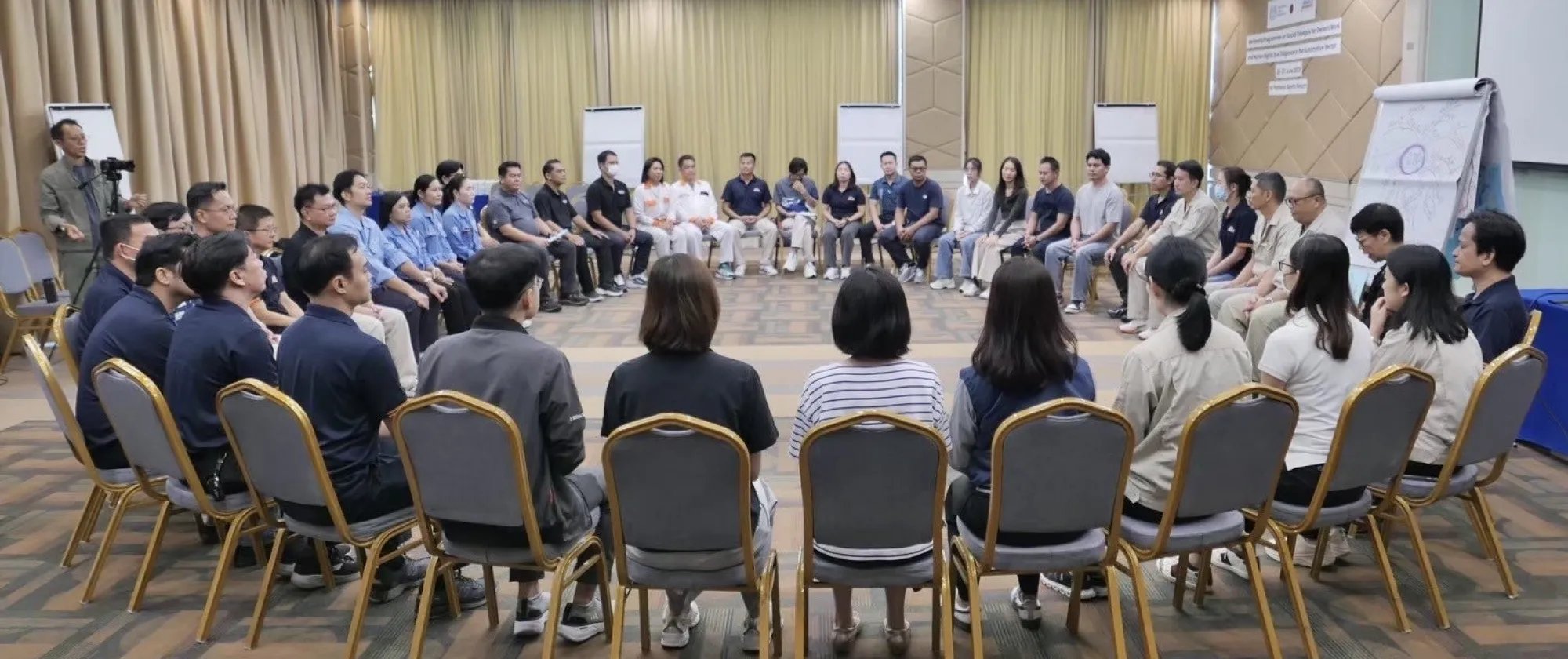
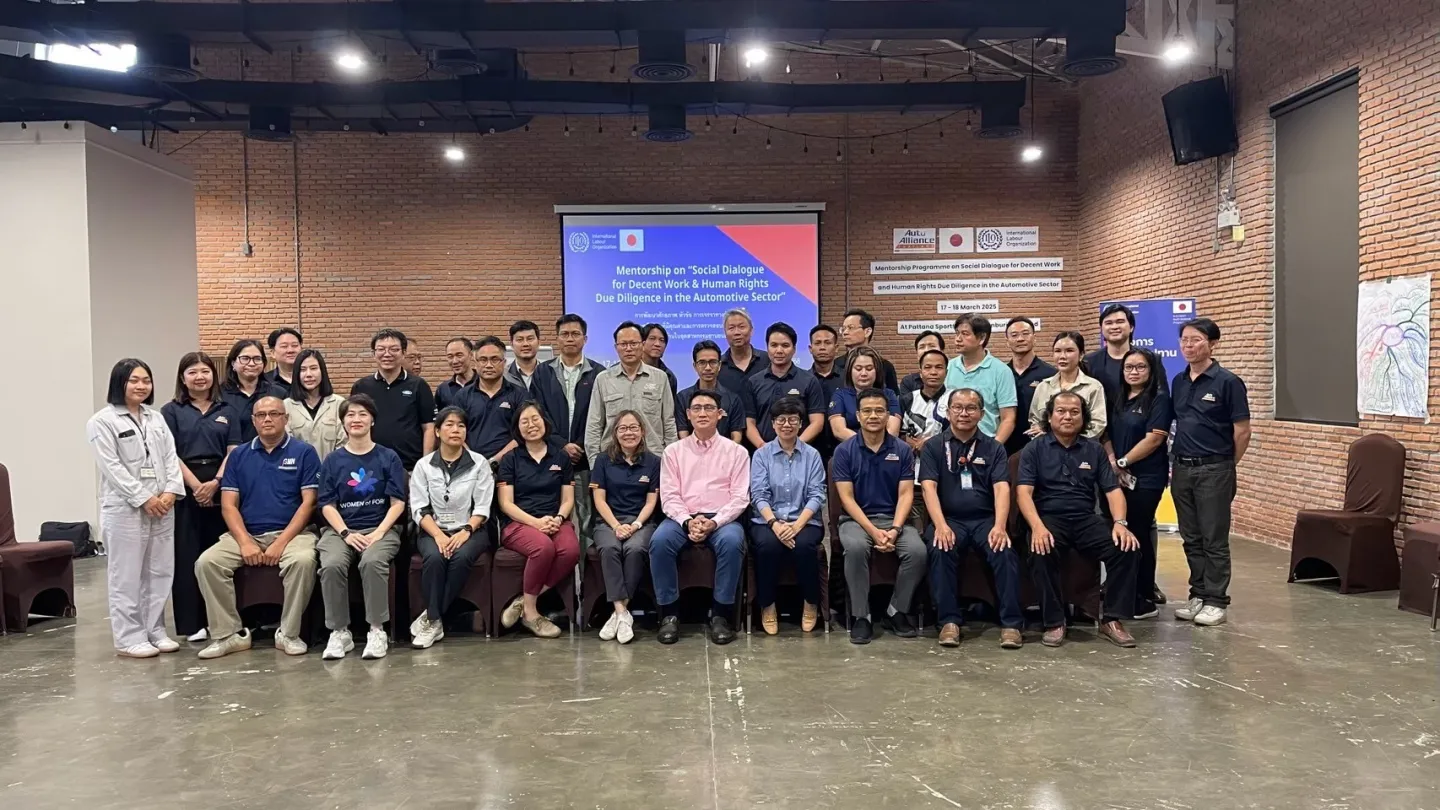
BANGKOK (ILO News) – A pioneering mentorship initiative has helped Thailand’s automotive industry gained knowledge and tools to drive tangible workplace improvements, strengthen industrial relations and support responsible business practices.
The International Labour Organization’s (ILO) social dialogue mentorship programme reached more than 350 stakeholders, including managers, HR professionals, trade unionists and worker representatives, across the Thai automotive supply chain.
Implemented from October 2024 to August 2025 by the ILO-Japan Resilient, Inclusive and Sustainable Supply Chains (RISSC) project in Thailand, the mentorship programme provided a platform for constructive engagement between employers and workers. It forms part of a wider ILO toolkit, which also includes bilingual practical guidelines and training, aimed at helping companies and workers integrate social dialogue into their day-to-day operations.
By combining strategic guidance with hands-on application, the programme provides knowledge and tools needed for firms to align workplace practices with both national and international standards, whilst also building enterprise-level readiness for human rights due diligence (HRDD).
Reflecting on the success of the programme, David Williams, the manager of the ILO RISSC project, said: “This first-of-its-kind mentoring shows how social dialogue can be tailored to context while delivering real value to automotive firms and their workers. Social dialogue is not only a tool to resolve labour issues, but also a way for businesses to boost resilience and adaptability, factors that are becoming ever more important for competitiveness in an uncertain and rapidly changing world.”
Social dialogue encompasses all forms of negotiation, consultation, or exchange of information on key workplace concerns. It may be tripartite involving government, workers, and employers, or bipartite between employers and workers (or their representatives) at the enterprise or industry level. It is not only central to achieving decent work, but it can also be a tool for responsible business, not least in providing a framework for workers and management to work together to address workplace risks and challenges through human rights due diligence.
Thailand ranks among the world’s leading automotive producers and exporters, with the industry accounting for nearly 10 per cent of manufacturing GDP and employing nearly one million workers. The industry is home to a range of leading global automakers, together with an extensive and well-developed supply chain comprising both domestic and global auto parts suppliers.
For further information please contact:
Noppavut Pravat
National Project Coordinator
Email: [email protected]
You may also be interested in

Tripartism and social dialogue
Resilient, Inclusive and Sustainable Supply Chains Asia (RISSC) in Thailand

Tripartism and social dialogue
Resilient, Inclusive and Sustainable Supply Chains Asia (RISSC)
ILO/Japan Multi-bilateral Programme

Summary report
Results from the Driving Industry Dialogue (DID) toolkit rollout in the Thai automotive sector
Relevant projects

Tripartism and social dialogue
Resilient, Inclusive and Sustainable Supply Chains (RISSC) in the Philippines
ILO-Japan Partnership
Automotive Supply Chain Programme in Thailand
Tripartism and social dialogue
Resilient, Inclusive and Sustainable Supply Chains Asia (RISSC) in Thailand
Tripartism and social dialogue
Resilient, Inclusive and Sustainable Supply Chains Asia (RISSC)