

Press release
ILO and QOOT Cluster partner to strengthen market linkages for farmers and agri-food SMEs in Lebanon
3 April 2025
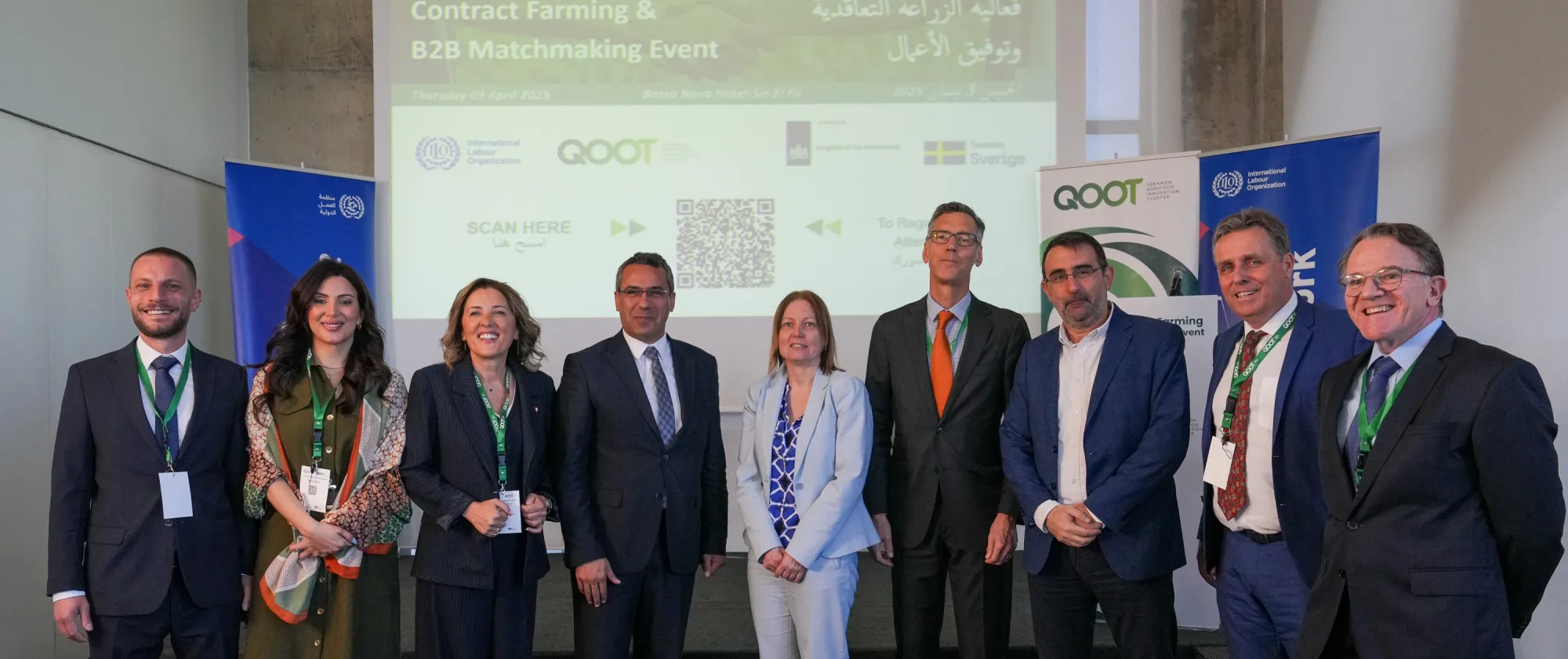
Beirut, Lebanon (ILO NEWS) – The ILO and QOOT, Lebanon’s leading agri-food cluster, in collaboration with the Ministry of Agriculture, hosted an event titled “Contract Farming & B2B Matchmaking: Connecting Farmers & Buyers for a Sustainable Agri-Food Future,” aimed at connecting farmers and businesses, ensuring business continuity, and fostering stronger linkages between them.
By connecting with agri-food businesses ahead of production, farmers can secure buyers for their products, expand market opportunities, improve profitability and job security, and focus on enhancing product quality and competitiveness, contributing to long-term sectoral growth. Meanwhile, Small and Medium Enterprises (SMEs) will have the opportunity to access alternative raw material sources, while farmers will receive support to upgrade production practices and meet SME demand.
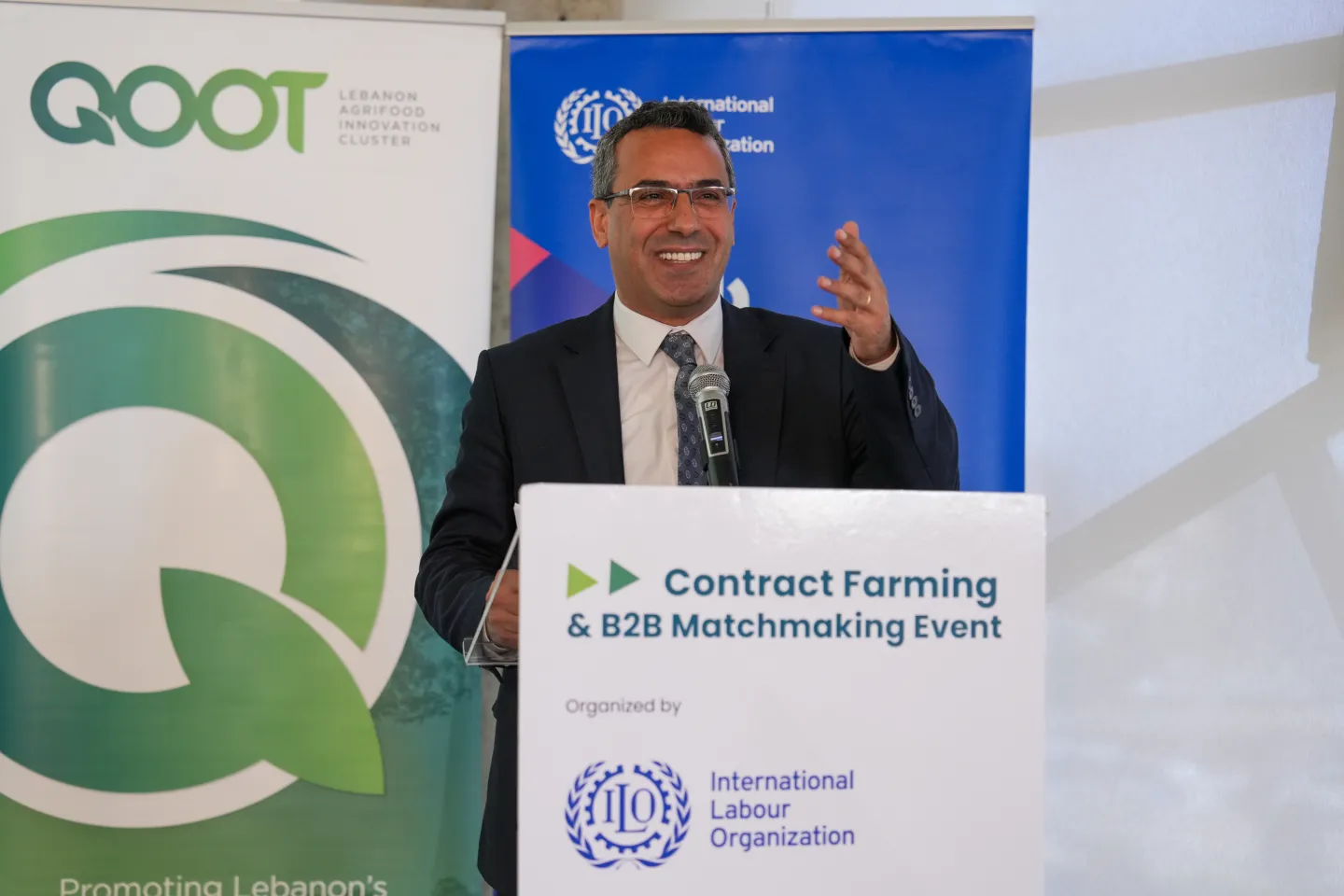
“Lebanon’s agricultural sector thrives when farmers and agri-food companies connect, ensuring products meet market demands,” said at the event Lebanon’s Agriculture Minister Nizar Hani. “By embracing innovation and sustainable practices, we can overcome climate challenge and enhance exports to international markets. Investing in water-efficient crops and advanced technologies will strengthen resilience, while contract farming provides farmers with security and stability. With international partnerships and a focus on quality, we can build a future where Lebanon’s agriculture remains a pillar of economic growth and sustainability.
Targeted interventions have prioritized SMEs most affected by supply chain disruptions, particularly in the vegetable and horticulture sectors. Key support measures include cost-sharing initiatives to strengthen business operations, ensure continuous access to raw materials, and address bottlenecks in sourcing, processing, and packaging—critical components for maintaining production flow and meeting market demand.
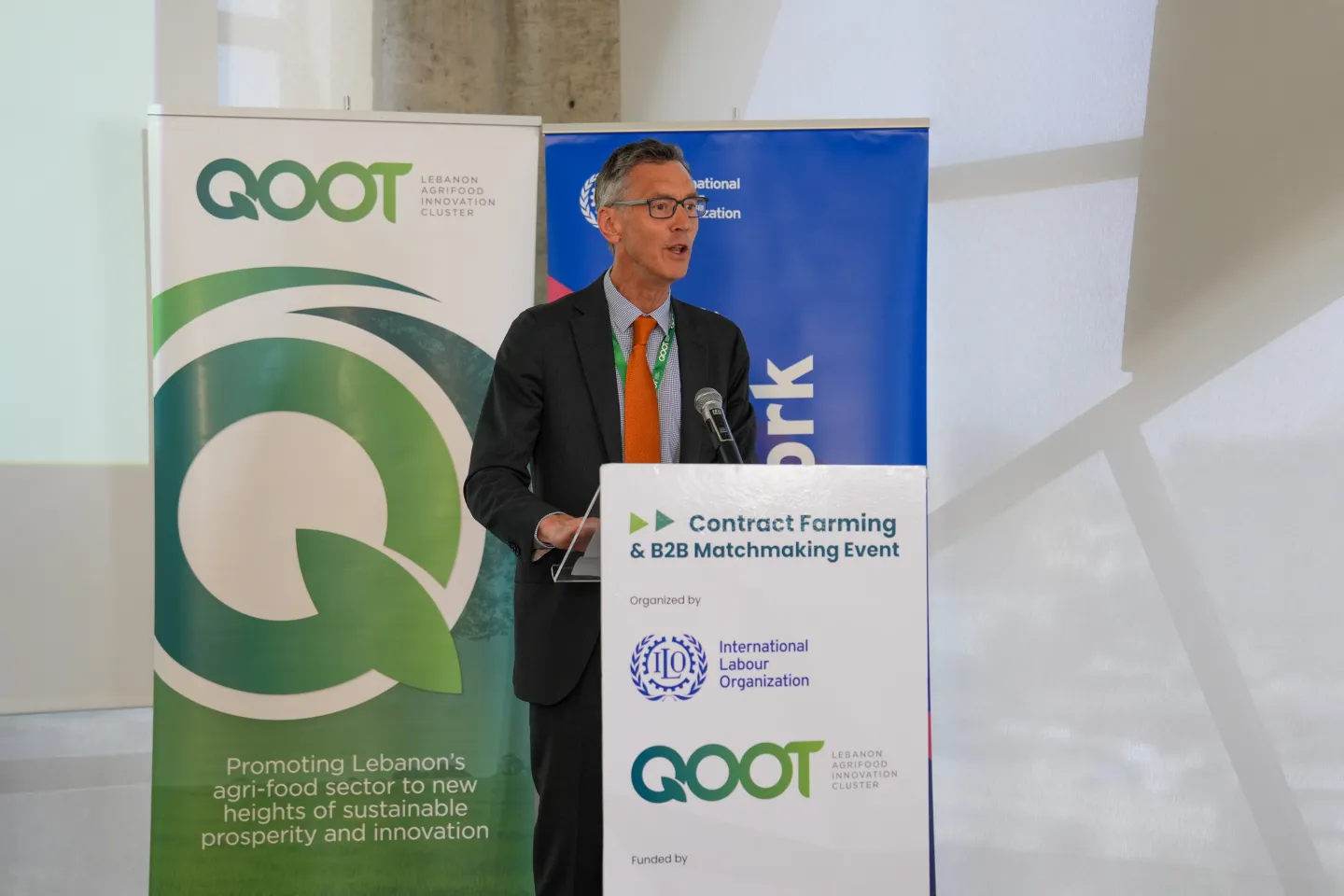
“The QOOT Cluster and its members represent some of the best that Lebanon has to offer in agriculture,” said Frank Mollen, the Netherlands Ambassador to Lebanon, whose country is supporting the local agriculture sector through multiple programmes, including the ILO PROSPECTS partnership. “Under the leadership of the Ministry of Agriculture, the agri-food sector offers significant opportunities for the Lebanese economy—opportunities that the ILO and donors like the Netherlands can help unlock by supporting Lebanese farmers and companies. We look forward to further strengthening the sector, and the Netherlands will continue to be one of its strongest supporters,” Mollen said.
These initiative serves as an entry point for broader systemic improvements, ensuring sustainable market access and operational resilience, enabling farmers to meet market needs and secure new opportunities. By addressing supply chain bottlenecks, the project aims to strengthen a more resilient and inclusive agri-food sector.
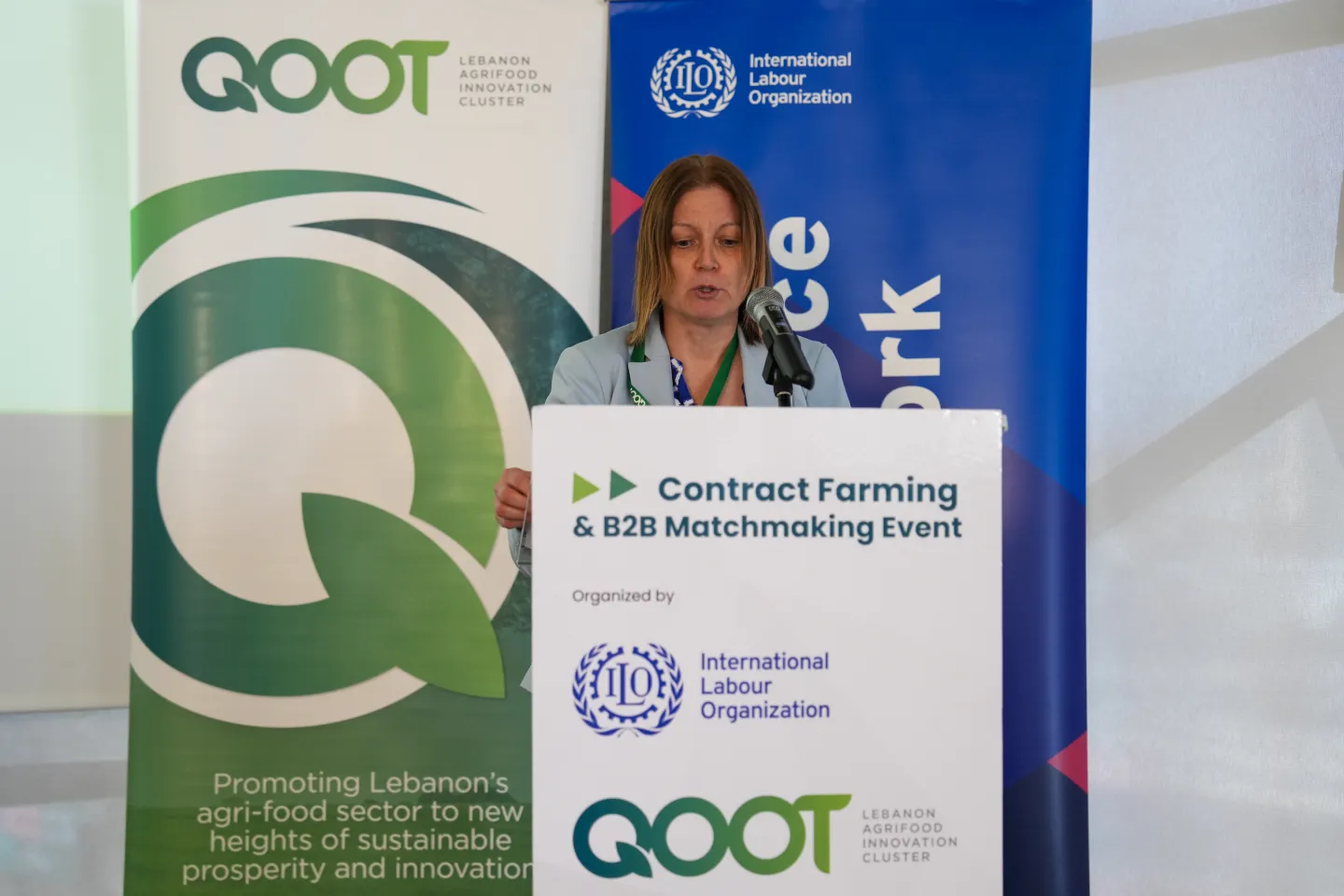
“Strengthening Lebanon’s agri-food sector through innovation and inclusive markets boosts both local production and export potential,” said Sweden's Ambassador to Lebanon, Jessica Svärdström, supporting the joint ILO-QOOT intervention through the ILO BOUZOUR project. This initiative not only safeguards existing jobs but also expands opportunities for both Lebanese communities and Syrian refugees, reinforcing social and economic stability. With a focus on gender inclusion and advanced agricultural practices, we are helping build a more competitive and sustainable food production chain for the future.”
The initiative comes amid a prolonged multi-level economic crisis and the fallout from the recent Lebanon conflict, which have further disrupted the agricultural sector. Damage to production, harvesting, and market access has threatened food security, with output expected to decline. Key regions like the South and Bekaa have faced infrastructure destruction, labor shortages, and sourcing challenges, prompting SMEs to seek suppliers from Mount Lebanon and the North. The intervention has addressed these issues by facilitating contract farming and other targeted interventions to sustain production and value chains.
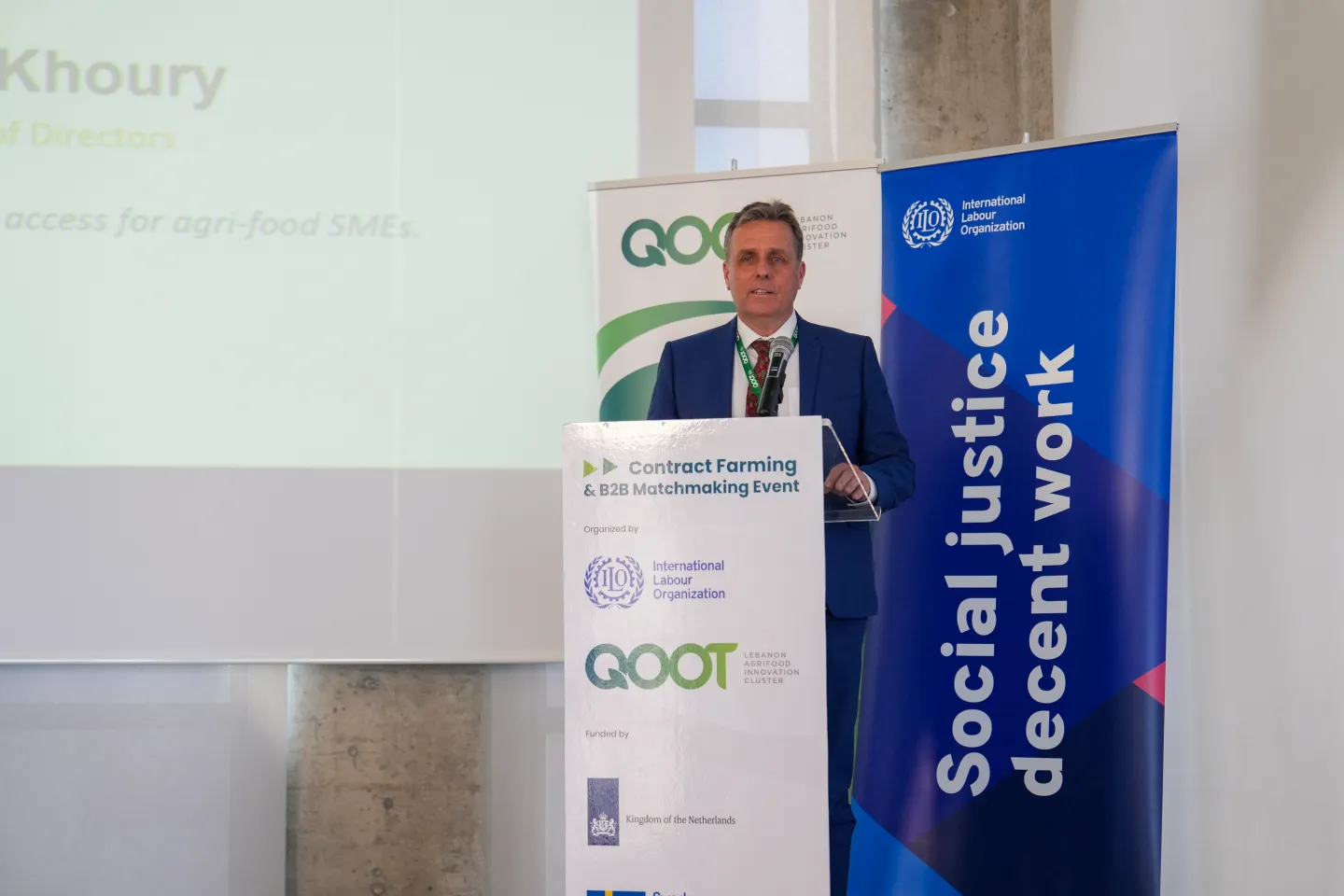
“This initiative is a crucial step in supporting Lebanon’s agriculture sector, which has been among the hardest hit by multiple crises, disrupting production and market access,” said ILO Deputy Regional Director Peter Rademaker. “As part of the ILO’s contribution to the Lebanon Emergency Response Plan, we are working to enhance the productivity of the sector, strengthen market access, and promote decent work for all agricultural workers. Protecting workers and improving their working conditions are fundamental principles central to broader efforts to revive the agriculture sector and unlock its full potential.”
The initiative is currently training shortlisted farmers from across Lebanon to meet SMEs’ needs, providing remote support during cultivation to mitigate risks like diseases and growth issues. Field visits are also monitoring cultivation practices, ensuring standards are met. Meanwhile, selected SMEs have developed customized plans, leading to matchmaking agreements and commitments.
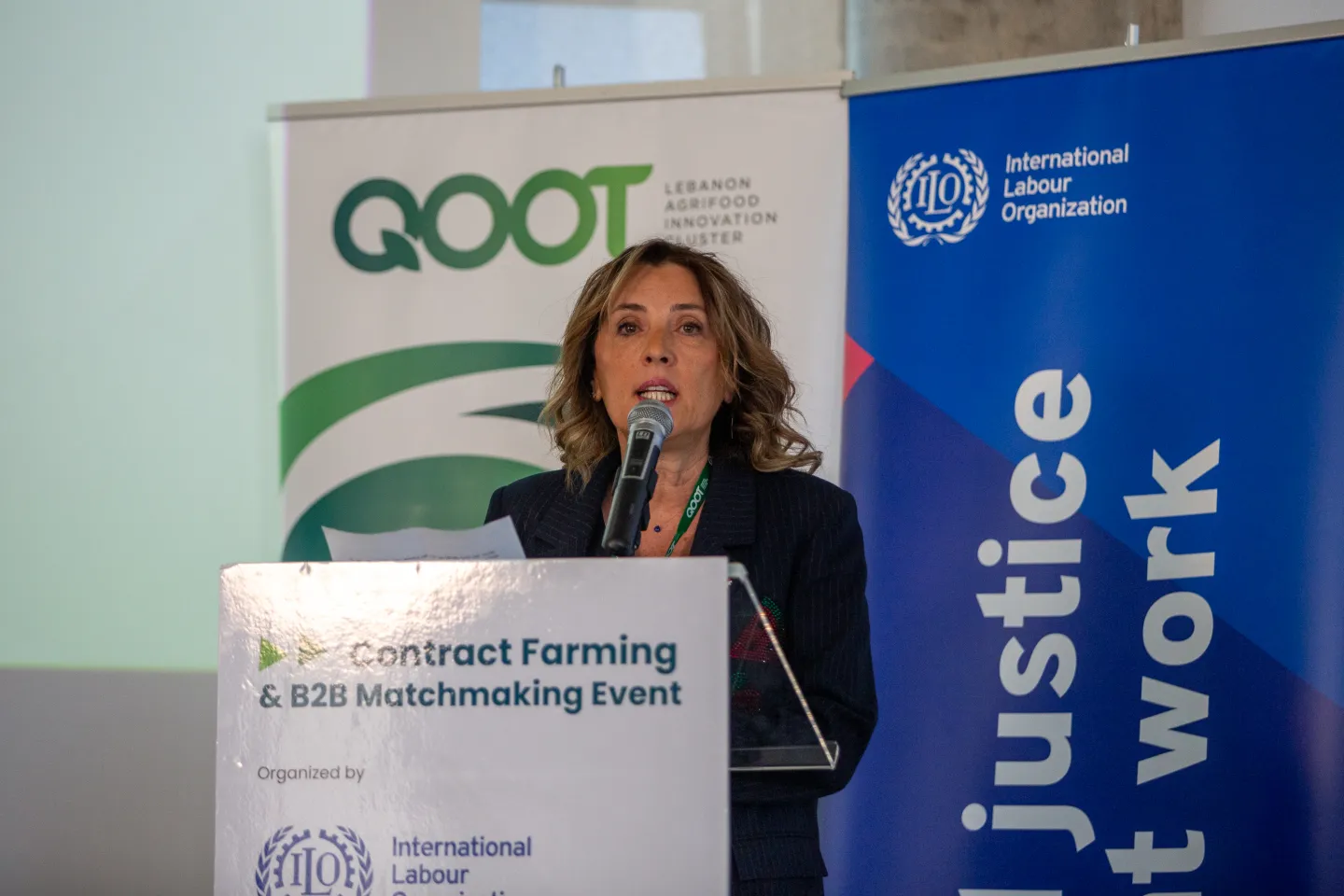
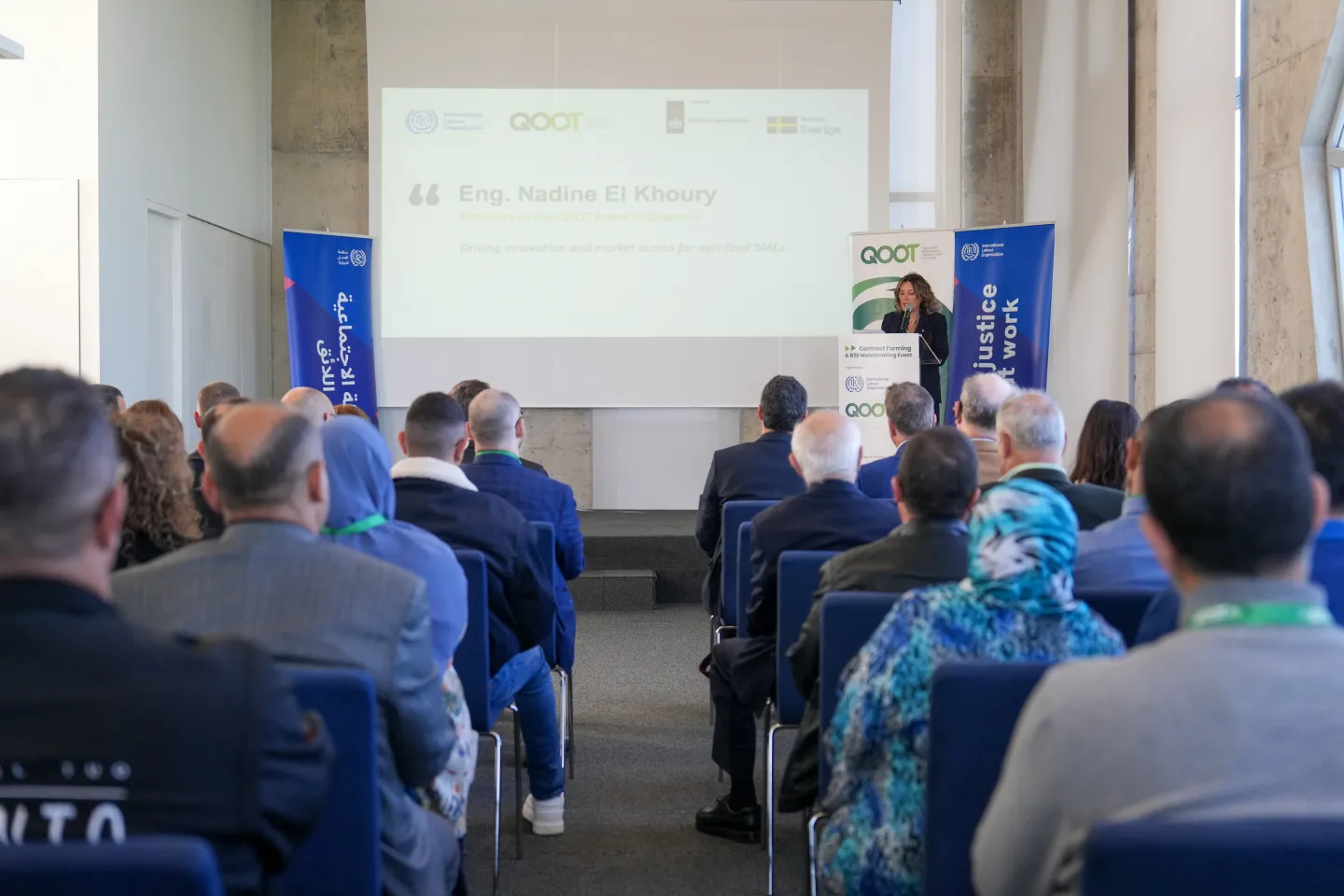
“QOOT is building key synergies among farmers across Lebanon and the country’s agri-food producers, emphasizing the importance of contract farming as a sustainable solution,” said Nadine Khoury, President of the QOOT Board of Directors. "By collaborating with farmers, agri-food producers, the Ministry of Agriculture, and various partners, we are driving innovation and new technologies to reach every farmer, every field, and every agrifood business. This reinforces our belief that agriculture in Lebanon can fuel a productive economy—one that produces locally, exports successfully, and positions us among the Mediterranean’s top agri-food nations."
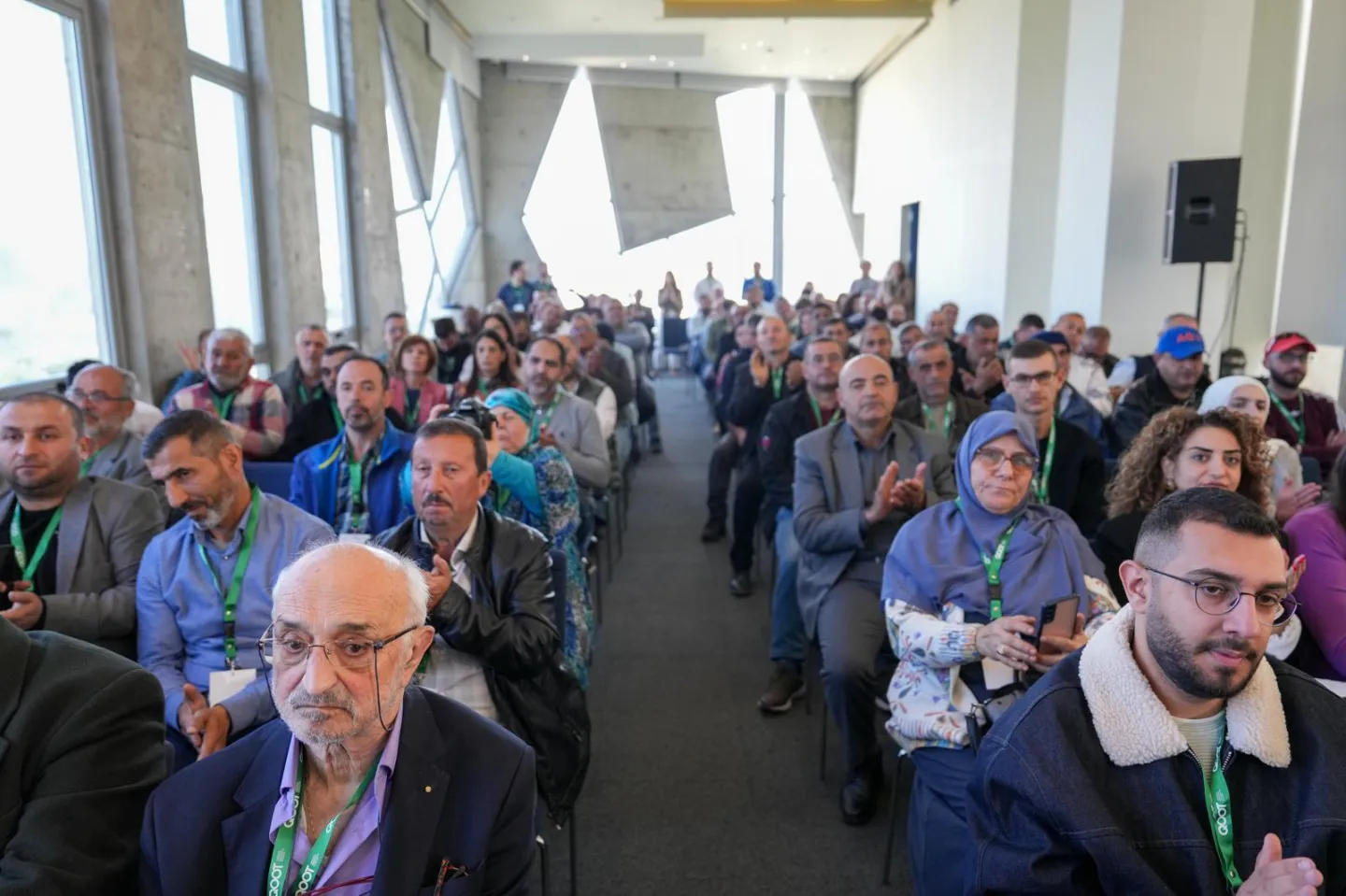
At least 100 customized one-on-one B2B matchmaking activities will be conducted between SMEs and farmers throughout the project, which runs until August 2025, supported by technical and legal experts. This process is expected to result in at least 30 formal contract agreements, fostering long-term business relationships and sustained incomes for farmers.
Related content

Photo Essay
Agricultural infrastructure revamp transforms Lebanon, one greenhouse at a time
Video
Microfinance empowers farmers, youths and workers in Lebanon
A deep dive into social protection for Lebanon’s agricultural workers and farmers
Interview with ILO expert
Access to social protection for agricultural workers in Lebanon
Relevant projects

ILO-Netherlands Partnership
Partnership for improving prospects for forcibly displaced persons and host communities (PROSPECTS) in Lebanon
Project
Building Inclusive Markets and Decent Work for Syrian Refugees and Lebanese Host Communities (BOUZOUR)
Programme
Partnership for improving prospects for forcibly displaced persons and host communities (PROSPECTS)