

From Consensus to Co-creation: Technical Workshop on Green Skills Development in Practice Successfully Held in Huzhou
From 11 to 13 November 2026, the International Labour Organization (ILO), in cooperation with the Ministry of Human Resources and Social Security (MOHRSS), held the 'From Consensus to Co-creation: Technical Workshop on Green Skills Development in Practice' in Huzhou, Zhejiang. Representatives from enterprises, training institutions and local governments exchanged and shared best practices in integrating green skills into skills policies, training and workplace.
14 November 2026
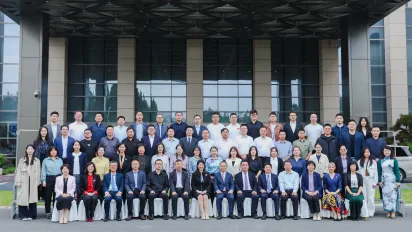
Huzhou, Zhejiang Province (ILO News) – From 11 to 13 November 2026, the ILO, in cooperation with MOHRSS, successfully held the 'From Consensus to Co-creation’ Technical Workshop on Green Skills Development in Practice in Huzhou, Zhejiang Province. As the concluding meeting of the 'GreenPulse for TVET' series under the Quality Apprenticeship and Lifelong Learning Project Phase 2, the workshop brought together nearly 80 representatives from MOHRSS, sectoral associations, governmental departments, enterprises and TVET institutions of project piloting cities and sectoral leading corporations. Building on the progress achieved through the project 'GreenPulse for TVET' capacity-building series, participants shared best practices in integrating green skills into skills policies, workplace training and school curricula.
In the opening remarks, Xiaochu DAI, Deputy Director of the ILO Country Office for China and Mongolia, said that green skills are not special skills required only by a small number of 'green jobs', but are becoming a foundational capability across industries and occupations. The future of work is being reshaped by the green transition, digital transformation and artificial intelligence advancement simultaneously. Integral skillsets in which green skills should multiply digital skills, AI literacy and other core skills will help workers improve productivity, employment quality and environment.

A core idea of the 'just transition' advocated by the ILO is that the green transition must focus not only on environmental outcomes, but also on people's employment, income, skills, social protection and participation throughout the process. We must ask not only whether the economy can become greener, but also whether workers can gain opportunities in the green transition; not only how much productivity new technologies can create, but also whether workers can acquire the ability to master these new technologies.
Xiaochu DAI, Deputy Director of the ILO Country Office for China and Mongolia
Xiaohui XU, Director of the Huzhou Municipal Human Resources and Social Security Bureau, expressed that the green transition is profoundly reshaping industrial patterns and the skill structure of the workforce. The Guide on Core Skills for the Green Transition developed by the ILO provides tangible and applicable guidance for climate literacy and capacities for green production and services. As a pilot city in both phases of the project, Huzhou has continued to deepen the integration of industry and training, established an apprenticeship research centre, strengthened multi-departmental policy coordination, and issued a plan for enhancing green skills, with a goal of bridging green skills talent cultivation with industrial upgrading.
In the keynote speech, Yunhua ZHENG, Deputy Director of the Huzhou Municipal Human Resources and Social Security Bureau, presented a comprehensive introduction to Huzhou policy measures to promotes green skills development after joining the project piloting. In 2026, the Bureau and 21 other governmental departments jointly issued the ‘Huzhou Municipal Skills Training Initiative and ‘Green Skills Development Implementation Plan (2026–2027)’, scaling training for green skilled talents and incorporating green skills into the municipal enterprise-based apprenticeship for the first time.
Xian GUAN, National Project Manager of the ILO Country Office for China and Mongolia, summarized the progress achieved over the past year of the 'GreenPulse for TVET' capacity-building series: five thematic workshops and a spring-semester practicum were organized; more than 30 ‘Green Skills Training Pioneers’ and over 70 ‘Green Skills Trainers’ were upskilled; 30 teaching cases drawn from frontline practices were documented; and training benefitted more than 2,100 students and workers. Within one year, green skills development has moved from a policy concept to concrete actions in workplaces and schools. Zhiqiang Du, Professor of Tianjin Light Industry Vocational Technical College and external national expert of the project, presented in detail the newly developed toolkit based on the Guide on Core Skills for the Green Transition and feedback from the spring-semester practicum.
The case-sharing session of the workshop was divided into 'TVET school scenario' and 'enterprise scenarios'. Representatives from Huzhou Changxing Technician College, Huzhou Communications Technician College, Wuxi Technician College, Rizhao Industrial School, Rizhao Technician College and Hubei Polytechnic College presented cases of how to integrate green skills into specialized courses, general education courses and school-enterprise joint programmes. Representatives from Hubei Donper Electromechanical Group Co., Ltd, Daye Nonferrous Metals Group Holdings Co.,Ltd. and Wuxi Runhe Blade Manufacturing Co.,Ltd introduced practical approaches to incorporating green skills into school-enterprise cooperation and daily work practices. They also shared trainees’ survey data which demonstrated positive changes.

Participants held group discussions around the cases. Through case improvement and cross-review, the discussion turned frontline experience to replicable and scalable practices. After the workshop, a field visit was organized in LandSpace Technology Co., Ltd., Jiuli Group, the Moganshan Homestay Butler Vocational Training School and Jiazhou Farm for mutual exchange and learning on skills development and youth entrepreneurship for rural revitalization.

Through guide development, capacity building and case sharing, the 'GreenPulse for TVET' series under the Quality Apprenticeship and Lifelong Learning in China project phase 2 promote joint efforts among governments, enterprises and TVET schools, turning ‘green skills’ from a shared consensus into co-creation at the local level. As green skills steadily enter classrooms, workplaces and production lines, the green transition is becoming a genuine opportunity for advancing high-quality employment and decent work.
Related content
Quality Apprenticeship and Lifelong Learning in China – Phase 2

Capacity Building Workshop on Green Skills for Trainers and Teachers successfully held in Huangshi
ILO promotes green skills to empower sustainable development in China
‘GreenPulse’ webinar series for trainers and teachers launched
Relevant projects
Quality Apprenticeship and Lifelong Learning in China – Phase 2