

Care economy and family-friendly policies in Uzbekistan: investing in people and future
The Senate of Oliy Majlis of the Republic of Uzbekistan, the Ministry of Employment and Poverty Reduction, with support from UNFPA and ILO, spotlight care economy, family-friendly workplaces and gender equality.
15 September 2025
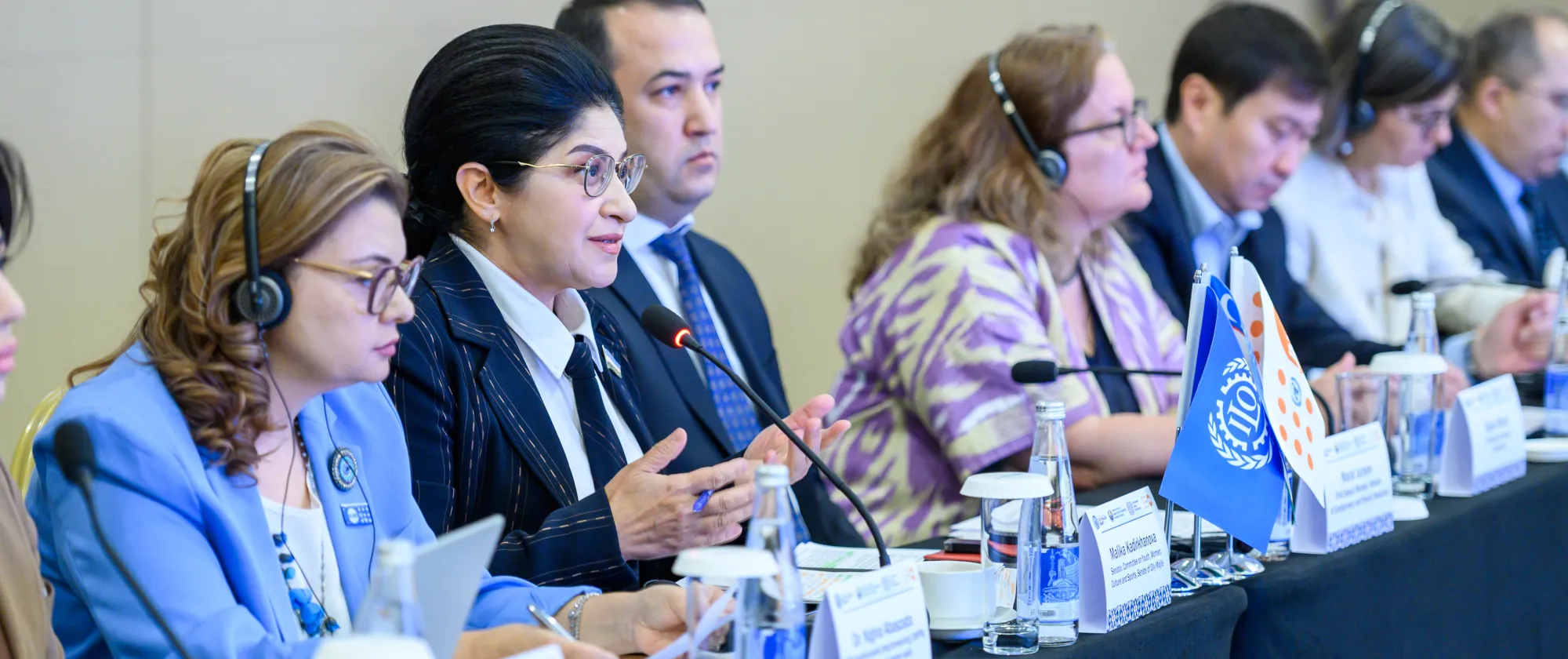
TASHKENT (ILO News) – The Senate of the Oliy Majlis of the Republic of Uzbekistan, the Ministry of Employment and Poverty Reduction, the International Labour Organization (ILO) and the United Nations Population Fund (UNFPA) convened a high-level workshop on “Investing in People and Families: Care Economy and Family-Friendly Policies for Uzbekistan’s Future” in Tashkent on 12 September 2025.
The care economy encompasses all paid and unpaid work that sustains families and communities — childcare, eldercare, healthcare, education, and household responsibilities. Globally, it represents 11.5 per cent of all jobs and contributes more than US$11 trillion annually to the global economy. Yet women continue to perform more than three-quarters of unpaid care work, which often goes unrecognized and limits their opportunities for full economic participation. Care responsibilities are the main barrier preventing women from participating in the labour force. According to ILO estimations, the share of women outside the labour force due to care responsibilities is 45 per cent globally. The unequal distribution of unpaid care work between women and men hinders women’s economic inclusion and effective labour market participation and widens gender gaps in the world of work.
Recognizing these challenges, Uzbekistan has taken significant steps to improve care policies, including the ratification of the ILO Convention on Workers with Family Responsibilities (No. 156) and expanded investments in early childhood education and social protection. Still, further efforts are needed to ratify the ILO Convention on Maternity Protection (No. 183), formalize care work, ensure decent work for care workers, reduce gender pay gaps and expand access to quality care services.
“Investing in the care economy is investing in Uzbekistan’s future. Family-friendly, gender-responsive policies will help families thrive, create jobs and ensure women and men can contribute equally to society and the economy,” said Malika Kadirkhanova, Senator, permanent member of the Committee on Youth, Women, Culture and Sports of the Senate of Uzbekistan.
A strong care economy is essential for resilience in Uzbekistan’s labour market.
Marat Jurayev, First Deputy Minister of Poverty Reduction and Employment of the Republic of Uzbekistan
“A strong care economy is essential for resilience in Uzbekistan’s labour market. By strengthening care services and ensuring decent conditions for care workers, we can open new opportunities for women’s participation in the labour market, create jobs and improve the quality of life for families in Uzbekistan,” said Marat Jurayev, First Deputy Minister of Poverty Reduction and Employment of the Republic of Uzbekistan.
In Uzbekistan, unpaid care remains a major barrier for women in accessing decent work and leadership opportunities. By expanding gender-transformative care services and workplace policies, the country can create new jobs, reduce poverty and strengthen social protection, while also redistributing unpaid care responsibilities more equitably between women and men. UNFPA evidence shows that family-friendly workplaces reduce absenteeism, increase talent retention, and create more motivated, productive teams. For example, hybrid work reduces employee turnover by 33 per cent, and on-site childcare cuts absenteeism by 36 per cent.

Family-friendly policies are not only a matter of workplace benefits but also a foundation for demographic resilience and social cohesion. By ensuring parents, women and men, can balance care and work, Uzbekistan can strengthen population health, enable women’s leadership, and foster equitable partnerships within families. These measures also contribute to transforming harmful gender stereotypes, which is at the core of UNFPA’s work on gender equality and violence prevention.
“No one should have to choose between work and family. By expanding gender-responsive family policies, Uzbekistan can unlock women’s full economic potential, improve demographic resilience, and accelerate progress toward gender equality,” said Dr. Nigina Abaszada, UNFPA Resident Representative.
The workshop highlighted how gender-responsive family-friendly policies — such as paid parental leave, accessible and affordable childcare services, flexible work arrangements, maternity protection and equal caregiving responsibilities for men and women — and decent work for care workers, including domestic workers, can unlock economic potential, improve family well-being and contribute to a more inclusive and resilient society.
“Care work is the invisible backbone of every economy and society. By recognizing, reducing, and redistributing unpaid care work, ensuring decent working conditions for care workers and promoting representation of care workers, Uzbekistan can take a transformative step toward social justice and gender equality,” said Özge Berber-Agtaş, ILO Gender Equality and Non-Discrimination Specialist.
The event brought together representatives of the Government, employers’ and workers’ organizations, civil society, academia and international partners to advance a national dialogue on the care economy and family-friendly policies as central drivers of economic growth, social well-being and gender equality.

The workshop is expected to result in actionable recommendations to expand care services, formalize decent work for care workers and institutionalize family-friendly workplace solutions across sectors. This will place Uzbekistan at the forefront of regional efforts to transform social norms, empower women and strengthen the foundation of inclusive economic growth.
Related content

Country portal
Uzbekistan

Topic portal
Care economy

Topic portal
Domestic workers
Topic portal
Gender equality