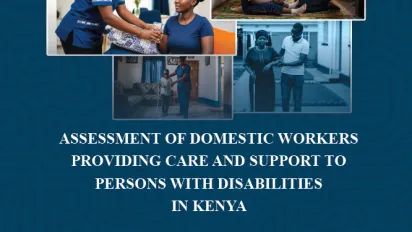
Domestic work is one of Kenya’s largest informal sectors, employing about two million people, primarily women, and providing essential care for persons with disabilities. Despite their crucial role, domestic workers often face low pay, undervaluation, and limited labour protections. A study involving 331 domestic workers and 70 employers in households with persons with disabilities examined how domestic work intersects with disability care. The study explored the extent of care provided by domestic workers (including those with disabilities), the unpaid care responsibilities they carry within their own families, and their overall working conditions. The issue is tied to Kenya’s commitments under the UN Convention on the Rights of Persons with Disabilities (CRPD). Ensuring adequate, sustainable, and high-quality care services is vital for the dignity and independence of persons with disabilities. Poor working conditions for caregivers undermine the realization of these rights.