

Op-ed
Three flaws, one solution: Ending child labour in Indonesia
Dede Shinta Sudono, ILO Project Coordinator for the Realizing Trade Gains Free From Gender Discrimination and Child Labour (RealGains), highlights that behind Indonesia’s improving statistics lies a harsh reality of over one million children hidden in an unregulated, informal economy. This opinion editorial was published by the Jakarta Post on 21 June 2026.
20 June 2026
Every year on June 12, Indonesia joins the global community in marking the World Day Against Child Labour. While official figures show the number of child labourers declining from roughly 1.27 million in 2024 to 1.05 million in 2025 alongside rising school enrollment, reality on the ground tells a harsher story.
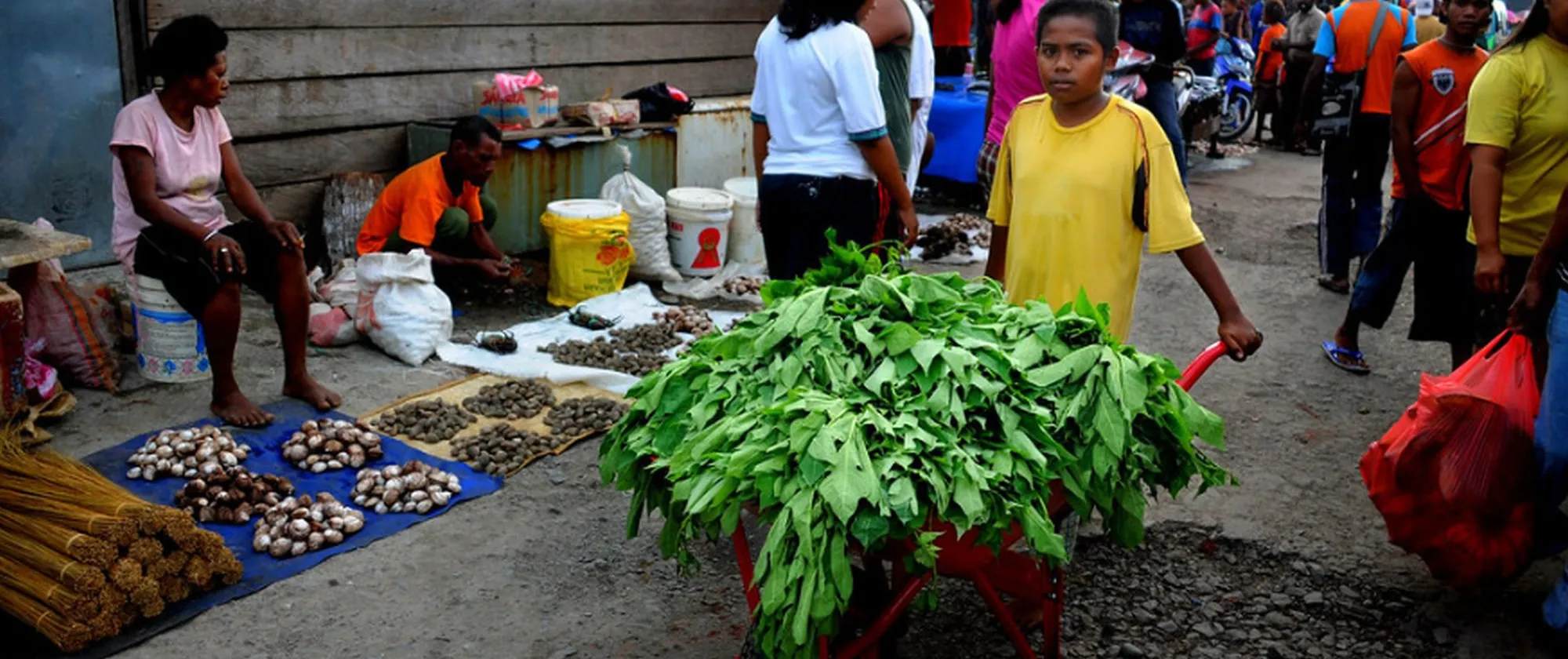
Each day, countless children begin work before sunrise: sweating on plantations, operating within hazardous, unregistered home industries, singing or begging on city streets or scavenging in landfills. Because they operate entirely outside the formal employment system, they remain invisible to the country's protective legal frameworks.
Three systemic bottlenecks prevent Indonesia from eliminating this crisis: endemic informality, fragmented national statistics across ministries and a fundamental lack of institutional coordination.
Critics often argue that informal employment is an inevitable economic cushion for the poor. However, the deepest layer of this ecosystem - often classified as "Tier Three" informal work, where economic activity is entirely unregulated, unregistered and untaxed - is not a mattress of economic flexibility. It is an arena where the state evades its obligation to protect its youngest citizens.
In Indonesia, deep informality breeds willful ignorance. Unregistered child labourers possess no legal identity on the job, stripping them of age certifications, health inspections, workplace safety standards, minimum wage protections or dispute resolution mechanisms. Informality, in short, is an escape from state accountability.
The antidote is the implementation of an affordable, penalty-free data collection mechanism targeting informal workplaces. By bringing these invisible children into the light, the government can effectively deploy targeted interventions, linking registration to conditional cash transfers, education allowances and localized social safety nets. By bridging identification with immediate family assistance, Indonesia can build a tangible pathway out of economic dependency.
Some policymakers claim that data from the National Workforce Survey (Sakernas) conducted by Statistics Indonesia (BPS) is sufficiently precise. But statistics lose their utility when locked behind bureaucratic vaults.
Currently, child labour data cannot be obtained at the village level without navigating multiple, exhausting layers of authorization - stretching from central ministries down to subdistrict offices. Without real-time, localized data, frontline actors like teachers, midwives and village officials are left powerless to act.
Consider the Partnership Action Against Child Labour in Agriculture (PAACLA) project - a promising monitoring, evaluation and remediation system developed under an interagency network led by the National Development Planning Agency (Bappenas) alongside the Women’s Empowerment and Child Protection Ministry. While highly effective in its design, its survival at the grassroots depends entirely on local data access. As long as disaggregated statistics remain gatekept at the top, scaling this vital pilot project remains impossible.
To unlock this potential, two systemic shifts must happen.
First, decentralize and dashboard. All child labour statistics collected by relevant ministries must be disaggregated to the village level, integrated into a unified public dashboard, and released without requiring multilevel bureaucratic permits.
Second, bridge PAACLA to the grassroots. PAACLA’s monitoring and remediation framework must be directly hardwired into this village-level data infrastructure, allowing local leaders to see exactly which households require immediate intervention.
Indonesia has no shortage of bodies tasked with eradicating child labour. Responsibilities span the ministries of manpower, social affairs, education and women’s empowerment, alongside the National Police and local governments. In theory, dividing these responsibilities allows each institution to play to its specific strengths. In practice, it results in siloed data, overlapping jurisdictions and protective turf wars.
Under the current framework, meetings are routine, but synchronized action is rare. A rescued child may receive temporary food assistance from the Social Affairs Ministry yet never set foot in a classroom because the Primary and Secondary Education Ministry or previously the Education and Culture Ministry were never looped into the case. Instead of protecting vulnerable children, this institutional gridlock protects the status quo.
Indonesia urgently requires a centralized coordinating body or an empowered interministerial committee that unites all relevant ministries and local governments under a single, authoritative mandate. Rather than hosting endless discussions, this committee must enforce strict, quarterly performance agreements. Ministries must be held to hard targets, such as the exact number of rescued child laborers successfully reenrolled in school and the number of families provided with sustainable livelihood support.
To ensure accountability, failure to meet these targets should trigger targeted administrative sanctions - such as shifting nonessential travel and administrative budgets away from underperforming ministries and diverting those funds directly into village-level remediation programmes (Dana Desa).
Furthermore, establishing an independent, community-based monitoring mechanism closer to the actual beneficiaries will provide the objective oversight that internal government reports often lack.
The PAACLA model has already proven that coordinated, sector-specific tracking works. The imperative now is to scale this model into other critical, high-risk sectors where the worst forms of child labour persist.
While historical efforts deserve recognition, half-measures will not suffice. Indonesia must deploy a robust, data-driven roadmap today if it genuinely intends to honor its youngest citizens and completely eliminate child labour by its centenary celebration in 2045.
The writer is coordinator of the Realizing Trade Gains Free from Gender Discrimination and Child Labour (RealGains) Project at the ILO Country Office for Indonesia and Timor-Leste. The views expressed are personal.
Related content

Project
Realizing trade gains free from gender discrimination and child labour (RealGains)
Our impact, their voices
More than two decades later, the impact of child labour prevention lives on
World Against Child Labour
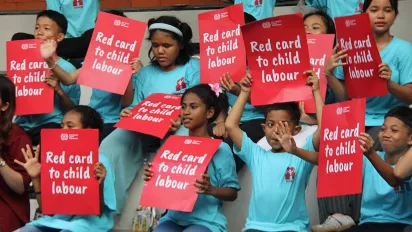
Red card to child labour campaign engages Indonesian youth
Relevant projects
Project
Realizing trade gains free from gender discrimination and child labour (RealGains)