

Our impact, their voices
More than two decades later, the impact of child labour prevention lives on
More than two decades after receiving support through an ILO-backed programme in Indonesia, former street child Abdul Rohim is helping a new generation of children build brighter futures.
23 June 2026
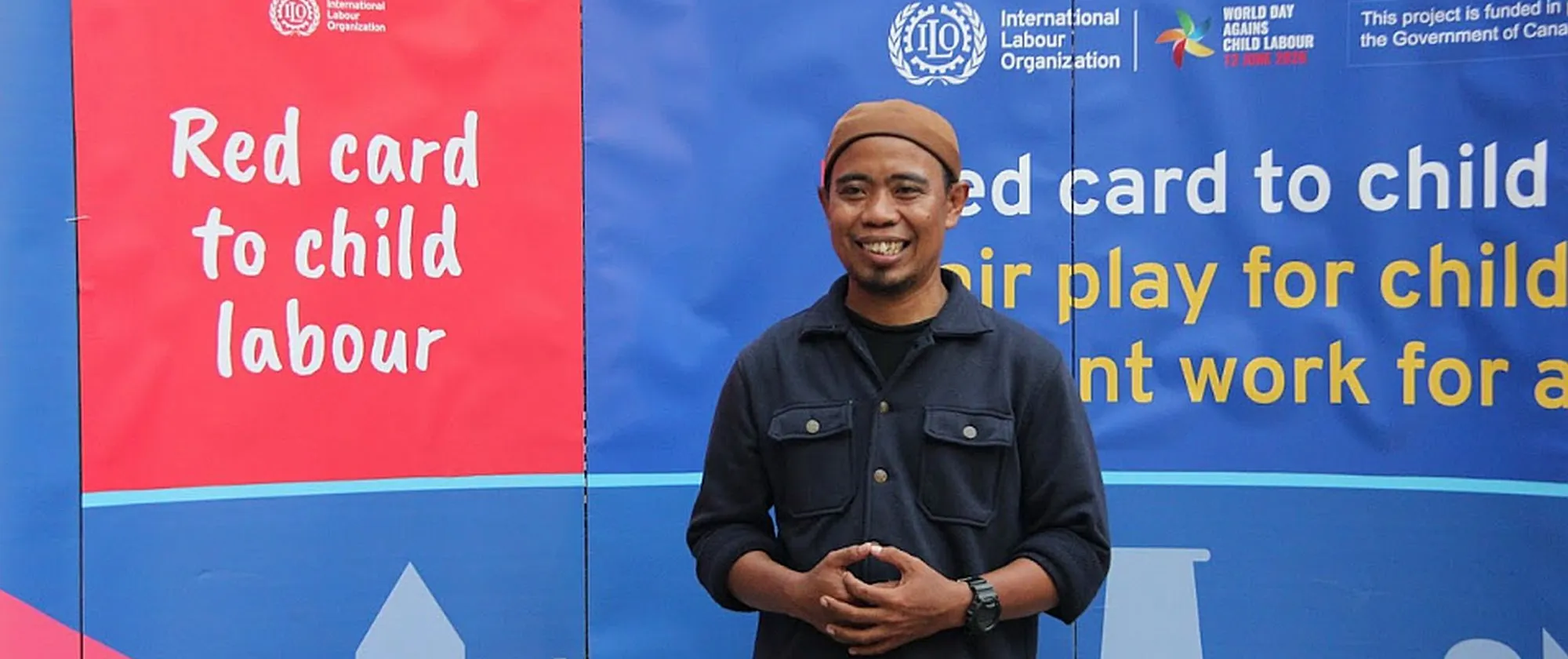
JAKARTA, Indonesia (ILO Story) - Abdul Rohim, now 40, sat quietly on a cemented bench with his youngest daughter, watching with unmistakable pride as a group of children he mentors – street performers like he had been – tuned their tiny ukuleles and hand drums. In the warm late afternoon light at Atma Jaya Catholic University of Indonesia, their voices rose, singing songs they used to sing for spare coins at busy intersections.
Their performance marked the World Day Against Child Labour (WDACL) on 12 June, witnessed by more than a hundred law students, child labour advocates, worker representatives and the ILO Country Director for Indonesia and Timor-Leste, together with her team. For a moment, the campus amphitheatre became a reminder of both the fragility of childhood and the power of second chances.
As the second of six siblings, I had to help support my family from the age of 12... I mostly worked as a street performer. I worked from one in the afternoon until nine at night in East Jakarta, particularly around bus terminals and busy intersections.
Abdul Rohim, a former child labourer, successfully broke the cycle of child labour
For Abdul, the scene brought back memories. More than two decades ago, after joining Yayasan Setia Kawan Mandiri (Sekam Foundation), the ILO’s implementing partner working to withdraw street-connected children from work in Jakarta, he too had stood on similar stages. Supported by the ILO’s International Programme on the Elimination of Child Labour (ILO-IPEC), he and his peers performed during WDACL events, back when the day was first commemorated in 2002.
“As the second of six siblings, I had to help support my family from the age of 12,” he recalled. “I did odd jobs, but mostly I worked as a street performer. I worked from one in the afternoon until nine at night in East Jakarta, particularly around bus terminals and busy intersections.”

His life changed when he joined the Ministry of Social Affairs’ 1998 pilot programme, which shifted from punitive “sweeping” approaches to an empowerment model that prioritized education, skills development and protection from exploitation. In 2003, at the age of 17, he enrolled in a motorcycle servicing training programme supported by the ILO-IPEC, which aimed to prevent children from engaging in the worst forms of child labour.
He left street performing at 18 after becoming a peer facilitator at Sekam Foundation, helping children and families in East Jakarta. He recalls learning from the ILO’s 3R (Rights, Responsibilities and Representation) Trainers’ Kit, an interactive tool for at-risk children and families. Through the programme, he learned how to identify and support children at risk of child labour by working directly with families and communities.
I just want to show that there is always hope. Seeing the changes in these children touches me deeply. They can access education, develop new aspirations and work towards a better future.
To strengthen his skills, he enrolled in a three-year vocational programme in informatics. “I thought I had to break the cycle. I had to improve myself. But at that time, I could not yet focus on my studies. So, after a year, I stepped back and I dedicated myself to helping ensure that no child would go through what I had experienced. I wanted to give them the support I once received,” he said.
When Sekam Foundation partnered with the ILO again from 2009 to 2010 to support street-connected children in East Jakarta, Abdul became one of the peer facilitators who went door to door – mapping needs, conducting assessments, raising awareness, providing educational services and strengthening community capacity.
“I was rejected many times. Some families would not even open the door. They did not think education mattered. Earning money was more important,” he said with a smile. “But I did not give up. I used a heart-to-heart approach. I knew their struggles because I had lived them. I also encouraged parents to sign commitment agreements.”
Giving back to society
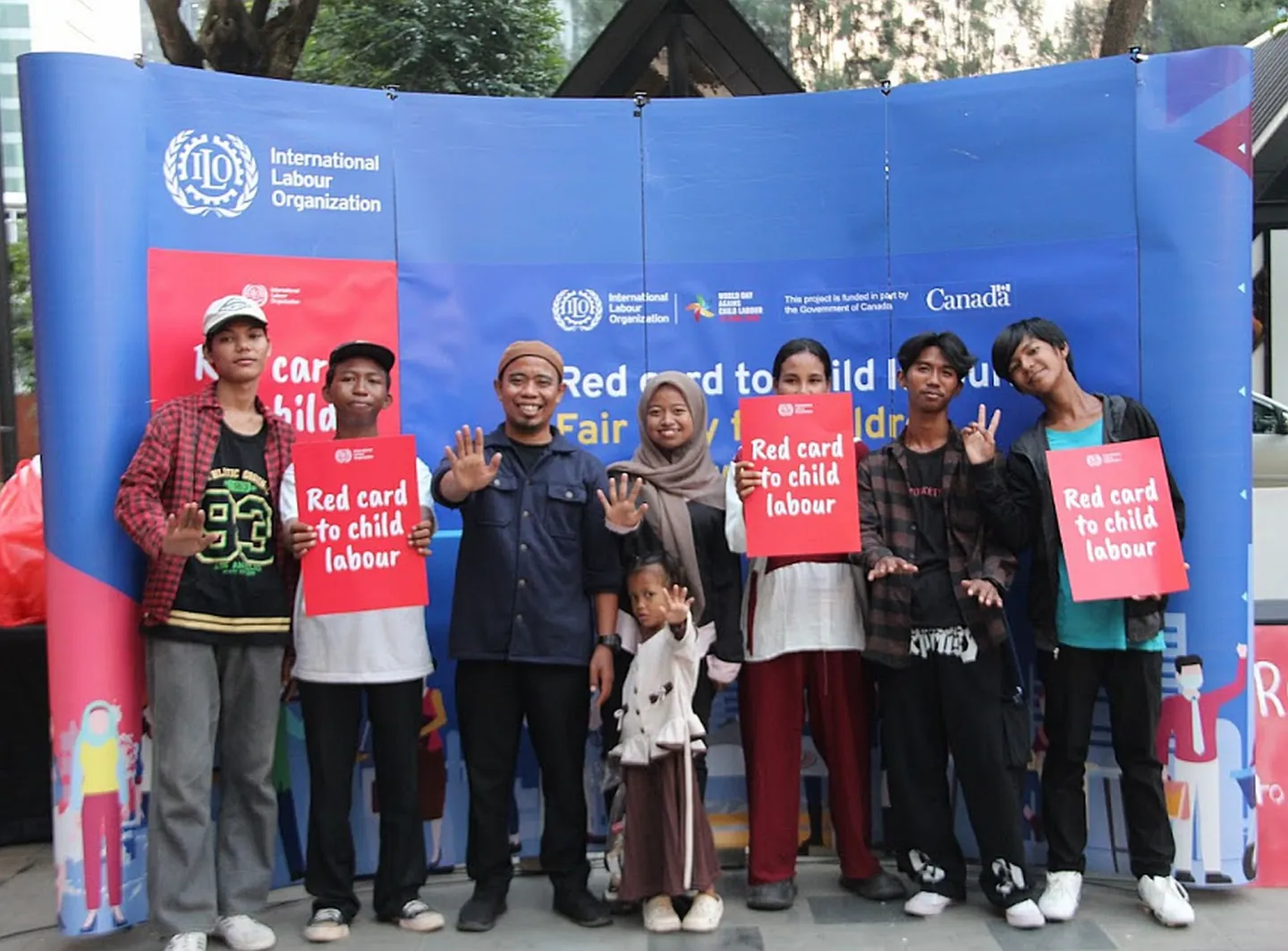
Not content with being only a facilitator, Abdul wanted to do more. In 2010, he founded his own NGO focused on education and skills development for street-connected children. Six years later, he officially registered his NGO under the name ERBE, short for Education, Religion, Bee Entertainment. “I wanted to use ‘Rumah Belajar’, but there were already many. So ERBE became the shortened version of Rumah Belajar.”
With legal status, his network grew. By 2020, his programmes were being recognized by the media. He appeared on national TV and was featured in various publications.
I truly felt the benefits of the ILO programmes. They helped me learn, grow and gain skills. My hope is that through my organization, I can give back by bringing real impact and opportunities to Indonesia’s children.
“I just want to show that there is always hope,” he said. “Seeing the changes in these children touches me deeply. They can access education, develop new aspirations and work towards a better future.”
After marrying in 2017, Abdul returned to higher education a year later. Supported by his wife, who had volunteered in child labour programmes as a university student and now serves as one of ERBE’s trainers, he enrolled in a social welfare programme at Binawan University and graduated in 2024, fulfilling a long-held ambition.
Today, as a father of three, Abdul sees every street child as a reflection of his own journey.
“I truly felt the benefits of the ILO programmes,” he shared. “They helped me learn, grow and gain skills. My hope is that through my organization, I can give back by bringing real impact and opportunities to Indonesia’s children.”
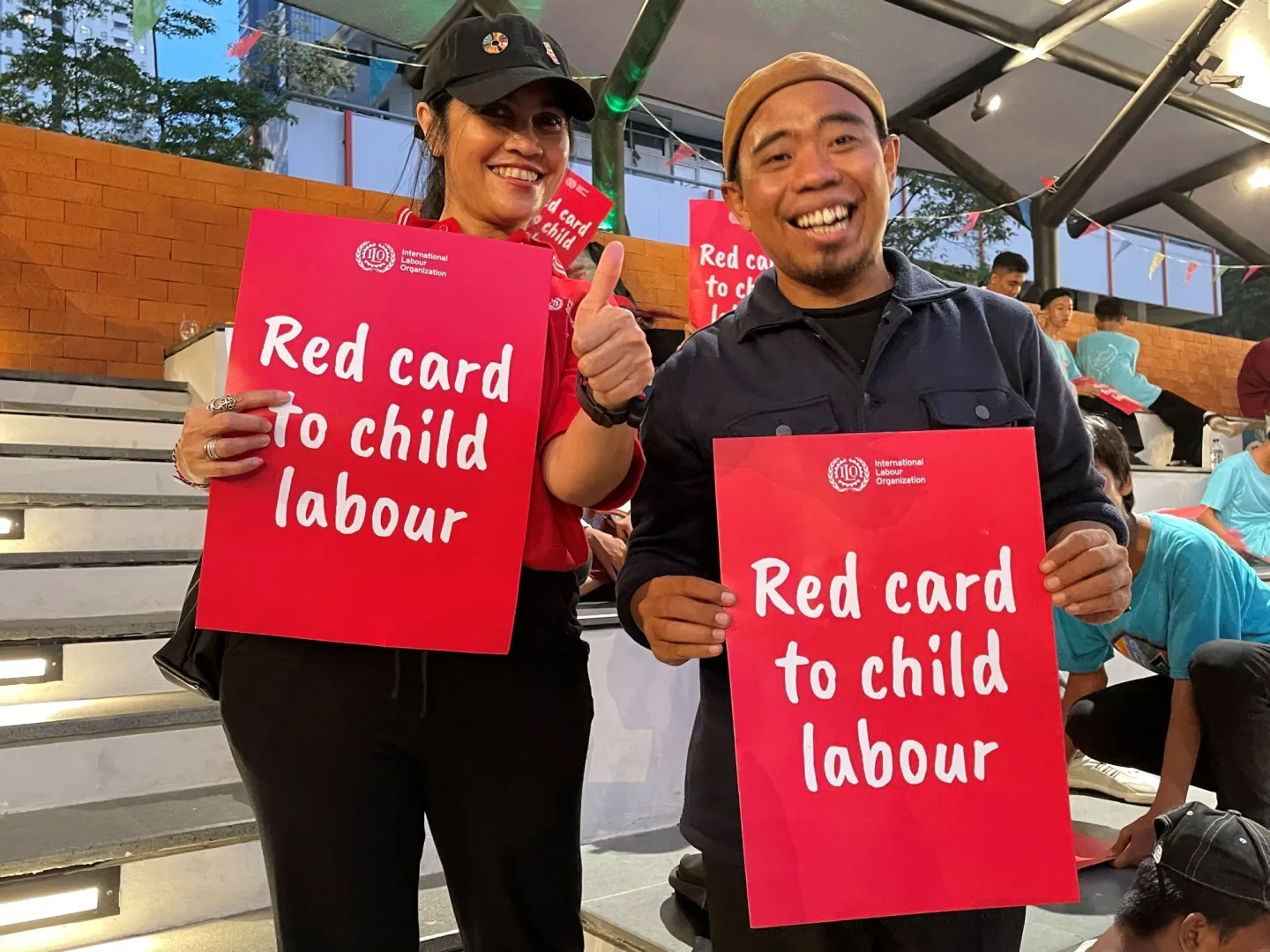
As Abdul reflected on his journey, those who had supported him in his early years saw his story as an example of the lasting impact of sustained support. Dede Sudono, Project Coordinator of the ILO’s Realizing trade gains free from gender discrimination and child labour (RealGains), was among those who worked closely with Abdul when he was a child. At the time, Dede served as an ILO-IPEC Project Officer.
“Abdul is living proof of what can happen when a child receives dignity, opportunity and consistent support,” Dede said. “The ILO’s programmes gave him the space to learn, grow and rebuild his confidence. What makes his story remarkable is how he has used that support to help others, turning his own experiences into opportunities for children in his community. That is the kind of change that lasts.”
Abdul is living proof of what can happen when a child receives dignity, opportunity and consistent support.
Dede Sudono, Project Coordinator of the ILO’s Realizing trade gains free from gender discrimination and child labour (RealGains) project
Related content

Project
Realizing trade gains free from gender discrimination and child labour (RealGains)
World Against Child Labour
Red card to child labour campaign engages Indonesian youth

Op-ed
Three flaws, one solution: Ending child labour in Indonesia
Relevant projects
Project
Realizing trade gains free from gender discrimination and child labour (RealGains)