

Pilot Initiative for Integrated Local Development
An example of integrated local development through Employment Intensive Investment in Tunisia
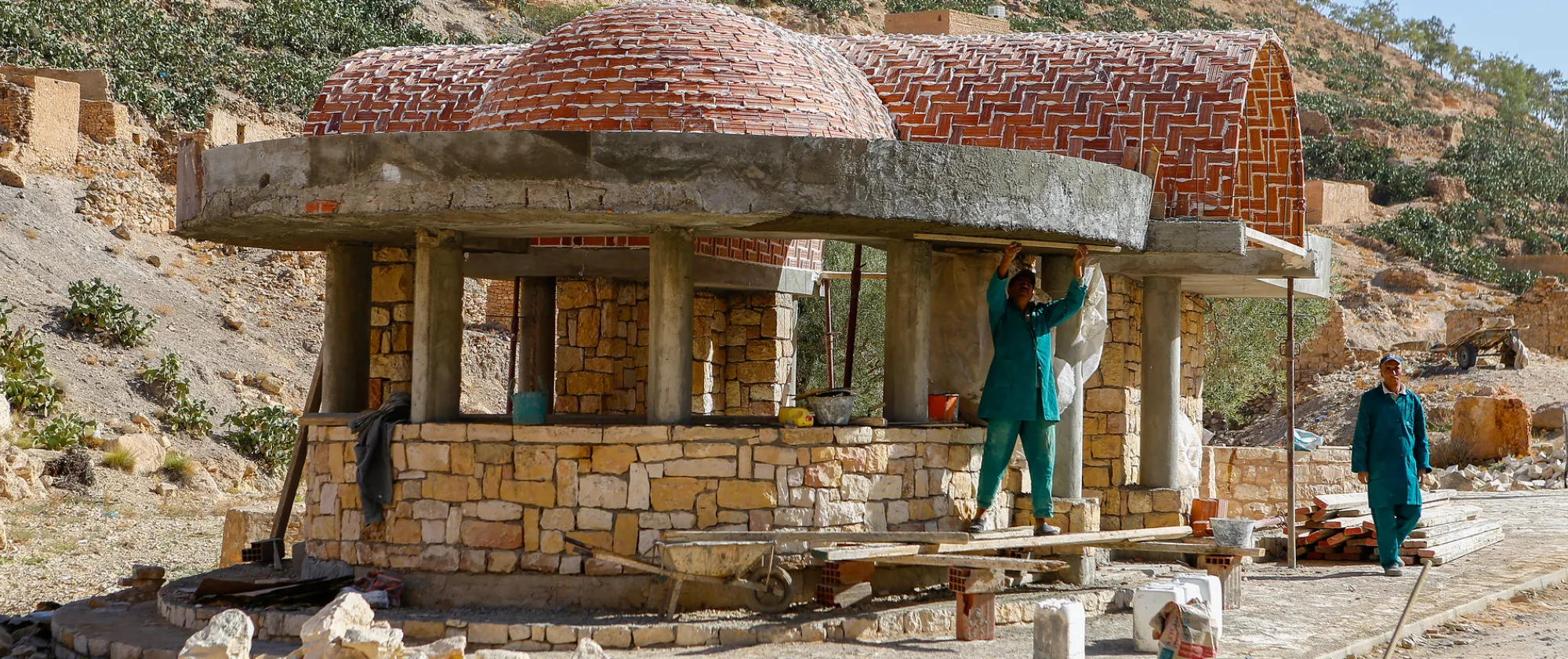
Rehabilitation works in the village of Sned Jebal draw on local resources to preserve cultural heritage, boost economic growth and enhance livelihoods.
7 February 2025
Tunis (ILO News) - The “Pilot Initiative for Integrated Local Development” (IPDLI) in Tunisia exemplifies the ILO's commitment to social justice and decent work through integrated local development. By leveraging the Employment Intensive Investment (EII) approach, the project not only preserves cultural heritage but also stimulates economic growth, creates employment, and improves local livelihoods.
The project of the functional rehabilitation of the Berber village of Sned Jebal demonstrates how investments in infrastructure, heritage conservation, and skills development can transform rural communities while reinforcing their resilience to socio-economic and environmental challenges.
A strategic intervention for sustainable development
Nestled in the mountains of the governorate of Gafsa in Tunisia, Sned Jebal is a historic Berber village known for its troglodyte dwellings, stunning landscapes, and rich cultural heritage. This remote community, home to a few dozen families, has preserved centuries-old traditions, including unique architectural techniques and olive oil production methods.
Despite its historical and cultural significance, Sned Jebal faces economic and environmental challenges, including rural exodus, limited economic opportunities, and climate change impacts on agriculture. While the village has gained recognition through its International Festival of Caves, many residents struggle to find sustainable livelihoods.
To address these challenges, the functional rehabilitation of Sned Jebal aims to preserve its cultural identity, improve infrastructure and living conditions, and boost economic opportunities through tourism and local crafts. By integrating heritage conservation with sustainable development, the initiative seeks to revitalize the village while ensuring the well-being of its inhabitants.
The ILO’s engagement in Sned Jebal began with a preliminary assessment to map out the village’s unique cultural and economic assets. This study identified three key areas of intervention:
- Cultural Heritage Preservation
The village, home to ancient troglodyte dwellings and an olive oil mill with a traditional camel-powered press, represents a significant part of Tunisia’s heritage. A key intervention involved restoring the ancient mill’s ceiling using cypress branches, a nearly lost technique. By sourcing materials from the village and its close neighbouring communities, and involving skilled local artisans, the project successfully revived traditional construction methods, ensuring the preservation of local knowledge and skills. - Infrastructure Enhancement for Economic Growth
Improved accessibility was a crucial component of the intervention. The project included:- Road rehabilitation, ensuring year-round access to the village while protecting a symbolic centuries-old olive tree by carefully rerouting the road.
- Restoration of stairways leading to the caves and historic sites.
- Construction of essential amenities to support local tourism and improve community well-being
- Economic Development and Employment Creation
By enhancing tourism infrastructure, the project directly boosted local economic activity. In parallel, the ILO introduced worksite schools where local workers received training in construction, restoration, and craftsmanship. This initiative generated sustainable employment by equipping workers with certified skills, facilitating job placement both locally and internationally. Some trainees secured microfinance loans to start their own businesses, while others found employment opportunities abroad.
- Strengthening decentralized governance by empowering local communities to lead development efforts.
- Promoting social inclusion by involving vulnerable groups, local businesses, and public institutions in economic revitalization.
- Maximizing local resources by employing local labour, utilizing indigenous materials, and reviving traditional techniques – core principles of the EII approach.
Related content
Topic portal
Employment-intensive investment

Project IPDLI
Pilot initiative for integrated local development
Relevant projects
Project IPDLI
Pilot initiative for integrated local development