

Safer farms, stronger futures: ILO empowers Kenya’s castor farmers
Workers and farmers are exposed to several occupational hazards and risks at the farming and aggregation stages of the castor supply chain. Sharp tools, toxic sap, handling of heavy loads, awkward postures, repetitive movements and hazardous pesticides were among the main sources of occupational safety and health problems. That is now beginning to change, thanks to a new training programme led by the International Labour Organization (ILO) in partnership with Eni S.p.A.
30 July 2025

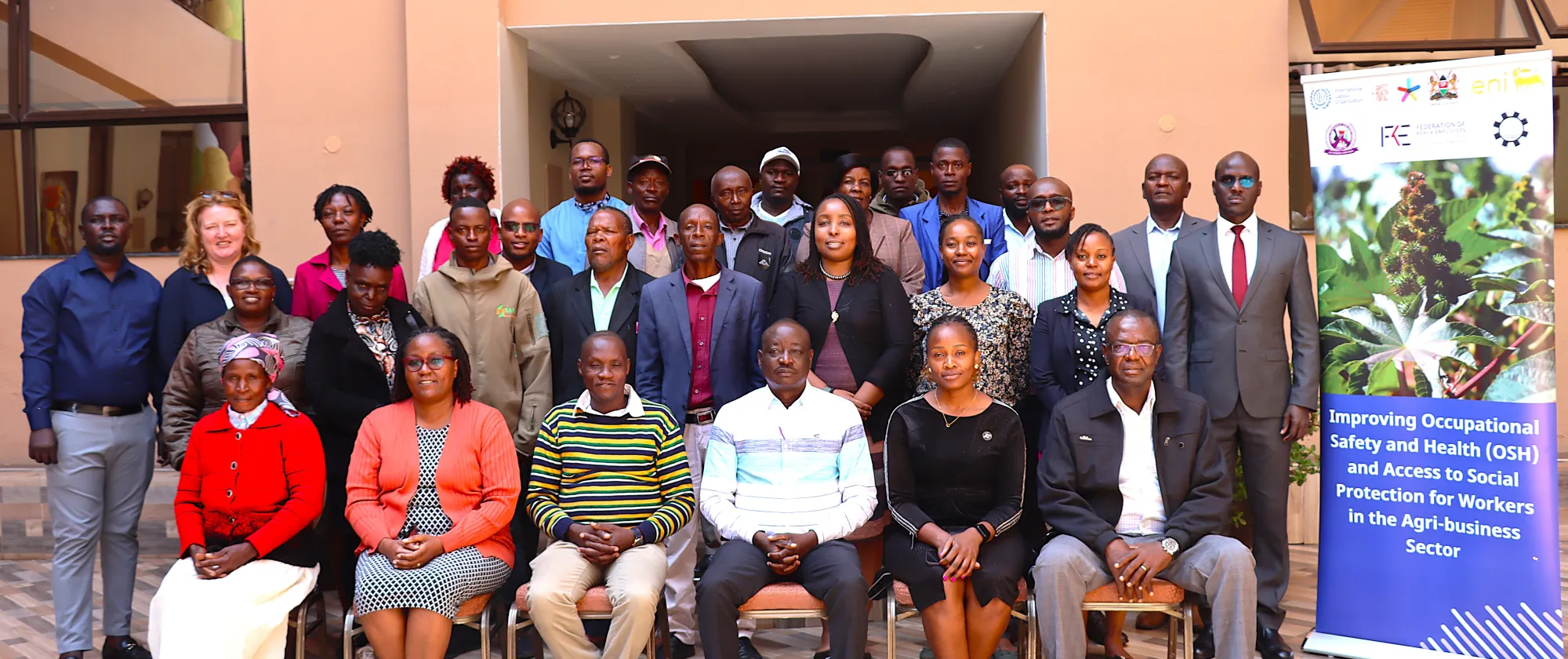
Nakuru County, Kenya - Between 23 and 27 June 2025, 31 farmers, employers, union leaders, and government officers at the national level and from Nakuru, Laikipia, and Makueni counties gathered in Naivasha for a transformative five-day training. Using the ILO’s globally recognized Work Improvement in Neighbourhood Development (WIND) methodology, participants learned how to identify risks and implement simple, practical and low-cost (affordable) safety solutions tailored to their farms.
Instead of just lectures, participants walked through castor fields, spotting hazards and testing safer practices. They introduced proper storage for tools and chemicals, experimented with simple hand protection, and reorganized workflows to prevent injuries. By the end of the week, each participant had drafted a concrete action plan for improving safety and health on their farms, within their institutions, and in their communities.

For farmers like Eliud Njoroge from the Uzima Weru Self-Help Group, the training was eye-opening:
I used to believe accidents were normal on the farm. The training has shown us simple and affordable ways to stay safe, and we are determined to share these lessons with others.
The impact extends beyond safety and health at work. Farmers were also linked to social protection schemes, including the National Social Security Fund (NSSF) and the Social Health Insurance Authority (SHA), giving them new opportunities to safeguard both their health and livelihoods. For many smallholder farmers, this was the first step toward inclusion in Kenya’s formal protection systems.
The initiative is part of the broader ILO–Eni project on occupational safety, health, and social protection in the agro-industry, with the potential to reach over 80,000 castor farmers nationwide. By creating a network of trainers, the programme ensures that knowledge cascades to thousands more farmers, multiplying its impact.

Local leaders and policymakers have already pledged support. “The WIND training is powerful because it is practical,” said Nakuru County Director of Agriculture, Charles Githiri. “Farmers can start implementing changes immediately with the resources they already have. This not only saves lives but also strengthens the castor value chain.”
Dr. Andrew Muruka, Director of the Directorate of Occupational Safety and Health Services (DOSHS), reinforced the government’s commitment: “DOSHS will work closely with stakeholders to implement these action plans and scale the model to other regions and sectors.”
ILO National Project Coordinator Hellen Magutu Amakobe summed up the ambition: “The training is not just about knowledge transfer, it’s about creating champions of safety and health who will carry these lessons forward, transforming communities and workplaces across Kenya.”

Every year, poor workplace safety and health practices claim over 3 million lives worldwide. By bringing global solutions like WIND directly to the grassroots, the ILO is ensuring that farmers in Kenya’s castor sector can work not only productively but also safely, with dignity, and with access to the protections they deserve.
Related content

Safety + Health for All
Improving Occupational Safety and Health and Access to Social Protection for Workers in the Agri-Business Sectors

ILO/ENI Project
Stakeholder forum on the assessment of the drivers and constraints for OSH improvement and social protection of workers in the castor value...

Safety + Health for All
Improving Occupational Safety and Health and Access to Social Protection for Workers in the Kenyan Agri-Business Sector