

ILO/ENI Project
Stakeholder forum on the assessment of the drivers and constraints for OSH improvement and social protection of workers in the castor value chain in Kenya
14 November 2024
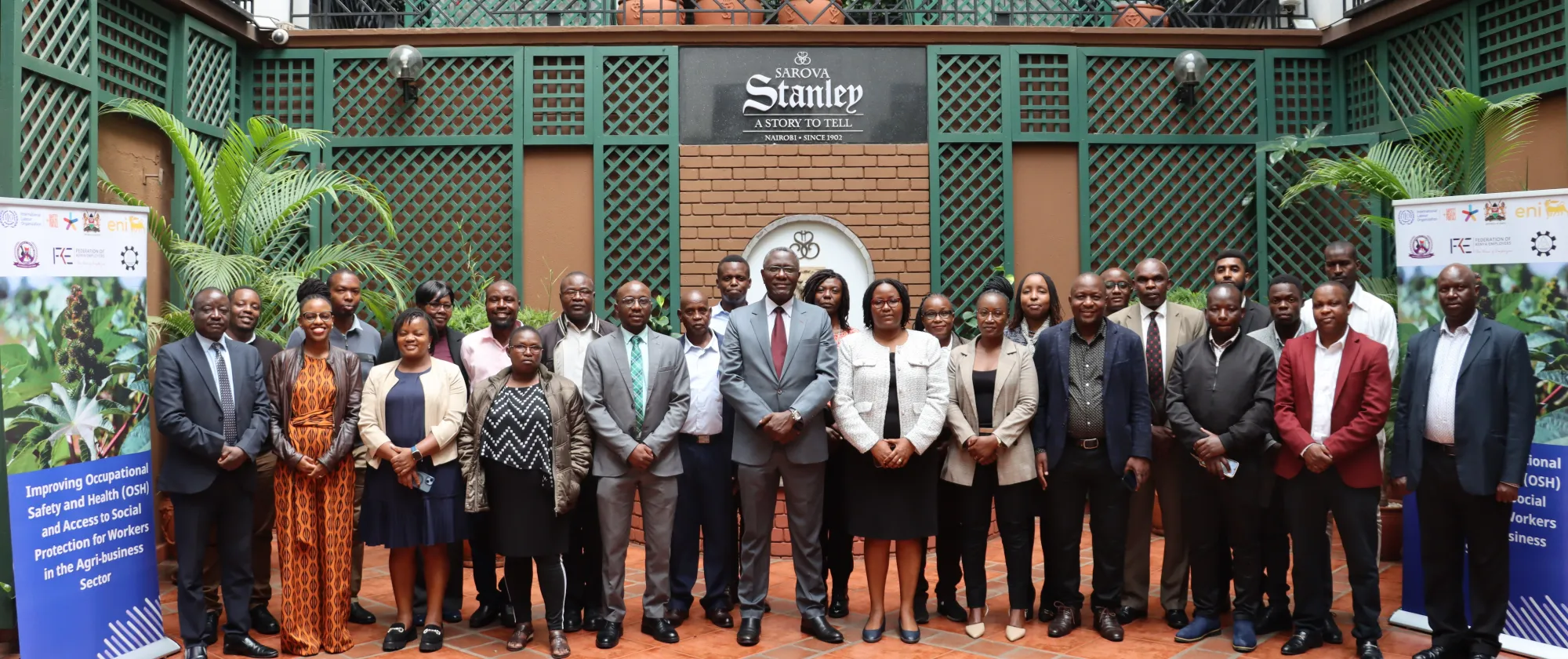
ILO News (Kenya) The International Labour Organization (ILO) convened a stakeholder workshop on 7th November 2024 towards the implementation of a project focusing on improving occupational safety and health (OSH) and expanding social protection access for workers in the agri-business sector in Kenya. The workshop, held at Nairobi's Sarova Stanley Hotel represents a vital step in a Public-Private Partnership funded by the Italian energy company Eni S.p.A. implemented by the ILO.
This initiative aligns with ILO’s commitment to providing safe working environments and social protections as part of the ILO flagship programmes on Safety + Health for All and Building Social Protection Floors for All, leveraging the market systems for Decent Work methodology. It addresses workplace risks in the agri-business sector, where hazards such as hazardous machinery, pesticide exposure, dust, high heat, and ergonomic hazards remain prevalent, particularly for smallholder farmers and temporary workers. The initiative will also contribute to the expansion of social protection to workers in the castor value chain, to address some of the financial and practical barriers faced by workers and farmers in effectively accessing social protection.
The ILO conducted an ‘Assessment of the Drivers and Constraints for OSH Improvement and Social Protection of Workers in the Castor Value Chain in Kenya’ between May and August 2024. The assessment identified key areas within the castor value chain that pose safety and health risks and identified barriers to improving and accessing social protection amongst workers and farmers. It also highlighted groups of farmers - smallholders - and workers - often seasonal and temporary labourers - who are at the highest risk yet have limited resources to address the challenges they face. The assessment was summarized in a report detailing the findings and recommendations.

The assessment findings were presented to ILO constituents, including stakeholders engaged in the assessment, at a preliminary meeting in Naivasha on October 29-30, 2024. Based on the feedback from this initial presentation, the project team organized a wider stakeholder workshop in Nairobi bringing on board county representation to validate the findings and refine strategies for addressing identified risks and constraints.
The wider stakeholder workshop brought together representatives from the Government of Kenya agencies, the Directorate of Occupational Safety and Health Services (DOSHS), National Social Protection Secretariat, Ministry of Agriculture and Livestock Development, National Social Security Fund, Social Health Authority, ENI S.p.A, Federation of Kenya Employers, the Central Organization of Trade, the Aggregators and Cooperatives among other key stakeholders. These participants provided insights and recommendations to further strengthen the project’s approach to enhancing workplace safety and expanding social protection coverage in the castor value chain and by extension the agri-business sector.
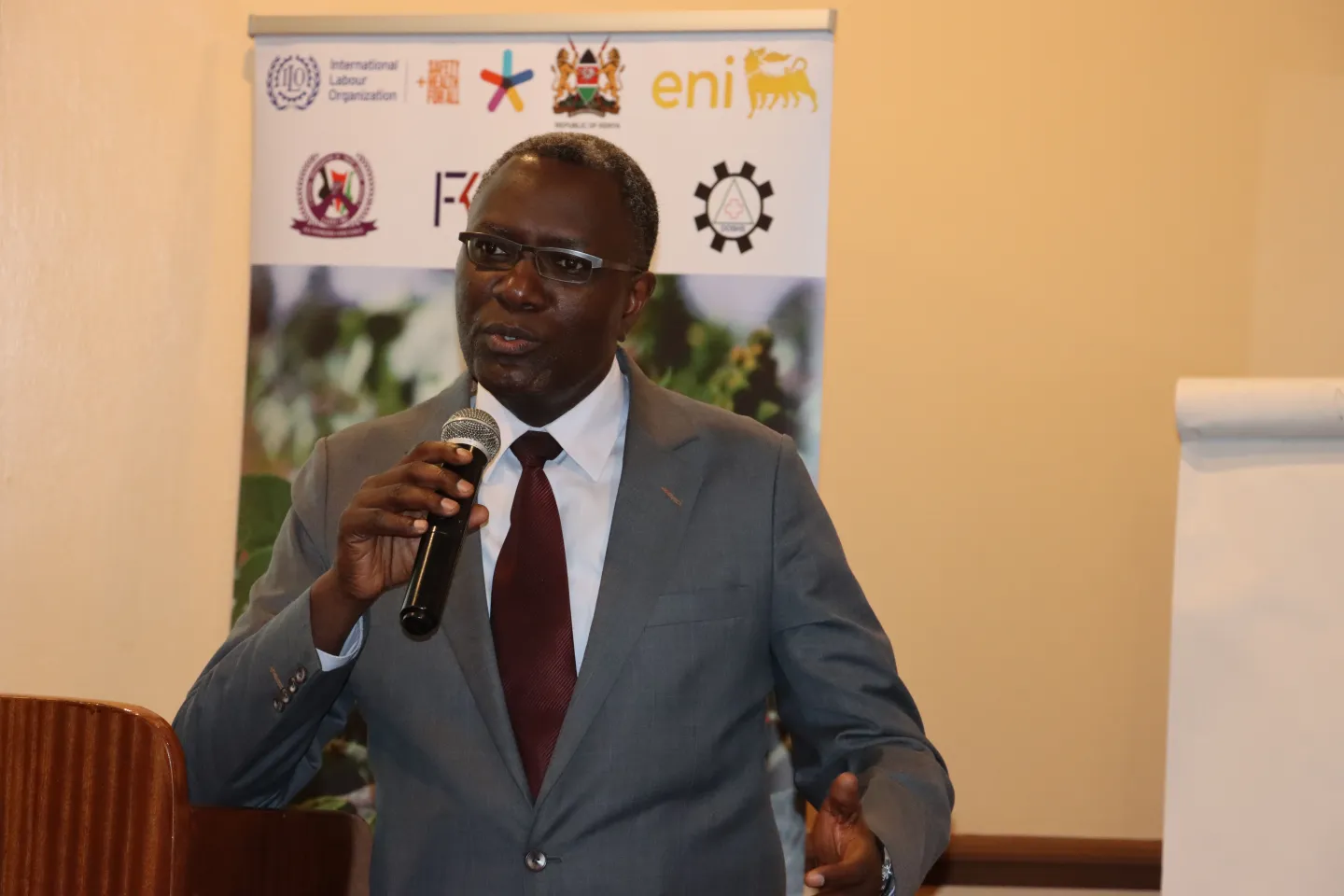
"The agricultural sector and its value chain contribute nearly 40% of Kenya's GDP, underscoring its vital role in our economy. For the small-scale farmers working in castor oil and other sectors, access to occupational safety, health protection, and social protection is essential. Kenya is committed to establishing systems that protect all workers, and we hope this project will create a ripple effect, enhancing safety and well-being across the entire agricultural sector," said OSH Secretary, Dr Musa Nyandusi during the forum.
Using insights from the national assessments, the project will soon initiate a range of activities aimed at empowering local employers, producers, and supporting functions to establish robust OSH practices. These activities will include comprehensive training sessions focused on preventing occupational risks and promoting workplace safety and health. The project also aims at expanding access to social protection within the value chain and particularly amongst small-holder farmers and farm workers. Under the project, these objectives will be achieved through the implementation of integrated approaches that aim to strengthen coordination and synergies between OSH and social protection.
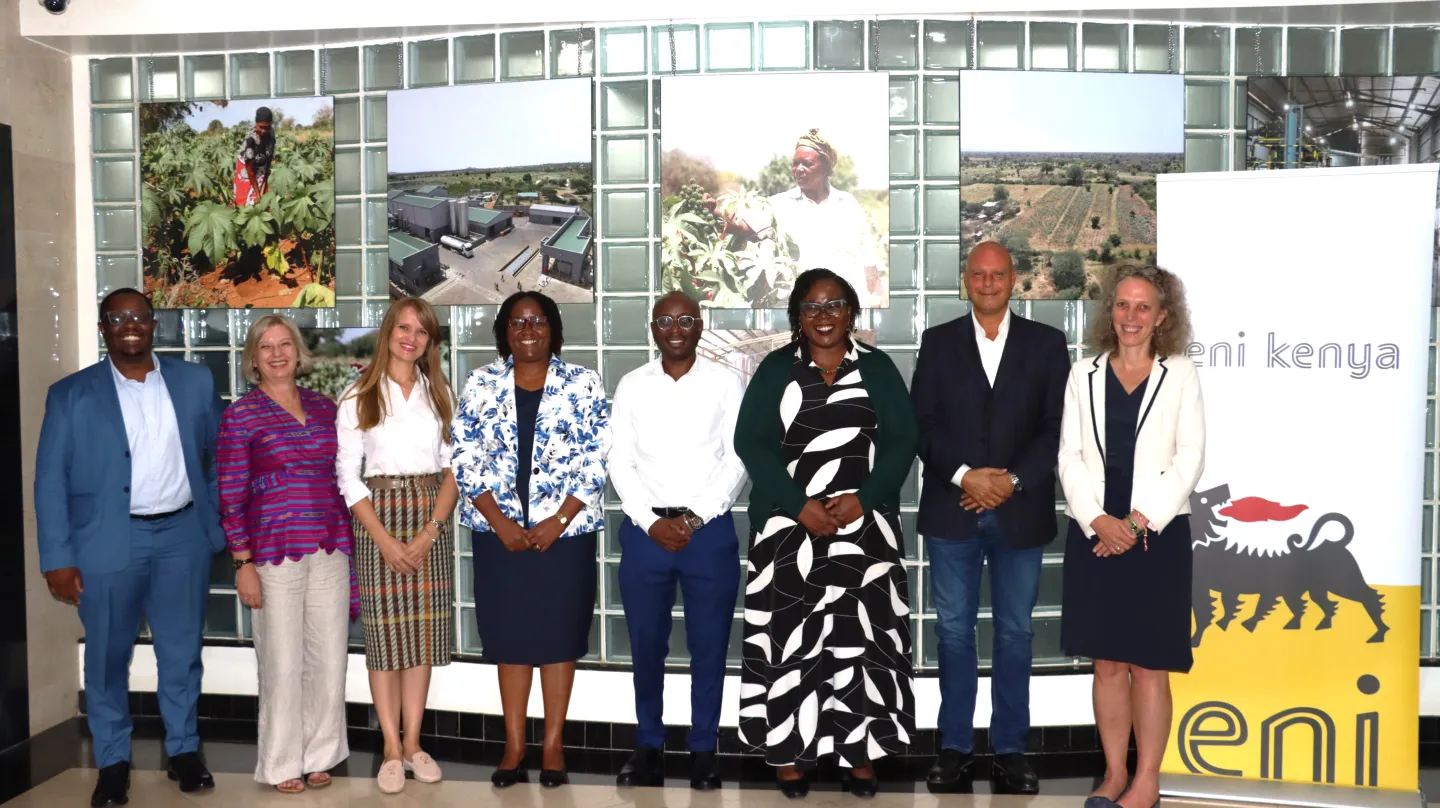
The ILO’s commitment to promoting decent work and enhancing social justice through safe working conditions and increasing access to social protection aligns with the Kenya government’s Vision 2030 and contributes to the recently adopted Strategy on the Extension of Social Protection Coverage to Workers in the Informal and Rural Economy in Kenya. This initiative also dovetails with Eni S.p.A ongoing work since 2021 to create a sustainable biofuel value chain. In collaboration with about 80,000 farmers and other actors in the agro-industry, Eni and ILO’s joint efforts aim to sustainably improve OSH practices and access to social protection across Kenya’s agriculture sector.
If successful, the strategies and frameworks developed through this project could serve as a model for future initiatives, expanding into other regions with similar needs in the agri-business sector. Ultimately, this initiative contributes toward the ILO’s overarching mission to ensure that all workers can work in environments that prioritize their health, safety, and access to social protection.
Through partnerships like this, the ILO remains steadfast in its mission to promote safe, healthy, and fair working environments as a cornerstone of sustainable development. With Kenya’s agri-business sector growing rapidly and climate challenges mounting, this project represents a timely and impactful intervention that could drive meaningful change and enhance workers' well-being.
Related content

Thursday, 24th October 2024, Nairobi-Kenya
Project Launch Event for "Extending Social Protection Coverage to Workers in the Informal Economy in Lao PDR and Kenya and Leveraging...
NSPS, ILO and FAO lead initiative to extend social protection to informal and rural workers in Kenya

Social Protection
Empowering Kenya Workers from the Informal and Rural Economy on Inclusive Social Protection