

Climate change
Protect workers, farmers from excessive heat
Heat poses severe risks to Siargao’s farming communities, which calls for the need to protect the most vulnerable and prevent heat-related illnesses and injuries.
11 March 2025
SIARGAO, Philippines (ILO News) - As temperatures rise due to climate change, more people are likely to experience heat stress at work. To keep workers safe from the dangers of too much heat, anticipatory action is important to plan using forecasts, early signs, and pre-disaster risk analysis.
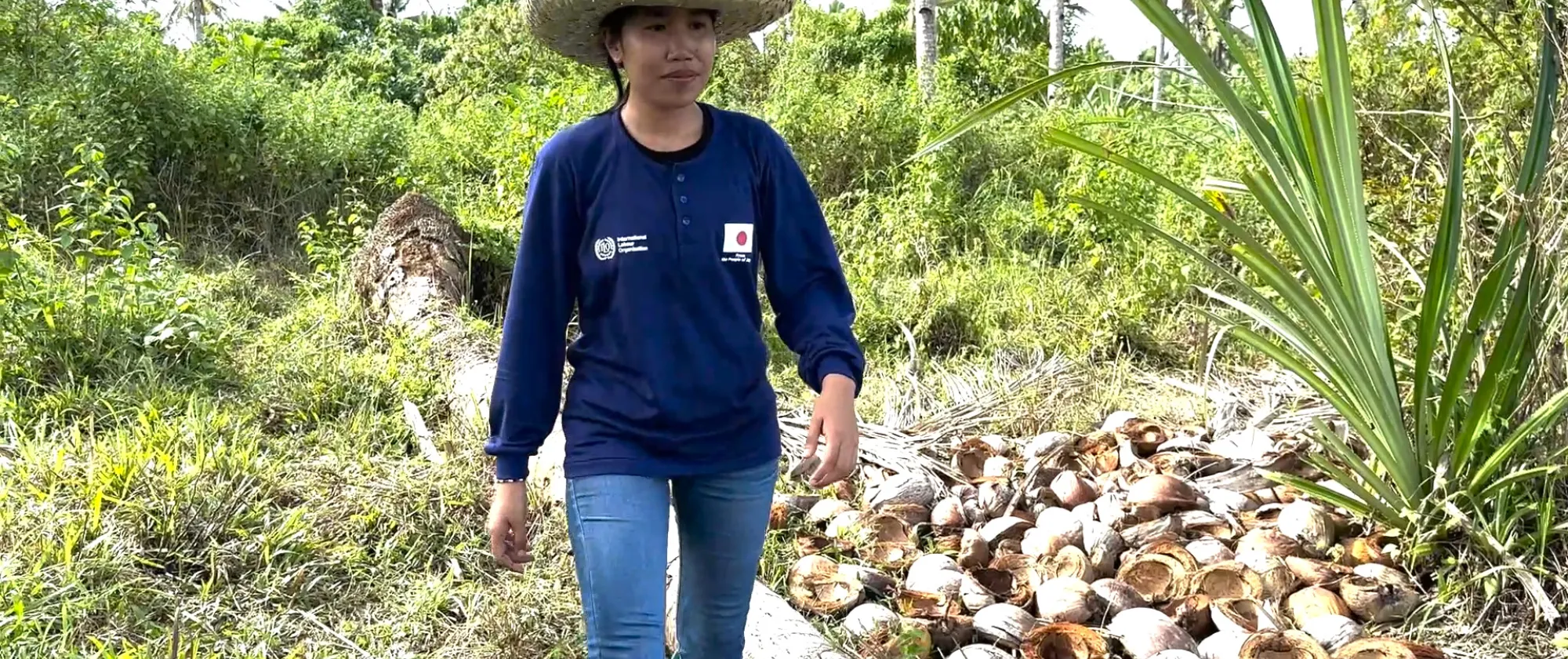
Darlyn Lawag, a 24-year-old from Siargao Island, understands the challenges firsthand. “As a daughter of a farmer, we do not know when we will plant due to changing weather brought about by climate change. We do not know the possibility of what extreme heat will bring. Like now, it is too hot, which can affect our harvests,” she said.
The uncertainty of weather patterns has left her family struggling to make ends meet. “We do not know where to get our daily expenses. Sometimes, we just combine the only food left from morning to afternoon just to get by due to lack of financial resources to spend.”
Darlyn is one of the young workers engaged by the International Labour Organization (ILO) to monitor coconut farms and ensure the use of personal protective equipment (PPE) like long-sleeve shirts and buri hats.
“I visit the farms to ensure that workers are wearing their personal protective equipment while planting, prioritizing their safety. With the changing weather, we are also supported by social protection and health insurance given climate change, which is a significant help since my parents’ farming income is not enough,” she explained.

Anticipatory action, along with occupational safety and health (OSH) measures and social protection are crucial to prevent illnesses or injuries from excessive heat.
According to an ILO report, enhanced safety measures could save up to $361 billion globally in lost income and medical treatment expenses.
The report, Heat at Work: Implications for Safety and Health, warned that heat stress is an invisible and silent killer, causing nearly 19,000 deaths annually and exposing over 70 percent of the global workforce to excessive heat at some point during their work.
Heat stress is an invisible and silent killer that can quickly cause illness, heatstroke or even death. Over time it can also lead to serious heart, lung and kidney problems for workers based on the report.
Data revealed that regions previously unaccustomed to extreme heat will face increased risks, while workers in already hot climates will confront ever more dangerous conditions.
In Asia and the Pacific, workplace exposures to excessive heat were above the global average, affecting 74.7 percent of the workforce.
The ILO estimates that low- and middle-income economies are particularly most affected, as the costs of injuries from excessive heat in the workplace can reach around 1.5 per cent of national GDP.
As the impact of heat on workers worldwide is fast becoming a global issue, urgent action is needed to protect those most vulnerable to the dangers of excessive heat.
Relevant projects

Sustainable enterprises
Rebuilding better coconut economy: Integrated inclusive recovery model from Super Typhoon Rai (Odette) and overlaying crises

Informal economy
Rise from multiple crises through the integrated formalization of informal economy with social protection and decent work in the...