

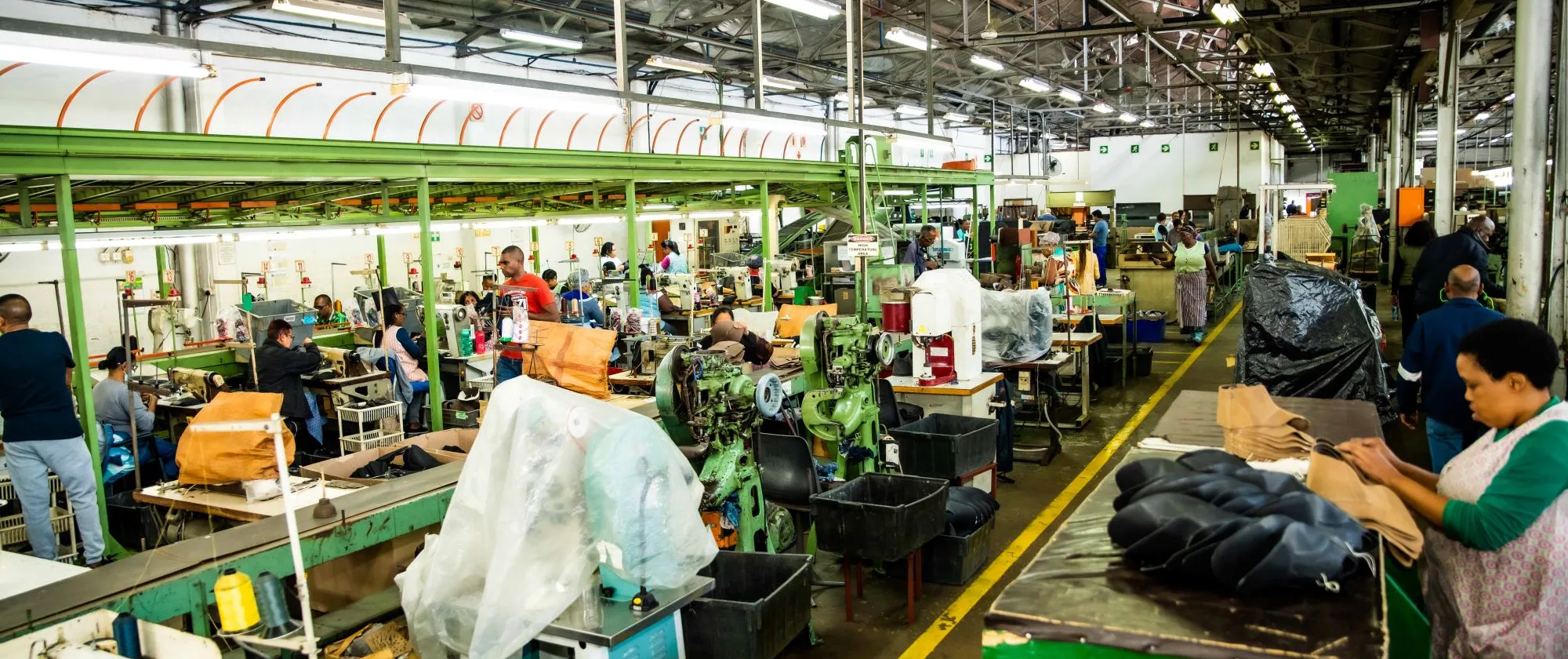
Productivity insights to strengthen and advance Decent Work in South Africa
ILO support enhances productivity measurement to inform evidence-based reforms.
5 December 2025
South Africa, Johannesburg (ILO News) - Productivity SA has released its Productivity Statistics 2025, marking an important step in strengthening the country’s capacity to track productivity trends and support policies that foster inclusive, job-rich growth.
This year’s publication presents the results of close collaboration between Productivity SA, national institutions like Statistics South Africa (Stats SA) and the South African Reserve Bank, social partners, and the International Labour Organization (ILO) through the Productivity Ecosystems for Decent Work programme.
This cooperation focused on improving the quality, depth, and policy relevance of productivity statistics. New approaches to measuring labour quality, multifactor productivity, and sector-level performance now provide a clearer and more accurate picture of how the economy is evolving, and what is needed to support decent work and competitiveness.
During the launch, Acting Chief Executive Officer, Ms. Amelia Naidoo highlighted the importance of this shift, noting:
This approach helps us answer key questions that matter for policy direction and decision-making. It allows us to better streamline interventions that support solution-driven policies.
A challenging productivity landscape
Despite moments of progress, South Africa’s productivity performance has remained subdued over the past two decades. Labour productivity gains have been modest and uneven, while multifactor productivity has weakened, reflecting declining efficiency in the use of labour and capital. These trends have contributed to slow economic growth, high unemployment, and pressure on wages and living standards.
The updated statistics introduce refined methods that capture not only the quantity of labour, but also its quality, including skills, education, occupation, and formality. This deeper analysis shows that while the workforce has expanded, labour quality has not improved at the pace required to sustain productivity growth. In some sectors, quality has declined, revealing a growing need for investment in skills development and workplace capabilities.
How is the ILO contributing
The ILO’s Productivity Ecosystems for Decent Work programme is supporting South Africa to develop a stronger, more coherent productivity measurement system. This includes:
- Modernising methodologies for labour, capital, and multifactor productivity.
- Introducing quality-adjusted labour input indicators that reflect changing workforce characteristics.
- Enhancing the statistical capacity of national institutions to produce reliable and internationally aligned data.
- Supporting the use of productivity findings to inform policies on employment, skills, wages, industrial development, and enterprise support.
- Strengthening sector-level diagnostic and intervention processes in collaboration with government, employers, and workers.
These efforts ensure that productivity data is not only more accurate, but also more actionable, enabling decision-makers to design solutions that support competitiveness while expanding opportunities for decent work. As Executive Manager for Research, Innovation and Statistics, Ms. Lalane Janse van Rensburg, reminded stakeholders:
This is not just data. It is information you can use to think about the role each of us can play in South Africa’s productivity journey.
Emerging results and significance
The enhanced statistics provide new insights into how productivity differs across sectors, how labour quality is evolving, and how capital investment interacts with output and employment. This evidence helps to identify where structural bottlenecks persist, where reforms are most needed, and which sectors offer the strongest potential for job-rich growth.
The work has also strengthened dialogue among government, employers, and workers around the shared objective of building productive, resilient, and fair workplaces. Improved measurement tools are supporting discussions on wage trends, investment needs, and the links between productivity, job creation, and enterprise sustainability.
Looking ahead
The ILO will continue to support South Africa in expanding its productivity measurement framework and deepening the use of data across national and sectoral planning processes. Future work will focus on increasing disaggregation, strengthening sector-level ecosystems, and ensuring that productivity improvements translate into better quality jobs and more dynamic enterprises.
Robust, reliable productivity insights are essential for steering the country toward inclusive growth and decent work. Through sustained collaboration, South Africa is building the foundations needed to link productivity, competitiveness, and social justice more effectively.
Productivity Ecosystems for Decent Work is a global programme of the International Labour Organisation (ILO), funded by the Governments of Switzerland and Norway. In South Africa, it aims to address constraints to productivity growth and promote decent work in the automotive and in the leather and footwear sectors
Relevant projects
Productivity
Productivity Ecosystems for Decent Work Project

Productivity Ecosystems for Decent Work
Productivity Ecosystems for Decent Work Programme Ghana