

Productivity
Productivity dialogue drives action on jobs in South Africa
A national tripartite+ symposium in Johannesburg brings together key stakeholders to advance a shared agenda linking productivity growth with decent work and inclusive economic development in South Africa.
19 March 2026
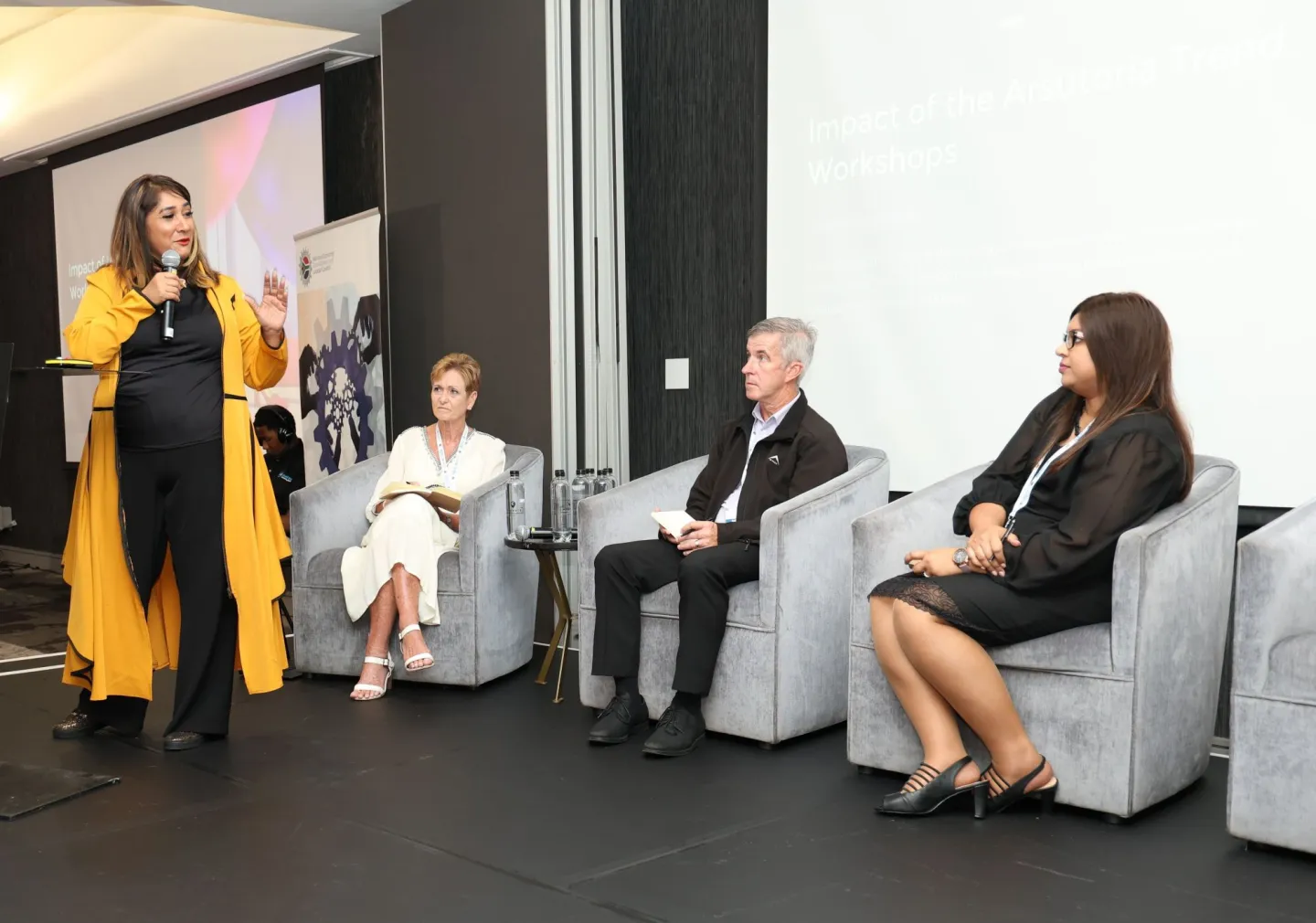
JOHANNESBURG (ILO News) – More than 100 representatives from government, employers, workers and development partners have agreed on the need to link productivity growth with decent work to address South Africa’s employment crisis, following a National Tripartite+ Symposium on Productivity, Decent Work and Sustainable Development.
The symposium, held in Johannesburg and jointly organized by the National Economic Development and Labor Council (NEDLAC), created a platform for dialogue on how productivity can support job creation, reduce inequality and strengthen economic resilience.
Participants emphasized that productivity and decent work must advance together. When supported by investment in people, strong institutions and effective policies, productivity gains can generate better jobs, higher incomes and more resilient enterprises.
South Africa stands at a decisive moment. Without restoring productivity growth, our economy will not generate the scale of decent jobs and shared prosperity our people urgently need.
NEDLAC Call to action on Jobs and Productivity, 2026
Addressing South Africa’s productivity challenge
South Africa’s economic context underscores the urgency of coordinated action. By late 2025, unemployment stood at 31.4 per cent, with youth unemployment reaching 43.8 per cent. At the same time, a decade of stagnant productivity has limited the creation of higher value-added jobs.
Opening the symposium, NEDLAC Executive Director Makhukhu Mampuru stressed the importance of a balanced approach: “Productivity cannot be pursued through cost-cutting or the erosion of labour protections. Sustainable productivity growth requires investment in people, skills, technology and workplace cooperation.”
Speakers highlighted that productivity must be understood within a broader ecosystem shaped by skills systems, industrial policy, infrastructure and labour relations.
“Productivity growth creates the foundation for better wages, stronger enterprises and improved living standards,” said Alexio Musindo, Director of the International Labour Organization Country Office for South Africa.
From Dialogue to Practical Solutions
Discussions focused on translating policy dialogue into concrete action.
Representatives from industry emphasized the role of coordinated industrial policies and sectoral masterplans in strengthening value chains and supporting small and medium-sized enterprises. Workers’ representatives highlighted the importance of ensuring that productivity gains translate into better jobs and working conditions.
“We must ensure that productivity improvements benefit workers and communities, not only firms,” said Riefdah Ajam, labour representative.
Community representatives underscored the broader social dimension of economic growth:
“The real question is whether growth creates opportunity, dignity and stability for communities,” said Thembinkosi Josopu.
A commitment to action
The symposium concluded with the adoption of the NEDLAC Call to Action on Reviving Jobs and Productivity Growth in South Africa.
The commitment promotes a “high-road” approach in which productivity, decent work and inclusion reinforce one another. It includes plans for an annual Productivity and Employment Review to strengthen accountability and policy coordination.
We must restore South Africa’s capacity to generate higher value-added growth and expand decent, productive employment at scale.
NEDLAC Call to action on Jobs and Productivity, 2026
Looking ahead
The symposium marked an important step in aligning stakeholders around a shared agenda. Participants agreed that sustained collaboration will be essential to translate commitments into tangible results.
Reviving productivity will be key to creating decent jobs, strengthening enterprises and building a more inclusive and resilient economy.
The Productivity Ecosystems for Decent Work programme is a global ILO initiative operating in Ghana, South Africa and Viet Nam. Funded by Switzerland and Norway, the programme promotes productivity growth for decent work at policy, sectoral and enterprise levels, supporting inclusive and sustainable industrial development.
Follow the Symposium Teaser https://youtu.be/Io6KT-a-Gmk
Relevant projects
Productivity
Productivity Ecosystems for Decent Work Project

Productivity ecosystems for decent work
Productivity Ecosystems for Decent Work Programme Ghana