


Photo essay
Microfinance initiative supports young people, farmers and workers in Lebanon
By providing subsidized loans and training, the ILO supported over 1,550 Lebanese and Syrians, creating jobs and building resilience amid Lebanon's multilevel crisis.
31 March 2025
North Lebanon, Bekaa Valley, LEBANON (ILO News) – The partnership between the ILO and Lebanese non-profit microfinance institution Al Majmoua has been a vital support system for farmers, workers and youths in North Lebanon and the Bekaa Valley.
Amid Lebanon’s economic crisis and recent conflict, this initiative—backed by the PROSPECTS partnership—has provided US$1.3 million in subsidized loans, totaling 400 loans.
These funds have helped farmers and would-be young entrepreneurs open activities, buy equipment, purchase agricultural material, revamp infrastructure, install solar systems, and other necessities. The loans have revitalized farming and other activities, created and sustained over 1,300 jobs, and provided essential support to families and different sectors in difficult times.
Since 2020, people in Lebanon have grappled with the effect of the pandemic, economic instability and, more recently, a conflict. By reinvigorating microfinance, the partnership has bolstered international confidence in Lebanon's microfinance sector, opening doors for future growth and opportunities.
Here, loan recipients and their workers share their firsthand experiences on the ground in Lebanon.
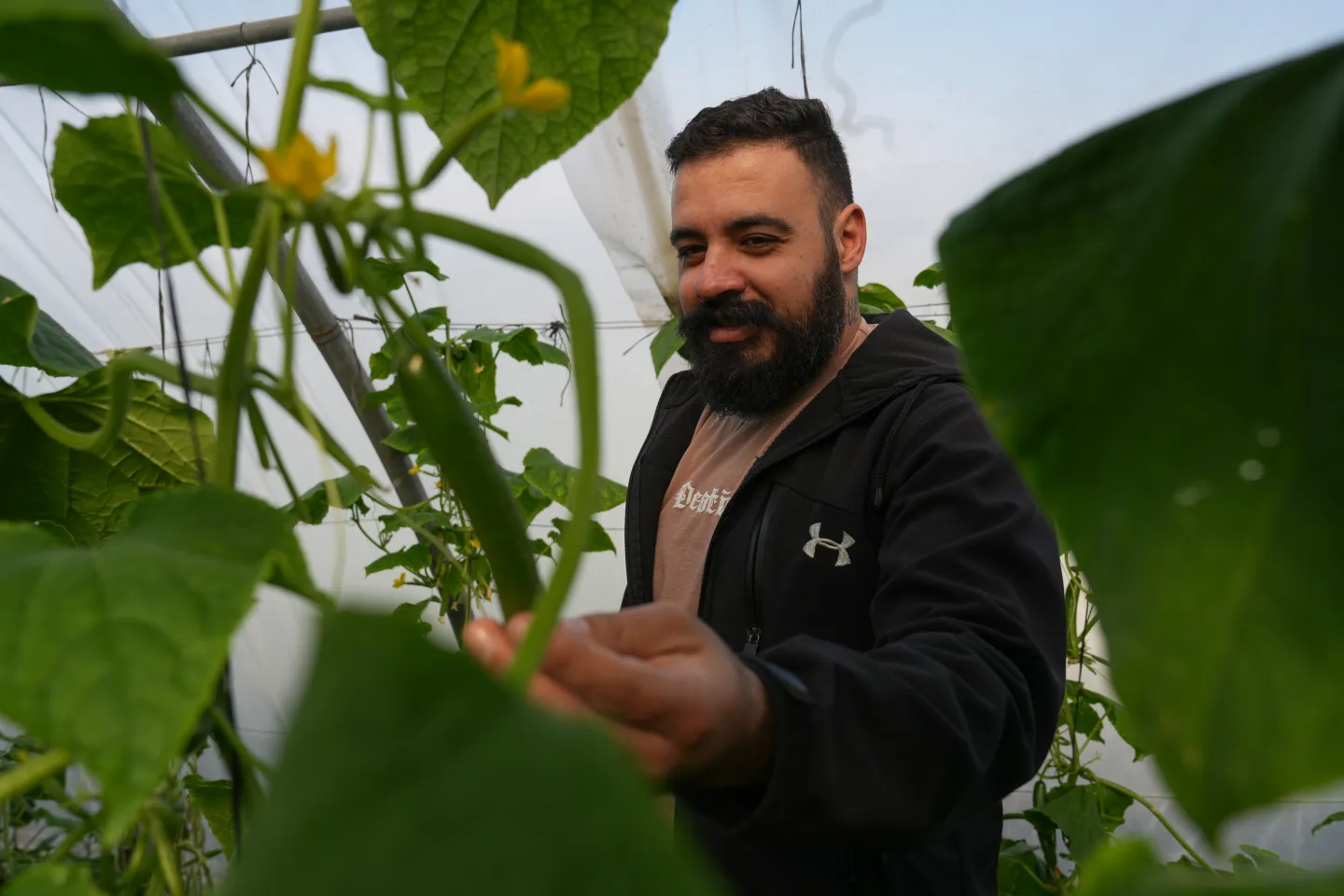
Farmer Abdallah Fares, 31, is seen in one of his greenhouses in Akkar, North Lebanon. He has been immersed in agriculture since early childhood, as farming has been the family business for as long as he can remember.
Determined to stand on his own feet, he decided to launch his own agricultural project. To achieve this, he secured a US$4,000 agricultural loan through the project.
With this financial support, Abdallah expanded his operations. He invested in more greenhouses, allowing him to diversify and enhance the quality of his produce. By reinvesting profits back into the business, he ensured the sustainable growth of his farm.
“I started here with my father, but I wanted to establish my own farm. Thanks to the loan, today, I have 35 greenhouses. Around 30 Lebanese and Syrian workers work with me. I grow tomatoes, strawberries, cucumbers, aubergines, lettuce, spinach, among other crops. We produce all year long,” he said.

A Syrian worker transports a light box of parsley in Halba, North Lebanon. Thanks to a loan the farm received, new investments were made, and more workers were hired, creating jobs with better working conditions in and around the farms.
Through the ILO’s Improve Your Agri-Business (IYAB) programme, which accompanied the loan distribution, over 760 individuals—farmers, agricultural workers, and youths with start-up projects—received training, with women making up 50 per cent of participants. Around 25 per cent of the beneficiaries were Syrian refugees.

A strawberry greenhouse field is seen in Akkar on Abdallah Fares’s newly expanded farm, thanks to the loan.
“With the money I received, I replaced the nylon on the older greenhouses and improved the roads around the farm to make work easier and allow tractors to move more efficiently. This helped me save time and improved safety,” he said.
“This means I now have better-protected spaces, leading to higher-quality production. My only plan for the future is to keep expanding my farm. Given Lebanon’s situation in recent years, we focus on short-term plans and take things day by day.”
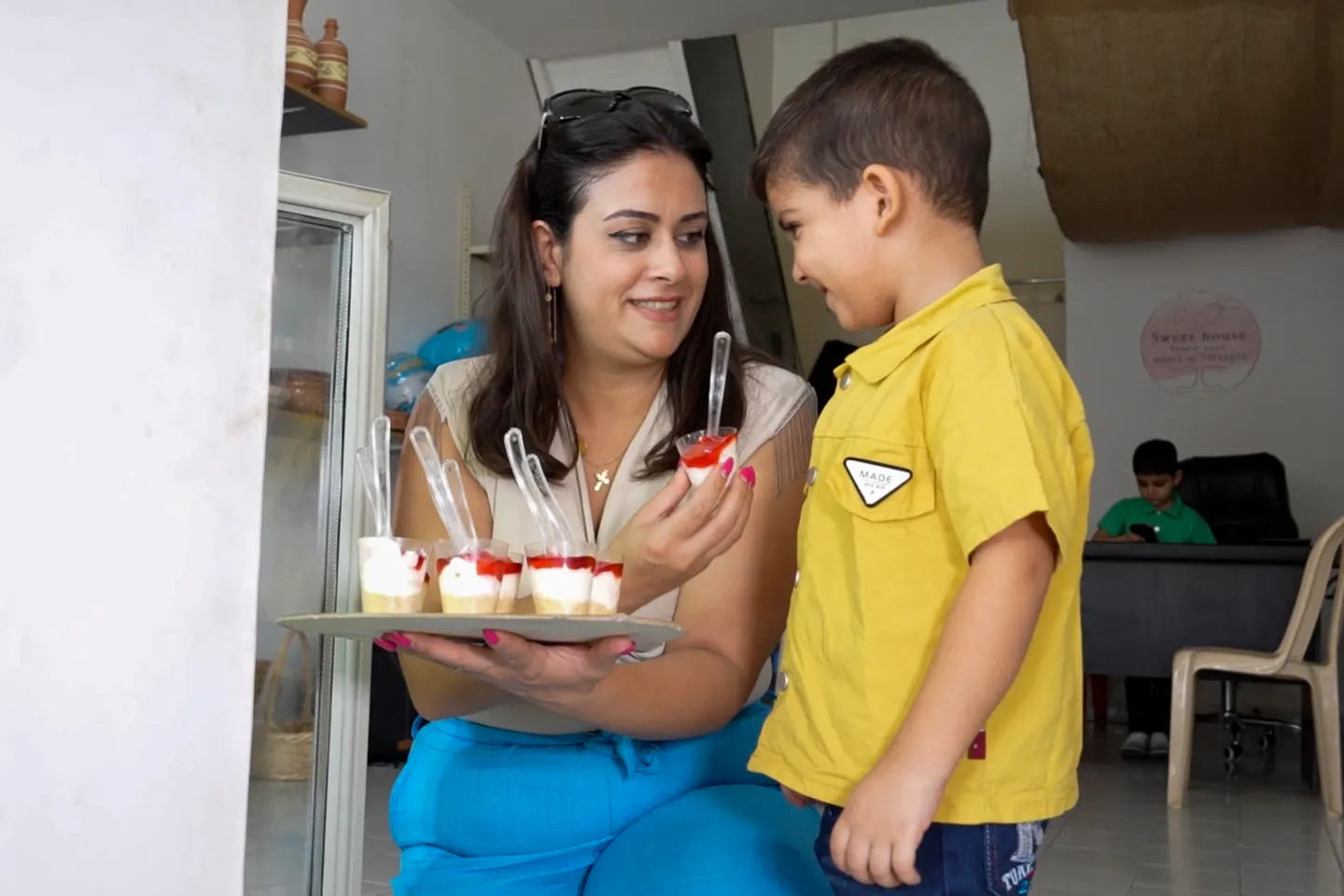
Mrinette Bashour is pictured with her children in the sweet shop she opened with the help of a loan. Here, she prepares sweets on request and sells pottery and handcrafted baskets.
A Syrian living in Lebanon, Mrinette started her business in 2021 during the COVID-19 pandemic. With no in-person courses available, she turned to online training. Balancing work with two small children was challenging. “I had to take care of everything myself, from organizing materials to photographing products.” Despite the hurdles, she refined her skills through trial and error.
Mrinette is one of over 800 individuals who completed the ILO Financial Education (FE) training, which accompanied the loan disbursement. The training covered financial literacy, budgeting, savings, and investment strategies. Women made up about 80 percent of participants, with refugees comprising roughly 35 percent.
Held in her village, the training helped her expand her business by teaching marketing, cost management, and financial planning. “I learned to accurately calculate costs and focus on fine details.” The loan allowed her to invest in essential equipment.
“My goal is to grow my business, take on larger orders, and gain wider recognition,” she said. With her husband’s low military salary, her work has become a crucial financial support for their family.
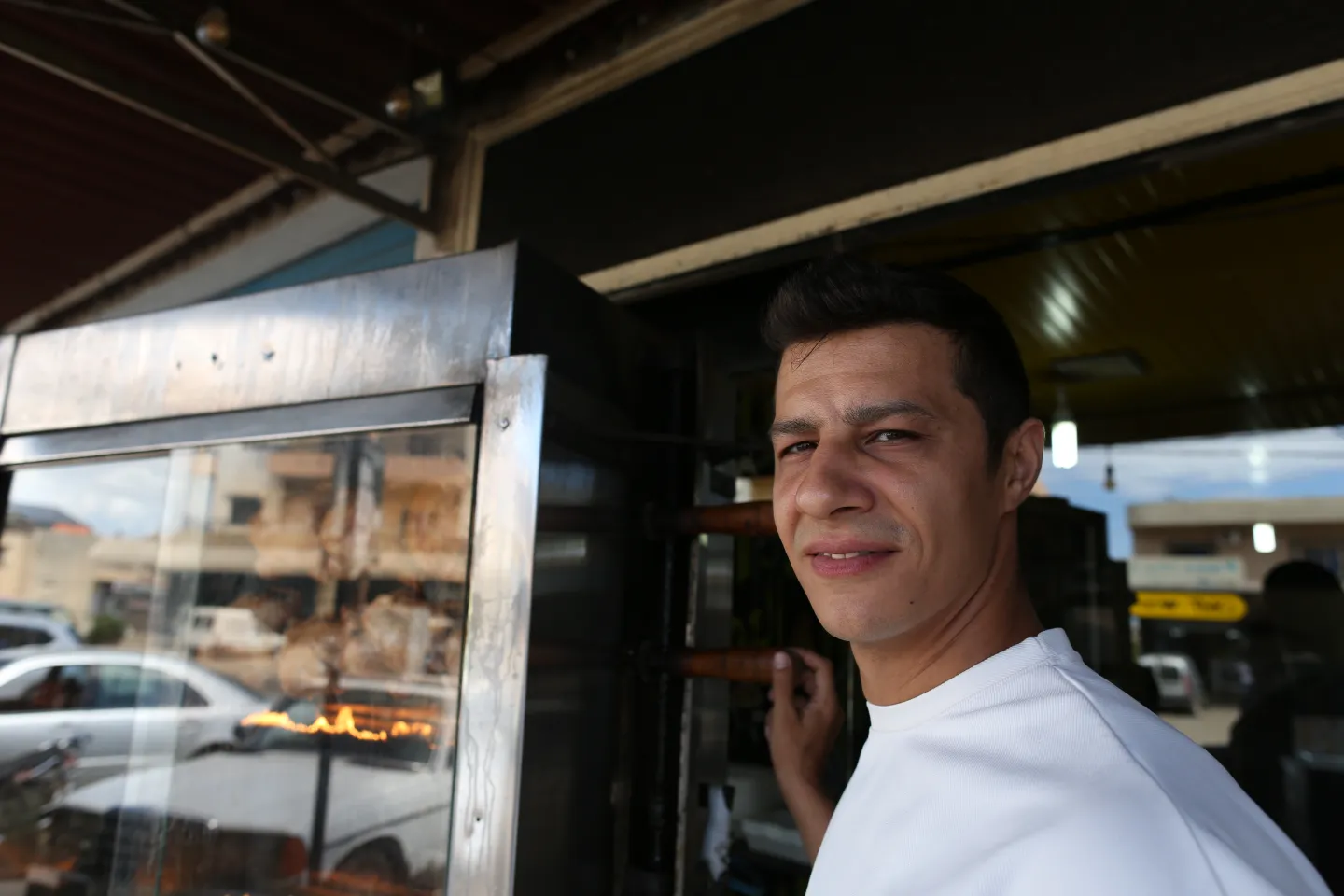
Farmer and entrepreneur Mohammad Sakr stands in front of his new start-up fast food shop in Akkar. Originally a farmer, he received a loan to boost his agricultural production and then reinvested the profits into opening this new venture, hiring local youths. “From our farming profits, we divided the earnings—some for daily expenses, some reinvested in farming, and some to develop this small food stand,” he said.
This reinvestment helped expand his work, purchase new equipment, and secure an additional source of income. The project stands out for its sustainability, as the capital is reinvested to benefit more people.
“I’m proud of what I’ve achieved. I hope more people recognize my work, and I can reach even greater success by employing more local workforce.”
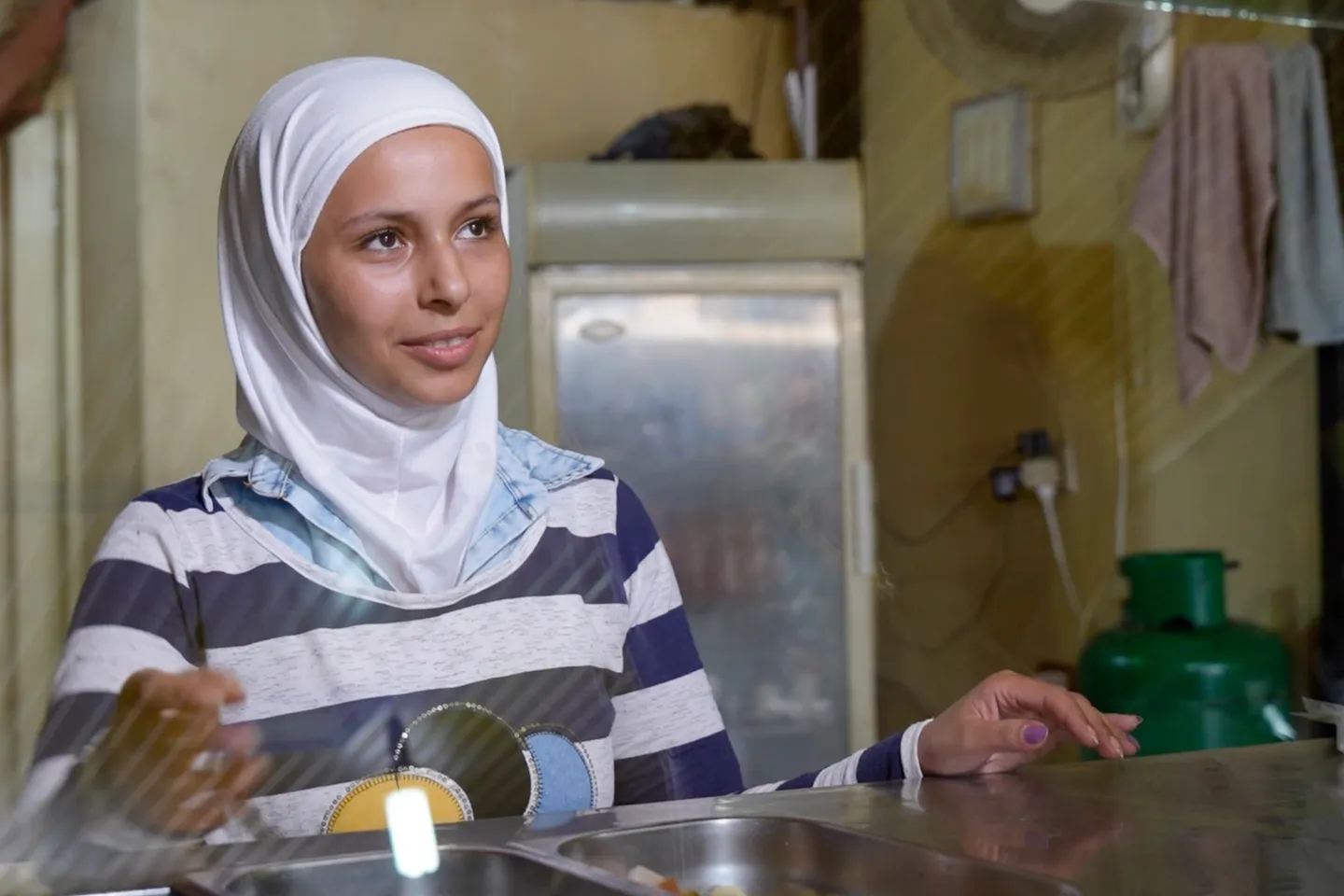
Ataa Eleiwi is a young Lebanese woman who recently secured her first job at a newly opened fast food restaurant in Akkar. Through the microfinance initiative, farmer Mohammad Sakr reinvested his farming profits into the shop, creating jobs for local youths.
Eleiwi said she was happy about starting a new job, especially in a time when finding employment is difficult in Lebanon. She is planning to use the salary she earns to continue her studies.
The joint ILO and Al Majmoua microfinance initiative helped create a snowball effect of investment, leading to job creation, improved working conditions, and increased productivity across various sectors, at a time when obtaining loans is especially challenging in the country.
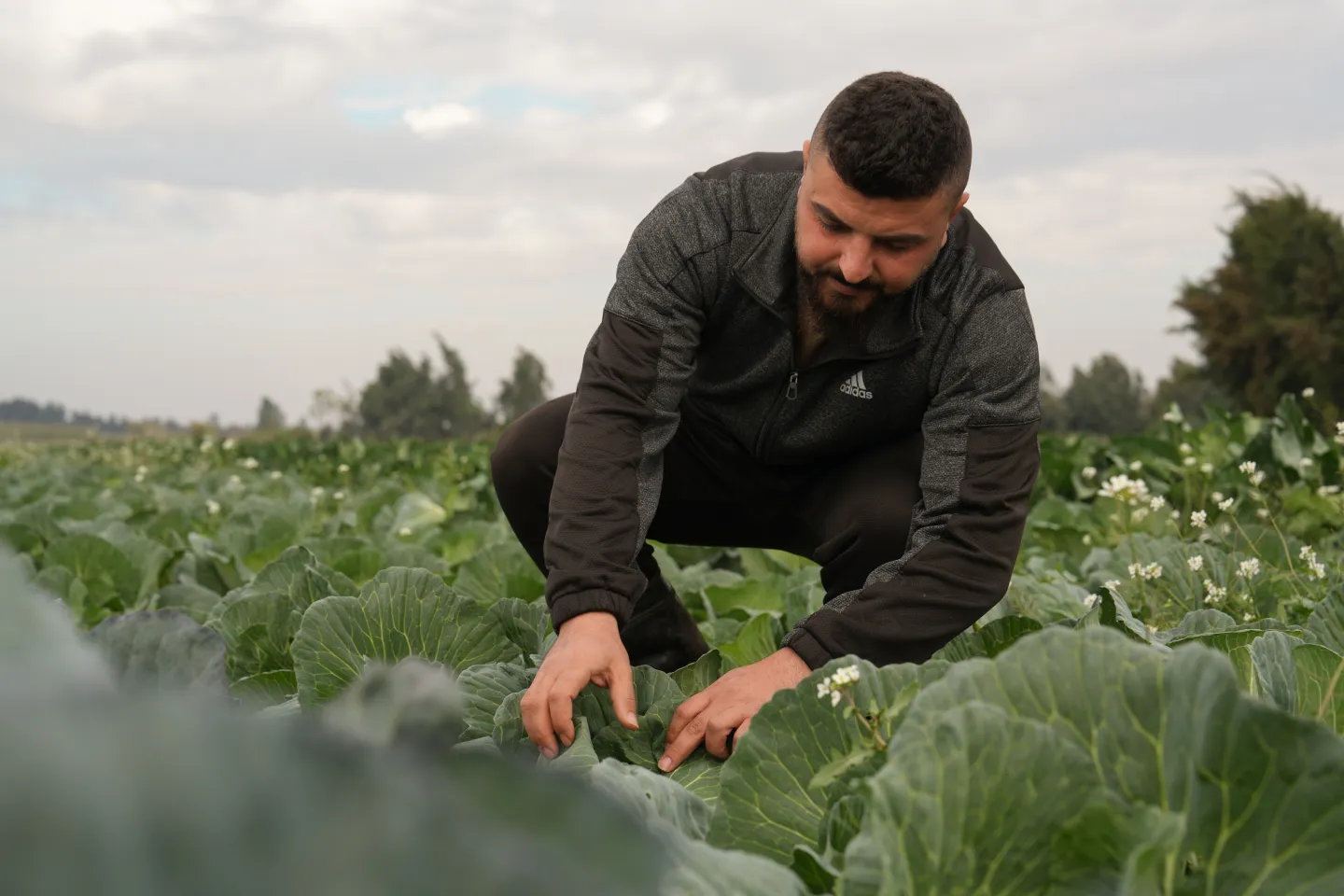
Ali Beshlawi works in one of his fields in Halba, North Lebanon. He has been a farmer for the past 12 years, having taken over the farm from his father. He is currently the only one in his family working in agriculture. He has six children, and his youngest was just born.
“I applied for a loan because I wanted to buy lettuce and spinach seeds,” he said. “I took a small loan for this, and it was a game changer that helped me increase production. I also bought Za’atar, a Levantine culinary herb, as well as radish and parsley.
The recent conflict in Lebanon affected us, leading to decreased consumption and the closure of many market outlets. The loan initiative was crucial amid the challenges the country has faced in recent years. We benefited greatly.
If I had the chance to take a new loan now, I would upgrade the well on my field, making it run on solar energy instead of expensive and polluting diesel.”

Farmer Abdallah Fares shows a strawberry from his farm in North Lebanon. He explained that thanks to the new greenhouses he established and the nylon used to cover them through the loan, the quality and quantity of his produce have increased, giving him an edge in the market amid challenging times.
“The protracted financial crisis hit us hard. With the devaluation of our currency, it became very difficult to make a profit, especially as prices remained extremely volatile. Also, one of the country’s largest agricultural markets shut down during the conflict, as it was located in an area in Beirut that was heavily bombed during the recent war,” he said.
“For the past five to six years, our business and lives have been severely impacted. There are brief periods when business picks up again, but this changes quickly as new crises and challenges emerge.”

Farmer Khaldiyeh Al Nazir (L) and Syrian worker Maha work in a new greenhouse purchased through the loan Khaldiyeh received earlier in 2024 in North Lebanon. “I have been working with my children since my husband is sick, and his health prevents him from working,” Khaldiyeh said. “The work has been exhausting lately due to the many challenges associated with this job. The cost of living is high, production is not satisfactory, and we often sell at low prices. The situation has been very hard on us and everyone else. I heard about this programme offering loans, so I applied to get resources for the work.I brought in new soil, a new greenhouse, and a solar system.
Usually, there is no electricity, except for an hour or two during the day. I want to add more greenhouses. We currently have five, and I aim to increase that to six.”

Farmer and entrepreneur Mohammad Sakr, 35, walks through his recently harvested plantation in Akkar. Mohammad has been farming for over three years, cultivating 20 dunums (20,000 square metres) of land, growing potatoes, corn, and lettuce. He took out a 5,000 USD loan to strengthen his project and increase production. “The loan really helped me a lot. My crops doubled, and so did my sales,” he said. “It also had a positive impact on my life.”
He credited the Financial Training he took through the initiative for helping him expand his project, calculate costs, and market his products. “There were things I hadn’t noticed before, like how to price each product and pay attention to performance details.”
Like most farmers in Lebanon, Mohammad faces significant challenges amid ongoing multiple crisis. “Farmers remain the weakest link and bear the cost of the country’s struggles,” he said. “The biggest problems are related to financing, securing quality crops, and obtaining fertilizers and seeds that are of good quality.”
Mohammad said youth participation was crucial in agriculture. “They bring new ideas that can really make a difference.”
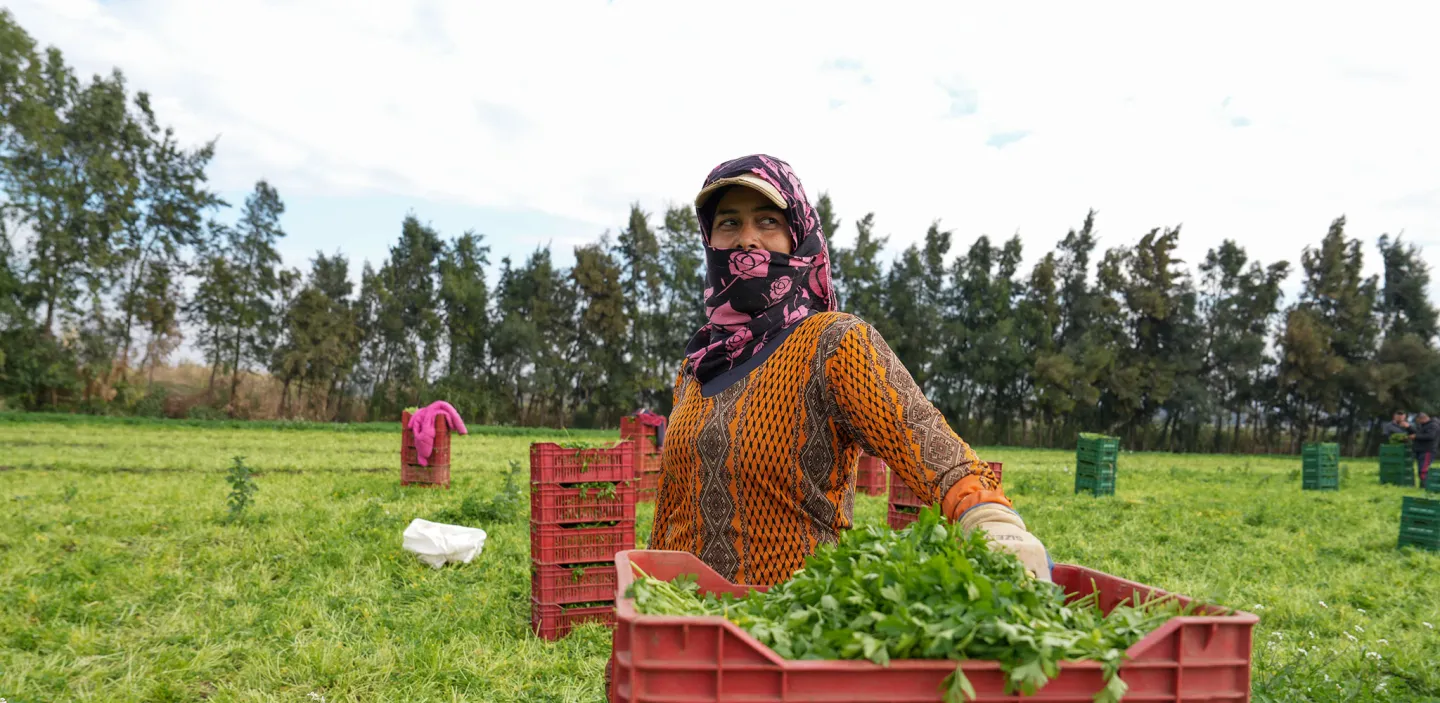
A Syrian worker is seen in a field in North Lebanon during parsley harvesting season. The farm where she works received a loan to purchase high-quality seeds and expand production. The loans provided through the initiative supported various sectors, including open-field and greenhouse farming, livestock breeding, forestry, and agribusiness. The Financial Literacy training, an essential part of the project, helped prepare women, men, youths, and startup owners to manage financial responsibilities as they entered the labour market and improve their ability to save.
Related content

ILO PROSPECTS Lebanon supports social enterprise initiatives in Lebanon

ILO project provides financial support and education for Lebanon’s agricultural sector

Photo Essay
Agricultural infrastructure revamp transforms Lebanon, one greenhouse at a time
Photo Essay
Strengthening Lebanon’s communities amid conflict: A holistic approach to education, training, and employment
Relevant projects

ILO-Netherlands Partnership
Partnership for improving prospects for forcibly displaced persons and host communities (PROSPECTS) in Lebanon
Programme
Partnership for improving prospects for forcibly displaced persons and host communities (PROSPECTS)