


Photo Essay
Strengthening Lebanon’s communities amid conflict: A holistic approach to education, training, and employment
Featuring testimonies from trainees and business owners, the project highlights real stories of resilience and career transformation amid Lebanon’s protracted crises.
9 December 2024
In response to Lebanon’s ongoing humanitarian and socio-economic crisis, the ILO, in collaboration with UNHCR, the UN Refugee Agency, through the PROSPECTS partnership and with Caritas Lebanon, launched a comprehensive initiative to enhance education, training, and employment opportunities in northern Lebanon. This initiative is part of broader efforts to bridge the gap between local skills and labour market demands.
Its goals are clear: to equip individuals with occupational skills and career guidance, and support job placement.
The initiative focused on an area of Lebanon with high levels of poverty and unemployment, particularly among youth and refugees. Lebanon’s unemployment rate rose from over 11 percent in 2018–2019 to about 30 percent in 2022, while youth unemployment (ages 15–24) increased from over 23 percent to some 48 percent during the same period.
Participants benefited from career guidance services and awareness sessions on rights at work, as well as three months of subsidized apprenticeships and accredited vocational training programmes that combined practical instruction with hands-on experience. They accessed opportunities in local sectors such as agriculture, construction, and small businesses requiring digital services.
“The structure of this intervention was also adapted to the evolving conflict situation in Lebanon to address the changing needs of displaced people,” said Shaza Al Jondi, ILO PROSPECTS Regional Chief Technical Adviser for Arab States. “We are proud of this initiative carried out with UNHCR and our partners, which aimed to promote livelihoods by ensuring that employment opportunities were both accessible and offered safe, decent work conditions for the most vulnerable.”
The year-long initiative, which concluded this month, facilitated 100 direct referrals to employment opportunities. Meanwhile, 100 participants with basic skills engaged in subsidized work-based learning apprenticeships, while another 150 completed vocational training followed by two weeks of on-the-job training, of whom about 90 percent were women and 40 percent were refugees.
As more refugees and vulnerable Lebanese turned to community development centres (CDCs) for skills development to enable them to find new sources of income generation, UNHCR continued to refer relevant refugee profiles that would fit ILO’s employability support service project.
“A key innovation was also the introduction of SKILL Lab, a platform used for the first time in this area,” said Al Jondi. “Beneficiaries created their own individual profiles, logged their skills, and uploaded training certificates. This personalized career guidance and skills profiling were new to them, significantly enhancing their job search capabilities.”
This initiative was integrated within the ILO’s Emergency Response Plan to the impact of the conflict in Lebanon. The plan focuses on enhancing social protection through immediate cash benefits, rehabilitating infrastructure at shelters housing displaced people, and more broadly sustaining jobs, enterprises and livelihoods, in keeping with the ILO’s mandate to advance social protection and ensure decent work opportunities and long-term economic sustainability.
Here are the testimonies of three trainees and business owners who successfully participated in the project. Enjoy their stories of embarking on the path to a brighter, safer and more skilled future of work.
Abeer Al Houri, 29, unemployed

“I joined the training and now attending my internship in a local Toy and School Supplies Shop. I didn’t complete my education and stopped my studies at 14. I got married young and have two children, a 5-year-old girl and a 3-year-old boy. I would have liked to finish my education. I don’t have any certifications, so finding a job has been difficult. Over the years, I mainly helped my husband in his work. But I eventually started taking courses with different organizations, and little by little, I began to learn.”

“This training, which I found on Facebook, was extremely useful. The training lasted for three months. I learned how to use a laptop and upload and download information useful for this job, such as product catalogues. I learned how to do some accounting jobs. I learned how to print documents properly and to download info from my phone to the laptop. Also, a young woman working here in her free time helped me learn.”

“I am very happy and comfortable in this job. I thought it was very difficult for me in the beginning, but then I learned. This was a success and a boost of confidence. I will keep working here in the future as this shop is expanding to other activities.”
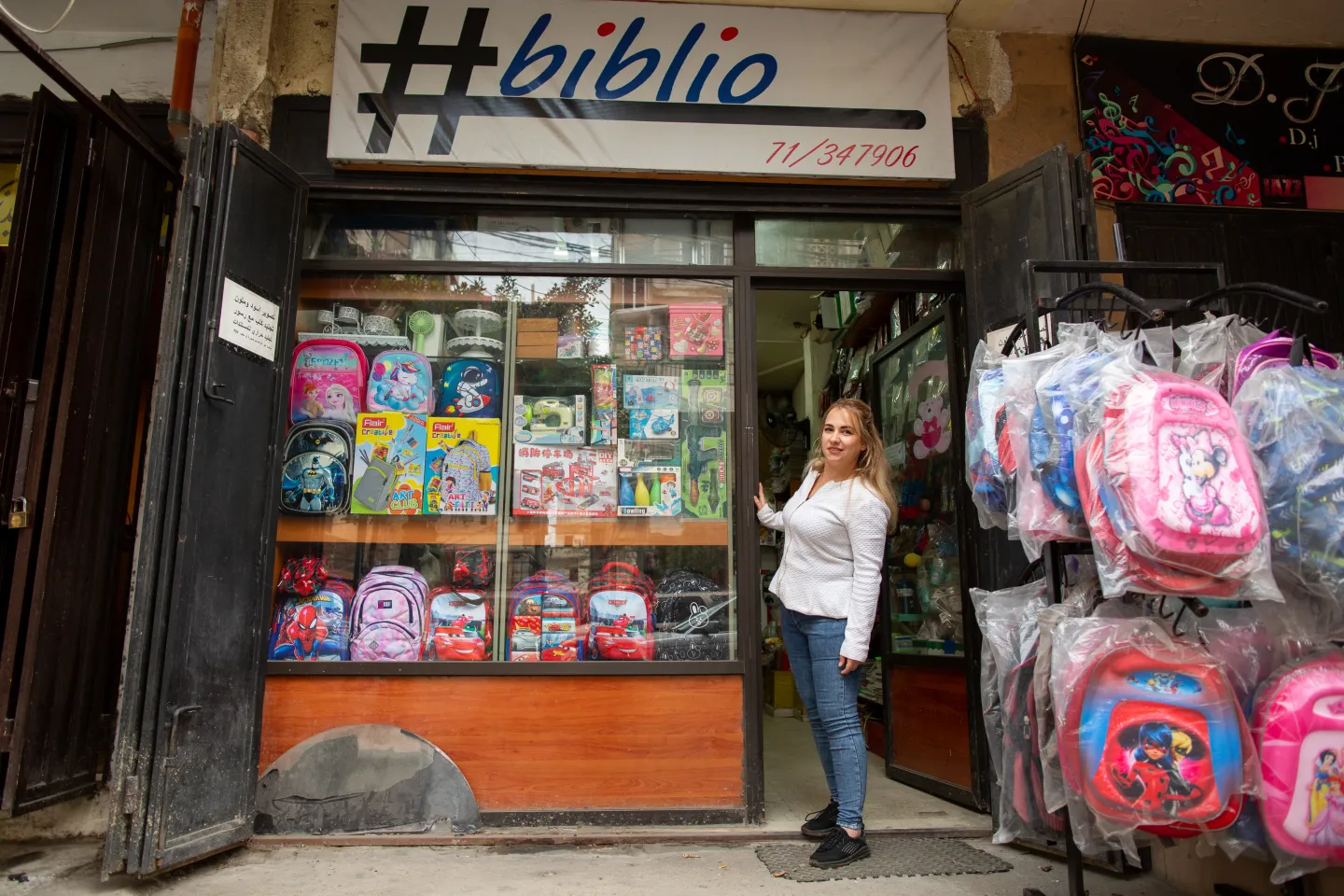
“The additional salary I am bringing home now is extremely helpful, especially in light of the protracted and different crises Lebanon has gone through over the past few years. We have children, a family, and we need to cover many expenses.”
Shop owner Layla Kanjo said that Abeer’s performance proved to be outstanding. “She quickly demonstrated a strong desire to learn and dedication and commitment to both the job and her training. We greatly benefited from having her with us,” Kanjo said.
Mira Hmouda, 21, student
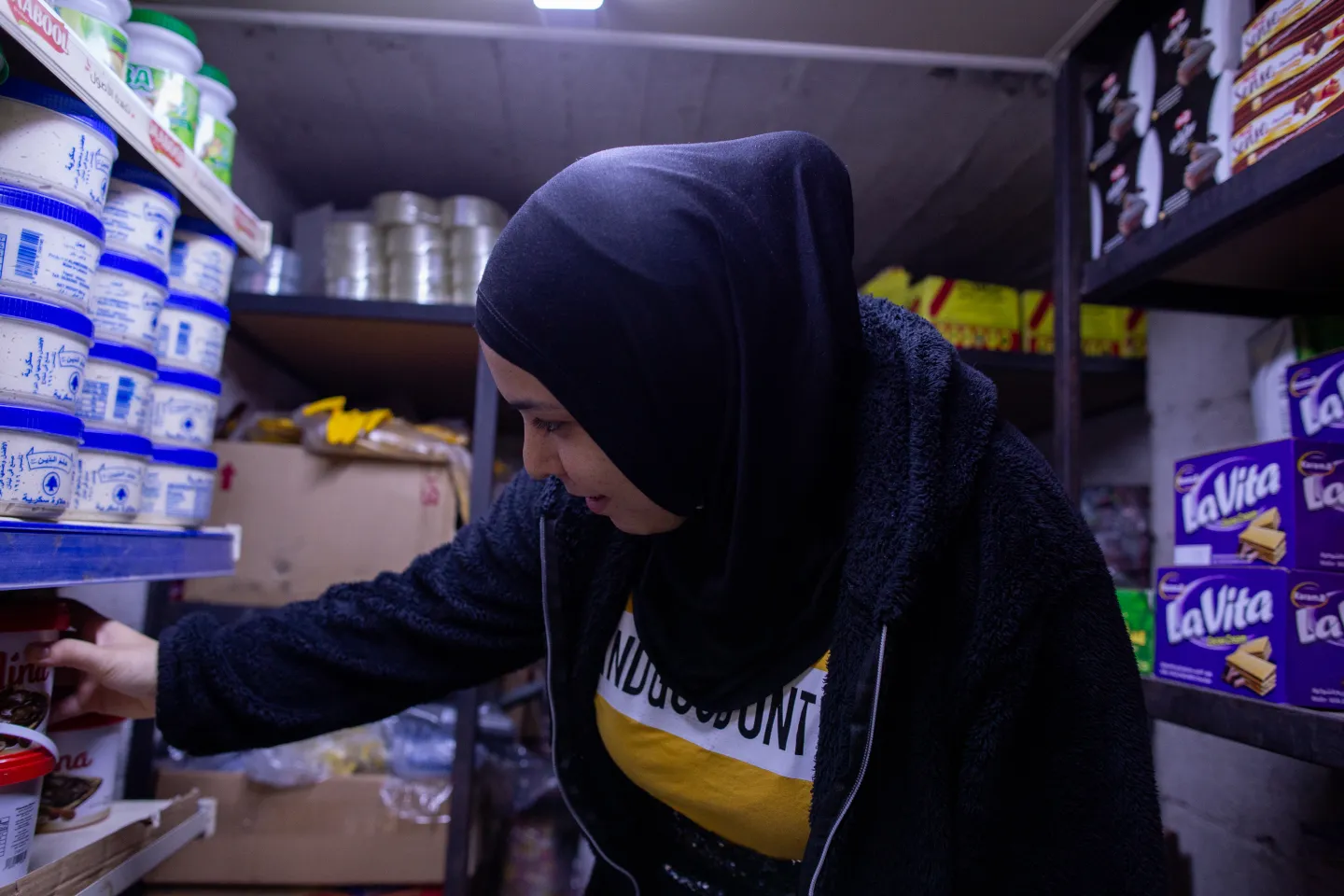
“I’m currently completing my studies in health supplies and logistics, but I was also eager to learn programming. Unfortunately, there were no available spots in programming courses, so I decided to join the ILO-Caritas training programme. The faculty director shared the link to this opportunity, and I registered right away, thinking, “Let’s give it a shot.” I was selected, and after three months of training, I started working at this supermarket.”

“The training taught me a lot, particularly in two key areas. I learned about computer-based accounting and managing supplies and logistics, which ties in with my studies. Combining these skills has been very rewarding.
Looking ahead, I’m considering my future carefully. I’ve always wanted to learn about computer science, and now I’ve made a start and feel very happy about it. My goal is to combine my knowledge of health supplies with these new skills, similar to what I’m doing at the supermarket.”
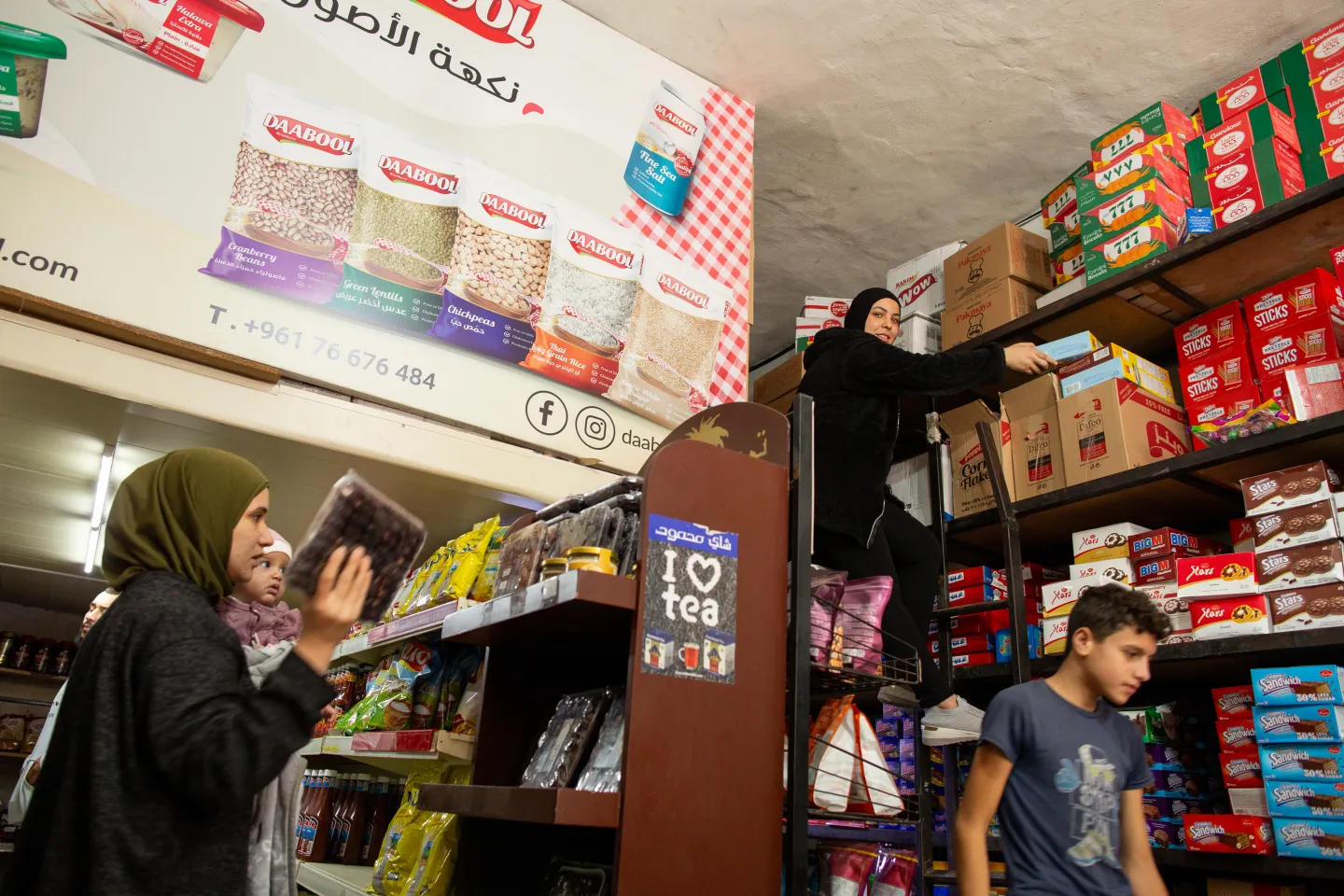
“I’ll now return to university to finish the year and then look for a job. The training provided financial support both for me and the supermarket. My salary has helped ease my family’s financial burden, and they’re very proud of me, especially my father. He’s the one who wakes me up in the morning and tells me to hurry so I’m not late.”

Abdel Naser Ahmad Naous, 37, is the owner of the supermarket where Mira attended her internship. “Business used to be much better and more manageable before the crisis, but now prices fluctuate every few days, making it difficult to organize orders and accurately plan delivery times,” he says.
“We are pleased with Mira’s work. The only initial challenge was teaching her to use the computer to upload data of the items we receive since she had no prior experience in this role. If she wants to continue working here, we would be happy to have her,” he said.
Ahmad Al Ahmad, 39, former supermarket and technical shops cashier

“I am from Homs, Syria, and I came to Lebanon in 2011 at the start of the conflict there. I studied banking and marketing in Syria. I’m married and have three children, aged 4, 7, and 9. They used to attend school at a centre run by an international NGO, but now it’s no longer operating, which is a big issue. Previously, they had a good education there and spent a significant part of the day at school, which allowed my wife and me to work. Now, I am the only breadwinner.”
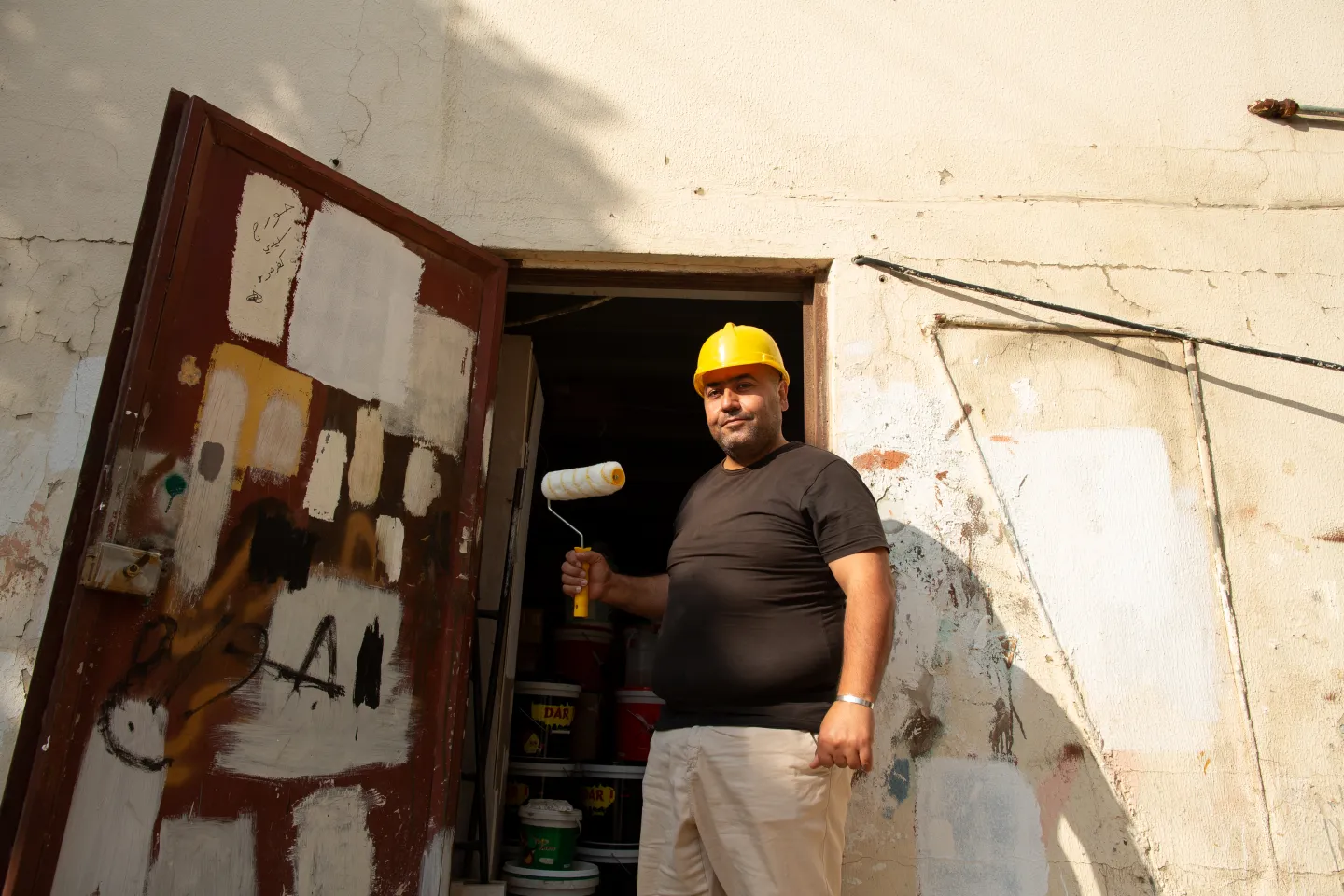
“I decided to attend the three-month training in a local house painting company. I enjoy hands-on work, especially with wood, and I like seeing the tangible results of my efforts. Here, I’ve learned how to mix colours to achieve the right shades, depending on the materials we work with. The training has been very beneficial, and the salary I earned helped me manage daily expenses.”

Ahmad is seen here with Nader Nader, the owner of the interior painting business. Nader mentioned that Ahmad was the only trainee he has had so far. “Ahmad spent three months with us, during which he learned about colours and mixing them, how to prepare ceilings and walls before painting, and the painting process itself,” Nader said. “When he first joined, he had no prior experience in this field, but now he has developed valuable skills. We’ll see what he decides next, and whether he wants to continue with us.” Nader said multiple crises in Lebanon have deeply affected his business. “We are currently operating at only about ten percent of the workload we had before the economic downturn,” he said.

“The challenge is that for every step forward, there are three steps back due to the constant crises. My house in Syria was destroyed, just like here in southern Lebanon during the conflict. I will update my Skill Lab profile with the new skills I acquired through the training and see what the future holds for me and my family.”
Relevant projects

ILO-Netherlands Partnership
Partnership for improving prospects for forcibly displaced persons and host communities (PROSPECTS) in Lebanon
Programme
Partnership for improving prospects for forcibly displaced persons and host communities (PROSPECTS)