

PROSPECTS Impact
Kenya’s Journey to Recognizing Informal Skills: The Making of the Recognition of Prior Learning Policy
With support from the ILO, Government of Kenya launched Recognition of Prior Learning (RPL) policy that certifies skills gained outside formal education, empowering informal workers and refugees with official credentials, improving employment opportunities, and promoting an inclusive, skills-based workforce.
8 November 2024
In Kenya, the journey to recognizing skills gained outside formal education began with a fundamental question: how can we validate the competencies of workers who have never held a formal academic certificate? In a country where 80 to 90% of the workforce is employed in the informal sector, many are self-taught in trades like textiles, construction, and automotive repair. These individuals form the backbone of Kenya’s economy, yet they often lack access to formal employment due to the absence of credentials. Addressing this gap became the mission of the Recognition of Prior Learning (RPL) policy, a collaborative effort between the International Labour Organization (ILO), the Government of Kenya, and other key stakeholders.
The origins of the RPL policy trace back to early 2020, when organizations like the Federation of Kenya Employers and the Kenya Jua Kali Association identified an urgent need to validate informal skills. “Employers frequently see candidates with exceptional skills but no formal certifications,” said Dr. Alice Kande, Director General of the Kenya National Qualifications Authority (KNQA). “Without certificates, these individuals are often overlooked, despite their competencies.”
From 2020 to 2023, multi-sectoral and multi-agency teams convened to design a framework that could recognize skills acquired outside traditional education. The Technical Vocational Education and Training Authority (TVETA), with support from the KNQA and ILO, led the effort to build guidelines, assessment procedures, and quality standards that would form the foundation of RPL.
Building a Comprehensive Policy
Throughout three years of deliberation, Kenya’s policymakers considered factors critical to the policy’s success: alignment with industry standards, integration with national development goals, and collaboration among various agencies. “We wanted a framework that could cater to diverse trades while maintaining high quality,” said Dr. Kipkirui Langat, Director General of TVETA. “We engaged stakeholders from every sector to ensure that each voice and perspective was represented.”
The resulting policy emphasizes flexibility and inclusivity. Whether a dressmaker, a web designer, or a lab technician, each profession would have a tailored assessment process. “The requirements for certification vary greatly by profession, so RPL is designed to adapt to each individual’s skills and trade,” explained Caroline Njuki, Chief Technical Advisor for ILO PROSPECTS in Kenya. This adaptability is critical to ensuring that RPL meets the needs of both candidates and employers.
From Planning to Pilot Program
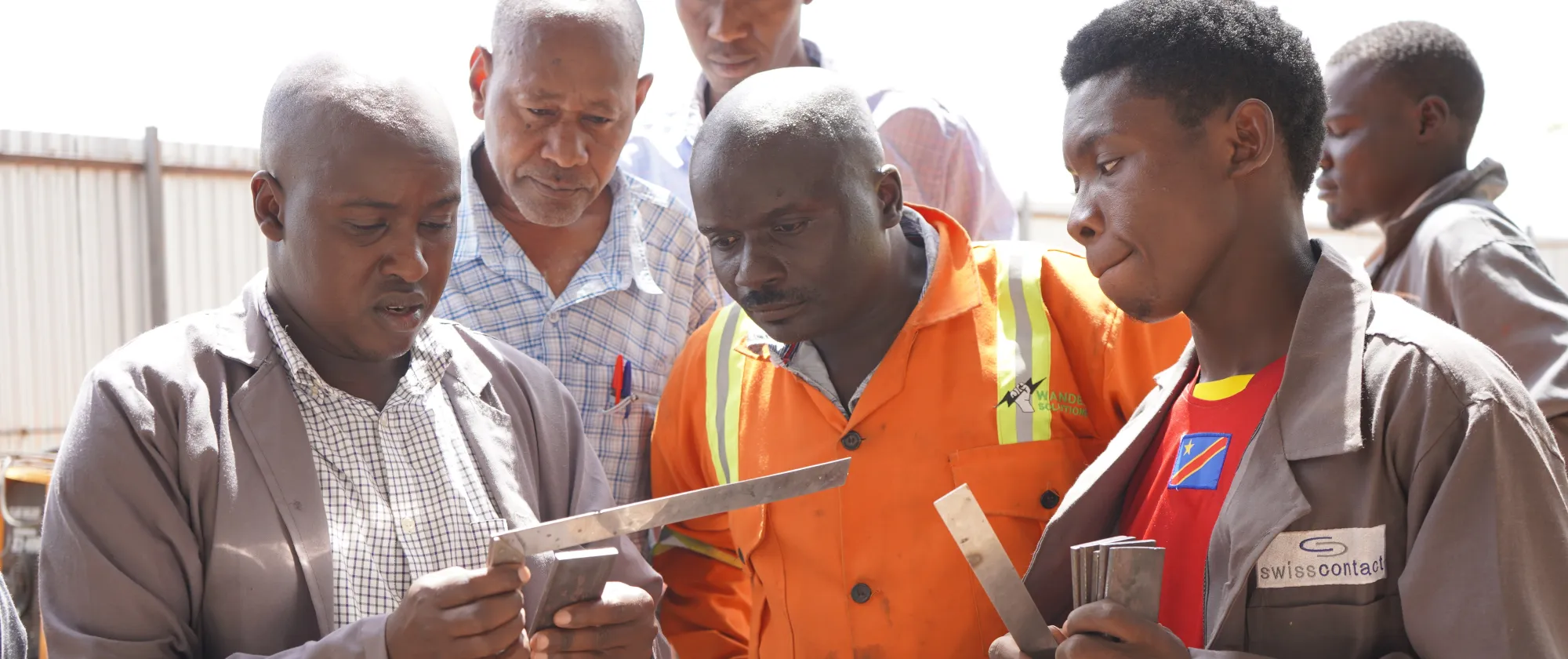
With a structured policy in place, the government launched a pilot program in 2023 across five trades: textiles, welding, motor vehicle mechanics, hairdressing and beauty, and building and masonry. This pilot allowed officials to test the policy’s functionality and make any necessary adjustments based on real-world application.
“We took candidates through the full process—from expression of interest to guidance, assessment, and certification,” Njuki shared. For those who met the qualifications, certifications were awarded; for others, the program provided recommendations for further skills development. This hands-on approach allowed the policy’s developers to refine assessment criteria and ensure the RPL process was comprehensive and fair.
Dr. Kande emphasized the importance of this phase, noting, “The pilot proved that RPL is timely for Kenya. By certifying informal skills, we are not only addressing economic needs but also uplifting individuals and communities.”
Embracing Inclusivity: Empowering Refugees and Marginalized Workers
The RPL policy is not only an economic instrument but also a tool for social inclusion. Many refugees in Kenya possess significant skills but are unable to participate in the job market due to a lack of certification. “Refugees shared with us their struggles to find employment without formal credentials,” said Njuki. In response, the RPL framework was designed to include marginalized groups, providing a pathway to formal employment and income generation for refugees and other disadvantaged populations.
Recognizing the need for broad accessibility, ILO and Kenyan authorities have committed to making RPL available in multiple languages and in both rural and urban settings. “Our aim is to break down barriers and make certification accessible to all Kenyans, including those in remote areas,” Njuki added.
The First Graduates: Marking a Milestone for Kenya’s Workforce
In early 2024, Kenya celebrated the graduation of 601 individuals who had achieved full or partial certification through the RPL program. Among them were candidates from various trades, some even receiving recognition in multiple fields. The ceremony was a significant moment for Kenya’s labor market, as the National Industrial Training Authority (NITA) awarded certifications to not only local candidates but also several refugees, demonstrating the policy’s inclusive approach.
“This graduation symbolizes more than individual achievement; it is a collective milestone that underscores the power of RPL to bring value to Kenya’s workforce,” said Theresa Wasike, Acting Director General of NITA.
For Dr. Kande, this moment reflected years of dedicated work: “We now have a framework that allows us to move forward as a country, one that recognizes all forms of skill and knowledge as valuable contributions to our economy.”
Looking Ahead: Scaling and Promoting RPL Nationwide
With the RPL policy officially in place, the ILO and Kenyan institutions are focused on increasing awareness and scaling the program nationwide. Dr. Kande noted the importance of making RPL a familiar concept for Kenyans across regions and sectors. “Awareness is crucial to the success of RPL. We want as many people as possible to understand that their skills have value and can be formally recognized,” she said.
The Kenyan RPL policy serves as a model for other countries seeking to embrace skills-based recognition in their own economies. As Njuki concluded, “The RPL process redefines what it means to be qualified. By validating skills gained outside formal education, we are acknowledging that knowledge and ability are the true measures of a person’s potential.”
Related content
Voices from ILO PROSPECTS
From volunteer to firefighter: Sara's journey of saving lives with Recognition of Prior Learning

Voices from ILO PROSPECTS
Transforming informal skills into formal opportunities: Theresa's journey of self-empowerment in Kenya
Voices from ILO PROSPECTS
Passion into professionalism: Dickson's journey to earning a cosmetology diploma

PROSPECTS Impact
From self-taught to certified: Kenya's Recognition of Prior Learning (RPL) awards over 600 certificates

PROSPECTS Impact
Rising from informal work to a government employee: the story of Florence Wambui
Relevant projects

ILO-Netherlands Partnership
Partnership for improving prospects for forcibly displaced persons and host communities (PROSPECTS) in Kenya
Programme
Partnership for improving prospects for forcibly displaced persons and host communities (PROSPECTS)