


Case study on the ratification of Convention 88: Kenya
Kenya puts inclusion and accessibility at the center of employment services with support from the ILO
22 August 2025
Kenya was one of the first East African countries to ratify Convention No. 88 on Public Employment Services (PES), doing so in 1952. While it has since become the second largest economy in the region, unemployment rates remain high. Groups in vulnerable situations often face greater barriers to decent work. Insufficient resources, limited capacity, and gaps in the service offering of PES also created barriers to effective labour market functioning.
To address these challenges, the International Labour Organization (ILO) has been supporting the National Employment Authority (NEA) to undertake a comprehensive assessment of the PES and the delivery of active labour market policies (ALMPs) and, subsequently, develop the NEA Integrated Management System, build the capacity of employment officers, and upgrade NEA employment offices between 2021 and 2024.
Improving employment services nationwide
The improvement of the PES began with a comprehensive system assessment, which led to key recommendations for enhancing its effectiveness. Following this, support was provided for the review of the NEA Strategic Plan for better alignment with institutional goals and priorities. Efforts then focused on capacity building initiatives aimed at strengthening the skills and competencies of personnel. Finally, institutional strengthening measures were implemented to reinforce structures and processes, ensuring the long-term sustainability of the improvements made.
A pilot initiative in Nairobi upgraded a NEA employment office closer to international standards. This pilot is expected to serve as a baseline model for employment offices in other cities in Kenya, for a replicable approach to employment services nationwide. Rural employment services have also been established in Kakuma’s Biashara Centre to provide services to refugees and host communities.
“Both the number of jobseekers and employers accessing NEA services has increased, and the scope of our employment services now extends to vulnerable communities, including refugees, enabling them to access job opportunities,” said Ms. Edith Okoki, the NEA Director General.

Benchmarking performance
In August 2023, Kenya participated in a week-long study visit to South Korea. The benchmarking visit included meetings with employment policy and services institutions, such as the Ministry of Employment and Labour, the Employment Welfare Plus Centre, and the Vocational Training Centre for Persons with Developmental Disabilities.
Participants reported gathering new insights on disability inclusion in policies and tools, specialised support through partnerships for groups in vulnerable situations, and collaborations with county governments to address local employment challenges. Furthermore, the Strategic Proposal in the Situation Analysis proposed to integrate tools that secure access to the digital platform for persons with disabilities.
Learnings were integrated in NEA’s Strategic Plan 2023-2027.
Modernising the NEA Integrated Management System
The NEA Integrated Management System (NEAIMS) underwent upgrading and modernization in alignment with the NEA Strategic Plan. This process included the creation of a system design framework, development of appropriate software, and acquisition of hardware with the ILO playing a facilitating role. The enhanced platform now supports more efficient operations, with initial results suggesting long-term viability for continued organizational effectiveness.
NEAIMS has become a browser-based platform to make it accessible across multiple technological devices. Jobseekers can now access information about local and overseas job opportunities with ease, while NEA can acquire real-time labour market data to inform decision-making. The platform integrates accessible and user-friendly design, particularly for groups in vulnerable situations. For instance, it features assistive technologies for people with poor eyesight.
According to an internal project evaluation of an ILO project to strengthen PES in English-speaking Africa, more than three quarters of early users confirmed the new platform is easy to operate, and 73% of them indicated that NEAIMS would make it easier for both employers and jobseekers to find suitable opportunities.
Capacity building for employment officers
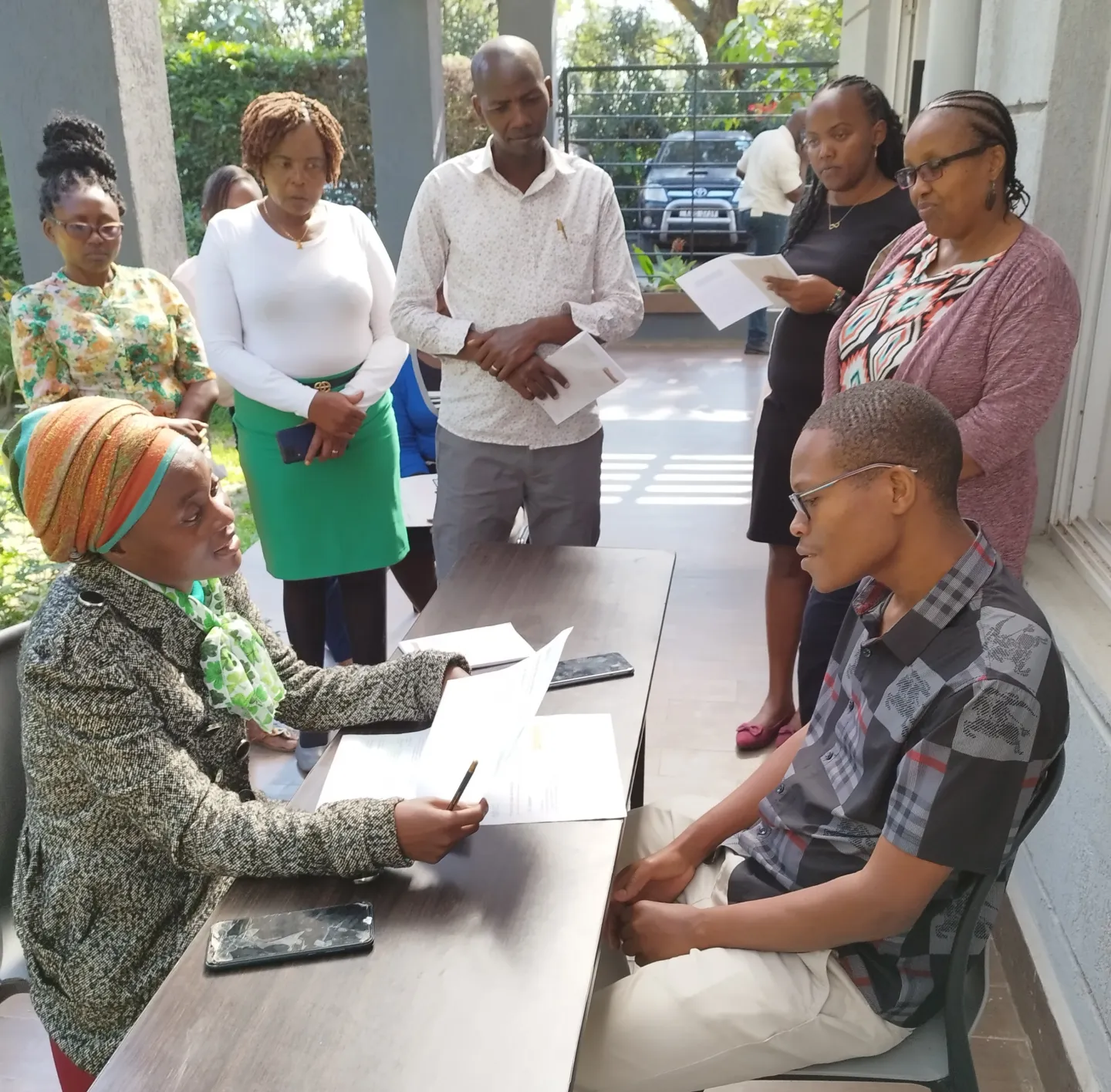
A cornerstone of the ILO's support is a comprehensive training development for the managers and operational staff in alignment with the capacity building of NEA. Knowledge transfer progressed from foundational concepts in public employment services to methodologies, trends, and advisory skills. NEA staff also received extensive training on the efficient use and management of the NEAIMS online portal.
Through this multi-modal approach spanning online training programs and in-person workshops, capacity building created both immediate impact and sustainable knowledge transfer mechanisms for employment services. All staff members were included to address representation and inclusion across the capacity building process.
The initiative culminated in developing a cohort of officers capable of training others, enabling long-term scalability of public employment service improvements. A training manual was also delivered and tested for PES managers and operational staff.
Lessons learned and best practices
Fostering partnerships is central to solving labour market challenges. Multiple organizations came together to strengthen public employment services in Kenya. The Republic of Korea’s Ministry of Employment and Labour covered funding for the ILO to provide technical assistance, capacity building, and IT equipment. Cooperation with the ILO programme PROSPECTS enabled the realisation of several activities beyond original plans. Country governments and their Country Employment Offices played crucial roles in service delivery, supported by national bodies such as the National Human Resource Planning and Development and National Industrial Training Authority responsible for IT systems alignment and industrial training coordination, respectively.
Emphasis was placed on selecting implementing agencies with local knowledge. Early engagement with partners, including government entities, facilitated smoother project implementation and mitigate potential risks arising from administrative changes.

Future outlook
The NEAIMS system shows early indications of sustainability. The job platform integrates with national systems and enables cross-ministry collaboration, creating a broader knowledge base. The software also considered groups in vulnerable situations by designing for accessibility. While full operationalisation is a work in progress, stakeholders committed to its completion with a dedicated budget allocation, integration in NEA performance contracts, and enhanced staffing with 129 new officers.
Taking its cue from the benchmarking visit to South Korea, NEA refocuses on the national labour market and plans to rebrand all its county offices into holistic job centres that offer career guidance, counselling, job preparation, job matching, mentorship programs, labour market information, and public-private sector collaboration programs.
It is also expected to establish specialised programs for the workforce in vulnerable situations, in collaboration with specialised agencies such as the National Youth Council and the National Council for Persons with Disabilities.
Looking forward, Ms. Okoki shared, “We are hopeful for a future where every jobseeker finds meaningful employment and every employer finds the right talent.”
We are hopeful for a future where every jobseeker finds meaningful employment and every employer finds the right talent.
Edith Okoki, the NEA Director General
To learn more about the Conventions, the ratification, and supports to member States, please read more at ILO Employment Services Portal and/or contact [email protected].
You may also be interested in

Case study on the ratification of Convention 181: ILO in Ethiopia
How Conventions 88 and 181 help change the labour market dynamics in Ethiopia
Case study on the ratification of Convention 181: Japan
Key role of private employment agencies in strengthening national labour markets: The Japan way
Case study on the ratification of Convention 181: ILO in Nigeria
How ILO missions supported the ratification of C181 in Nigeria
Case study on the ratification of Convention 181: Uruguay
Uruguay: promoting decent work and social inclusion through ratifying and implementing Convention 181