

Productivity Ecosystems for Decent Work in Egypt
Italy brings centuries of expertise to Egypt’s marble and leather sectors
Through multilateral collaborations, Italy is bringing its artisanal expertise to Egypt's industrial sectors to promote productivity and decent work.
13 October 2025
Italy’s artisanal craftsmanship has been helping shape the future of Egypt’s key industrial sectors. Through a partnership between the Italian Agency for Development Cooperation (AICS) and the International Labour Organization (ILO), Italy has been sharing its know-how and innovation to enhance productivity, sustainability, and decent work in Egypt's leather and marble sectors – supporting the country’s Vision 2030.
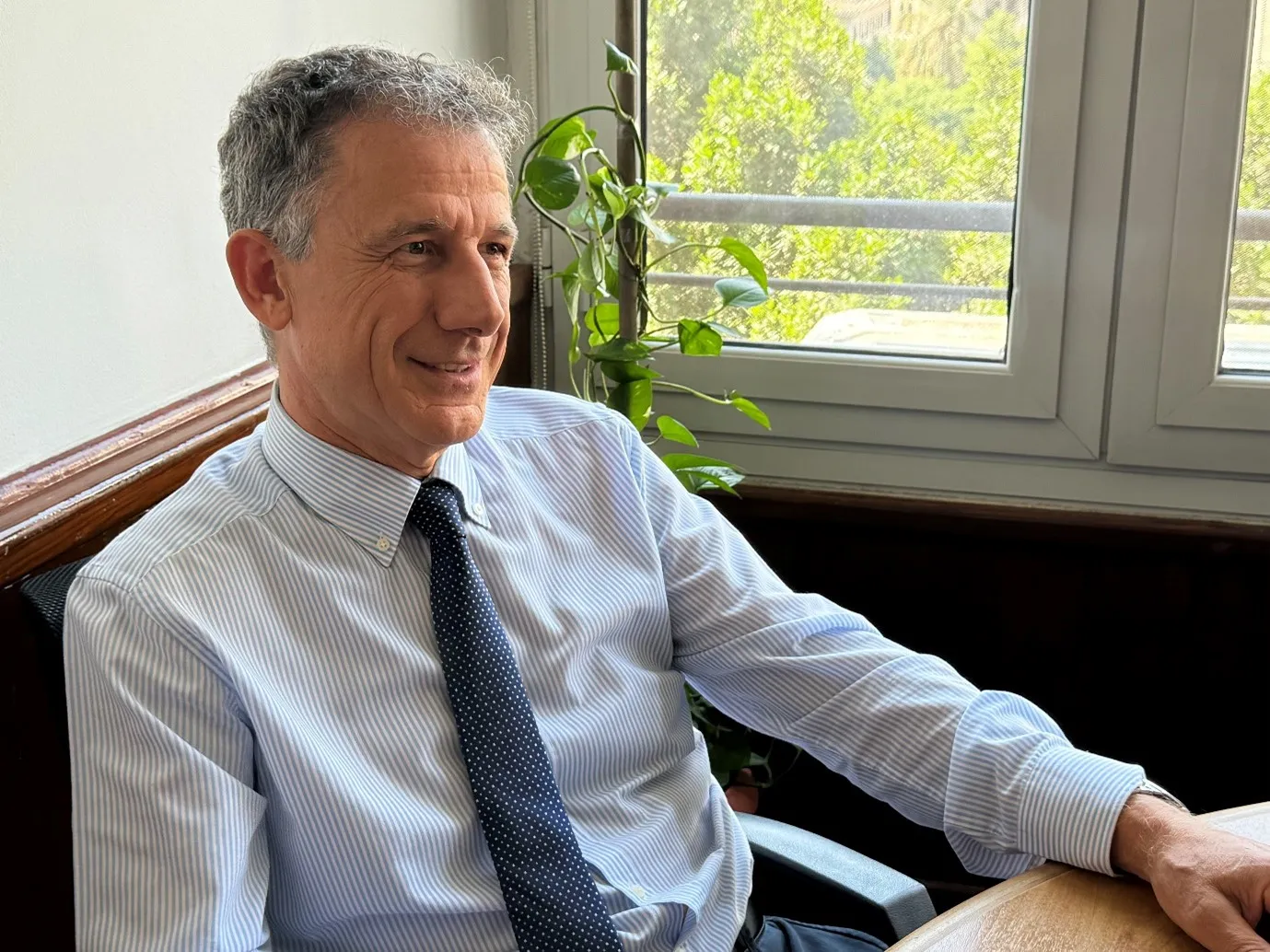
To discuss this partnership further, the ILO’s Productivity Ecosystems for Decent Work project spoke with Tiberio Chiari, AICS Director in Cairo.
From heritage to modern industry
Italy’s marble and leather industries are rooted in centuries of craftsmanship and innovation. As Tiberio Chiari explained: “Leather tanning is prominent in Italian fashion worldwide, and marble is represented by the Carrara district, famous for structures built from its marble. Italy brings together technical know-how, artisanal tradition, and innovation. Creating a district enriches all three elements together, a vision that has guided Italy since the Middle Ages.”
Over the past few years, this heritage has been progressively transferred to Egypt. Working with one of its key multilateral partners, the ILO through its Productivity Ecosystems for Decent Work programme, the focus is on the leather tanning and marble sectors. He continued, “The ILO and its SCORE programme is focused on improving productivity and working conditions in small and medium enterprises, have been identified as a main pillar to improve the targeted sector[s] and the management of enterprises, enhancing entrepreneurship and the capacity to enrich human resources.”
Through the partnership's implementation of the ILO’s SCORE (Sustaining Competitive and Responsible Enterprises) methodology, enterprises in Egypt’s leather and marble sectors are improving workplace cooperation, productivity, and occupational safety– thus ensuring economic growth translates into better jobs and working conditions for all.
Innovation as a driving force
Italy’s approach to craftsmanship does not stop at the added value of its heritage. It is based on the principle that tradition must evolve with innovation. “Innovation depends on market access and investment, but also on evolving tradition to meet international demand. It is a double track that ensures success and strong partnerships.”
The AICS Director highlighted that innovation is key: “We cannot think in terms of business as usual. The world is evolving, and cities demand new products. Brand renewal and design investment are crucial even for traditional industries. Leather and marble today cannot be the same as five years ago.”
Innovation depends on evolving tradition to meet international demand. Leather and marble today cannot be the same as five years ago.
Tiberio Chiari, AICS Director in Cairo
Sustainable industrial growth
Industrial districts have been a defining feature of Italy’s economic model for centuries. Tiberio Chiari, explained, “The district is a way to create synergies among small producers, scale up innovation, and preserve entrepreneurs’ ownership. Their governance is not only private but also involves local administrations in managing territory, environment, resources, and waste.”
This synergy-based model generates wealth and well-being while ensuring worker protection. In sectors such as marble, the district’s framework also enables labour laws to be enforced through shared public–private governance. “This is the Italian model: fostering prosperity through industry, with a flexible and evolving structure that adapts to new times and needs,” he highlighted.
Ensuring sustainability
The Italian model emphasises that sustainability depends on cooperation between entrepreneurs and workers. Tiberio Chiari added, “Without partnerships between entrepreneurs and workers, there is no sustainability. Businesses cannot survive without impact, and impact includes respect for workers’ rights and families. This has been established through labour laws and the recognition of unions.”
Districts then continue to provide a space where laws can be applied while also serving as laboratories for new approaches. “The district model is where lessons and best practices are generated for national use. It is a platform for experimenting with new ways to produce, innovate, recognize rights, and use the environment sustainably.”
Without partnerships between entrepreneurs and workers, there is no sustainability. Businesses cannot survive without impact, and impact includes respect for workers’ rights and families.
Tiberio Chiari, AICS Director in Cairo
Looking ahead: the Mattei Plan and Egypt Vision 2030
Italy’s future priorities are guided by the Piano Mattei for Africa (Mattei Plan for Africa), which emphasises replication and scaling up of successful models.
Tiberio Chiari concluded: “What we have done can be replicated, diffused, and scaled up. This model of governance, enforcing laws for both entrepreneurs and workers, applies across sectors. It creates win–win situations. Respecting laws for the environment and workers is a cost, but it is essential for sustainability. This is the Italian vision: doing better business while respecting people and the environment. The Mattei Plan reinforces this and aligns with Egypt’s Vision 2030.”
What we have done can be replicated, diffused, and scaled up. This model of governance, enforcing laws for both entrepreneurs and workers, applies across sectors. It creates win–win situations.
Tiberio Chiari, AICS Director in Cairo
Through such partnerships, Italy’s industrial expertise and the ILO’s developmental support bring technical know-how, scalable models, and a strong commitment to workers’ rights and sustainability to Egypt’s marble and leather sectors. This underscores Italy’s and the ILO’s support of Egypt’s efforts towards resilient industries, decent jobs, and sustainable development.
As Italy and the ILO continue to collaborate under the Mattei Plan and Egypt’s Vision 2030, their shared commitment to innovation, decent work, and sustainability is helping build stronger, fairer industries– where heritage and progress go hand in hand.
Relevant projects

Productivity Ecosystems for Decent Work in Egypt: Improving productivity and strengthening working conditions in key industrial sectors
Productivity ecosystems for decent work