

International Year of Cooperatives 2025
ILO strengthens cooperatives to tackle child labour in Nigeria’s cocoa and gold sectors
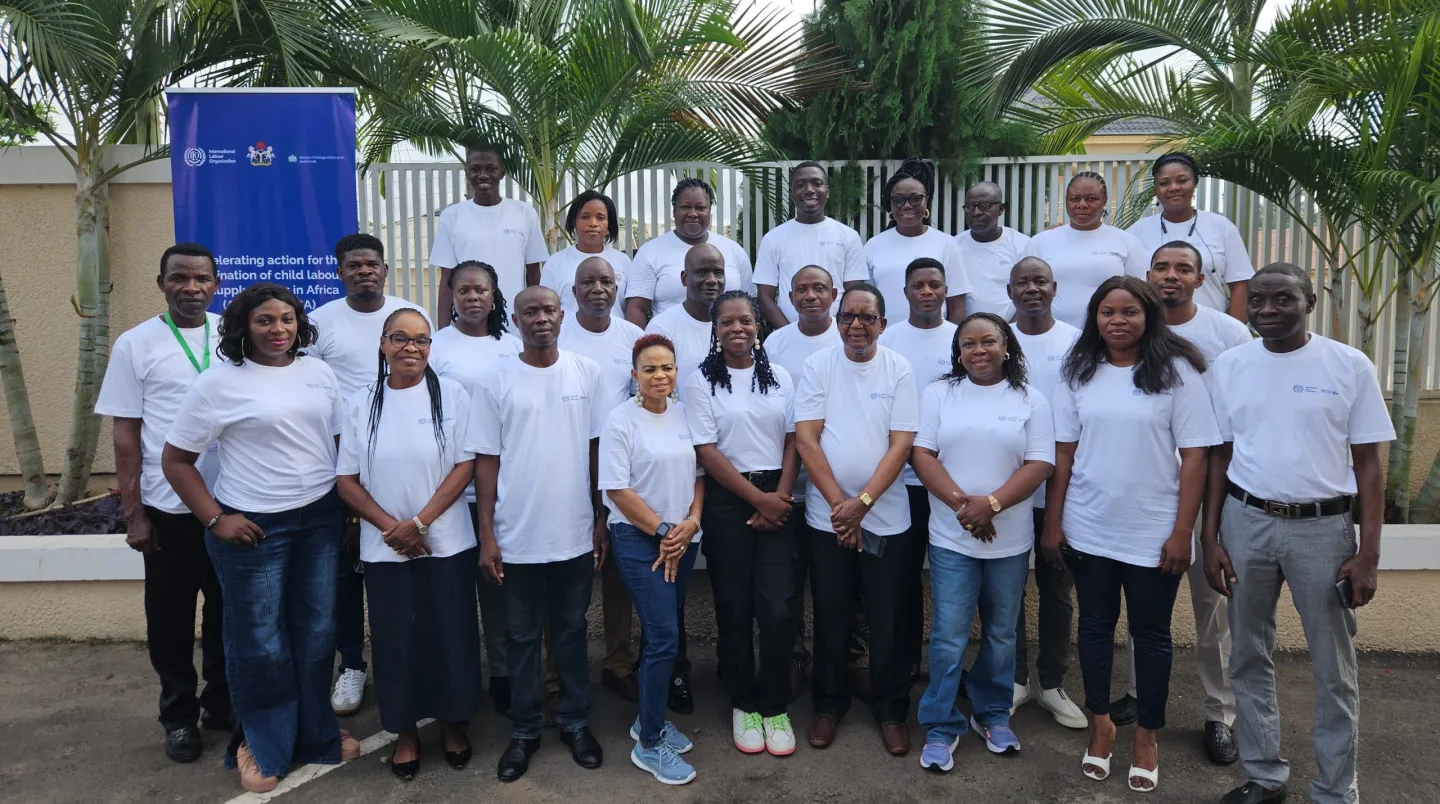
The ILO’s ACCEL Africa project held a Training of Trainers in Akure, Nigeria, to strengthen cooperatives in cocoa and artisanal gold mining communities across Ondo, Osun, and Niger States. Using ILO tools (Think.COOP, Start.COOP, My.COOP), the training equipped cooperative leaders, farmers, and officials to promote decent work, boost incomes, and reduce child labour in high-risk supply chains.
5 June 2025
AKURE (ILO News) - As part of ongoing efforts to accelerate the elimination of child labour in supply chains, the International Labour Organization (ILO), through its ACCEL Africa project, conducted a Training of Trainers (ToT) on cooperative development from 26 May to 5 June 2025 in Nigeria. The training, which utilized ILO tools—Think.COOP, Start.COOP and My.COOP—was held from 26 May to 5 June 2025 in Akure, Ondo State. Funded by the Ministry of Foreign Affairs of the Netherlands, it focused on enhancing the role of cooperatives in cocoa-growing communities and artisanal small-scale gold mining areas.
Participants included representatives from Ondo, Osun and Niger States, drawn from cooperative unions and societies, the Department of Cooperatives (Ministry of Commerce, Industry, and Cooperative Services), non-governmental organizations (NGOs), the Cocoa Farmers Association of Nigeria (CFAN), the Miners Association of Nigeria (MAN), employers’ organizations, government officials and academia.
The initiative aims to collaborate closely with cooperative societies to reach vulnerable individuals and households—particularly farmers and miners—within the cocoa agriculture and gold mining supply chains. The ToT’s objective was to equip cooperative service providers and community actors with key ILO tools to support the establishment, participatory development and effective management of cooperatives.
Additionally, the training sought to build the capacities of state and local-level cooperative service providers, including cooperative unions, cocoa farmer associations and organizations involved in cocoa and gold mining value chains. These actors are critical in engaging workers, community child labour monitoring committees and local government officials in the project states.
The training specifically targeted 16 communities across Ondo, Osun and Niger States, where ACCEL Africa is implementing direct interventions and where child labour risks in cocoa and gold mining remain significant.
Why cooperatives?
The ILO has long recognized cooperatives as value-driven enterprises that promote democratic governance, economic empowerment, and social protection—all vital components in tackling child labour. In rural and underserved regions, particularly those reliant on cocoa farming and artisanal mining, cooperatives help organize producers and often fill the service gaps left by the public sector.
This training initiative aligns with the ILO Promotion of Cooperatives Recommendation, 2002 (No. 193), which calls for greater support for cooperatives to achieve sustainable development and promote rights at work.
Overview of ILO tools used
- Think.COOP: An introductory, activity-based training tool for individuals considering starting or joining a cooperative. It covers cooperative values and principles, their distinctions from other enterprises, decision-making processes, and the benefits of collective action and good governance.
- Start.COOP: A step-by-step guide that supports cooperative formation. It helps participants identify core members, define and assess business ideas, develop viable business plans, and establish organizational structures.
- My.COOP: A training package aimed at improving the management of agricultural cooperatives. It enables existing and potential cooperative managers to address key challenges in market-oriented agricultural development.
Building foundations for a child labour-free future
The ToT programme was designed to ensure that cooperative business models actively contribute to child-labour-free supply chains by:
- Enhancing productivity and income generation among farmers and miners;
- Raising awareness of child labour risks and the benefits of collective action;
- Promoting improved governance, marketing, and operational practices within cooperatives;
- Strengthening business planning, feasibility analysis, and cooperative management skills;
- Facilitating dialogue with stakeholders to influence policies and ensure compliance with national and international labour standards.
“The training was not only informative, but transformative,” said Ms. Folashade Bamigboye of the NGO Kids n Teens. “I now understand how to help cocoa farmers access market information, improve their collective bargaining power, and earn better prices. These improvements will allow families to invest in their children’s education and avoid the need for child labour.”
Next steps
As part of their follow-up responsibilities, participants have developed and shared action plans that include training schedules, objectives, target cooperatives or beneficiary groups, and execution timelines for the next quarter.
They will conduct step-down training for:
- Selected cooperative members, boards, and managers; and
- Informal producer groups, to support their transition to formal cooperative structures.
Upon successful delivery of these trainings, participants will be assessed by an ILO Master Trainer. Those who meet the requirements will be certified as trainers and granted the rights to deliver training using ILO cooperative development tools
Professor Oluwole Akinnagbe, Head of the Agriculture Department at the Federal University of Technology, Akure (FUTA), emphasized the long-term value of the training: “I plan to integrate these tools into agricultural research and extension work, organize trainings for community leaders, and influence policy and academic curricula. This programme is a game-changer for cooperative development in Nigeria.”
Building on the momentum from this ToT, ACCEL Africa is paving the way for community-driven solutions to child labour. By empowering cooperatives with the right tools, knowledge, and networks, the project is building a sustainable path toward decent work, improved livelihoods, and child-labour-free supply chains in Nigeria.
Related content

ILO COOP/SSE participates in a #CoffeePeople webinar on Occupational Safety and Health through Cooperatives

Cooperatives promote decent work in Uganda's coffee supply chain
Video
Cooperative members and workers benefit from occupational safety and health initiatives in Nepal

ILO supports Occupational Safety and Health across cooperatives in Jordan

International Year of Cooperatives 2025
ILO strengthens cooperatives to tackle child labour in Nigeria’s cocoa and gold sectors
Relevant projects
Accelerating action for the elimination of child labour in supply chains in Africa (ACCEL Africa)