

Our impact, their story
How I found hope again: David’s journey out of child labour in Nigeria
From child labour to aspiring fashion designer, this is the story of how the ILO’s ACCEL Africa project helped 24-year-old David from Ondo State break free from farm work, learn a skill he loves, and reclaim hope for the future. This is his journey, told in his own words.
5 December 2025
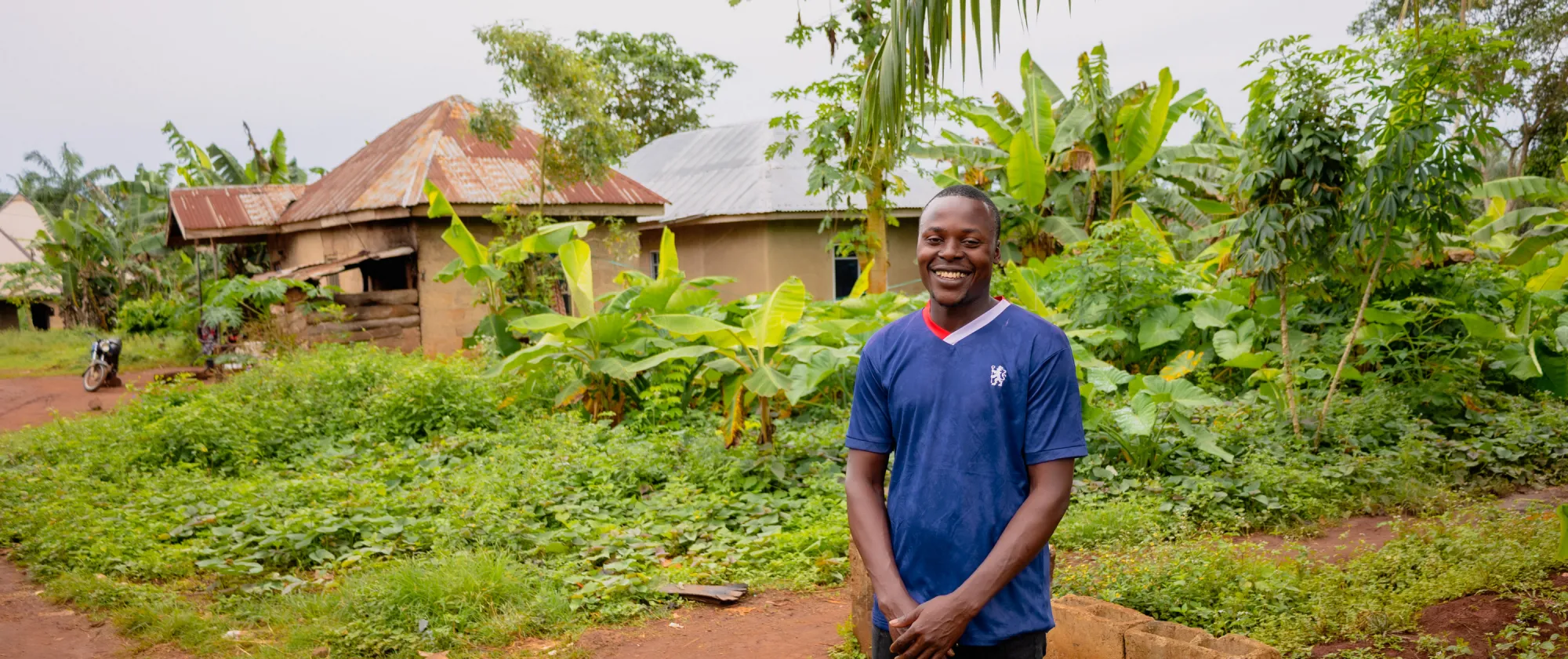
My name is Ebeh David Chukwuemeka, and I am 24 years old. I was born and raised here in Ondo State, Nigeria. I come from a family of three, and I am the eldest.
Growing up, life was not easy for us. In fact, it was very hard. When I was just eight years old, I lost my father, and from that moment, everything changed.
With my father gone, the burden fell on my mother, and on me too. I saw how much she struggled to take care of me and my two younger siblings. I felt like a big man at eight, like I had to stand up and support her. So, while other children were still in school, I made the painful decision to drop out in primary three.
I didn’t want to see my mother suffer. I told myself it was better if my siblings continued their schooling, and I joined my mother on the farm. That was how my childhood disappeared.
From the age of eight until I turned twenty-one, I worked full-time on the farm. We planted cocoa, palm trees, maize, yam, anything the land would allow. I was the one who cleared the fields, planted the crops, harvested them, cracked cocoa pods, dried the beans, and carried loads no child should carry. There was no money to hire labourers. It was just me and my mother, every day, through sun and rain. Life was not easy, but we had no help from anywhere.
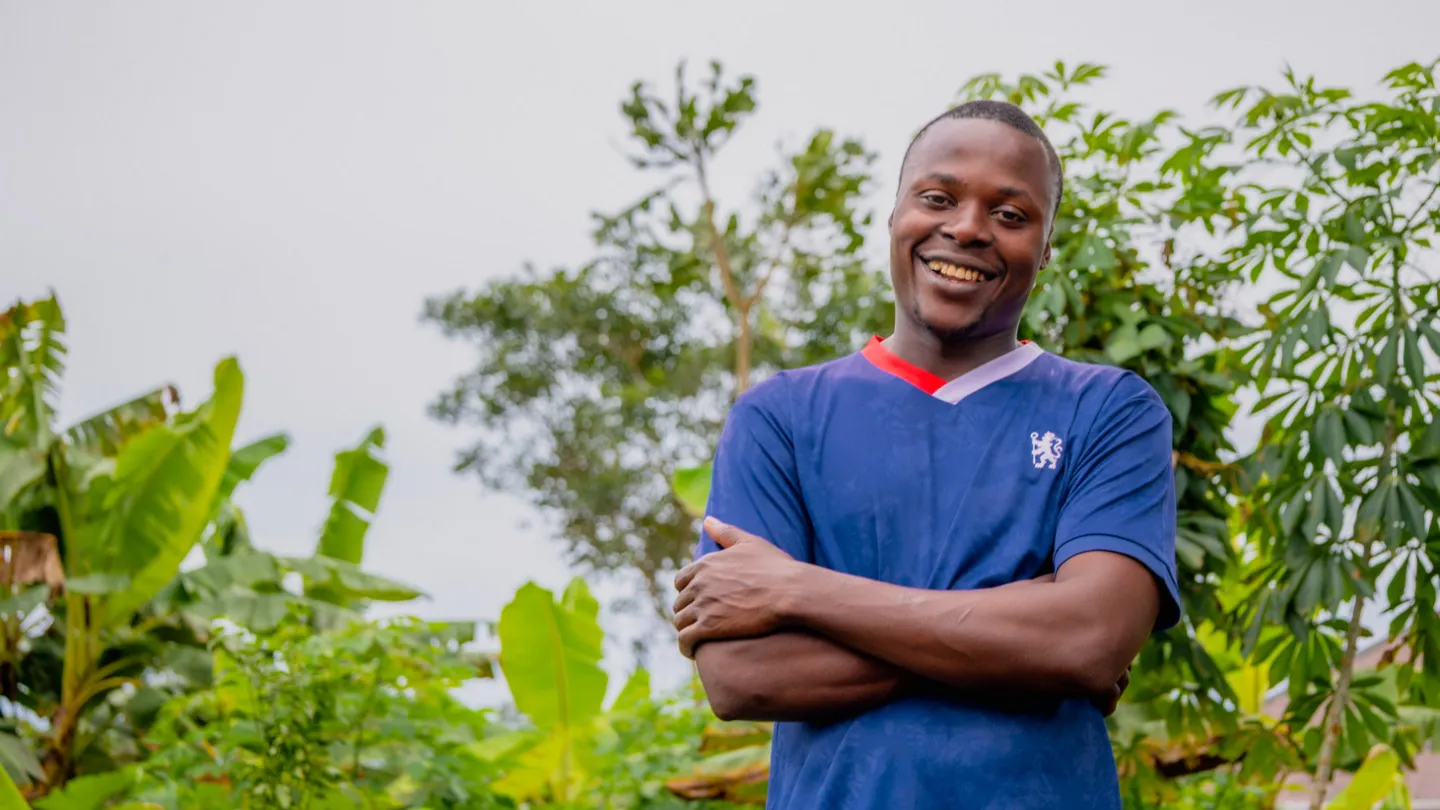
Then one day, something happened that I never expected. Our community leaders told us that some people from the International Labour Organization had brought a programme to help families like ours. Honestly, I did not believe it at first. Many opportunities had come before but they all turned out to be scams. So I ignored it.
But then I started seeing other children from our village who had also dropped out of school, walking around with new school bags and uniforms. That surprised me. Then I discovered it was truly the ILO supporting them. That was when I decided to give it a chance. I wrote down my name, hoping maybe this time something real was happening.
When they invited us again, they told us we would be taken somewhere to learn a skill. That was the first time in my life I felt a spark of hope for my future. I chose fashion design because I have always loved fashion. That passion was inside me even when I didn’t have the opportunity to follow it. The ILO registered me for six months of training, and I was more than eager, I wanted the training to be finished today and tomorrow! My boss kept telling me, “Fashion takes time. Concentrate.” And I did.
I will never forget the first time I sat in front of a sewing machine. I felt on top of the world. I had never imagined myself sitting beside a sewing machine, and suddenly I had one in front of me. My boss said, “This is your machine until you finish training.” In my mind I was thanking God and thanking the ILO. I didn’t even know how to pedal the manual machine, but he taught me. It took me hours to get it right, but I refused to give up. That was the beginning of my new life.
After the skill training, the ILO took us again for business management training to teach us how to handle a business so it wouldn’t die in our hands. They brought in experts who showed us how to grow what we had learned into something sustainable. For the first time, I felt prepared to stand on my own.
But there was still one big problem: we had no money to buy equipment. My mother was happy for me, but she was also worried. Even feeding ourselves was difficult unless we went to farm. How would we ever afford a sewing machine? I told her not to worry, and she prayed for me, believing that help would come one day. And it did.
When the ILO told us to come to an event centre, I didn’t know what to expect. It was my first time in such a place, and seeing the crowd already made me excited. Inside, there were sewing machines everywhere; real ones, brand new, shining. I thought they would just show them to us and take them away.
But when the programme ended, they told us: “When you are going home, go home with your sewing machine.”
I couldn’t believe it. I still cannot explain that joy. When I got home, I showed the machine to my mother, and she was so happy that she cooked the best meal we had eaten in a very long time. That night I could not sleep, I kept waking up to check if the machine was still there, because it felt like a dream.
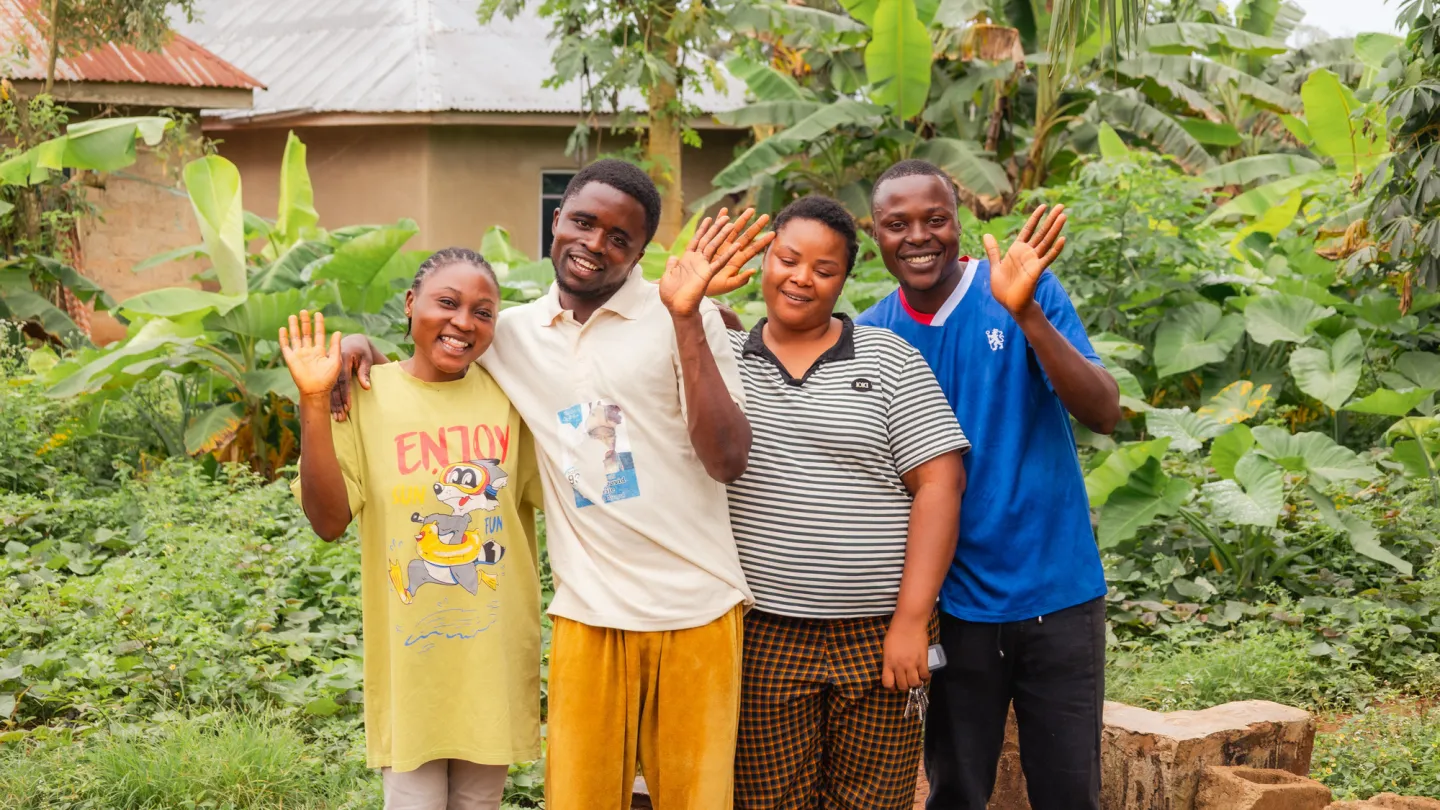
Since then, my life has changed completely. I no longer have to go to the farm every day. I continued improving myself, learning how to sew caps, trousers, and many more designs. I am still learning, but now I earn my own money. I am the boss of my own small business, and that alone gives me pride.
Along the way, I lost my mother. That pain was heavy. She did not live long enough to fully enjoy what she suffered for. But I know she was proud before she left. And because my younger siblings now look up to me, I have to remain strong.
The ILO brought my hope back to life. They made me realize that against all odds, there is still something to live for. They gave me something to look forward to every morning. Our community leaders also stood by us, and I am grateful.
My message to other young people like me is simple: Don’t give up.
Good things don’t come easy. Grab opportunities when they come, even if you are not sure they are real. If I had refused to join this programme because others disappointed us before, I would not be where I am today. Today, I am living my dream. I am truly becoming the person I always hoped to be.
Find out more:
- ACCEL Africa is tackling child labour in Nigeria's cocoa sector by promoting business development and formalization.
- The project also works with vulnerable communities to teach them about the risks children face in farming and the importance of education.
- ACCEL Africa is also supporting Nigeria's efforts to expand social protection to cocoa farmers, miners, and informal workers at risk of child labour. This includes updating social registers, expanding health insurance coverage, and through cash transfers in Ondo and Osun States.
- ACCEL Africa is funded by the Ministry of Foreign Affairs of the Netherlands.
Related content
Accelerating action for the elimination of child labour in supply chains in Africa (ACCEL Africa)

Morocco to host Sixth Global Conference on the Elimination of Child Labour, 11–13 February 2026
Relevant projects
Accelerating action for the elimination of child labour in supply chains in Africa (ACCEL Africa)