

Skills development
Empowering women in Viet Nam's textile and garment industry: The importance of training, skills development, and gender equality
Women dominate employment across most occupational groups in the manufacturing industry in Viet Nam, yet the share of women in management positions remains low.
17 March 2025
Hanoi, VIET NAM (ILO News) - Women make up a significant portion of the workforce in Vietnam's textile and garment industry, contributing to its growth and success. Despite their essential role, challenges such as underrepresentation in leadership, wage gaps, job insecurity, and safety risks persist. Fostering training and gender equality is key to creating more opportunities and strengthening the industry as a whole.
The roles and challenges of women in the industry
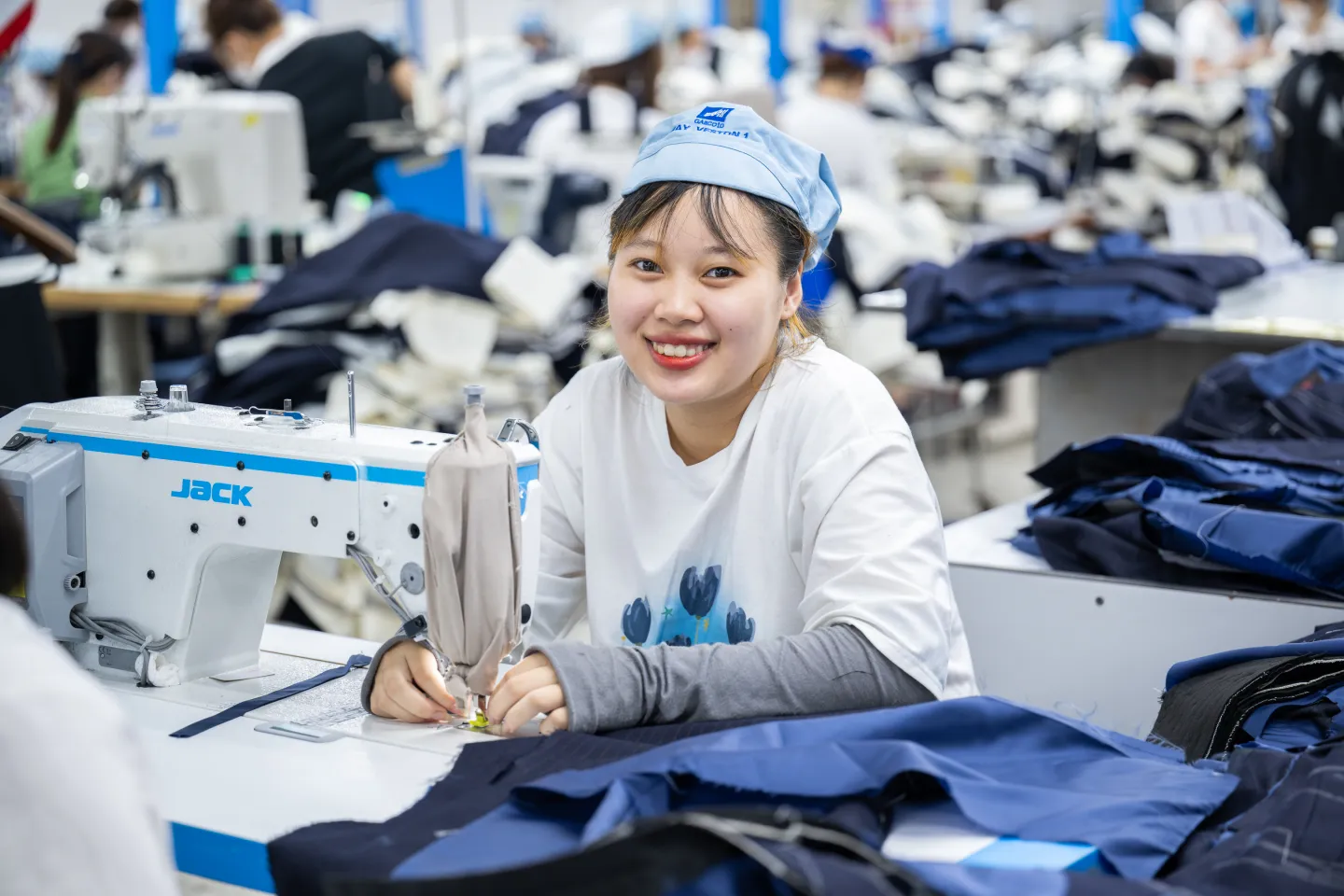
The textile and garment industry remains an important employer for women in Viet Nam, creating more than a million additional jobs for women in the past decade, thereby fuelling the growth of the textile and garment industry, which recorded approximately USD 44 billion export turnover in 2024. A recent report by the ILO and the Viet Nam Textile and Apparel Association (VITAS) on Skills for Trade and Economic Diversification: Analysis of the textile and garment in Viet Nam shows that the number of female workers in this sector increased from 1.4 million in 2013 to 2.5 million in 2023, accounting for 74.8 per cent of the industry workforce. This growth has been primarily in wage and salaried positions, reflecting a shift from small-scale production to larger factory settings.
Women dominate employment across most occupational groups in the industry, yet the share of women in management positions remains low. According to the General Statistic Office (GSO), in 2023, women accounted for more than 80 per cent of employment in the crafts and related trades workers category, approximately three-quarters in the plant and machinery operators and assembler’s category, and more than two-thirds of the sector’s professionals, technicians, clerical service, and elementary workers. Despite this dominance, the share of women in management positions remains low at 30%, with a higher percentage in textile (40 per cent) than in garment (27 per cent).
The gender wage gap in the textile and garment industry has narrowed significantly over the past decade, from 17.2 per cent in 2013 to 9.3 per cent in 2023. However, income disparities persist mainly due to the nature of tasks performed by female workers, who often engage in lower-skilled tasks and work less overtime due to gender-related responsibilities.
There is room for improvement in addressing women-related occupational safety and health (OSH) issues and ensuring compliance with national labour laws, especially during pregnancy, following Better Work Viet Nam’s annual report in 2023. The nature of work in textile and garment factories poses potential health risks and occupational hazards, particularly for women. In addition, the high reliance on temporary contracts [1]has increased employment and income insecurity, with the share of female employees on temporary contracts rising from 65% in 2013 to 77.5% in 2023[2] (ILO and VITAS, 2025). Excessive overtime, especially for women, also limits opportunities for learning and skills development. Emphasizing training, skills development, and gender equality is crucial for enhancing women’s status in the industry.
Empowering women through training and skills development
A case study from the Better Work Viet Nam (BWV) Programme showcases the impact of training, skills development and gender equality initiatives on female workers. Pham Thi Thom, a 30-year-old worker at Eclat Vietnam Textile Co., Ltd, has made positive changes in her work after participating in the Gender Equality and Returns (GEAR) training in 2022, delivered by the BWV Programme.
GEAR, an initiative by the International Finance Corporation (IFC) adapted for Viet Nam in 2019, equips female sewing operators like Thom with the technical and soft skills needed for supervisory roles. It also promotes the application of Kaizen, a core element of lean production methods aimed at enhancing productivity, eliminating waste, and fostering continuous improvement.
Thom's experience highlights the role of of skills enhancement in empowering women. Initially struggling in her role, Thom gained crucial skills through GEAR, which enhanced her performance and boosted productivity on her production line. Thom's initiative shortened the sewing time for pocket sides from 1 minute 23 seconds to just 40 seconds, greatly improving efficiency. The factory manager implemented her Kaizen initiative across all sewing lines, enhancing both individual performance and overall team productivity.
Recognized by the Management Board, Thom received company incentives and being entrusted with greater responsibilities. However, what she values most is the ability to better support her team as a team leader. She regularly shares her knowledge and trains team members, driving continuous improvement in line productivity.
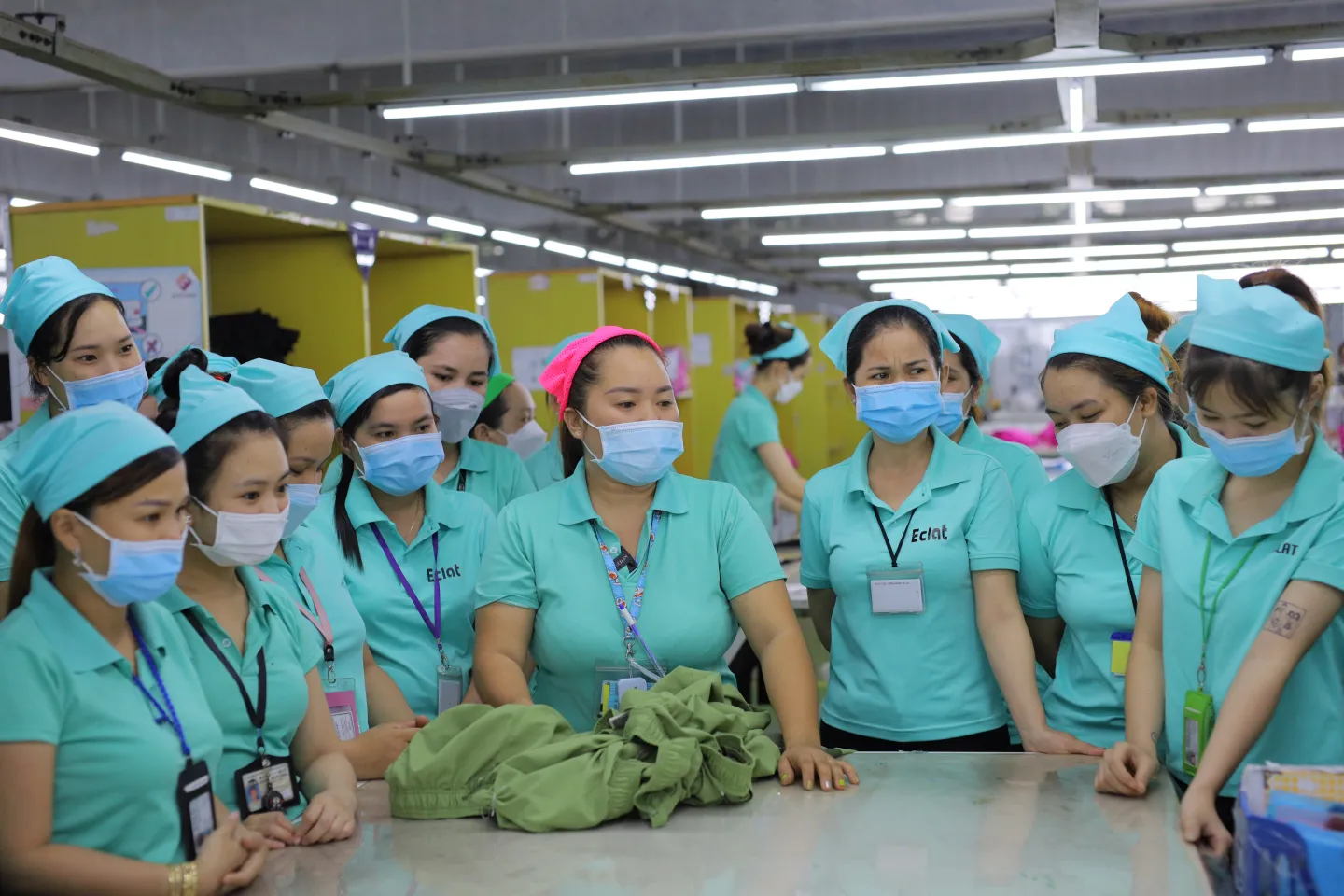
Training and skills development initiatives like the GEAR not only enhance individual careers but also create lasting change in workplaces. Thom’s story is a good example of how investing in women’s skills fosters both professional growth and workplace gender equality.
Offering both job-related training such as technical and supervisory skills, leadership, and compliance and personal development like parenting, stress management, and communication is equally important for workers. This approach improves our workers' professional skills while enriching their personal lives. Happier and more well-rounded workers are more focused and productive, which ultimately drives our business growth and ensures sustainable development.
Linus Liu, Eclat Factory Administration Section Manager.
Promoting gender equality and career development for women in the industry
Promoting gender equality and fostering an enabling work environment are crucial for empowering female workers and expanding their access to training and skills development in Viet Nam's textile and garment industry. The ILO, and its national partners and sectoral stakeholders, in the report “Towards a sector skills strategy for Viet Nam’s textile and garment industry: Priority skills needs, actions, and recommendations for education and training system” and its Brief: Towards a sector skills strategy for Viet Nam’s textile and garment industry emphasize the importance of developing and implementing inclusive and gender-responsive training policies. Women, particularly those from remote, ethnic, and disadvantaged communities, need equal access to high-quality training. Promoting lifelong learning and enhancing the connection between continuous and formal training can open new and additional career pathways for women and other vulnerable groups. Enterprise-based training should take into account the needs of women employees, specifically to access managerial positions. Additionally, prioritizing OSH training and raising awareness of workers' rights, particularly for women, is crucial.
“The best part of GEAR is learning not only technical and soft skills but also gender equality. I feel fortunate that many of our female colleagues and I had the chance to develop and got promoted at work”– Thom added, “I received full salary and benefits and reduced my overtime when I joined the training. I appreciated the support from the company, my supervisors, and my husband during this time. Without the support, I couldn't have upgraded my skills and maximized the learning opportunities”
Not only Eclat, but many textile and garment companies in Viet Nam are actively promoting gender equality and empowering women. By adopting and implementing inclusive, gender-responsive training policies, the industry can create a more equitable and supportive environment for all workers. This approach not only boosts overall productivity but also ensures the sustainability of the sector.
[1] Covering non-permanent employment contracts, including fix-term contracts, project or tasks-based contracts, seasonal or casual contracts, including day-labour contract.
[2] Calculated based on ILO harmonised and processed datasets from GSO data.


You may also be interested
Country portal
Viet Nam

Skills development
Future of Work in Textile and Clothing: Forecasting and Developing Skills in Viet Nam to Advance Decent Work and Productivity in the Sector