

Skills development
Brief: Towards a skills strategy for the textile and garment industry in Viet Nam
The brief highlights the achievements, opportunities, and challenges of Viet Nam’s textile and garment industry amid increasing international integration and participation in global value chains. It provides key recommendations for developing a sector skills strategy to ensure the industry's continued competitiveness and sustainable growth.
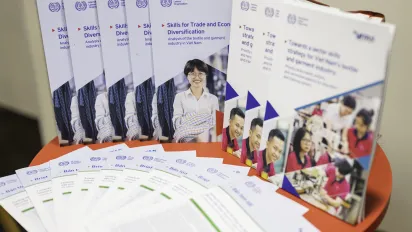
This brief draws on insights from two key reports jointly developed by the ILO and Viet Nam Textile and Apparel Association (VITAS), namely: "Skills for Trade and Economic Diversification: Analysis of the textile and garment industry in Viet Nam" and "Towards a sector skills strategy for Viet Nam’s textile and garment industry: Priority skills needs, actions, and recommendations for education and training system" (ILO and VITAS, 2025). It recommends optimizing the policy environment, enhancing industry and training linkages, ensuring the relevance of training programs, and promoting inclusive, gender-responsive education and training policies. It also emphasizes quality assurance, industry participation in skills development, and financing for sector-specific training. Additionally, the brief identifies business capability gaps, skills implications, and highlights priority skills and interventions for key occupational groups in the short, medium, and long term.
Related content

Country portal
Viet Nam

Skills development
Future of Work in Textile and Clothing: Forecasting and Developing Skills in Viet Nam to Advance Decent Work and Productivity in the Sector
Skills development
ILO and national partners launch two key reports towards a sector skills strategy for Viet Nam’s textile and garment industry
Relevant projects
Skills development
Future of Work in Textile and Clothing: Forecasting and Developing Skills in Viet Nam to Advance Decent Work and Productivity in the Sector