

Our impact, their voices
Empowering a teacher, inspiring a generation in Timor-Leste
A certified education training programme under the ILO’s Agroforestry Skills Programme in Timor‑Leste has transformed the life of a dedicated teacher.
17 December 2025
LAUTEM MUNICIPALITY, Timor-Leste (ILO News) - For the past 23 years, Carlos da Costa, widely known as Mestre Carlos, has dedicated his life to shaping young minds at Escola Teknika Agrikola Fuiloro (an agricultural technical school) in Lautem municipality, Timor-Leste. At 52, he remains one of the school’s most committed teachers, delivering courses in agriculture, food processing and climate change. Beyond teaching, he plays a key role in evaluating and overseeing the school’s curriculum, helping ensure it remains relevant to students’ needs.
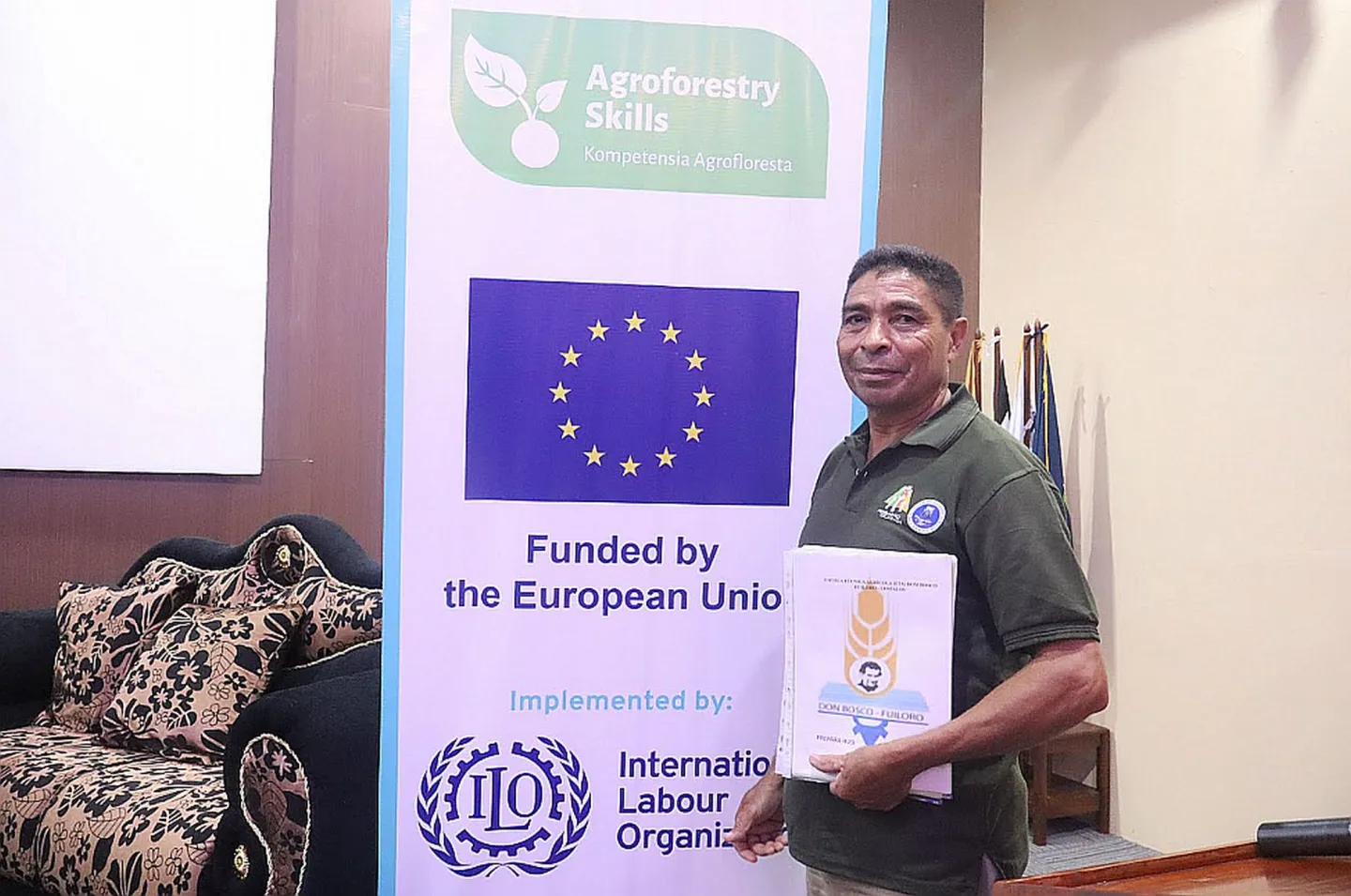
Although he had participated in various trainings over the years, mainly in language and agriculture, he, like many trainers and teachers across Timor-Leste, had never obtained a formal teaching certification. So, when he was invited to join the Certificate III in Education, Training and Assessment under the Agroforestry Skills Programme, implemented by the ILO and funded by the European Union (EU), he seized the opportunity.
I now feel more confident than ever in how I structure and deliver my classes and I can clearly see that my students are able to follow and understand the lessons much better.
Carlos da Costa, widely known as Mestre Carlos
Facilitated by FC Cicanada–Youth Vocational Training Center from 21 October to 27 November 2025, the month‑long training marked a turning point in his professional journey. It was his first nationally accredited programme focused on education, assessment and teaching.
Throughout the course, Mestre Carlos strengthened his ability to create safe and healthy learning environments and developed practical skills in planning, organizing and delivering structured lessons. Hands‑on practice sessions further sharpened his instructional techniques, helping him better organize demonstrations, monitor training performance, assess learner progress and complete required documentation with confidence.
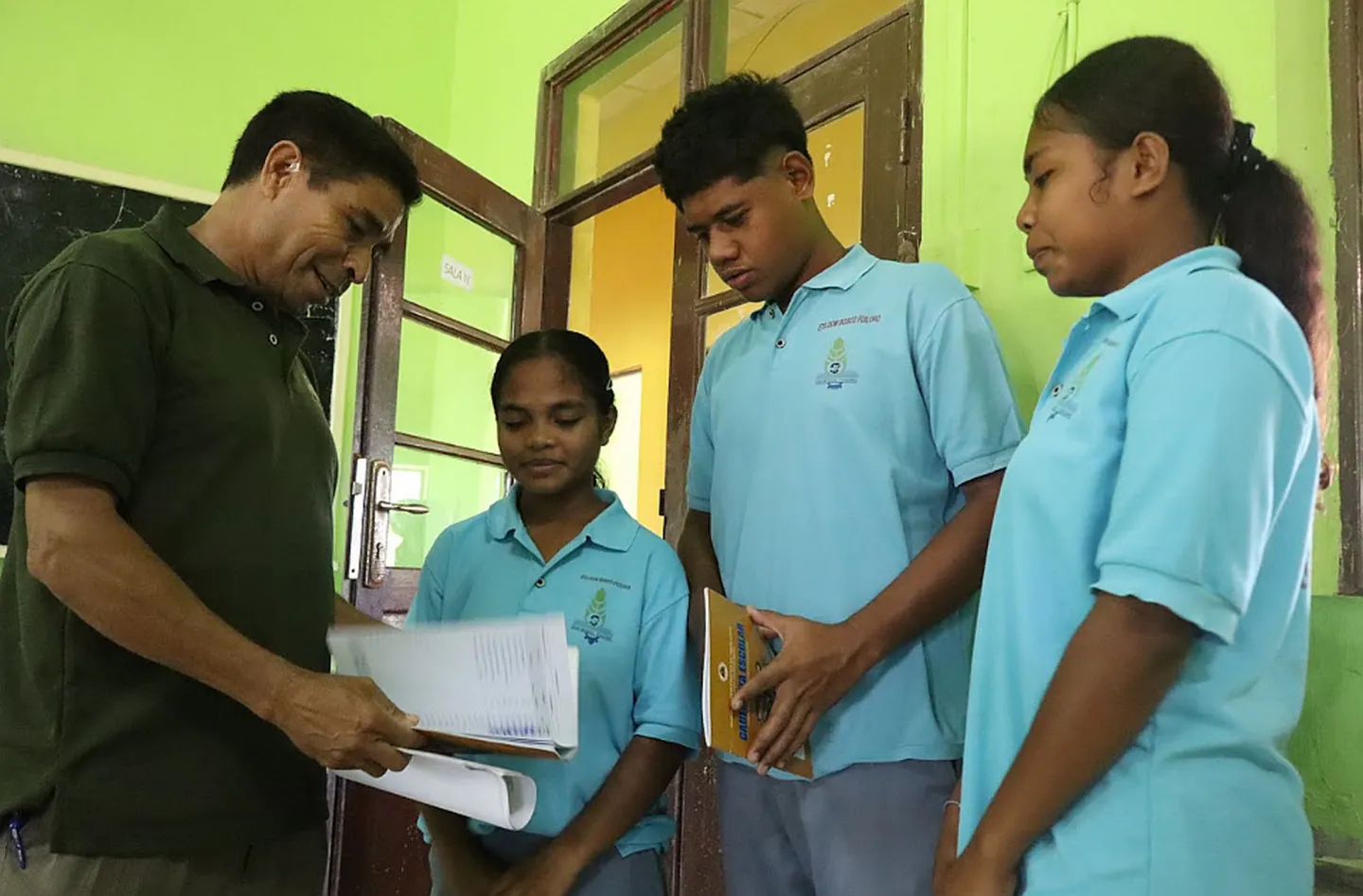
Today, the impact of the training is clearly visible in his classroom. Rather than concentrating solely on meeting the targets of the national curriculum, he now prioritizes ensuring that students and trainees genuinely understand the lessons. Previously, multiple topics were often grouped into a single class, leaving students overwhelmed with information. Now, he develops clear, structured activities and lesson plans, breaking down complex topics into manageable sessions and incorporating practical demonstrations and interactive methods. He also checks students’ understanding regularly throughout the lesson to ensure no one is left behind.
“My colleagues and I are truly grateful to the ILO and the EU for investing in us. This opportunity has transformed the way I teach and will continue to benefit my students for many years,” he shared. “I now feel more confident than ever in how I structure and deliver my classes and I can clearly see that my students are able to follow and understand the lessons much better.”
I can clearly see the improvement in training delivery among trainers who participated in the programme, and this has elevated our school’s overall profile.
Father David de Sousa, Director of Escola Teknika Agrikola Fuiloro
This year, 28 students graduated under Mestre Carlos’ guidance. Looking ahead, he hopes they will continue to pursue their dreams and contribute meaningfully to their communities and to the country. Having experienced the impact of the certified training programme firsthand, he hopes initiatives like this will continue, especially as TVET centers move toward accreditation, where certified trainers are essential.
Father David de Sousa, Director of Escola Teknika Agrikola Fuiloro, echoes this transformation: “I can clearly see the improvement in training delivery among trainers who participated in the programme, and this has elevated our school’s overall profile. As trainers, it is essential that we ourselves receive accredited training before we train students and farmers.”

Related content
EU Programme
Agroforestry skills for employment and resilience in Timor-Leste
Relevant projects
EU Programme
Agroforestry skills for employment and resilience in Timor-Leste