

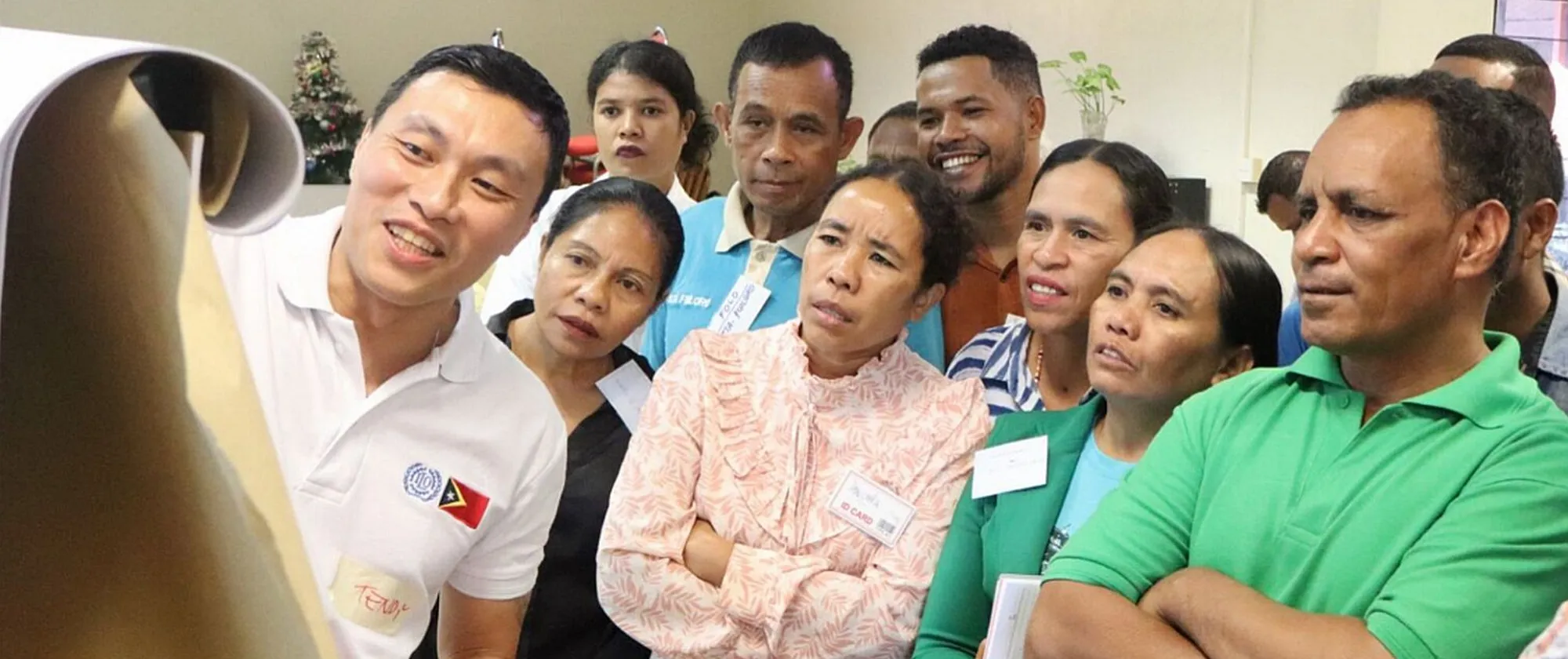
Timorese trainers strengthen capacities in career guidance, soft skills and disability inclusion to support youth employment
The European Union and the ILO enhance Timor-Leste’s institutional capacity to better support youth employment and promote inclusivity.
3 September 2025
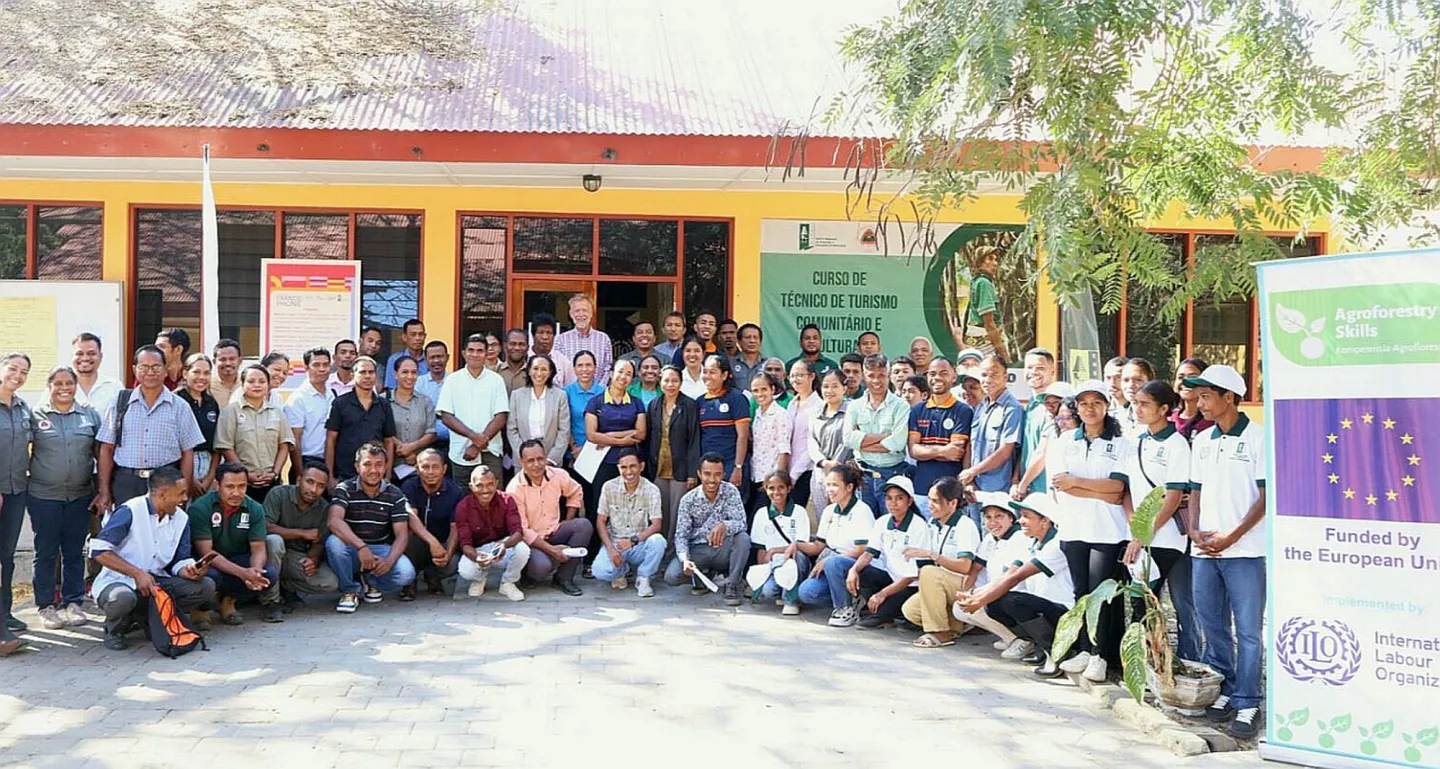
DILI, Timor-Leste (ILO News) - Fifty representatives from Timor-Leste, including officials from government agencies, training centers, technical-vocational and agricultural schools, NGOs and the private sector, successfully completed a six-day Training of Trainers (ToT) held at Centro Nacional de Emprego e Formação Profissional (CNEFP Tibar) from 18 to 23 of August 2025. The ToT focused on three core areas: career guidance, soft skills and disability inclusion, with the goal of enhancing the capacity of trainers and institutions nationwide.
This ToT was organized under the Agroforestry Skills for Employment and Resilience in Timor-Leste programme, led by the ILO and funded by the European Union (EU). It was delivered in collaboration with Centro Nacional de Emprego e Formação Profissional (CNEFP Tibar), an institution that provides accredited vocational training and serves as a national training provider in the country.
Facilitated by an ILO trainer from Indonesia, the career guidance session equipped participants with the skills to advise students and job seekers on career pathways and labour market trends. Practical sessions covered CV writing, interview preparation and employment counseling, enabling trainers to better support youth in achieving their career aspirations.
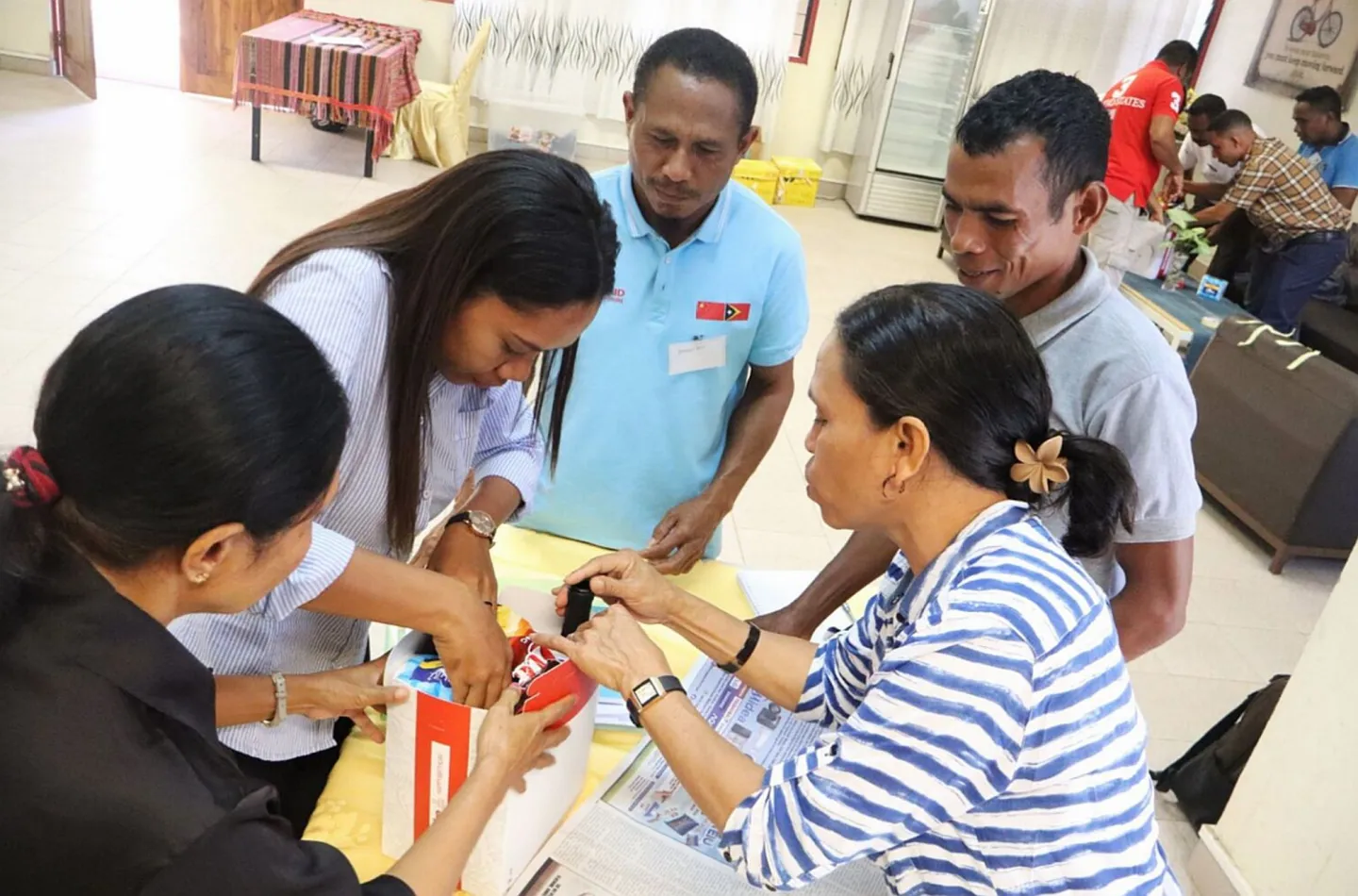
Led by CNEFP Tibar, the soft skills segment focused on enhancing participants’ communication, decision-making and teamwork abilities. Through interactive exercises, they gained hands-on experience in project planning, conflict resolution and time management as key competencies for effective training delivery.
Delivered by the ILO, the disability inclusion session aimed to foster inclusive practices within training environments. Participants explored topics ranging from disability awareness to accessible infrastructure. A pre-training survey encouraged reflection on institutional readiness to support learners with disabilities, helping identify areas for improvement.
This training has equipped me with the tools to better guide students and youth entering the workforce. I am grateful for the new skills that will help me support their transition into employment.
Jengki Cardoso, Trainer at Centro Treinamento Claret-Salele
Throughout the ToT, participants demonstrated high levels of enthusiasm and involvement, actively contributing to discussions, group activities and practical exercises. The participatory format fostered an inclusive and dynamic learning environment where participants felt empowered to voice their perspectives, exchange experiences and build on each other’s insights.
Jengki Cardoso, Trainer at Centro Treinamento Claret-Salele shared, “This training has equipped me with the tools to better guide students and youth entering the workforce. I am grateful for the new skills that will help me support their transition into employment.”
Meanwhile, Bernadino Pinto, Trainer at Escola Tekniku Agrikola Fuiloro, added, “As a teacher and trainer, I am proud to have taken part. The lessons I have learned are invaluable and I am committed to applying them with my students to strengthen our institution.”
Sofia Neves, Programme Officer at the National Institute for Labour Force Development (INDMO), highlighted the significance of the ToT programme both for INDMO in its role as a regulatory authority and for training centers as providers of vocational skills. She noted that the training plays a crucial role in helping institutions uphold quality standards and foster greater inclusivity. According to her, the three focus areas of the ToT – career guidance, soft skills and disability inclusion – align closely with INDMO’s self-assessment framework and accreditation criteria.
“The ToT strengthened our ability to match people’s skills with industry needs and deepened my understanding of inclusive practices, especially for persons with disabilities. I also found the soft skills training, particularly communication and problem-solving, highly valuable for my daily work,” Sofia concluded.
As a teacher and trainer, I am proud to have taken part. The lessons I have learned are invaluable and I am committed to applying them with my students to strengthen our institution.
Bernadino Pinto, Trainer at Escola Tekniku Agrikola Fuiloro
Related content
EU Programme
Agroforestry skills for employment and resilience in Timor-Leste
Relevant projects
EU Programme
Agroforestry skills for employment and resilience in Timor-Leste