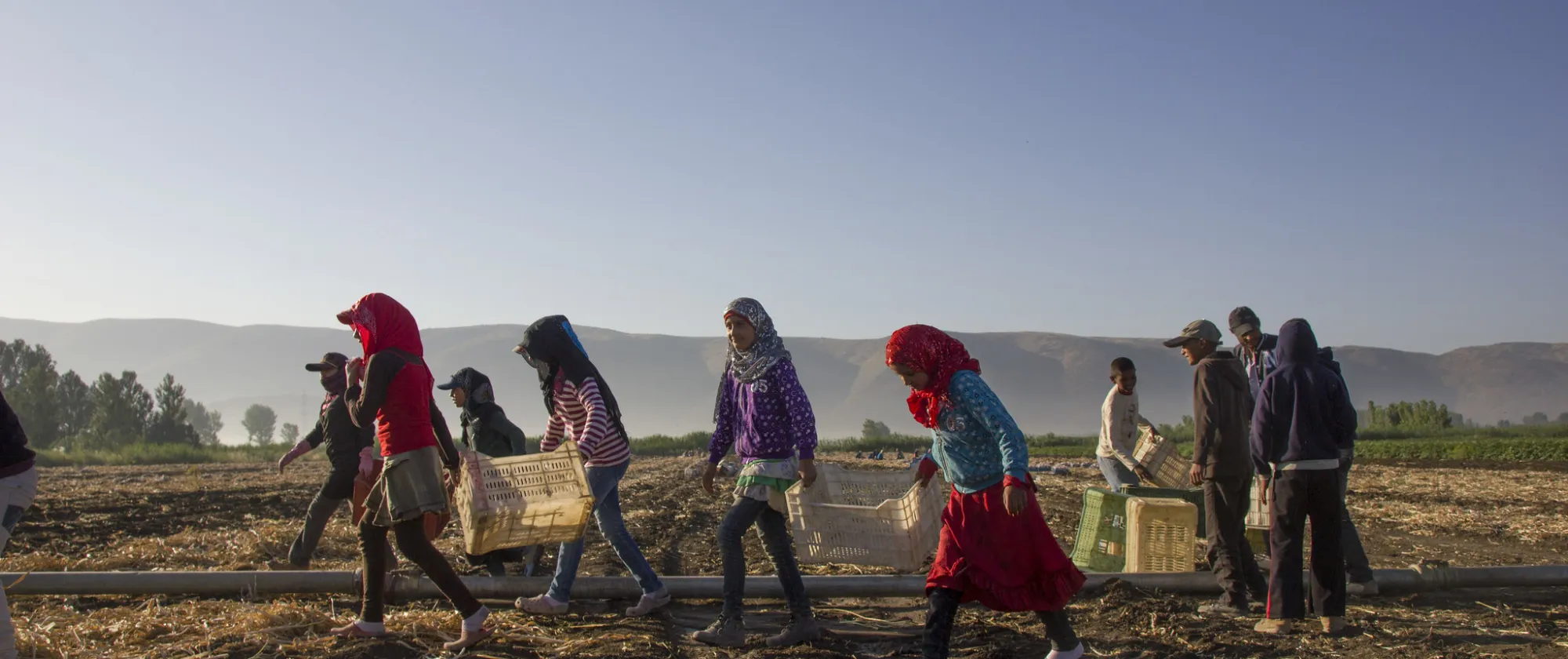
The Syrian refugee crisis embodies one of the largest and most protracted and complex humanitarian emergencies of modern times. Since 2011, the bulk of refugees fleeing the conflict in Syria have found refuge among host communities in neighbouring states. Among the Arab States hosting Syrian refugees, Jordan and Lebanon already had to contend with difficult socioeconomic conditions before the Syrian crisis, particularly in communities where refugees have now settled.
Host communities in Jordan and Lebanon now face a myriad of socioeconomic pressures stemming from the refugee crisis, including:
An increase in labour supply which results in increased employment competition as well as downward pressure on wages, particularly among low-income and low productivity jobs;
a rise in market demand which exerts upward pressure on consumer goods;
a decrease in access and quality of public services including utilities, infrastructure, healthcare and education.
an increase in child labour among refugees and host community residents, including the worst forms of child labour; and
rising social tensions and lower social cohesion among refugees and host community residents.
The ILO Response
As the Syrian refugee crisis continues, the evolving nature of the crisis necessitates a response that encompasses humanitarian and development interventions which provide access to livelihoods and decent employment. As part of the wider UN-response to the refugee crisis, the ILO Regional Office for the Arab States has adopted a cross-cutting development-focused strategy in Lebanon and Jordan which supports both refugees and host community residents in order to preserve social and economic stability as well as realise the rights of both to decent work and social justice.
As such, the ILO strategy builds on existing country programmes in both Lebanon and Jordan to implement country-specific interventions that focus on the following areas of response to:
Build the resilience of host communities in order to facilitate access to employment and livelihood opportunities;
strengthen institutional capacity and coordination mechanisms at local, regional and national levels to combat unacceptable forms of work with a focus on child labour; and
support policy development to ensure an employment-rich national response, embedded in the principles of decent work.
Created 207,000 workdays for the maintenance and rehabilitation of numerous public assets.
Instituted flexible work permits in agriculture and construction outside the Kafala (sponsorship) system.
Issued 57,000 work permits in agriculture and construction.
Issued 64% of 118,000 work permits for Syrians in all sectors.
Modified a unified contract for migrant workers in Jordan’s garment sector to include Syrian refugees.
Established 11 Employment Service Centres which placed some 3,300 Jordanians and Syrians in employment (43% women) and issued around 16,000 formal work permits to Syrian refugees.
Lebanon
Created 95,800 workdays for native Lebanese and Syrian refugees, equivalent to 2,400 short-term jobs.