

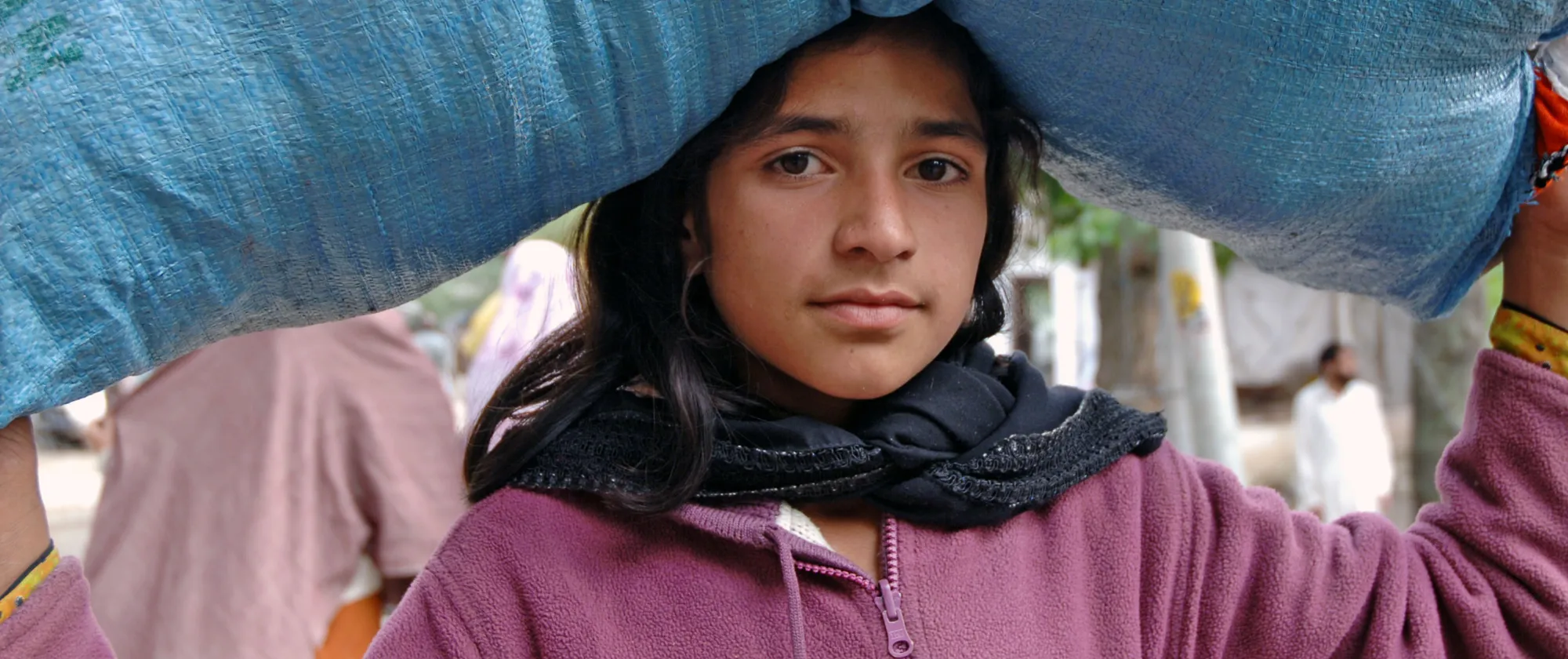
Understanding and addressing child labour across the Humanitarian-Development-Peace Nexus
Crises driven by armed conflict, disaster and outbreaks of disease are affecting growing numbers of children worldwide, increasing the risk of child labour and of other human rights violations. The numbers are staggering. According to the United Nations Children’s Fund (UNICEF), more than 400 million children live in areas under conflict, and an estimated one billion children – nearly half the world’s children – live in countries at extreme vulnerability to the impacts of climate change. The COVID-19 pandemic has had substantial secondary impacts in crisis contexts, exacerbating the already high levels of vulnerability of children concerned.
Child labour and crises are closely linked. Whether precipitated by conflict, disaster or disease, crises can lead to population displacements within and across national boundaries, state breakdown and severe economic and labour market disruption, all serving to heighten the risk of child labour. Indeed, out of the estimated 160 million children in child labour worldwide, 80 million lived in countries with a coordinated Humanitarian Response Plan in 2022.
Target 8.7 of the Sustainable Development Goals (SDGs) calls for ending child labour in all its forms by 2025. Unless urgent action is taken against child labour in situations of crisis, global progress towards this goal will be further eroded by growing humanitarian needs worldwide.
Defining child labour in the Humanitarian-Development-Peace Nexus (HDPN)
Addressing child labour in crises in a comprehensive and sustainable way requires greater coherence, complementarity and coordination between actors working on humanitarian support, development cooperation and peacebuilding efforts. Such a Humanitarian-Development-Peace Nexus (HDPN) approach embeds immediate and short-term assistance in longer-term sustainable development support and peace-building programmes. By moving away from ad-hoc and isolated crisis responses, an HDPN approach ensures that immediate measures to mitigate the heightened risk of child labour when crises strike are designed to complement and reinforce measures to address the root causes of child labour.
This issue paper provides an overview of child labour in crisis contexts and discusses the impact channels and interlinkages between crises and child labour. It also discusses broad priorities and measures for addressing child labour in situations of crisis within an HDPN framework. The issue brief complements other guidance, tools and case studies developed in recent years, including the Interagency Toolkit: Preventing and Responding to Child Labour in Humanitarian Action published in 2021 and other guidance produced by the Alliance for Child Protection in Humanitarian Action Child Labour Task Force.
Additional details
References
- ISBN Print: 978-92-2-039923-1
- ISBN Web PDF: 978-92-2-039924-8
Related content

Topic portal
Child Labour
Relevant projects
MAP16: Measurement, awareness-raising and policy engagement to accelerate action against child labour and forced labour

Measurement, Awareness Raising, and Policy Engagement (MAP16) Project

Towards the first generation free of child labour
Regional Initiative Latin America and the Caribbean Free of Child Labour
MAP16
MAP16 Project: Measurement, awareness-raising and policy engagement to accelerate action against child labour and forced labour