

Labour migration
Ship to Shore Rights South-East Asia: Gender equality, diversity and inclusion strategy
This strategy provides an evidence-based framework for addressing intersecting forms of discrimination and promoting gender equality, diversity and inclusion for migrant workers in South-East Asia’s blue economy.
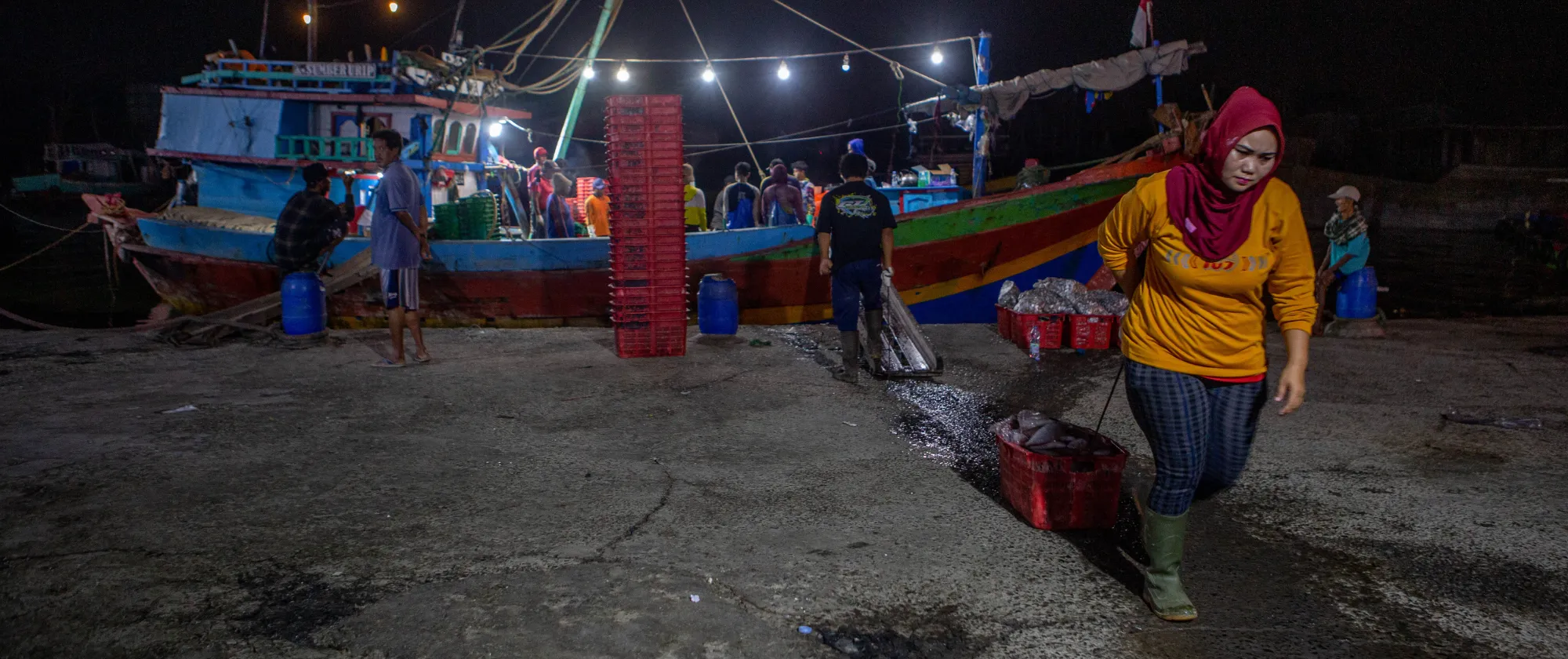
Migrant workers are central to South-East Asia’s fishing, seafood processing and aquaculture sectors, yet many experience overlapping forms of discrimination that restrict their access to safe migration and decent work. Women migrant workers face gender wage gaps, pregnancy discrimination, inadequate maternity protection, and violence and harassment. Persons with disabilities, ethnic minorities and LGBTQI+ individuals encounter additional barriers to recruitment, employment, social protection and support services. These inequalities are compounded by discriminatory social norms, unequal power relations and gaps in legal and institutional protections.
The Gender Equality, Diversity and Inclusion Strategy for the Ship to Shore Rights South-East Asia programme draws on an analysis of the fishing, seafood processing and aquaculture sectors, including stakeholder interviews, focus group discussions with migrant workers, programme evaluations and a review of relevant literature. It examines the structural and intersecting factors that shape migrants’ experiences and identifies opportunities to strengthen equality of opportunity and treatment throughout the migration cycle.
The strategy adopts a twin-track approach that integrates gender equality, diversity and inclusion across all programme activities while introducing targeted interventions to empower marginalized groups. It identifies priority actions to strengthen inclusive labour migration policies, improve labour inspection and dispute resolution mechanisms, promote non-discriminatory workplace practices and enhance access to support services. Through practical recommendations for programme planning, budgeting, monitoring and evaluation, the strategy aims to embed an inclusive approach throughout programme implementation and contribute to safe migration and decent work for all migrant workers in South-East Asia’s blue economy.
Additional details
Author(s)
- Imogen Howells
References
- DOI: https://doi.org/10.54394/00034904
- ISBN Print: 9789220437667
- ISBN Web PDF: 9789220437674
Related content
Labour migration
Ship to Shore Rights South-East Asia: Safe migration for decent work in the blue economy – Stakeholder institutional capacity-building...
Labour migration
Ship to Shore Rights South-East Asia: Safe migration for decent work in the blue economy – Institutional capacity-building curriculum
Relevant projects

Labour migration
Ship to Shore Rights South-East Asia: Safe migration for decent work in the blue economy