

Collective bargaining
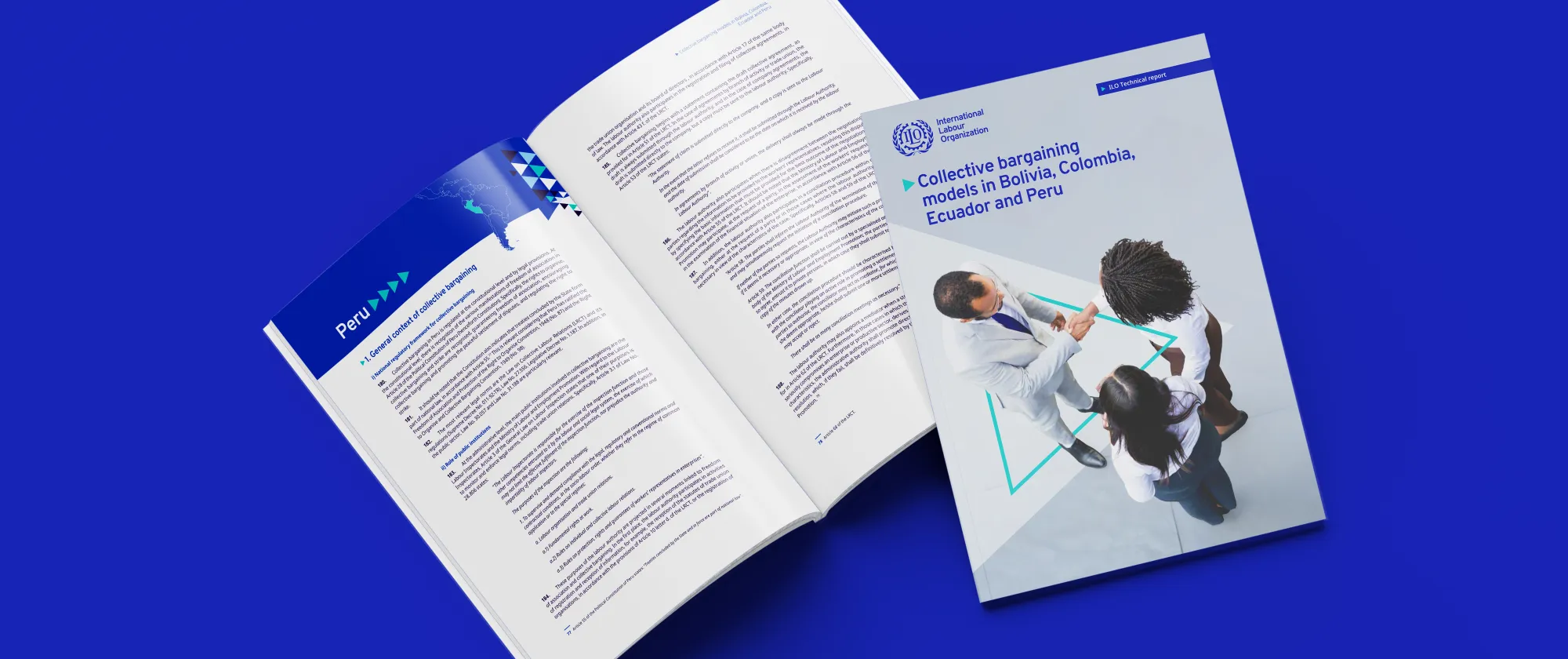
Collective bargaining models in Bolivia, Colombia, Ecuador and Peru
This comparative study brings together the legal frameworks, institutions and mechanisms that govern collective bargaining in Bolivia, Colombia, Ecuador and Peru, providing a clear overview of their respective models and specific features.
Collective bargaining is grounded in the right to freedom of association, which enables workers and employers to form representative organizations capable of engaging in negotiations. It also requires the existence of a legal and institutional framework that promotes and establishes the necessary conditions for its effective functioning, allowing the parties to negotiate voluntarily, freely and in good faith.
In this context, the document aims to systematize information on the legal and institutional frameworks that govern collective bargaining systems in the Andean countries.
Key regulatory elements in each country were examined, including the role of public institutions in collective bargaining, the procedures and mechanisms that facilitate the process, the representativeness of the negotiating parties and the coverage of collective bargaining, the coordination between collective instruments and labour legislation, the mechanisms for preventing and resolving disputes arising from collective bargaining, and, where available, relevant statistical information on union density and the number of collective agreements concluded.
Additional details
References
- DOI: https://doi.org/10.54394/DRPZ6029
- ISBN Web PDF: 9789220429518
Related content

Social Dialogue
Regional Initiative for the Strengthening of Social Dialogue and Collective Labour Relations in Latin America and the Caribbean