


The social dimension of the ecological transition – Phase I
Duration
21 April 2021 - 31 December 2025
Development partner(s)
France
Reference
RAF/20/51/FRA
Location
Côte d'Ivoire, Nigeria, Senegal
Contact
Background
The transition to a low-carbon economy represents opportunities (green jobs, health) but also challenges (social transformation and economic restructuring) for society and the economy. This transition will only be possible and sustainable if it does not increase inequalities.
The International Labour Organization (ILO) and its tripartite constituents are committed to achieving a just transition and a sustainable future that meets the requirements of decent work, in accordance with the "Guiding Principles for a Just Transition to Environmentally Sustainable Economies and Societies for All".
The 2015 Paris Agreement on Climate Change specifically mentions "the imperatives of a just transition for the workforce and the creation of decent and quality jobs in accordance with nationally determined development priorities".
At the UN Climate Action Summit in 2019, 46 countries - including Côte d'Ivoire, Nigeria and Senegal - committed to support a just ecological transition by formulating just transition policies in parallel with scaling up their climate action. To translate this agenda into concrete action, UN Secretary General António Guterres and ILO Director General Guy Ryder announced the creation of the Climate Action for Jobs (CA4J) initiative. The ILO has been asked to spearhead the initiative.
The CA4J initiative provides support to countries to meet their just transition commitments in all key policy areas and facilitate an inclusive and sustainable recovery from the COVID-19 crisis. At the global level, the Initiative also provides a Just Transition Innovation Centre, a funding pooling mechanism for technical assistance at the country level and an advocacy and awareness raising facility.
The social dimension of the ecological transition project fits in this context. It is the first project to implement technical support under the umbrella of the CA4J initiative and is one of the axes of the 2020-2024 partnership between France and the ILO.
Climate Action for Jobs: An Introduction
Objective
The social dimension of the ecological transition project aims to enable a just ecological transition in countries through a better understanding of the nature and impact of climate change on employment and income, as well as the definition of social measures and policies to promote job creation and social inclusion while mitigating economic and social risks.
Areas of action
Anchoring and strengthening research and development capacities of integrated economic models for policy evaluation
Strengthening institutional structures for social dialogue
Supporting the formulation and implementation of policies (social protection, enterprises, investment) based on inclusive social dialogue and integrated analysis models
Countries
The project will focus on three “pilot” countries:
Experience sharing and learning will take place in four other countries:
- Algeria
- Ghana
- Morocco
- Niger
News and articles
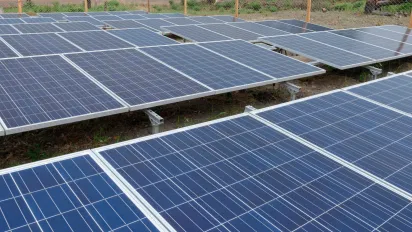
UN Agencies and the Governments’ NCCC Sign MoU to develop a Just Transition Roadmap for Nigeria

ITCILO Builds the Capacity of Social Partners and Stakeholders on Just Transition, under the ILO Social Dimension of Ecological Transition...
The Government of Nigeria, social partners and development partners launch new programme on just transition, placing jobs and social...
Publications and documents
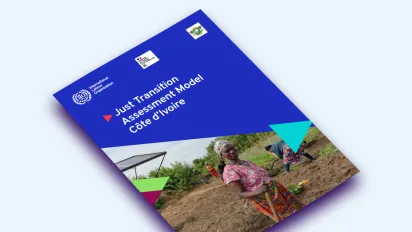
Just Transition Assessment Model for Côte d’Ivoire

The Job impacts of Climate policies in Senegal : How to make the Transition of the labour market just

Fact sheet
Nigeria: Leveraging social protection for inclusive climate action and a just transition