

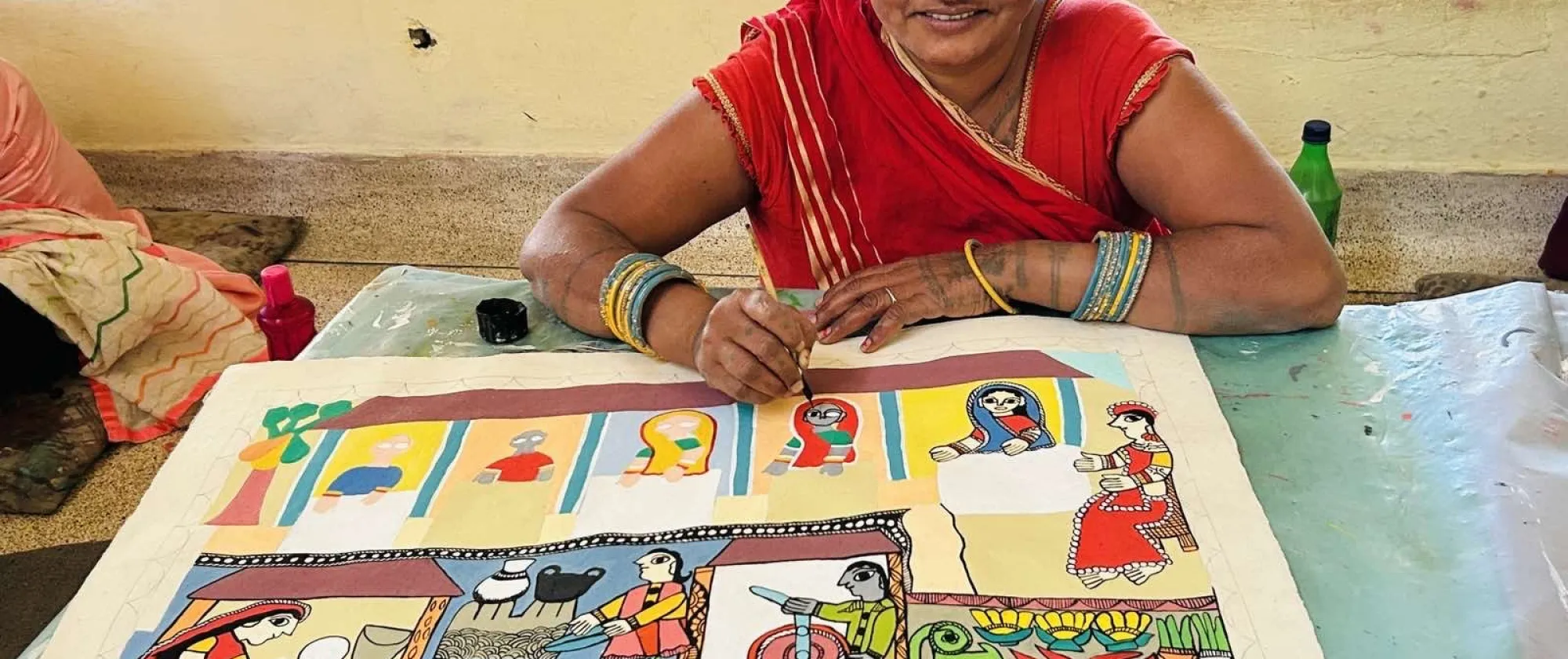
Womens' empowerment
Empowered Women Prosperous Nepal (UNJP)
The Joint EU and UN programme, Empowered Women, Prosperous Nepal will contribute to the full realization of human rights and agency of Nepalese women, girls and people of diverse genders.
Duration
1 January 2023 - 31 January 2027
Development partner(s)
Delegation of the European Union to Nepal
Reference
NPL/22/05/EUR
Location
Kathmandu, Nepal
The Programme seeks to address key drivers of gender inequality in Nepal through an integrated gender transformative approach - addressing formal and informal barriers women and girls confront with to enjoy their human rights – with a focus on: (1) ensuring women and girls in all their diversity, are safe, valued and have increased voice to challenge and transform harmful social norms; (2) women, men, girls and boys, in all their diversity, increasingly enjoy their equal economic, labour and social rights; and (3) institutions deliver gender equality outcomes in all spheres, in line with international and national normative frameworks.
Objective
The project impact will see women and girls fully enjoy their human rights and agency role in Nepalese society.Outcome 1: Men and boys, families and communities demonstrate more gender-equitable behaviours and support for positive social and gender norms that promote GEWE and women and girls have increased agency and voice
- Output 1.1 – Men and boys have increased capacity to challenge discriminatory social and gender norms and to act as role models that promote positive masculinities.
- Output 1.2 – Families and communities have increased capacity to enhance the economic role of women and nurture equitable and non-discriminatory relationships.
- Output 1.3 – Women and girls have increased capacity to advocate for gender equality and the rights of women and girls, hold duty bearers accountable for action on GEWE, and challenge discriminatory social and gender norms both individually and collectively
Outcome 2: Women, men, girls and boys, in all their diversity access opportunities to exercise their equal economic, labour and social rights
- Output 2.1 – Institutions in project locations at all levels have the capacity to deliver equitable access to jobs, decent work, social protection and freedom from exploitative forms of work, particularly in the agriculture and forestry sectors.
- Output 2.2 – Women and women’s groups have the capacity to engage with income generating opportunities and resources, in fair and sustainable value chains based on solidarity economy principles
- Output 2.3 – Enhanced capacities of multisectoral essential service providers to deliver quality survivor-centered, child-sensitive GBV response services
Outcome 3: Institutions deliver gender equality outcomes in all spheres, in line with international and national normative frameworks
- Output 3.1 – National Women’s Machinery has the improved capacity to advance GEWE in line with international/national normative frameworks.
- Output 3.2 – Key duty bearers and relevant stakeholders have the capacity to develop, implement, and monitor evidence-based laws, policies, strategies and action plans promoting gender equality from an intersectional lens.
- Output 3.3 – Youth, women’s networks, civil society organizations have enhanced capacity to influence decision-making, engage in evidence-based civic dialogue / action and demand accountability and transparency for GEWE.

Project updates
Joint EU and UN Programme - Empowered Women, Prosperous Nepal
Related content

Joint press release
National Gender Equality Programme launched
Social protection
Nepal advances in social protection but faces challenges amid climate change
Joint Press Release
Canada and ILO Nepal collaborate to promote decent work and the care economy in Nepal
Joint Press Release
Celebrating Care: Recognizing and honouring support and care providers
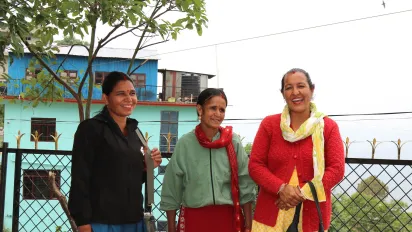
Press Release
Investing in care: New partnership to expand jobs, support families, and advance gender equality in Nepal through care cooperatives
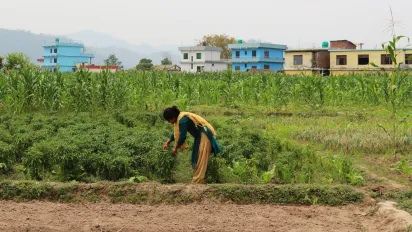
Care Economy
Nepal advances care cooperatives to support care workers, families and women’s economic participation
Brief
Informality in Nepal’s Construction Sector: Promoting enterprise formalization and extending social protection to construction workers
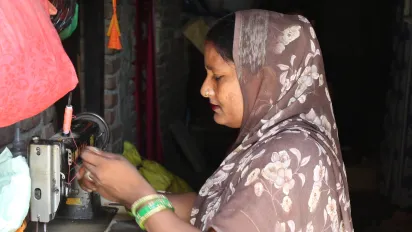
Women’s entrepreneurship in Nepal
Stitching a future of her own: From tailoring at home to entrepreneurship