

Joint Press Release
Canada and ILO Nepal collaborate to promote decent work and the care economy in Nepal
Canada and International Labour Organizaton in Nepal reiterated their commitment to continuing collaborative efforts to advance decent work and gender equality in Nepal's care economy.
18 February 2025
KATHMANDU, Nepal (ILO News)- Care work is central to human, social, economic, and environmental well-being, supporting the development of children, the elderly, and individuals in need. Both paid and unpaid care work are crucial for the functioning of all sectors. A strong care economy leads to a healthier workforce, job creation, and increased productivity. However, care workers, especially women, often face low wages, poor working conditions, and lack social protections.
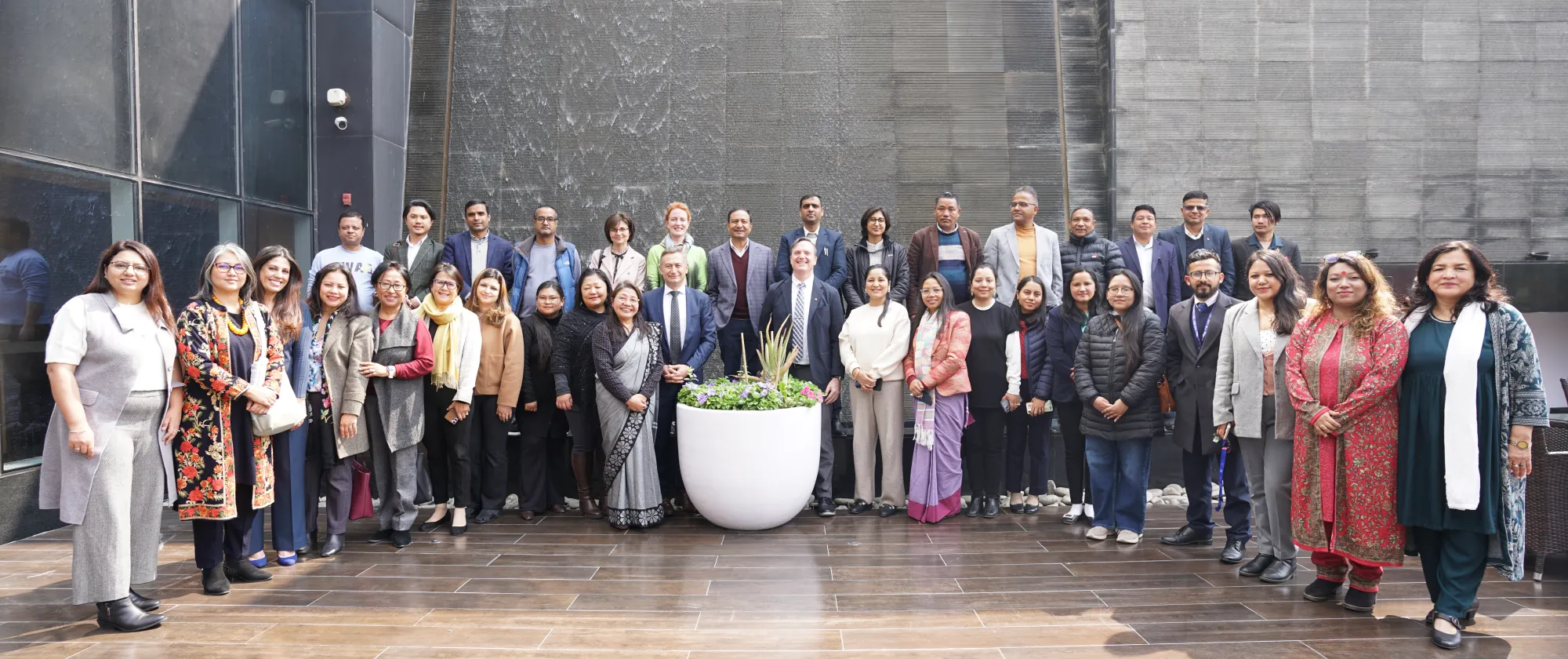
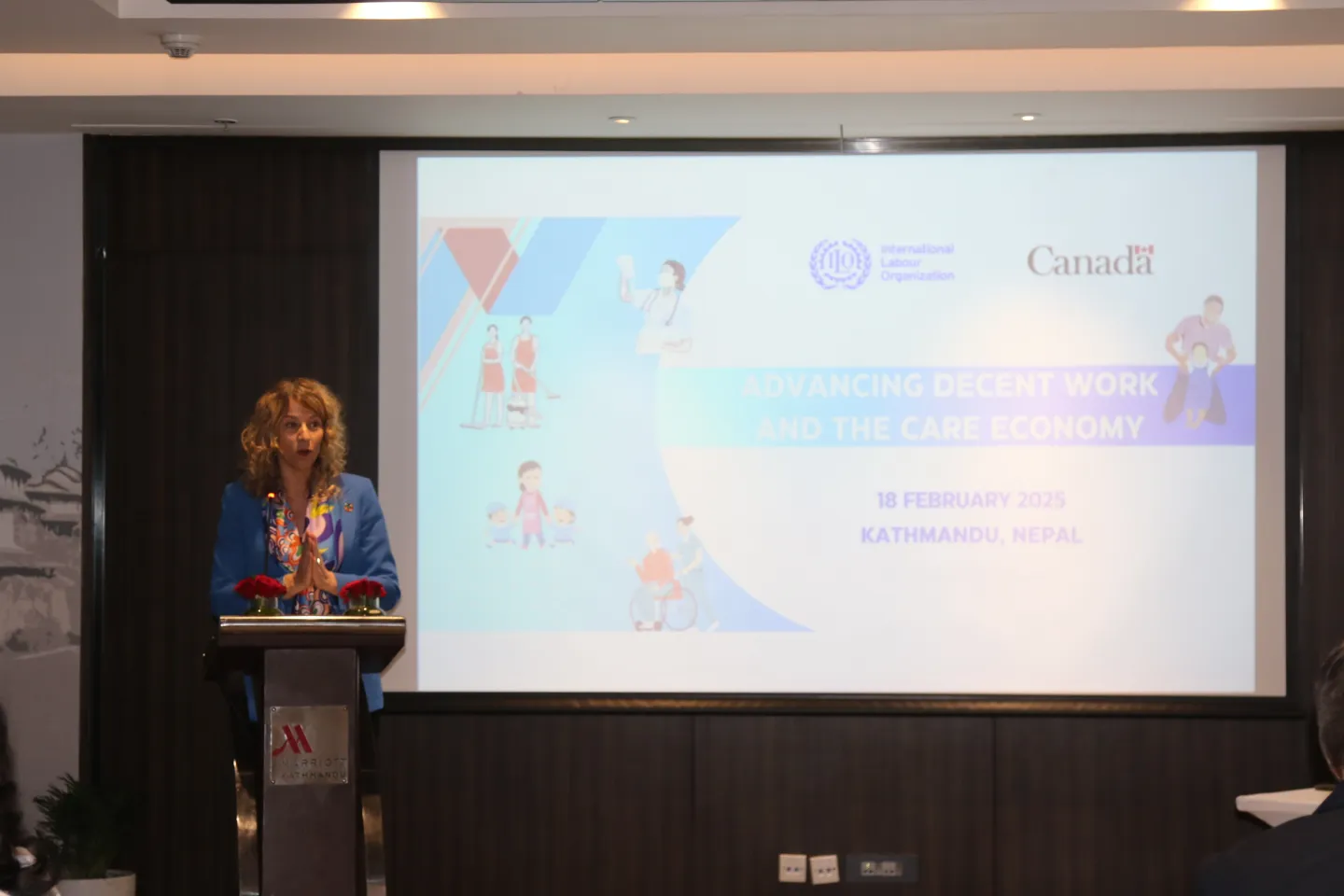
To highlight the vital yet undervalued and invisible role of care work, the Embassy of Canada to Nepal and the International Labour Organization (ILO) Nepal successfully co-hosted a dialogue on Advancing Decent Work and the Care Economy in Kathmandu on 18 February 2025. The event aimed to foster a shared understanding of key concepts, definitions, and approaches to the care economy, along with best practices that position care work at the core of a future with decent work and promote greater cooperation, collaboration, and synergy among government bodies and development agencies in Nepal.
The dialogue brought together key stakeholders from government agencies, workers’ and employers’ representatives, development organizations, civil society, and the private sector, academia, media to discuss strategies for promoting decent work in the care economy.
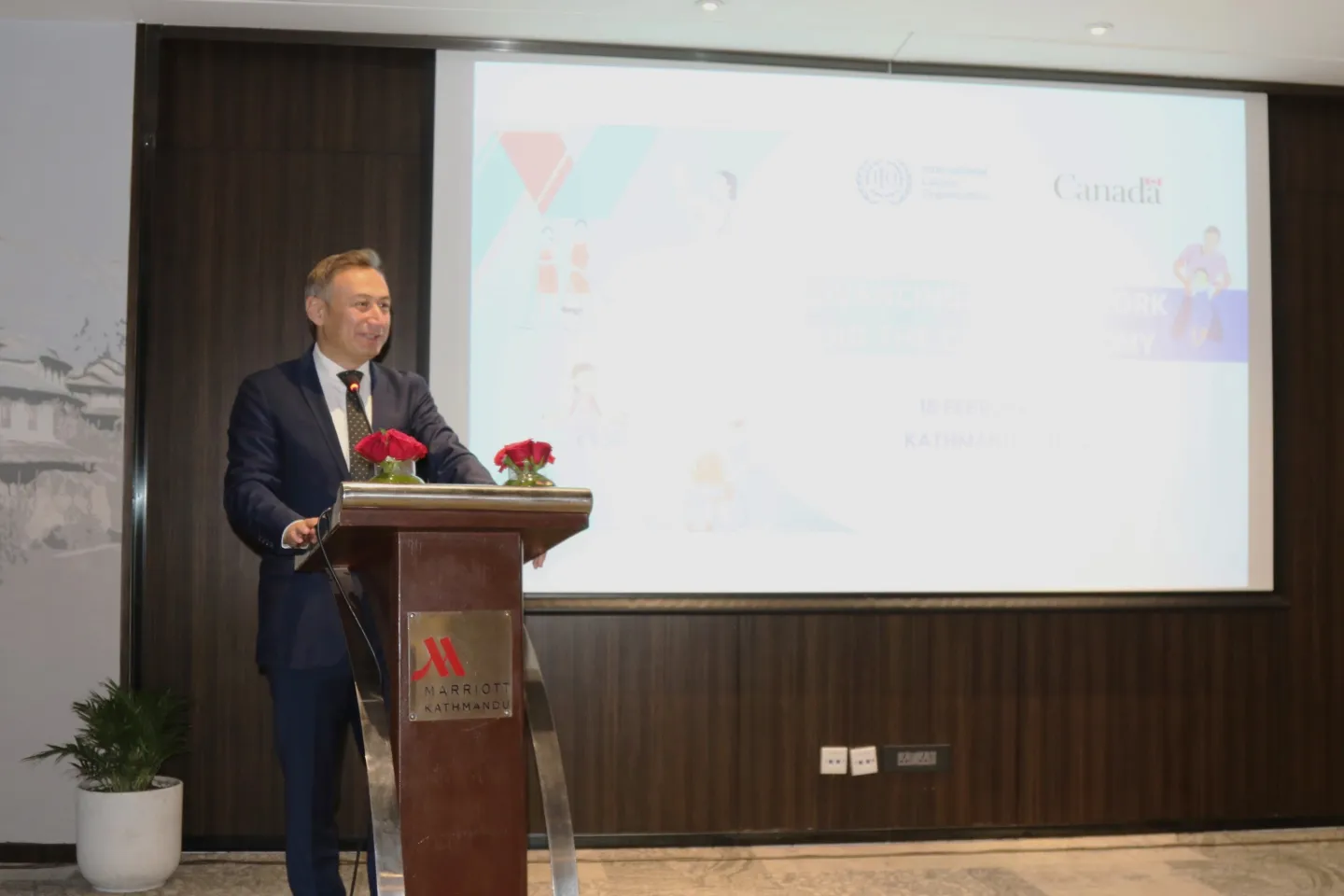
The event opened with welcome remarks from Mr. Numan Özcan, Director of the ILO Country Office Nepal, who emphasized: “Care work is the silent force that we often don’t realize, but it keeps our societies and economies running. It is a shared responsibility for all governments, employers, and workers to promote international labour standards, invest in research, expand care services, and close financing gaps. We stand ready to support Nepal’s journey in building a resilient, inclusive, and sustainable care economy.”
In June 2024, the International Labour Conference (ILC) adopted a resolution concerning decent work and the care economy, further refining the definition of care work. An action plan for implementing the resolution’s conclusions is currently being discussed globally.
A joint study entitled Public Investments in Nepal’s Care Economy: An Estimation of Care Deficit, Investment Costs, and Economic Returns in the Education and Health Sectors, commissioned by the ILO, UN Women, and the National Planning Commission (NPC) of Nepal, revealed that investing NPR 272,232 million (approximately USD 1,957,348,080) to address Nepal’s care coverage gaps in education and health would generate a total of 1,386,000 jobs (directly and indirectly), with at least 60% of them filled by women. This investment strengthens aggregate demand across the entire economy while simultaneously improving long-term societal well-being, gender equality, and economic growth.
Recognizing these challenges and opportunities, the Government of Nepal has taken steps to promote decent work for care workers and strengthen the care economy. The 16th National Development Plan of Nepal prioritizes the promotion of decent work and the care economy under:
- Productive employment, decent work, and sustainable social security.
- Healthy, educated, and skilled human resource capital.
- Gender equality, social justice, and an inclusive society.
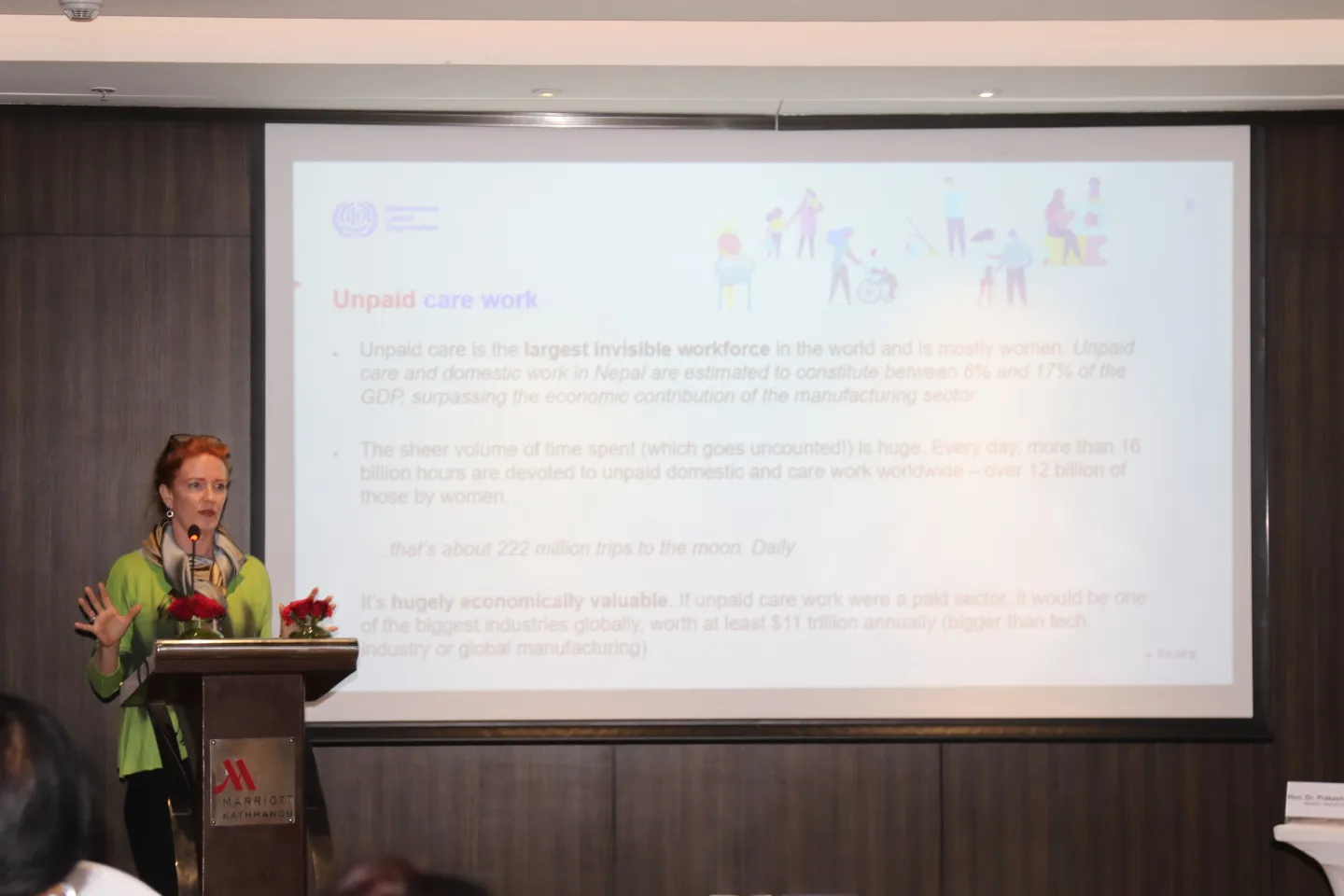
During the event, Ms. Jennifer Mudge, ILO Senior Specialist on Gender Equality, provided an overview of care economy concepts and ILO’s policy framework.
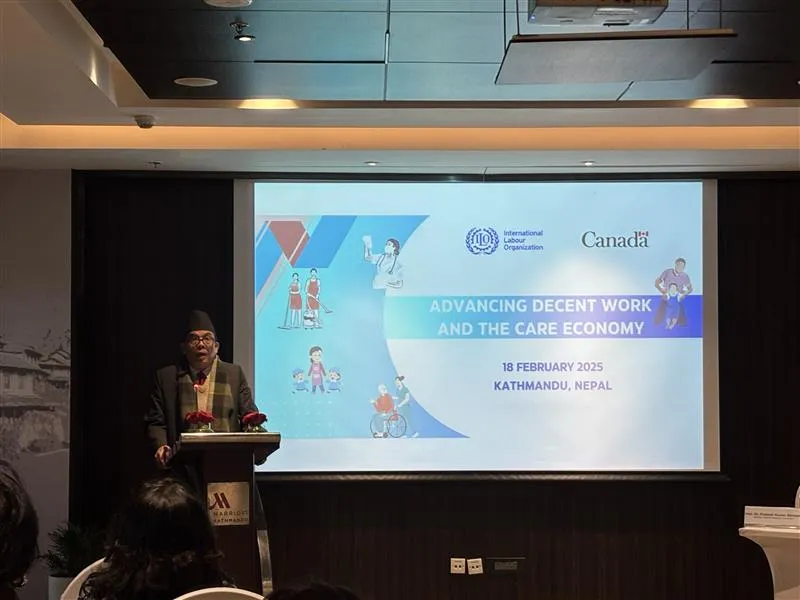
Hon. Dr. Prakash Kumar Shrestha from Nepal’s National Planning Commission highlighted the Government of Nepal’s initiatives on developing an integrated national care policy. He further shared that Nepal as a pathfinder country of Global Accelerator on Jobs and Social Protection for Just Transitions has care as one of the priority sectors.
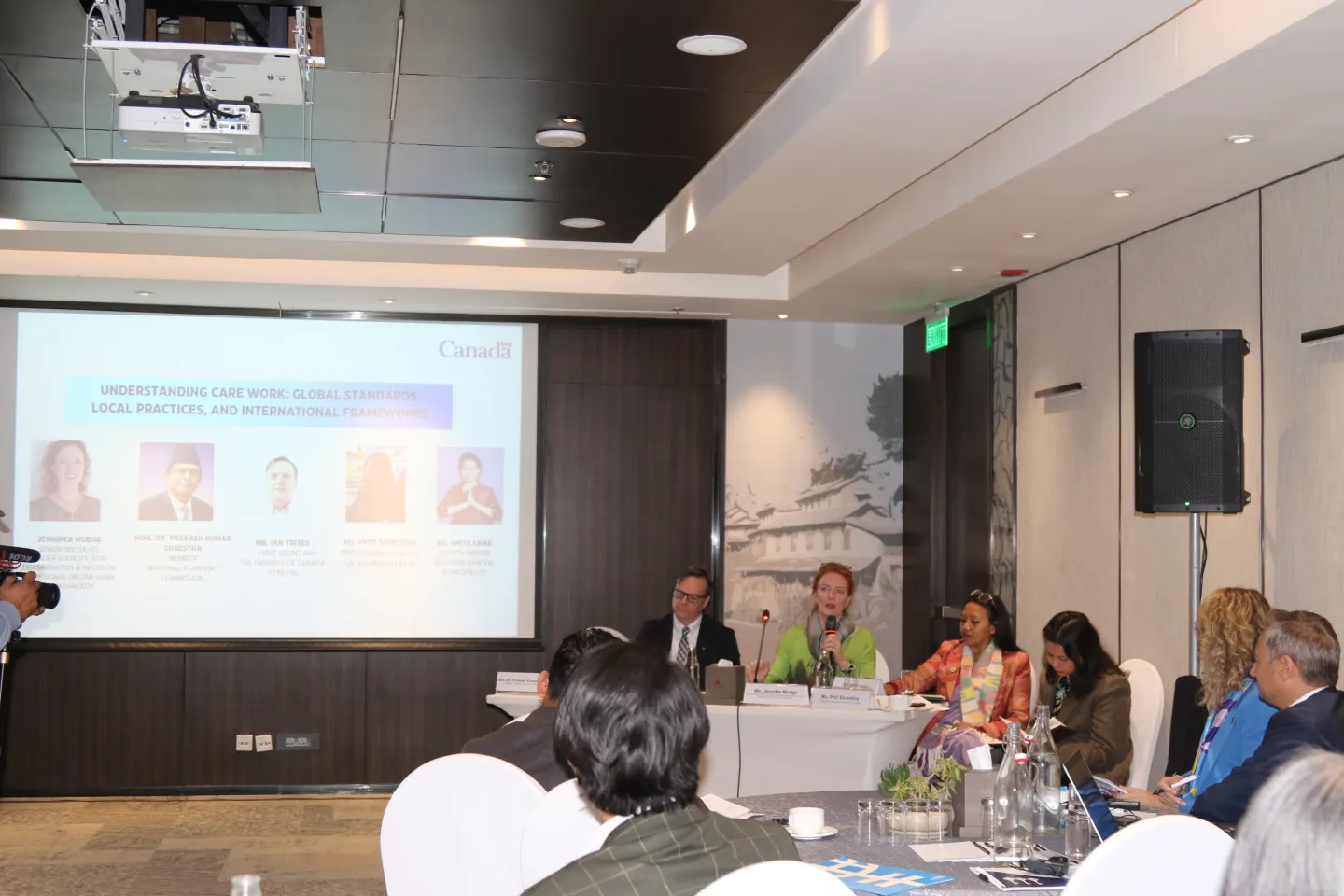
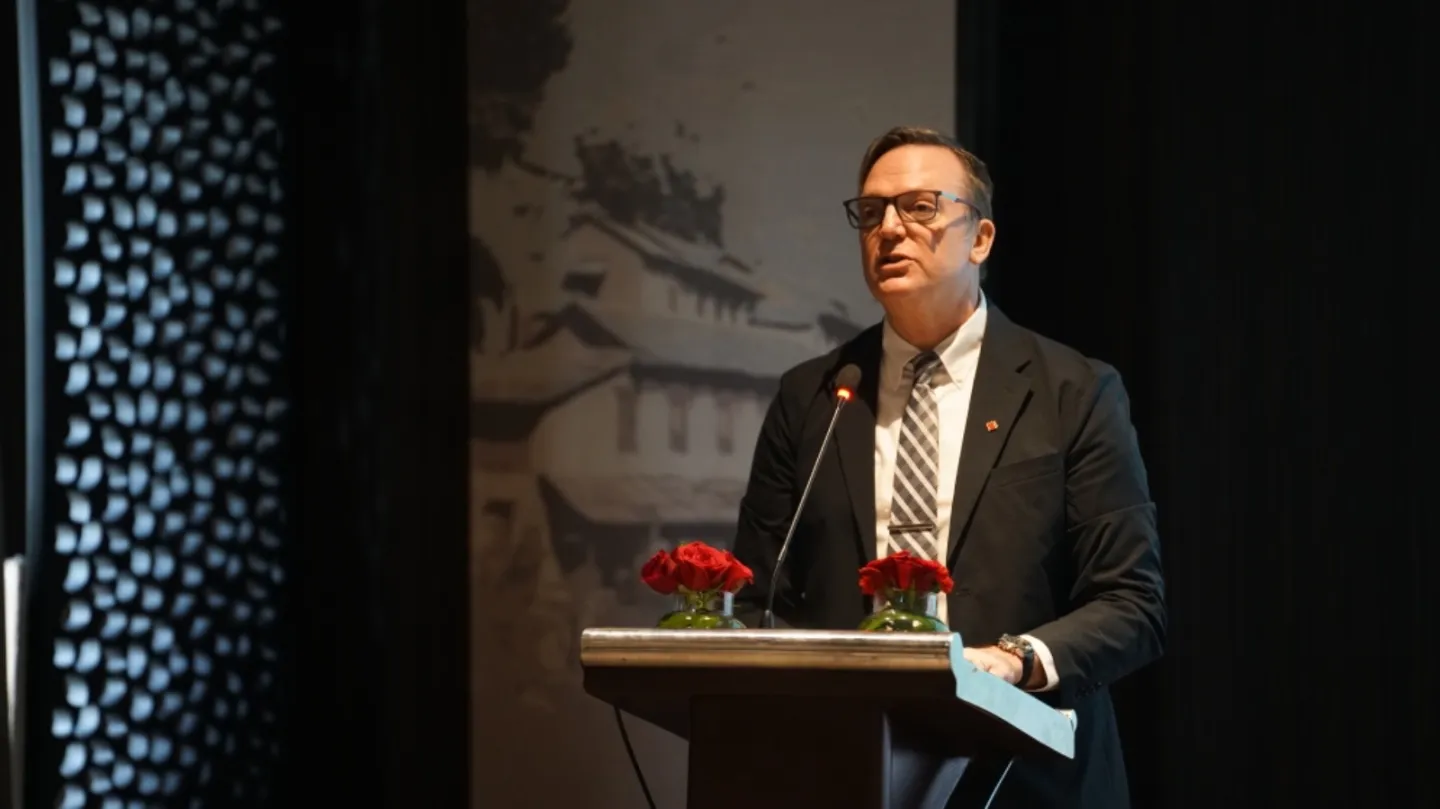
Representing the Government of Canada, Mr. Ian Trites, First Secretary, Embassy of Canada to Nepal, shared: “Canada remains committed to supporting Nepal in advancing decent work and gender equality within the care economy. As we mark 60 years of diplomatic relations, we celebrate our long-standing shared values of sustainable development and inclusive growth.”
Ms. Patricia Fernandez-Pacheco, Country Representative, UN Women Nepal, stated, “Promoting decent work in the care economy is a key pathway to advancing women’s economic empowerment and achieving gender equality. This is a call for urgent action. It is important to have this conversation, care matters because it can be both a barrier and a catalyst for economic empowerment. If properly funded, the care economy has the potential to boost the economy significantly. It is crucial to recognize both the right to care and the right to receive care.”
Additionally, Ms. Anita Lama, Deputy Mayor of Budhanilkantha Municipality, shared several encouraging initiatives taken by the local government to promote decent work for care workers, along with the challenges faced in implementation.
Furthermore, representatives of workers’ organizations highlighted issues such as low wages, lack of social protection, and difficulties in unionization. Meanwhile, representatives of employers’ organizations pointed out key challenges, including low skill levels among care workers, lack of policies for protecting and financing the care sector, and regulatory gaps.
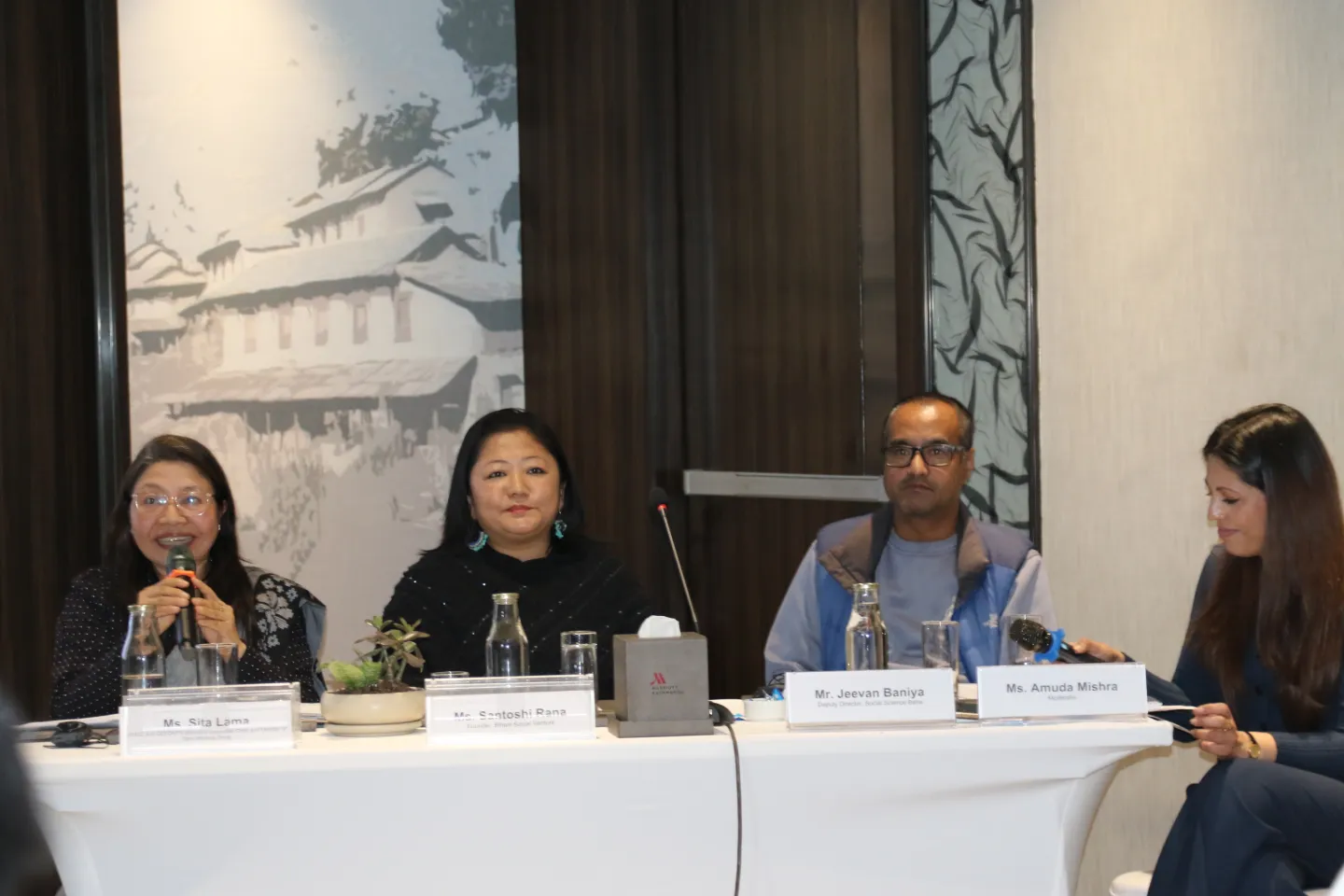
The dialogue concluded with a discussion on key takeaways, emphasizing that advancing decent work requires:
- The design and implementation of cohesive care policies and systems.
- Addressing undervaluation and gender disparities.
- Investing in quality care and amplifying the voices of care workers.
- Enhancing skills and expanding partnerships.
- Extending universal social protection and maternity protection.
- Conducting adequate research to inform policy decisions.
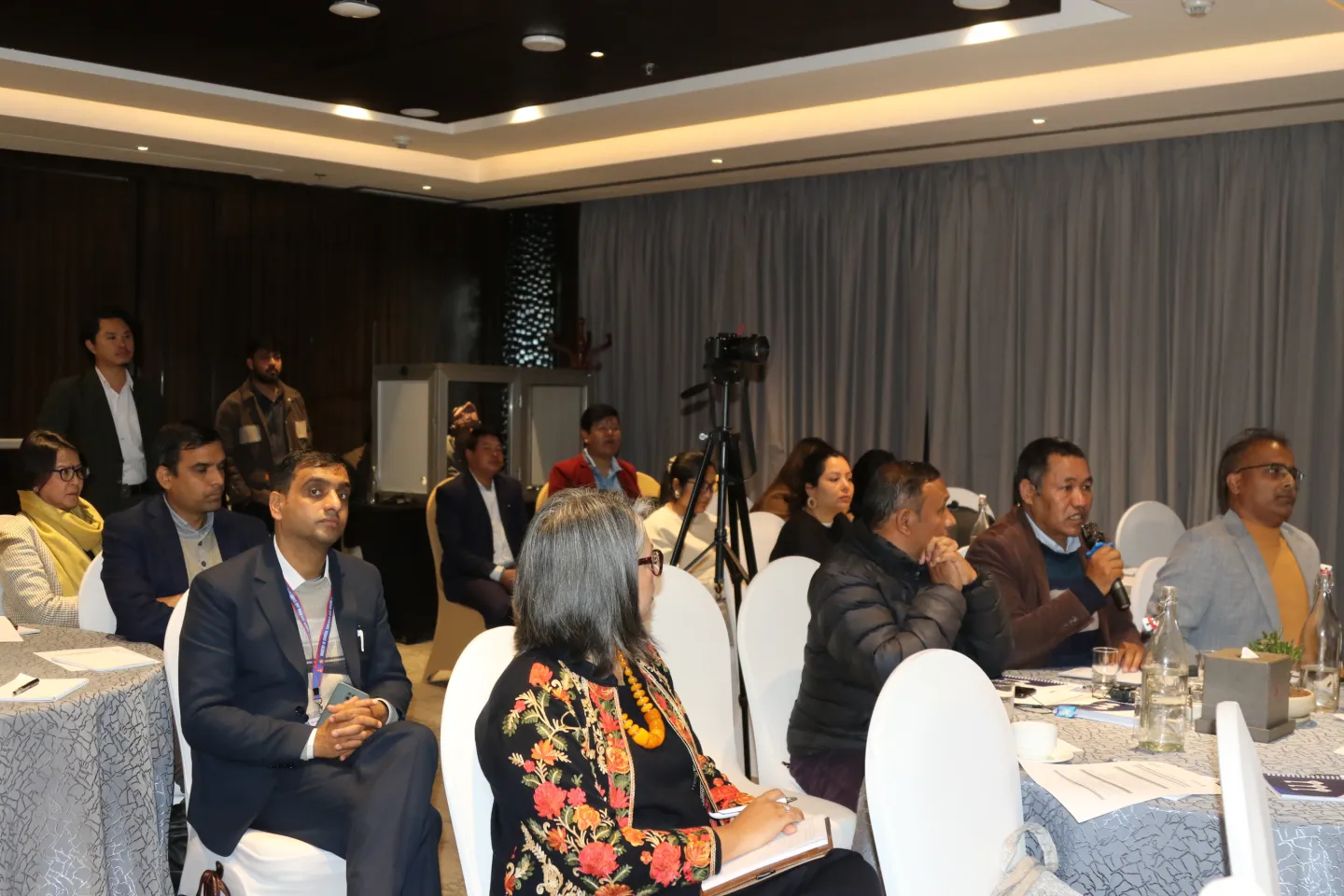
The Embassy of Canada to Nepal and ILO Nepal reaffirmed their commitment to continuing collaborative efforts with stakeholders to advance decent work and gender equality in Nepal's care economy.
For further inquiries, please contact:
Bina Kunwar Thapa
ILO Country Office for Nepal
Archana Mirajkar and Jasvinder Kaur
Embassy of Canada to Nepal