

Women’s entrepreneurship in Nepal
Stitching a future of her own: From tailoring at home to entrepreneurship
A sewing machine gave Jayamala Sahani Devi from Nepal more than an income of her own. Through tailoring, she is supporting her family, building a more secure future and passing on her skills to around 20 people in her community.
22 September 2026
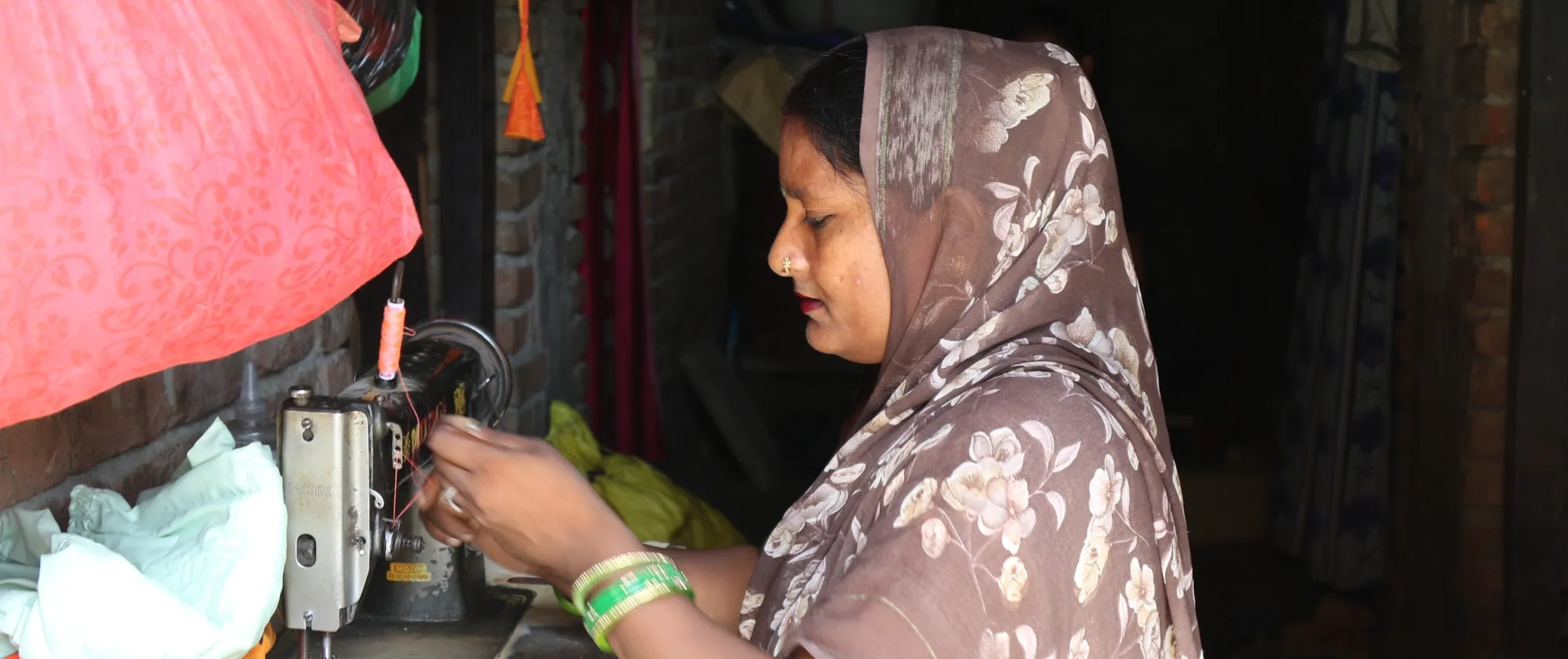
Nepal (ILO News) – Jayamala Sahani Devi’s day begins long before she sits down at her sewing machine. At her home in Yamunamai Rural Municipality, in Madhesh Province, the 33-year-old mother of two starts her morning preparing meals, doing household chores and getting her sons, aged 16 and 14, ready for school. By around 10 a.m., she turns to another part of her day: measuring fabric, cutting patterns and stitching clothes for customers from her community. That machine has become the engine for her household.
Most days, she works until 3 or 4 in the afternoon. But when festivals and wedding seasons arrive, the rhythm changes. Customers sometimes even bring fabric as late as 9 p.m., hoping to have their clothes ready the next morning. On such nights, the sound of Jayamala’s sewing machine can carry on until midnight. It is a demanding routine. But for Jayamala, the sound of that machine represents something important: an income of her own.
“Now I have money in my own hands from my tailoring work,” Jayamala says. “I don’t have to ask others to buy things like soap or oil for me. I have my own earnings.”
A skill that waited years to be used
Jayamala first learned tailoring from friends before she was married. But for years after marriage, the skill remained largely unused. Around eight years into her marriage, she returned to it for a simple reason: having clothes stitched in the village was expensive. She bought a sewing machine and began stitching clothes for herself and her family to save money.
A one-month refresher course in her village helped her sharpen her skills. Soon, neighbours began noticing the clothes she made. They started coming to her with fabric of their own.
From a household skill to a business
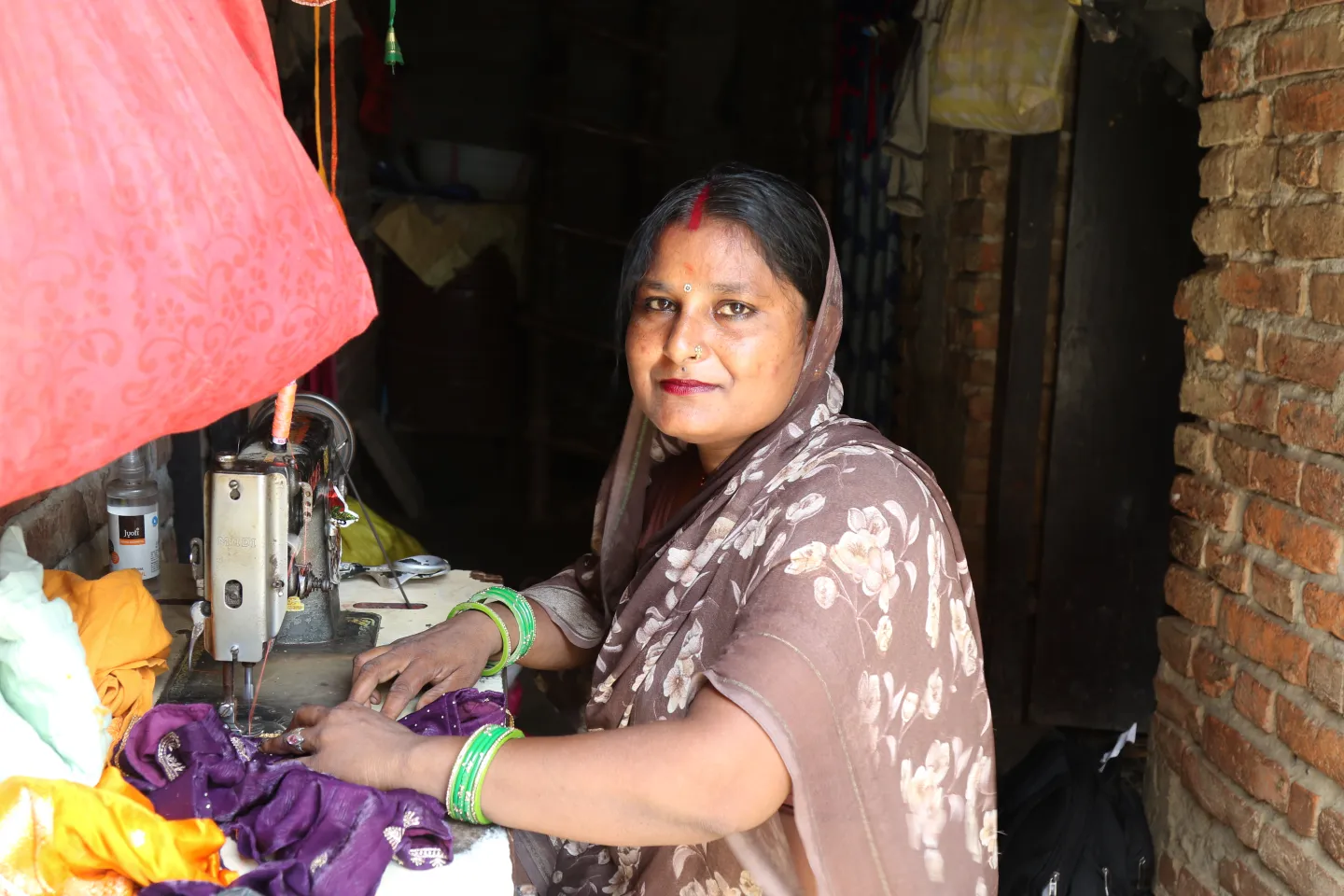
Gradually, what had begun as a way to reduce her family’s expenses became a small source of income. And as customers multiplied, Jayamala began to see tailoring differently, not simply as a skill she possessed, but as a business she could build.
Support from the rural municipality helped her take another step. She received a small sewing machine and an interlock machine and participated in a one-month advanced tailoring course. She also gained knowledge about running a business.
She went on to take part in Start and Improve Your Business (SIYB) training twice, once through the rural municipality and once through ILO under Empowered Women Prosperous Nepal (EWPN) programme, learning business planning, management and customer relations. The training changed not only how she priced and planned her work, but how she dealt with the people who walked through her door.
“I learned how to manage and plan my business and how to deal with customers,” she says. “I learned to speak calmly with customers and to run the business in a better, more planned way.”
An income that changed more than one life
Jayamala now earns around NPR 500 (approx. USD 3) a day from tailoring, although the amount varies with demand. Festivals and the beginning of the school year are particularly busy periods.
The money helps pay for her sons’ education, contributes to household expenses and allows her to meet some of her own needs independently. But her earnings have also helped create an opportunity that extended beyond her own business.
Her husband, Birendra Sahani, 35, had left his education 13 years earlier. With Jayamala contributing NPR 125,000 (approx. USD 822) from her tailoring income, he was able to return to his studies and undertake an 18-month Community Medical Assistant (CMA) course in Butwal.
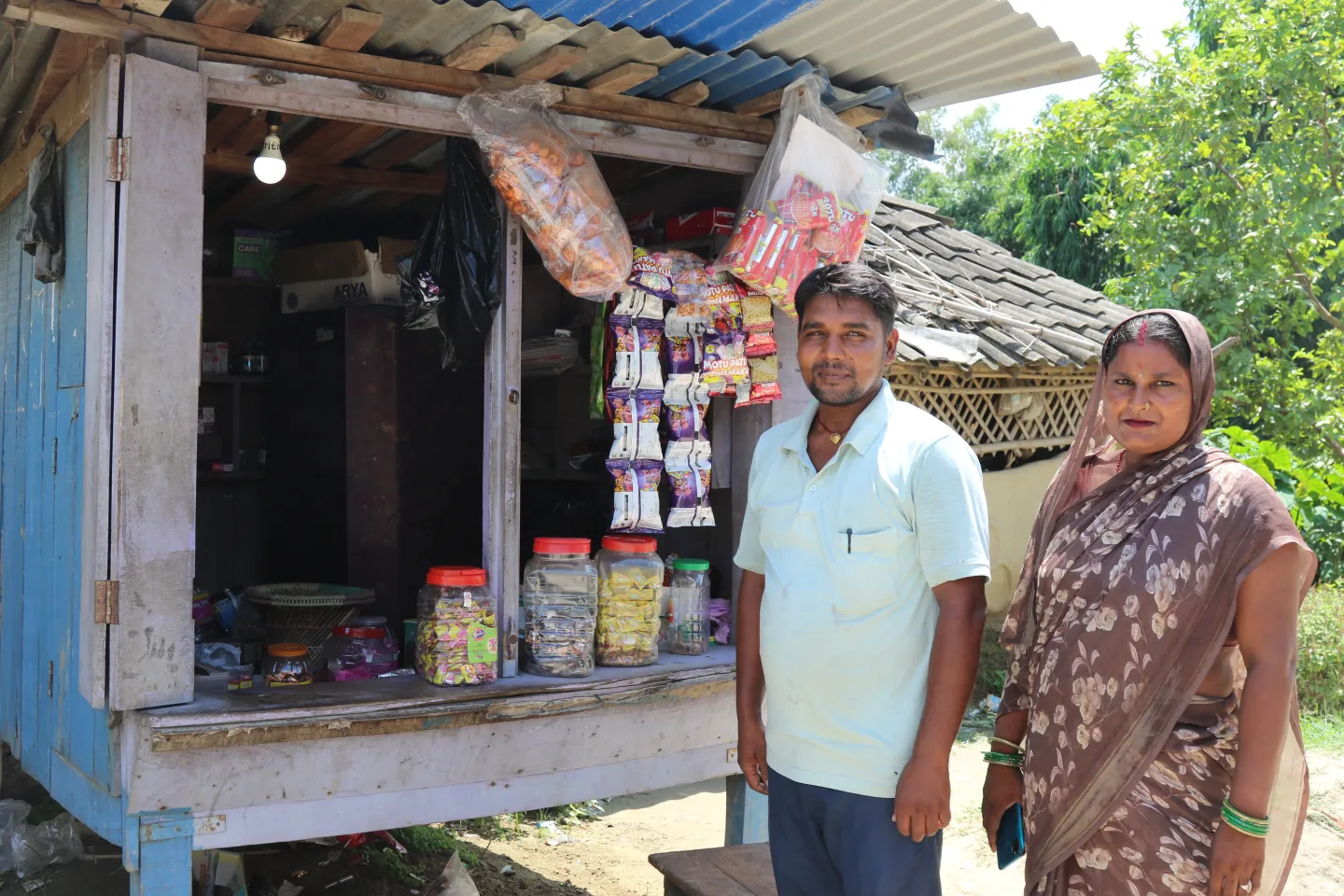
Today, Birendra runs a small medical store combined with grocery items nearby. His earnings help the family repay loans, and Jayamala occasionally looks after the shop when needed. Jayamala’s support has not only helped him to acquire education but has also been able to compete for the civil servant job. He has successfully cleared the written selection examination five times and has appeared for the interview four times. He is currently preparing for his fifth interview.
For Birendra, his wife’s tailoring work has become an important contribution to the family. He is proud that she has built an income of her own while also helping the household move forward.
Passing her skills to others
The impact of Jayamala’s sewing machine is also beginning to extend beyond her family. Over the years, she has shared her tailoring skills with around 20 people in her community. Currently, four people are learning tailoring from her, each paying NPR 6,000 (approx. USD 39) for the training.
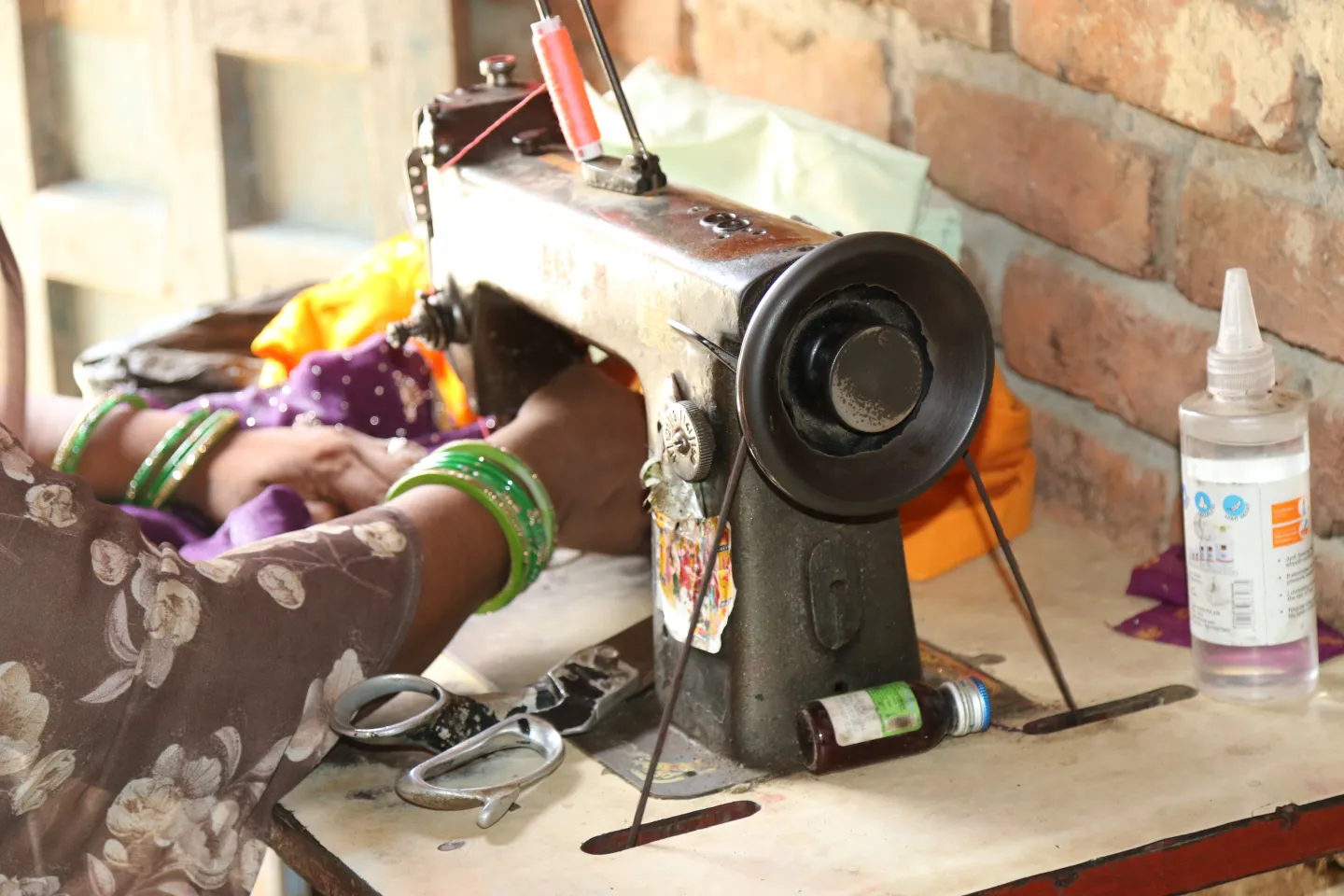
In this way, Jayamala is no longer only a tailor. She has become a trainer, passing on the same kind of practical skill that once helped her begin earning.
Her business is not yet formally registered, but it has given her something she values alongside her income: recognition in her community. It has also allowed her to make a significant investment in her future.
The distance from then to now
Stitch by stitch, order by order, Jayamala also set aside money she earned through tailoring. Enough, eventually to buy a plot of land behind her home for NPR 500,000 (approx. USD 3290).
For now, the land remains a promise of what might come next. Her plan is to build on it and create a dedicated, better-organized space for her tailoring business that has carried her this far.
The ambition is a long way from why she first returned to sewing. Back then, she simply wanted to avoid paying someone else to stitch clothes for her family.
Today, the same skill helps educate her children, has supported her husband’s return to education, provides training opportunities to others and has enabled her to invest in land for the future.
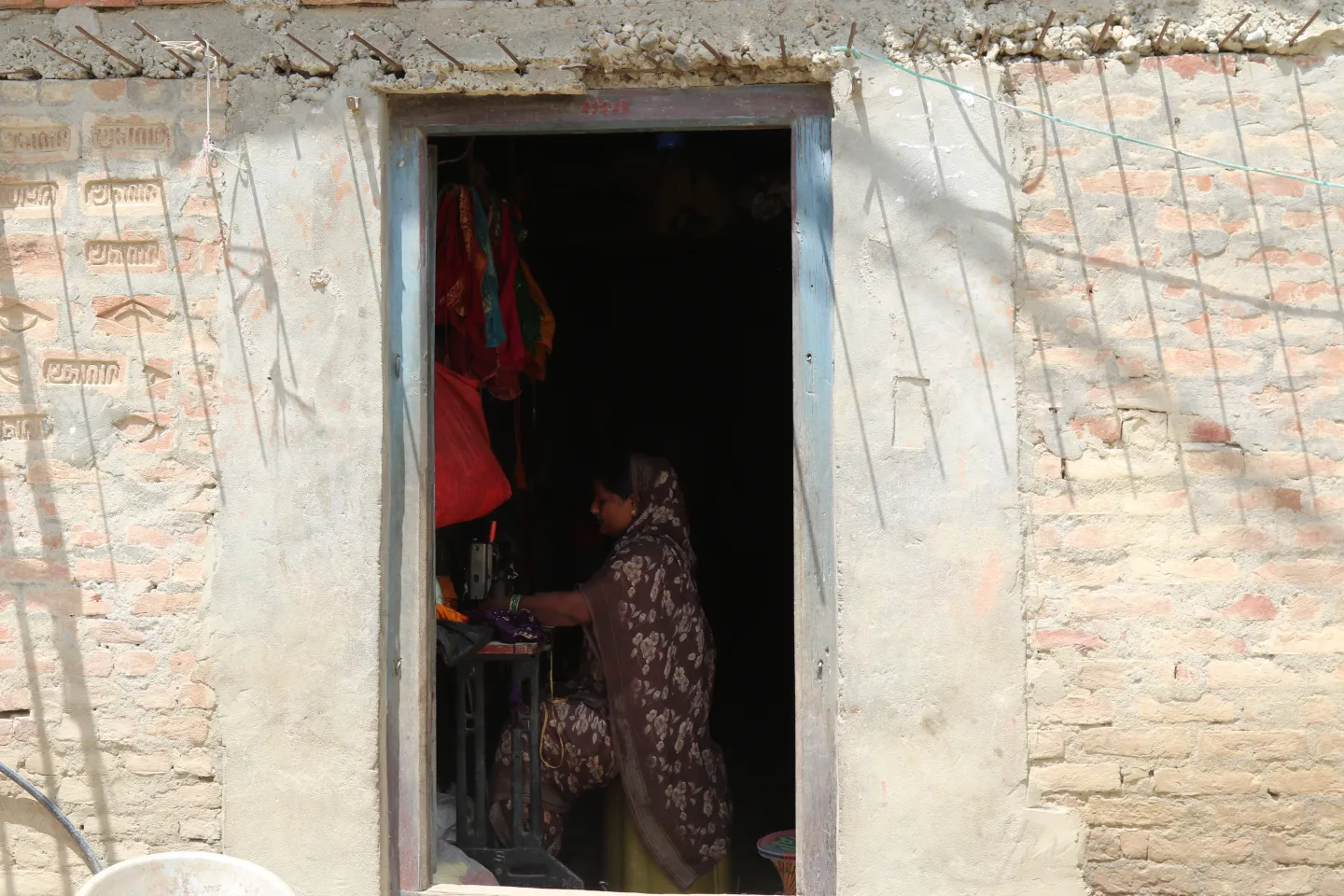
And each morning, after the household work is done and her children have left for school, Jayamala returns to her sewing machine, stitching clothes for her customers and, one piece at a time, building a livelihood of her own.
For more information, please contact:
Nistha Rayamajhi
- Communications Officer, ILO Country Office for Nepal
- https://www.ilo.org/nepal
Related content
Womens' empowerment
Empowered Women Prosperous Nepal (UNJP)