The ILO and WFP formalize a partnership to promote decent employment, food security, and climate resilience in Madagascar, for vulnerable populations and in line with national priorities and the 2030 Agenda.
Indicative Programme
09:30: Welcome & installation
10:00: Opening remarks (UN RC, ILO, WFP)
10:15: ILO–WFP cooperation axes
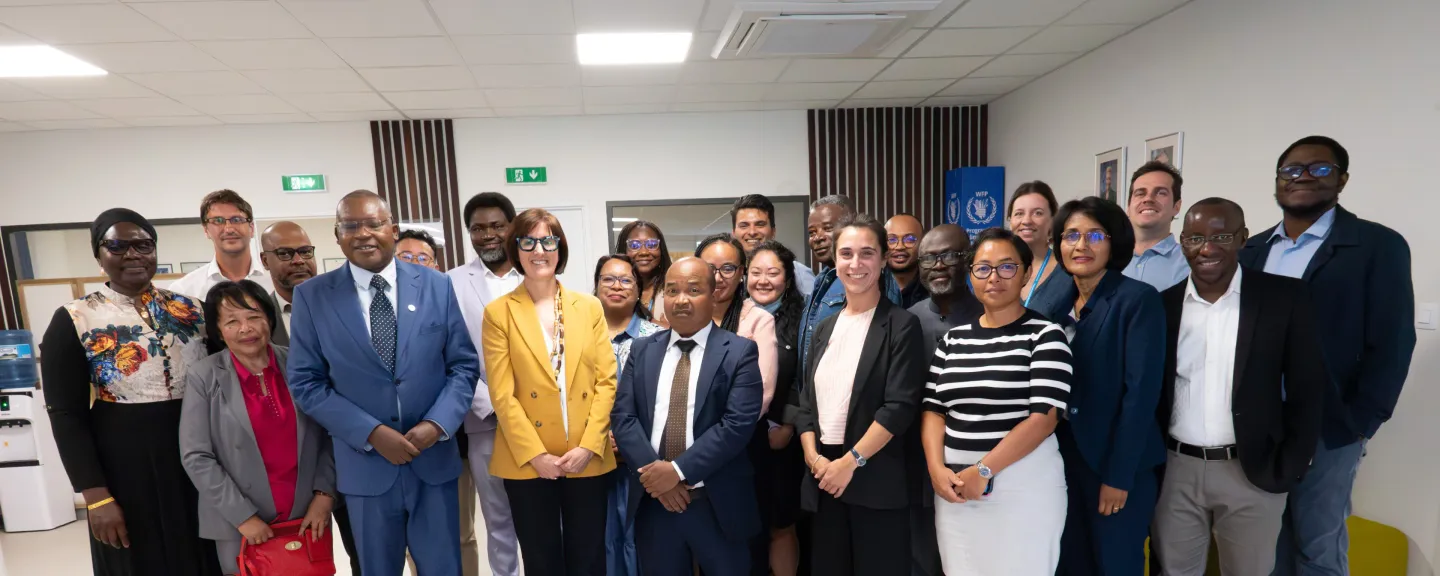
10:25: Signing of the MoU and photo session
10:40: Closing – Press point – Refreshments
Attendees:
Mr. Anthony Ngororano, United Nations Resident Coordinator in Madagascar
Mr. Frederick Muia, Director and Resident Representative of the ILO in Madagascar
Ms. Tania Goossens, Country Representative and Director of WFP in Madagascar
Equipe de l’OIT et du PAM lors de la cérémonie de signature du protocole d’accord. Antananarivo, Madagascar. 9-9-2025.
Objectives of the Partnership
Address structural causes: ≈75% of the population lives below the poverty line and >50% suffers from chronic food insecurity; >70% of the working population is employed in agriculture.
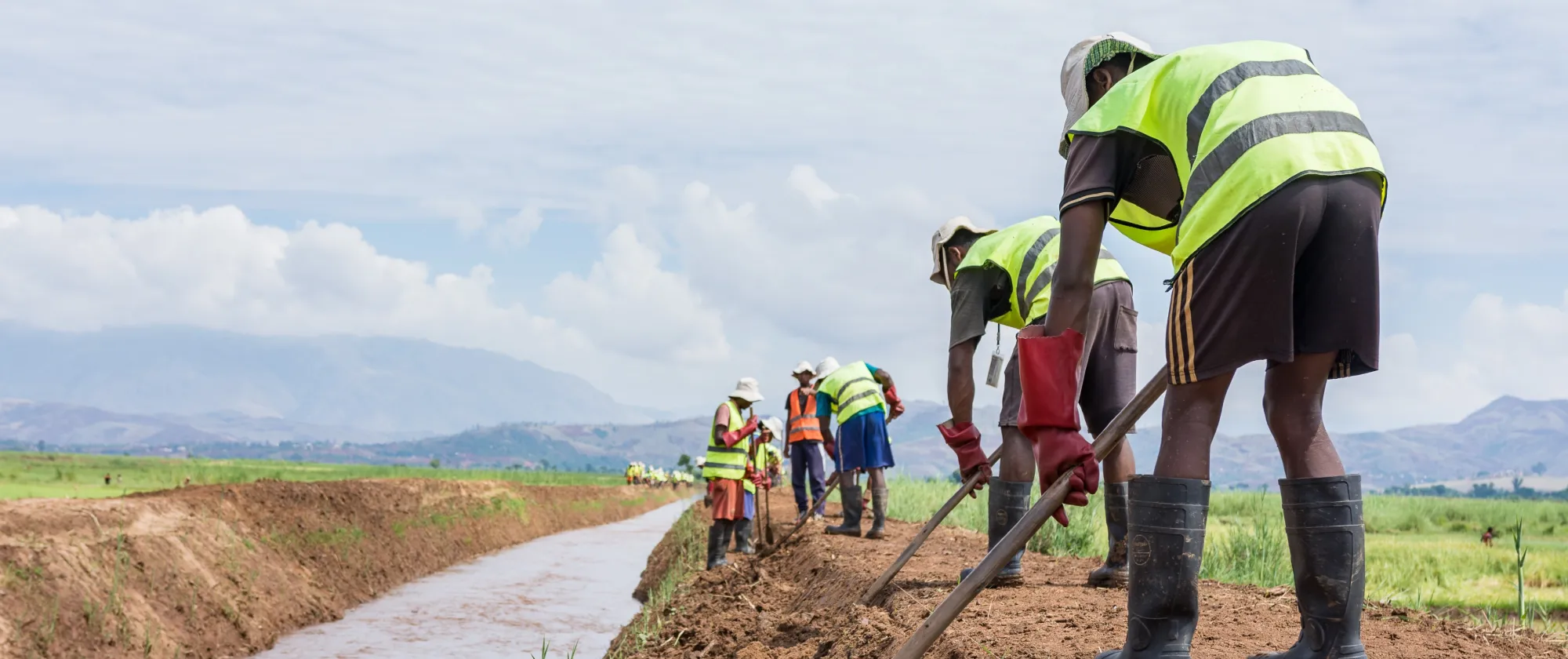
Co-develop concrete solutions: UPA/UPSI, storage facilities, and irrigated areas to reduce post-harvest losses and add local value.
Support the structured labour-intensive approach: local jobs, training, rural entrepreneurship, and compliance with decent work standards.
Address structural causes: ≈75% of the population lives below the poverty line and >50% suffers from chronic food insecurity; >70% of the working population is employed in agriculture.
Co-developing concrete solutions through an HDP approach:
Humanitarian (H): Targeted assistance during shocks + cash/food-for-assets
Development (D): Structured labour-intensive works → UPA/UPSI, storage warehouses, and irrigated areas to reduce post-harvest losses, add local value, and create decent local jobs (women/youth, OSH, duration, pay, Do no harm & PSEA).
Peace (P): Inclusive management committees, rules for water/equipment use, mediation (land/water), social clauses in contracts, jobs for youth/women to reduce tensions.
Expected Results
Increased food security: reduced post-harvest losses, improved availability and quality.
Decent jobs created through labour-intensive approaches: stable incomes, strengthened local skills.
Increased agricultural productivity and irrigated area; management by trained users.
Strengthened community resilience to climate and economic shocks.