

ILO Voices | Violence and harassment prevention
Technical skills should be for everyone
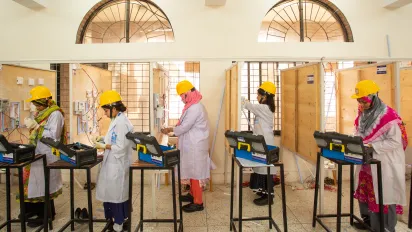
Md. Ziaur Rahman leads a technical training centre in Bangladesh where more women are entering non-traditional trades. Through ILO-supported initiatives, he is helping to create a safer and more inclusive learning environment.
22 June 2026
My name is Md. Ziaur Rahman. I work in the vocational education and training (TVET) sector in Bangladesh. I know what it is like to feel unsafe in a learning environment, and it is important to me to promote a safe and inclusive space for my students.
I grew up in an ordinary family. My father was a government employee. Due to his job transfers, I had the opportunity to study in different districts across Bangladesh.
Something I remember very clearly is my first day at school. I was bullied by a classmate who was physically much bigger and stronger than me. Because of that incident, I was too afraid to attend school during Class One and Class Two. Through a lot of counselling and encouragement from my family, I was finally able to return to school. This has remained a significant memory in my life.
Something I remember very clearly is my first day at school. I was bullied by a classmate who was physically much bigger and stronger than me.
Md. Ziaur Rahman, Principal, Technical Training Centre (TTC) Khulna
I completed a diploma in engineering in Refrigeration and Air Conditioning and later obtained two master’s degrees in Environmental Science and Electrical Engineering.
I started my career in the technical and vocational education and training (TVET) sector in 1999.
What motivates me is the potential of the TVET sector. We have engineers, equipment and resources. Through government support, different projects and international organizations like the International Labour Organization (ILO), we have received considerable assistance.
Earlier in my career, I had the opportunity to work in the hotel industry, and my understanding of gender equality developed from that experience.
While working in hotels, I observed that there was no discrimination between men and women. In every field, both men and women contributed equally and performed well. In many cases, I even saw women outperforming men.
Seeing this inspired me to work on gender inclusion in my TVET institution.
In 2024, I was transferred to work as Principal of the Technical Training Centre (TTC) Khulna.
Early on, we faced a gender-related issue in the institution, and at that moment I realized that as a principal alone, it would not be possible for me to handle such matters effectively.
I wanted to create more gender inclusion at the institution. Previously, there were no such activities, so we started everything from scratch.
At first, whenever we tried to talk with parents about gender equality, in most cases they tried to ignore it, and very few responded positively.
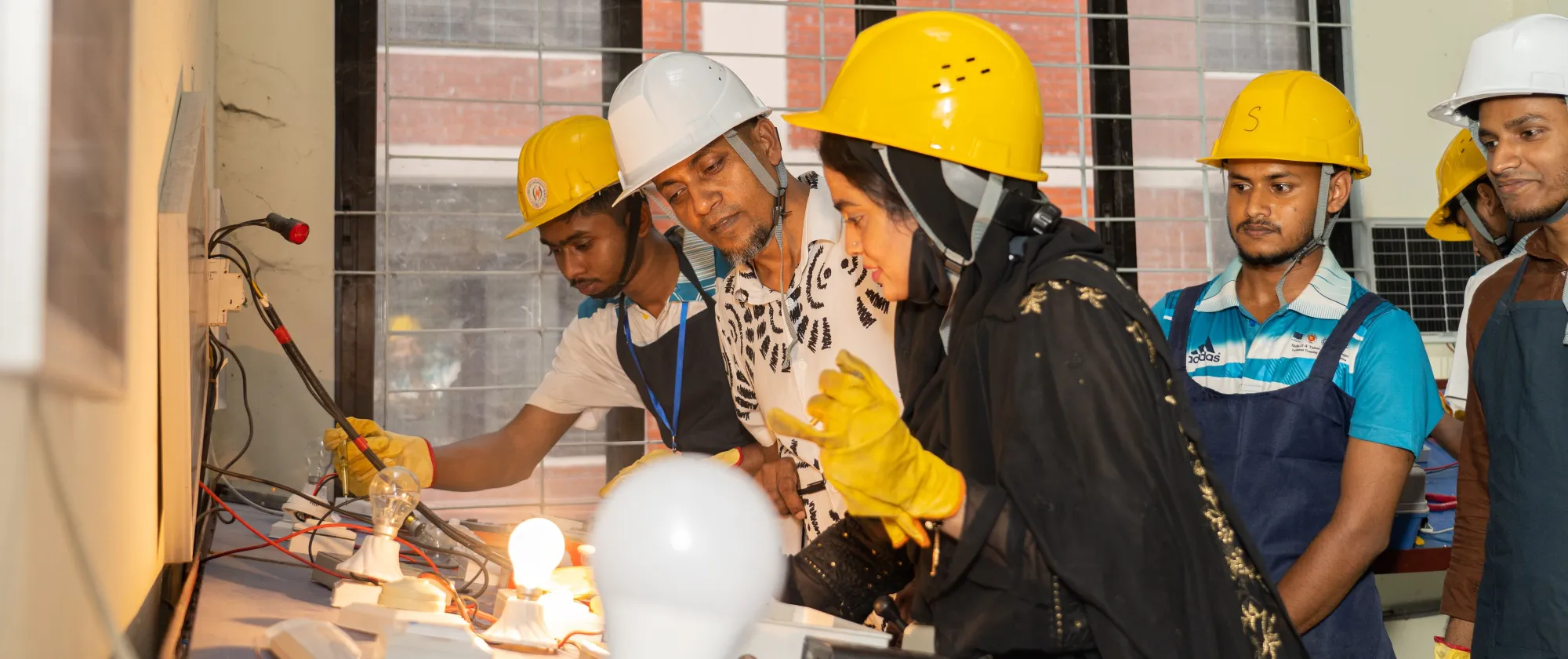
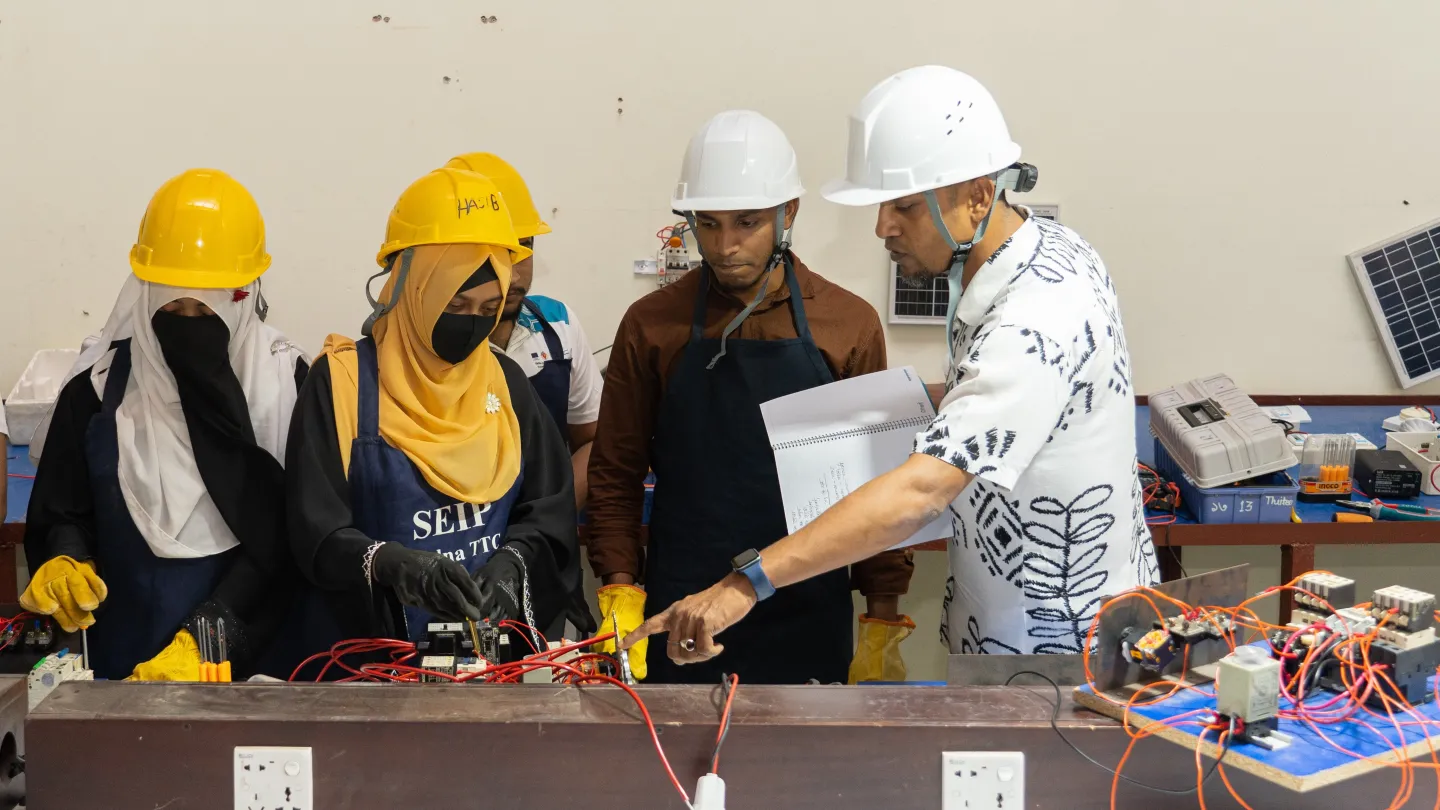
I knew if we were willing, we could overcome these challenges and encourage women to participate alongside men in non-traditional skills development sectors such as plumbing and electrical work.
These professions have strong demand in the labour market and offer significant opportunities for women to succeed.
My first opportunity to work with the ILO came through the ProGRESS project, and through that involvement I became engaged with gender-related issues. Later, through the ILO’s Skills 21 project, we became connected with the Talent Partnership initiative.
It has been a very positive experience. At the Khulna Technical Training Centre, the ProGRESS and Talent Partnership projects have brought new momentum to our training activities and introduced new courses.
We were already working on gender equality issues, but our efforts were unorganized and scattered. Through our involvement with ILO programmes, we learned how to work in a more organized way and further mitigate these issues. We gained this knowledge through various ILO trainings and workshops.
We have successfully built trust among the trainees, and they understand there is absolutely no scope for gender-based violence in this institution.
Md. Ziaur Rahman, Principal, Technical Training Centre (TTC) Khulna
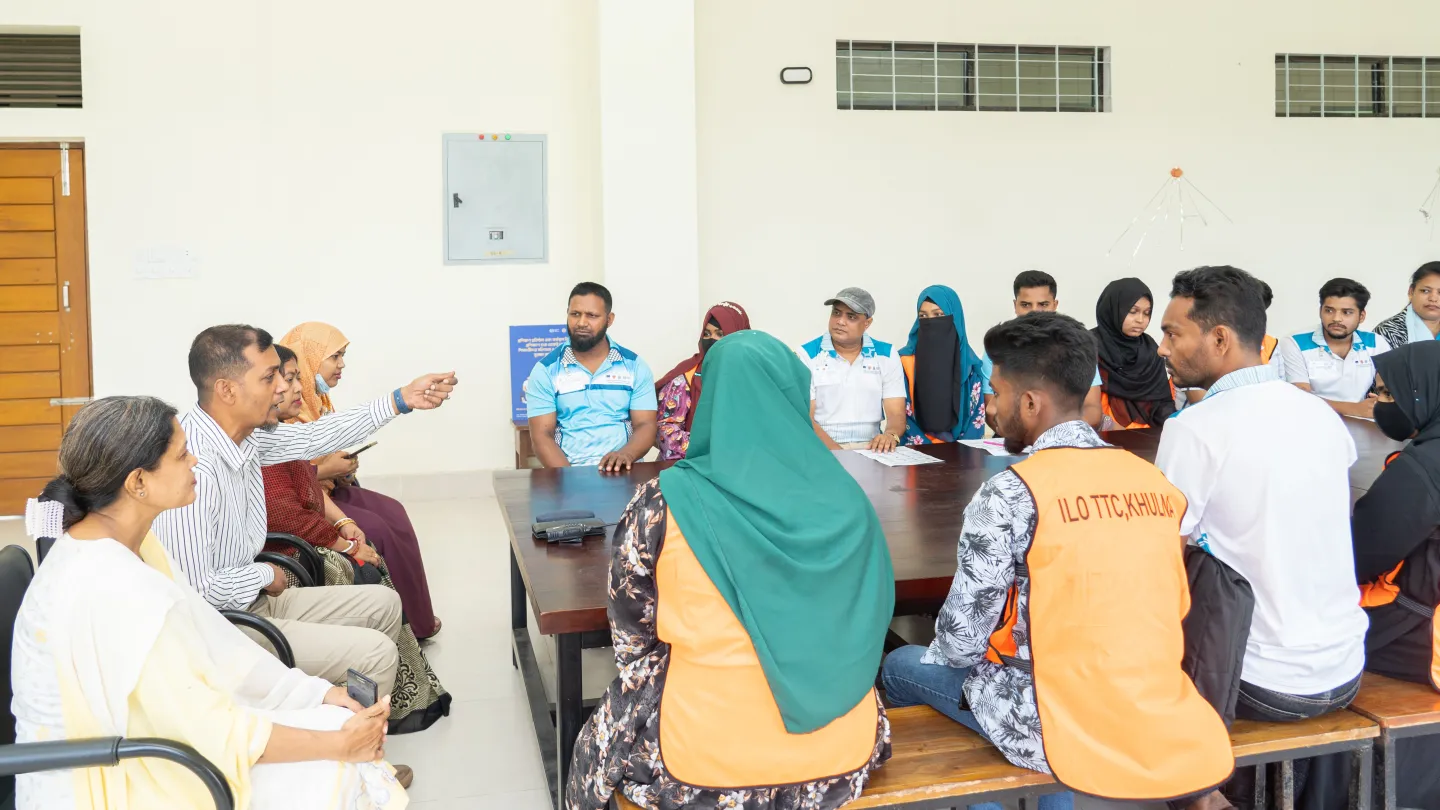
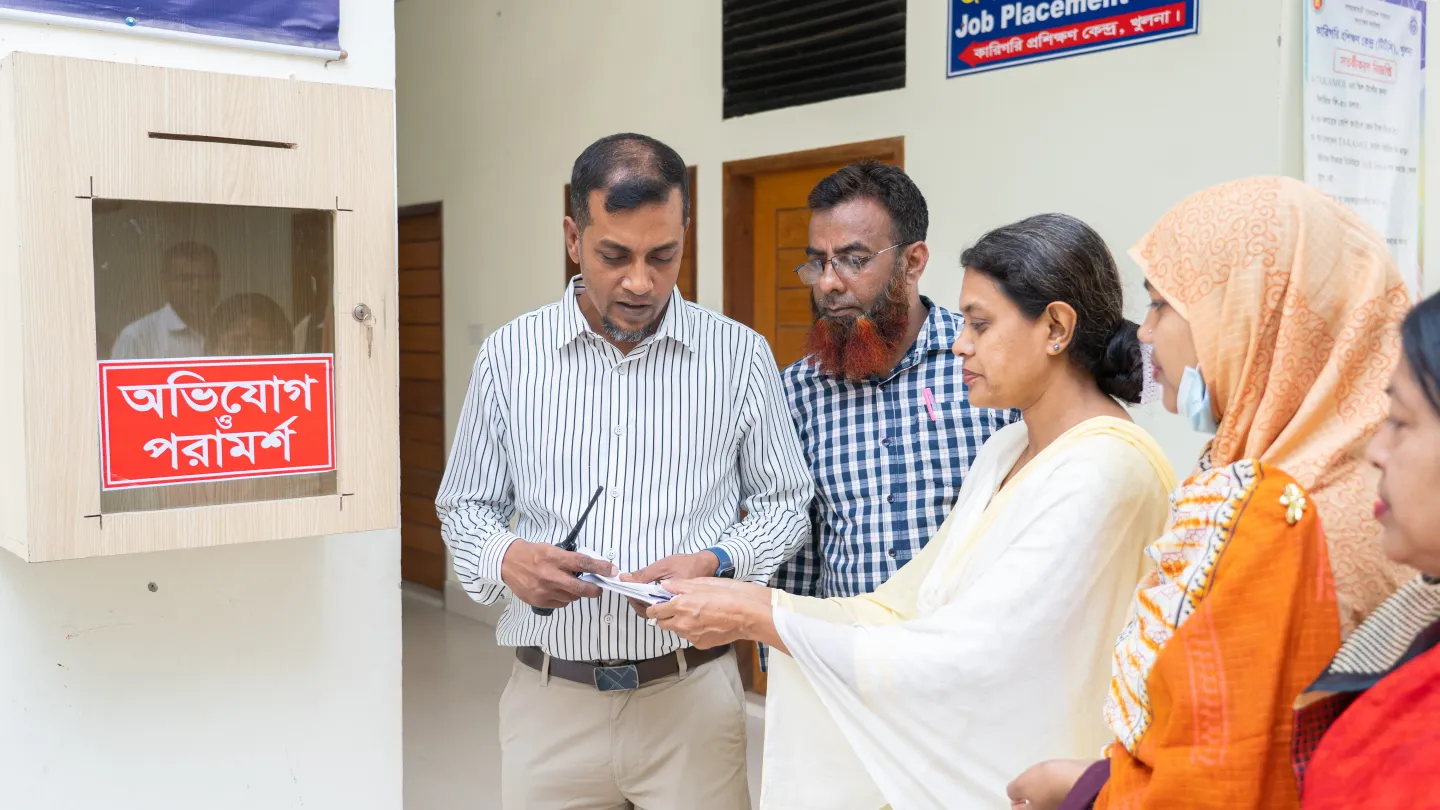
We formed a Gender Committee consisting of both male and female colleagues. Whenever issues related to training activities arise, we try to resolve them through counselling and discussion.
During every orientation session, we try to spread awareness messages among all trainees. On the first day of orientation, guardians usually accompany the female trainees, and we use that opportunity to build awareness among them as well.
We tell them that there is no discrimination between men and women here and explain the facilities available to them. We have successfully built trust among the trainees, and they understand there is absolutely no scope for gender-based violence in this institution.
Recently, we sent nine young men and five young women from our Japanese language course to Dhaka for interviews for jobs in Japan.
When I learned that there wasn’t a proper separate security arrangement for the young women, I became very worried.
I called one of the female students to ask whether they were facing any problems. The answer she gave moved me deeply. She explained that they felt just as safe with their male colleagues as they would with their own family members and brothers. From this response, I realized that during their training period, our trainees had developed an understanding beyond gender differences.
I realized that during their training period, our trainees had developed an understanding beyond gender differences.
Md. Ziaur Rahman, Principal, Technical Training Centre (TTC) Khulna
Through working on gender issues, I also changed my own behaviour. I used to be somewhat strict in nature, and my way of speaking was a bit harsh.
Now I present myself in a way that builds trust, especially when speaking with women. I consider this a major personal transformation.
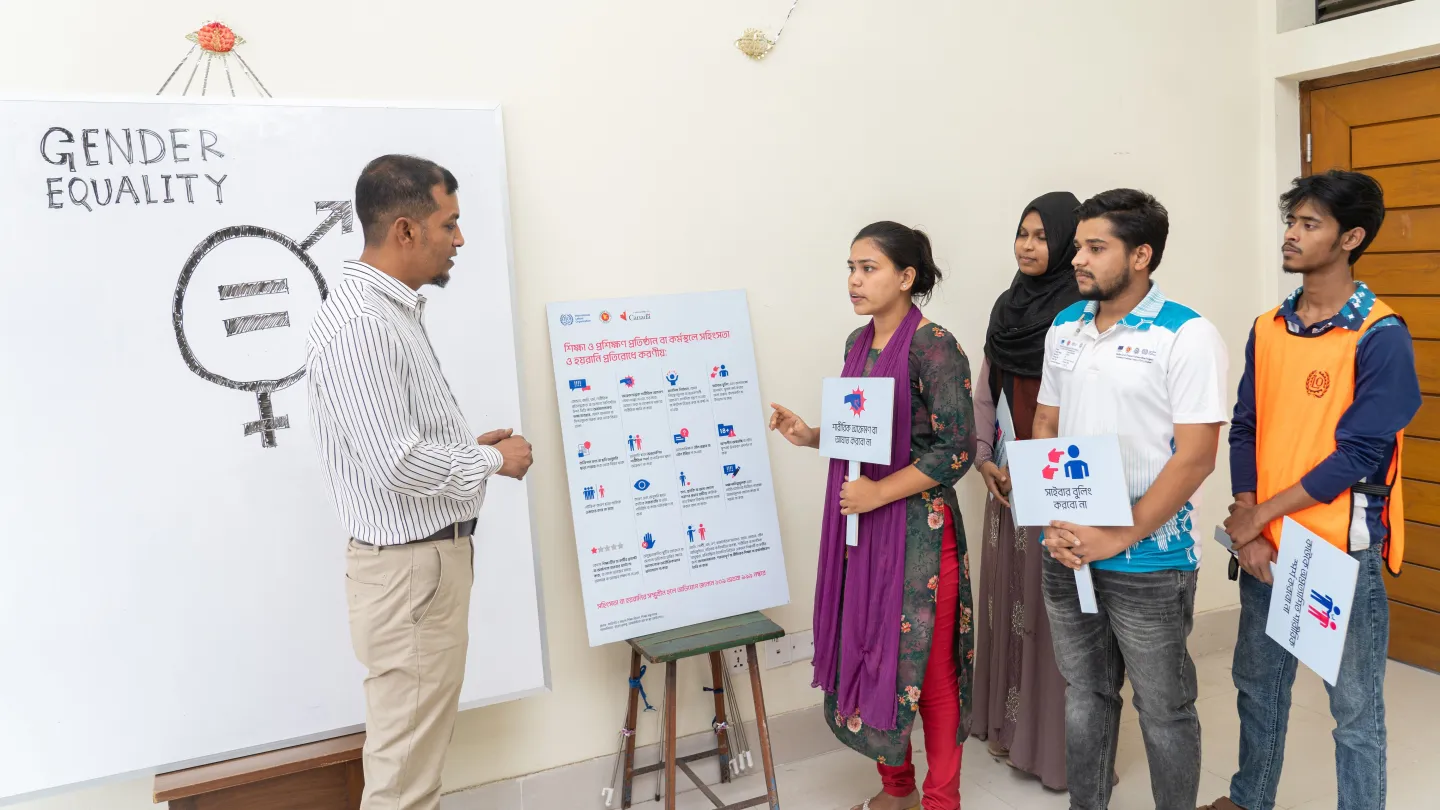
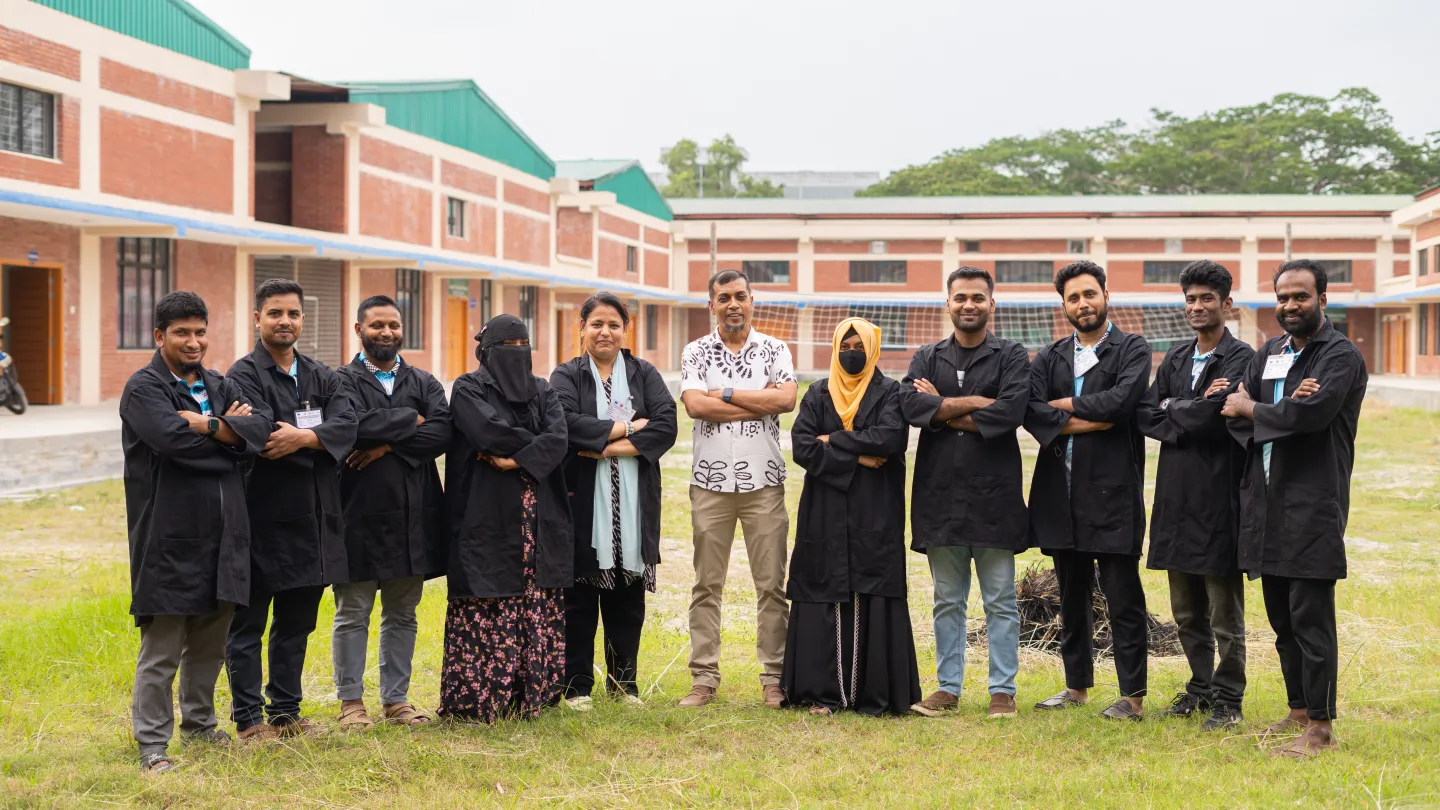
Technical training centres were once seen mainly as places where men trained for technical occupations. But women, alongside men, are now participating in all types of skills development activities. We have been able to create this mindset among local young men and women, and they are now participating in training together without discrimination.
If we can forget the differences between men and women and bring everyone onto a common platform, then we will have equal opportunities to represent ourselves socially, economically and in the global job market. In this way, no one in society will be left behind – we will move forward together, taking everyone along.
Fast facts
- Promoting Gender Responsive Enterprise Development and TVET Systems (ProGRESS) is an ILO project funded by Global Affairs Canada that promotes gender equality, safer learning and working environments, and more inclusive skills development opportunities in Bangladesh.
- Skills 21 is an ILO project funded by the European Union that supports skills development systems, improves the quality and relevance of training, and helps equip young people with skills demanded by the labour market.
- Supporting a Talent Partnership with Bangladesh is a project funded by the European Union to upskill Bangladeshi migrant workers in various occupational sectors to meet the skilled labour needs of select EU Member States, while establishing legal and safe migration pathways between Bangladesh and the EU Member States.
- More than one in five (22.8 per cent or 743 million) persons in employment has experienced at least one form of violence and harassment at work during their working life.
- Through ILO-supported initiatives, TTC Khulna has introduced measures to help prevent violence and harassment, including awareness sessions, a Gender Committee and confidential mechanisms for reporting concerns.
- Convention No. 190 (C190) is the first international labour standard to recognize the right of everyone to a world of work free from violence and harassment, including gender-based violence and harassment.
- Each year, 21 June marks the anniversary of the adoption of ILO Convention No. 190 on Violence and Harassment in the World of Work, which was adopted by the International Labour Conference in 2019.
Interview with Jurate Smalskyte Merville from the European Union delegation to Bangladesh
Find out more
Related content
ILO Voices
Relevant projects
Project: Skills development and labour migration
Supporting a Talent Partnership with Bangladesh

Project: Employability of women workers
Promoting Gender Responsive Enterprise Development and TVET Systems (ProGRESS)
Project
Skills 21 – Empowering citizens for inclusive and sustainable growth