Workshop on South-to-South Cooperation in Combating Child Labour
The workshop, hosted by the ILO Jakarta Office, took place from 4 to 6 March 2013. It was attended by tripartite delegations from Cambodia, Indonesia, Lao PDR, Philippines, Viet Nam and Timor-Leste. The activity was organized within the framework of the project “Combating Child Labour through Education”, which is supported by the Government of the Netherlands.
JAKARTA - The participants were welcomed by the Director of the ILO Office for Jakarta and Timor-Leste, a representative of the Dutch Embassy and the Secretary General of Indonesia’s Ministry of Manpower and Transmigration. All three emphasised the importance of quality education to ensure that children are equipped with skills enabling them to access decent work. The need to remove barriers to education, including through effective social protection measures, was emphasised.
The six participating countries presented country reports in which they highlighted some of the country-specific issues that they were dealing with. For example, Indonesia highlighted the need to link youth employment and child labour, Cambodia the need to co-operate among countries and Lao PDR spoke about developing a National Plan of Action on the elimination of child labour. The Philippines voiced its concern to comply with international labour standards, Viet Nam addressed the need to integrate attention to child labour into government policies and Timor-Leste emphasised that although as a young nation they were starting from zero with regard to child labour, there were a number of national programmes that can be used in tackling child labour.
Thematic sessions of the workshop were on Child Labour and Education (presentations by Indonesia and Viet Nam), Data Collection and Analysis with presentations by Lao PDR and the Philippines, Conditional cash Transfer programmes and Social Protection (presentation by Cambodia and Indonesia) and Labour Market Policies (presentation by Indonesia and the Philippines). All sessions were followed by in-depth discussions, questioning and sharing of experiences among the countries. This intra-country sharing was greatly valued by all and by the end of the workshops a significant increase in discussions among the six countries was observed. A number of support initiatives, for example between Viet Nam and the Philippines, were also identified and will be followed-up.
On the last day there were tri-partite discussions on experiences, challenges and gaps among Government, Employers, and Workers participants of the different countries. The workshop ended with a Strategic Planning Session during which the participating countries used the checklist of the draft “ASEAN Roadmap on the Elimination of the Worst Forms of Child Labour by 2016” to identify their achievements so far as well as the challenges and the gaps that remain. There was a strong call by all countries for the ASEAN Roadmap to be finalised and approved by ASEAN.
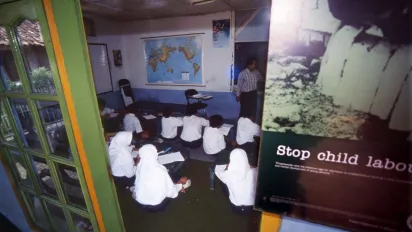
Field visits to centres for street children, for child domestic workers and to the Jakarta garbage dump were conducted on the afternoon of the second day. These field visits were highly appreciated by all participants as they provided an important and much–needed link with the reality of child labour situations. Participants were touched and inspired by what they saw and shared some of their feelings and thoughts about the field visits the next day during the workshop.
The project “Combating child labour through education” is continuing to support other south-south cooperation and knowledge sharing activities as part of its on-going work.