

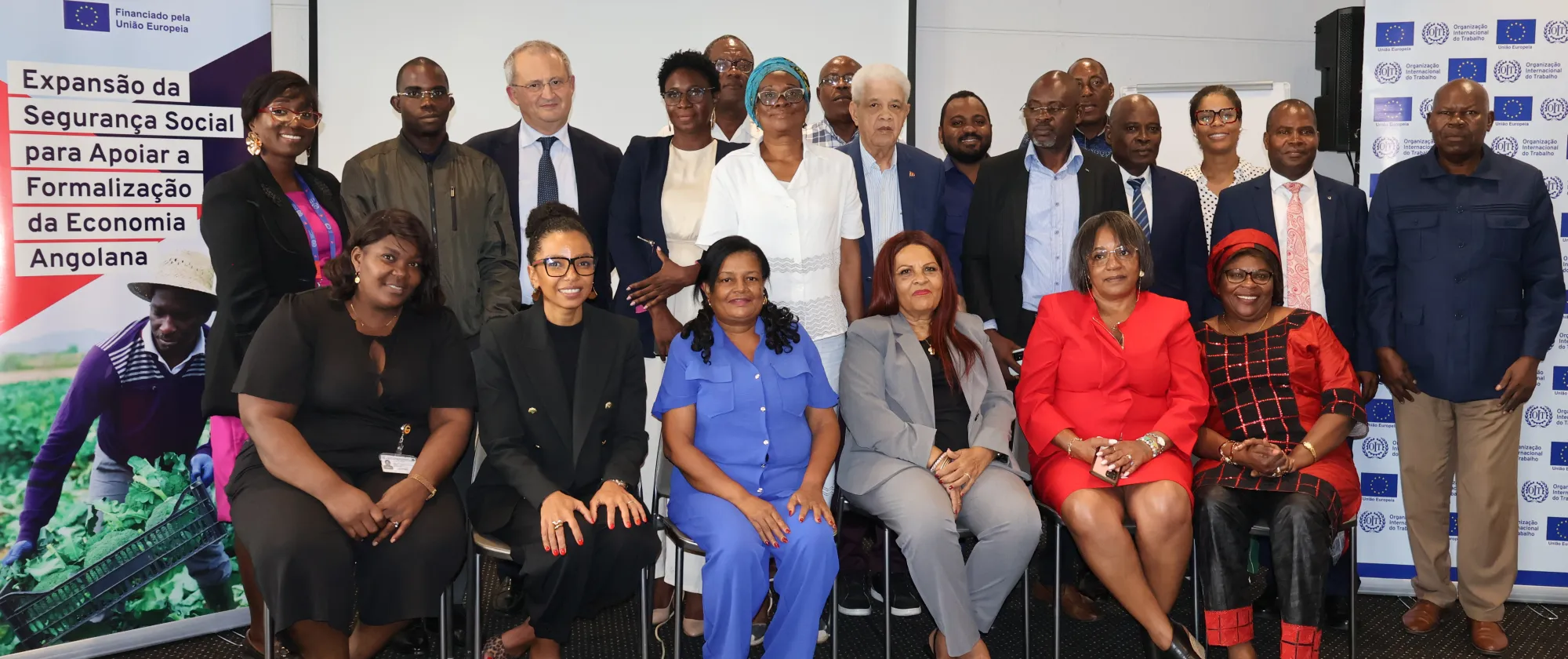
Workers and employers submit recommendations for social protection against unemployment, sickness and disability
A joint effort to discuss recommendations on the feasibility and relevance of unemployment, sickness and disability benefits in the socio-economic context of Angola.
7 February 2025
The International Labour Organization (ILO) held today, 7 February, in Luanda, a Bipartite Social Dialogue with the aim of discussing the comparative and benchmarking studies carried out by the ILO on the social protection of workers in the event of unemployment, illness and disability, and proposing recommendations to support the decision of the Government of Angola in the implementation of these benefits in the country's social security system.
Held under the Project "Expansion of Social Security to Support the Formalization of the Angolan Economy", funded by the European Union, the event brought together about 25 representatives of Employers' and Workers' Organizations, in a joint effort to discuss recommendations on the feasibility and relevance of unemployment, sickness and disability benefits in the socio-economic context of Angola.
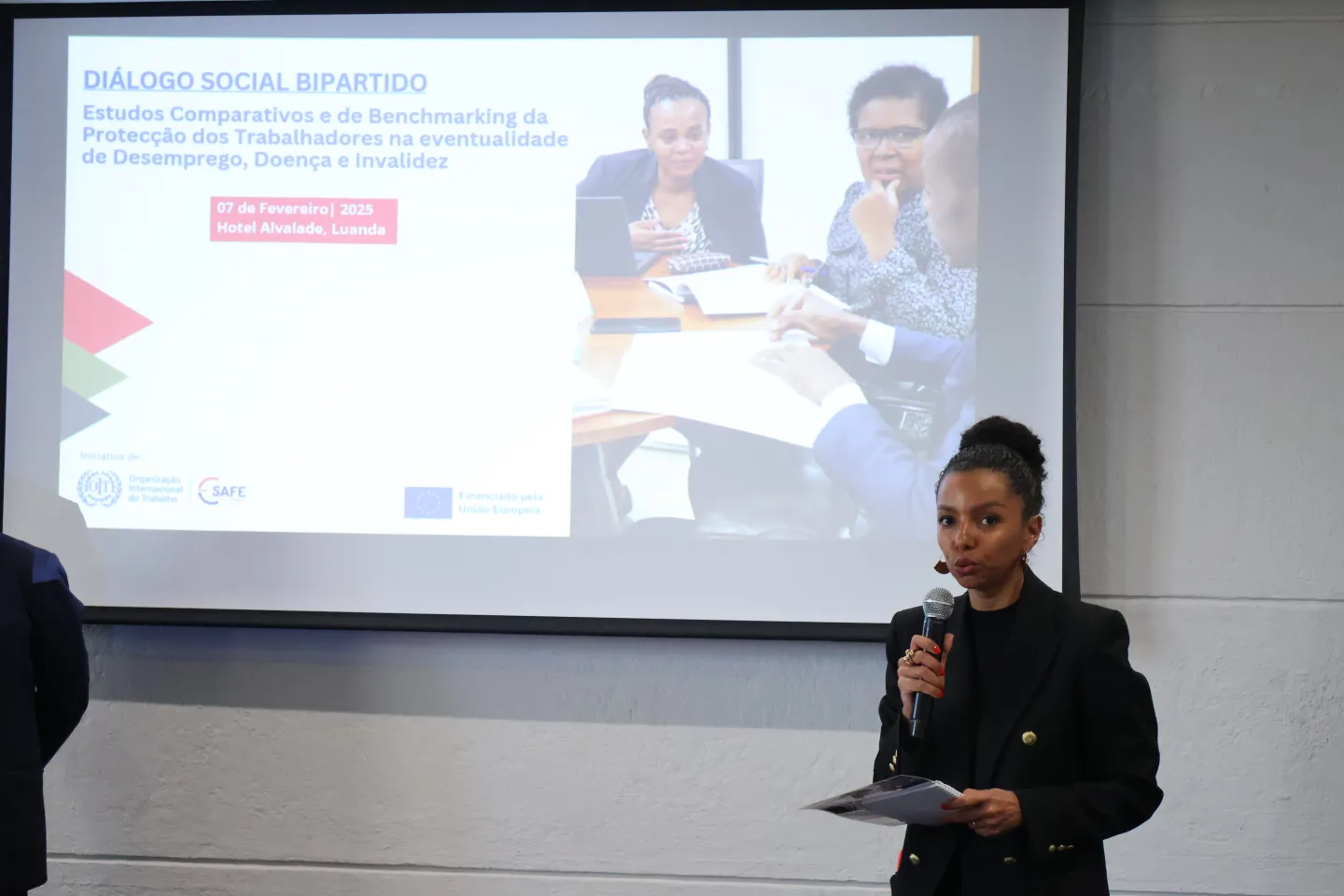
The session was opened by Denise Monteiro, ILO Project Manager, who highlighted the importance of social dialogue in the formulation of inclusive and sustainable social protection policies.
The participants were divided into groups for an interactive dynamic, where they discussed the recommendations and proposals for the design of the new benefits in the light of international practices and based on the international social security standards of the ILO, considering the financial viability and adequacy to the socio-economic context of Angola. The exchange of ideas between employers and workers reinforced the need for a balanced system, which guarantees the protection of workers in the three proposed eventualities without compromising the financial sustainability of the National Institute of Social Security (INSS).
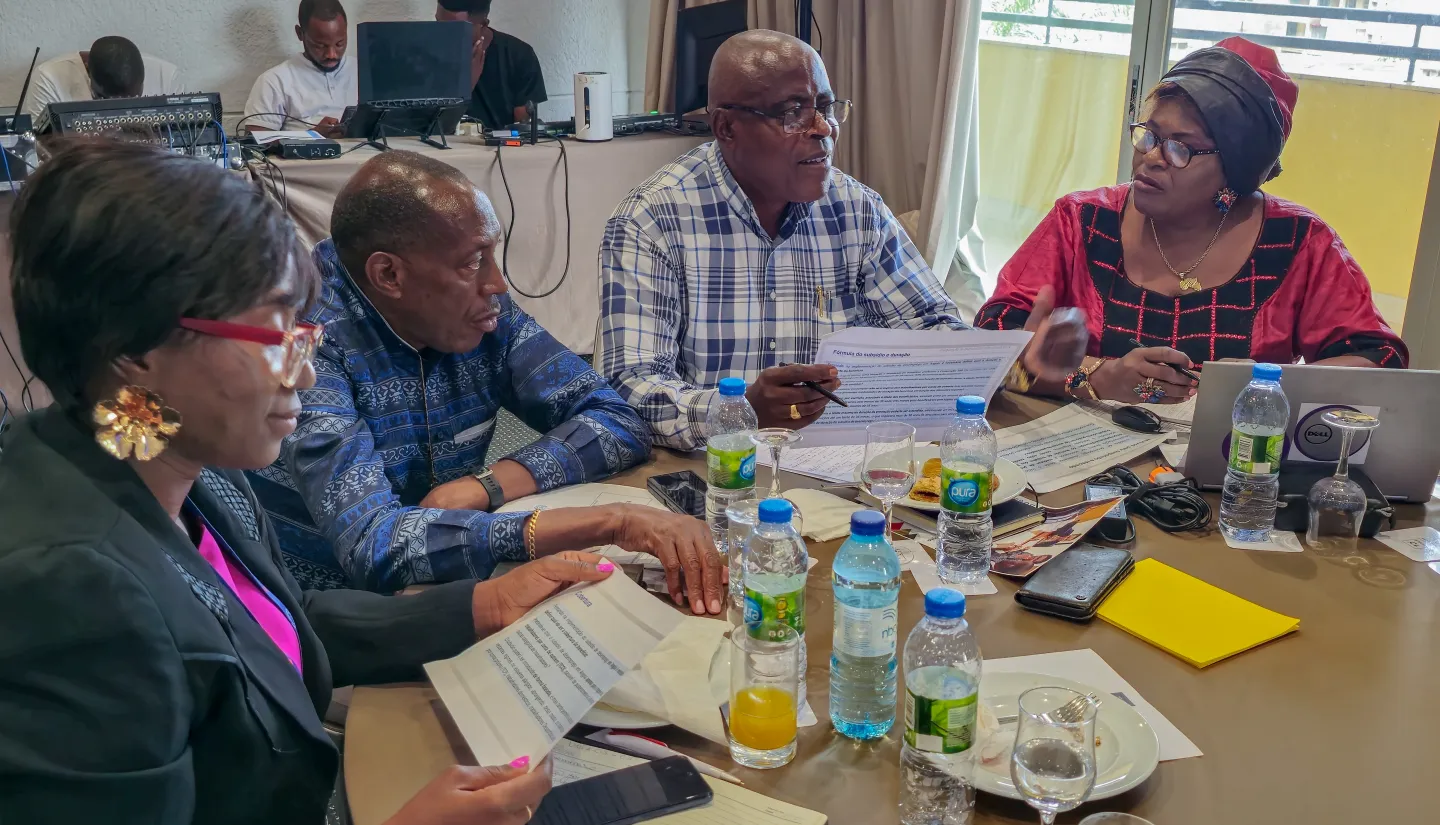
According to the trade unionist Infinda Virginie Samuel, Secretary for International Relations of the Union of Workers of Angola (UNTA-CS), the meeting produced important analyses that allowed the trade unions to reflect on the insertion of actions more focused on advocacy for social protection issues for their next planning. For the also president of the Unionized Women of UNTA-CS, these proposals will benefit women, who are the majority among the unemployed population.
"On social protection in the event of illness, we, the unions, must closely monitor and transmit their rights to workers, because it is the workers who sustain the economy," said Infinda Samuel.
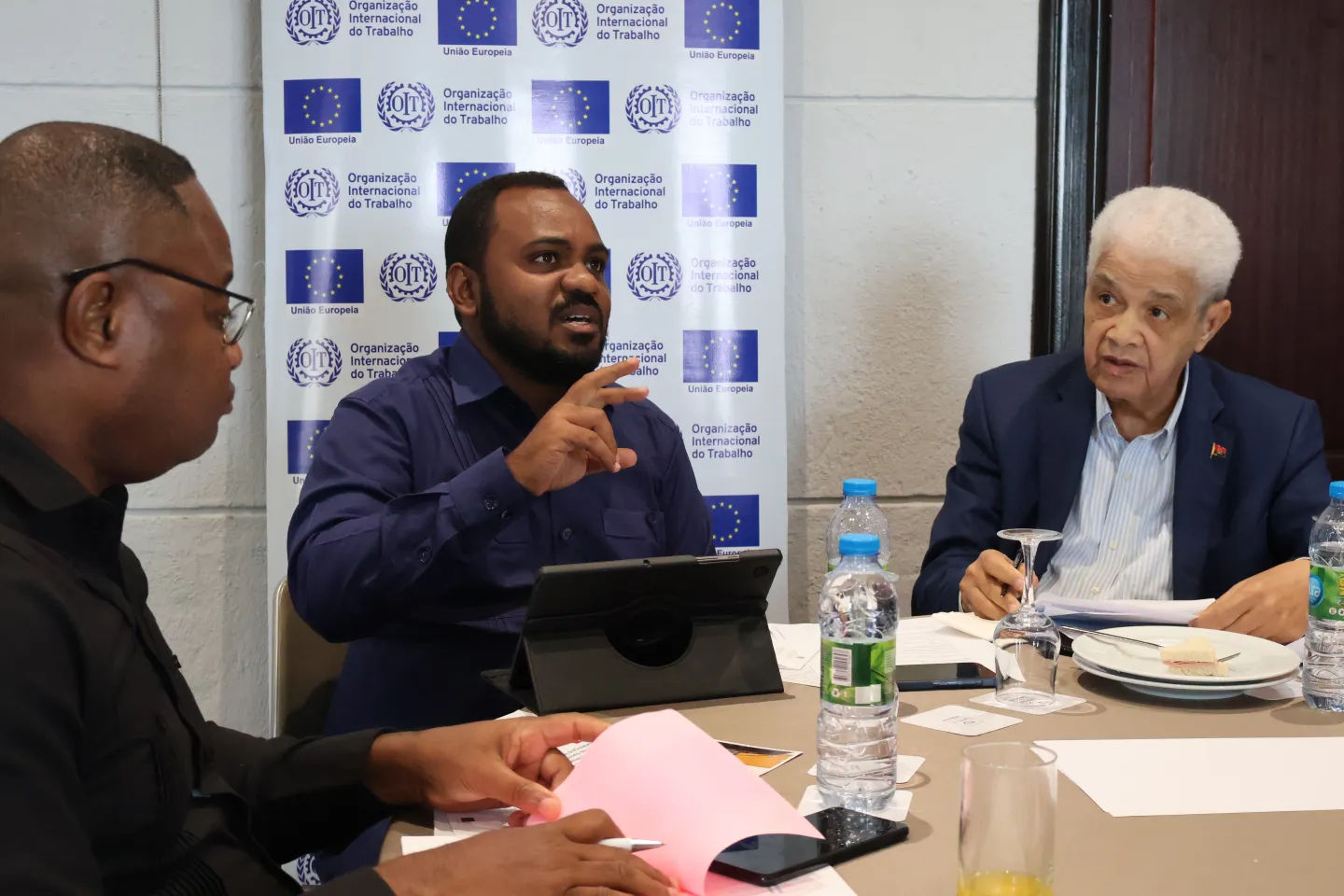
For the president of the Industrial Association of Angola, José Severino, the bipartite social dialogue was "a happy moment" between representatives of the working classes and employers. "We left the meeting very comfortable, with the expectation of improving the lives of workers and with the conviction that we all have to work to offer workers the security they need," said the AIA representative.
José Severino encouraged the ILO to continue to carry out studies and promote similar dialogues, in order to contribute to reducing the high rate of unemployment and informality. "Anyone who has worked for more than a year should receive at least six months of unemployment benefits," he suggested.
This social dialogue strengthens the role of employers and workers in establishing social security reforms built in a participatory and equitable way.
The event reinforced the ILO's commitment to support Angola in the development of social protection policies that provide increasingly higher levels of social benefits in line with ILO Recommendation 202.