

Workers and employers to campaign labour rights and gender equality in palm oil and fish processing sectors
The ILO’s Workers Rights Project equips workers’ and employers’ organizations with communications skills to promote wider campaigns on labour rights and gender equality in the palm oil and fish processing sectors.
3 April 2023
Aimed to build the capacity of the participants in awareness raising and advocacies, the training was conducted in collaboration with Magdalene, a woman-focused online publication that offers news and views with a gender perspective. The training, held online, was attended by participants from various provinces known for its palm oil and fish processing sectors: Jakarta, Yogyakarta, Bali, Riau, North Sulawesi, East Kalimantan, North Sumatra and Maluku.
“Through this training, we hope to promote stronger compliance to labour laws and the principles of occupation safety and health (OSH) as well as gender equality in the management and supply chains of these two sectors. It is also part of the ILO’s support to develop and roll out gender-responsive information materials as well as training and education programmes in these two main targeted sectors of the ILO’s Workers’ Rights project,” said Januar Rustandie, Project Coordinator of the ILO’s Workers’ Rights Project.
During the training, the participants learned to map out their stakeholders, identify the right communication channels for their organizations, classify the needs of their targeted audiences and impacts and create their messages. They also learned basic practical skills ranging from creative writing, press release and content formulation to social media strategy and basic graphic design techniques.Through this training, we hope to promote stronger compliance to labour laws and the principles of occupation safety and health (OSH) as well as gender equality in the management and supply chains of these two sectors."
Januar Rustandie, Project Coordinator of the ILO’s Workers’ Rights Project
The training also focused on the importance of monitoring and evaluation strategies to measure impacts. The participants were taught to use quantitative and qualitative tools to measure impact. By using these tools, they could measure the successfulness of their communications campaign not only in terms of the number of audiences reached, but also the quality of and absorption of key messages.
The training concluded with the development of communications and informational materials that would be used their own organizational campaigns. The participants were assigned to produce a variety of materials ranging from posters, news releases, articles to social media posts. To assist the development of quality materials, two online coaching sessions were provided to encourage the participants practicing new communications skills that had learned to promote decent working conditions, labour rights and labour compliance and gender equality at the company and organization level.
The participating workers’ and employers’ organizations included the Indonesian Pole & Line and Handline Tuna Fisheries Association (AP2HI), The Foundation of Indonesian Society and Fishing (MDPI), the Indonesian Employers’ Association (Apindo), the Confederation of All Indonesian Labour Union (KSBSI) and its Trade Union Federation of Forestry, General Industry, Timber, Agriculture and Plantation (F-HUKATAN), the Confederation of National Trade Union (KSPN), the Confederation of Indonesian Moslem Labour Union (K-Saburmusi), and the Trade Union Federation of Agriculture and Plantation of the Confederation of All Indonesian Workers’ Union-CAITU (FSPPP KSPSI-CAITU).
Related content

Workers' rights in rural sectors
Improving Workers’ Rights in Rural Sectors of Indonesia

Communications Training for Employers and Workers Organizations on Labour Standards, OSH and Gender Equality
Workers and employers of palm oil and fish processing sectors join forces to promote labour rights and gender equality
Relevant projects
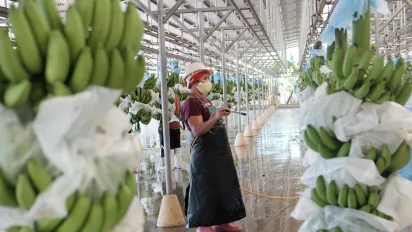
Workers' rights in rural sectors
Improving Workers' Rights in Rural Sectors of the Philippines
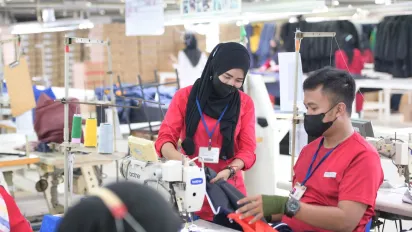
Promotion of C190 Ratification and Prevention of Violence and Harassment at Work in Indonesia
Workers' rights in rural sectors
Improving Workers’ Rights in Rural Sectors of Indonesia