

Gender pay gap
Women in Armenia are paid less than men for work of equal value: causes and possible solutions
In Armenia, women earn 25–30% less than men for work of equal value. With support from UN Women, ILO and the World Bank experts discuss causes, barriers and solutions to address the gender pay gap.
10 September 2025
YEREVAN (ILO News) - In Armenia, women are paid 25–30 per cent less than men for work of equal value, despite the country’s ratification in 1994 of the International Labour Organization (ILO) Equal Remuneration Convention, 1951 (No. 100). What are the causes of such disparity? What factors hinder equal pay, and what measures should be taken to improve the situation?
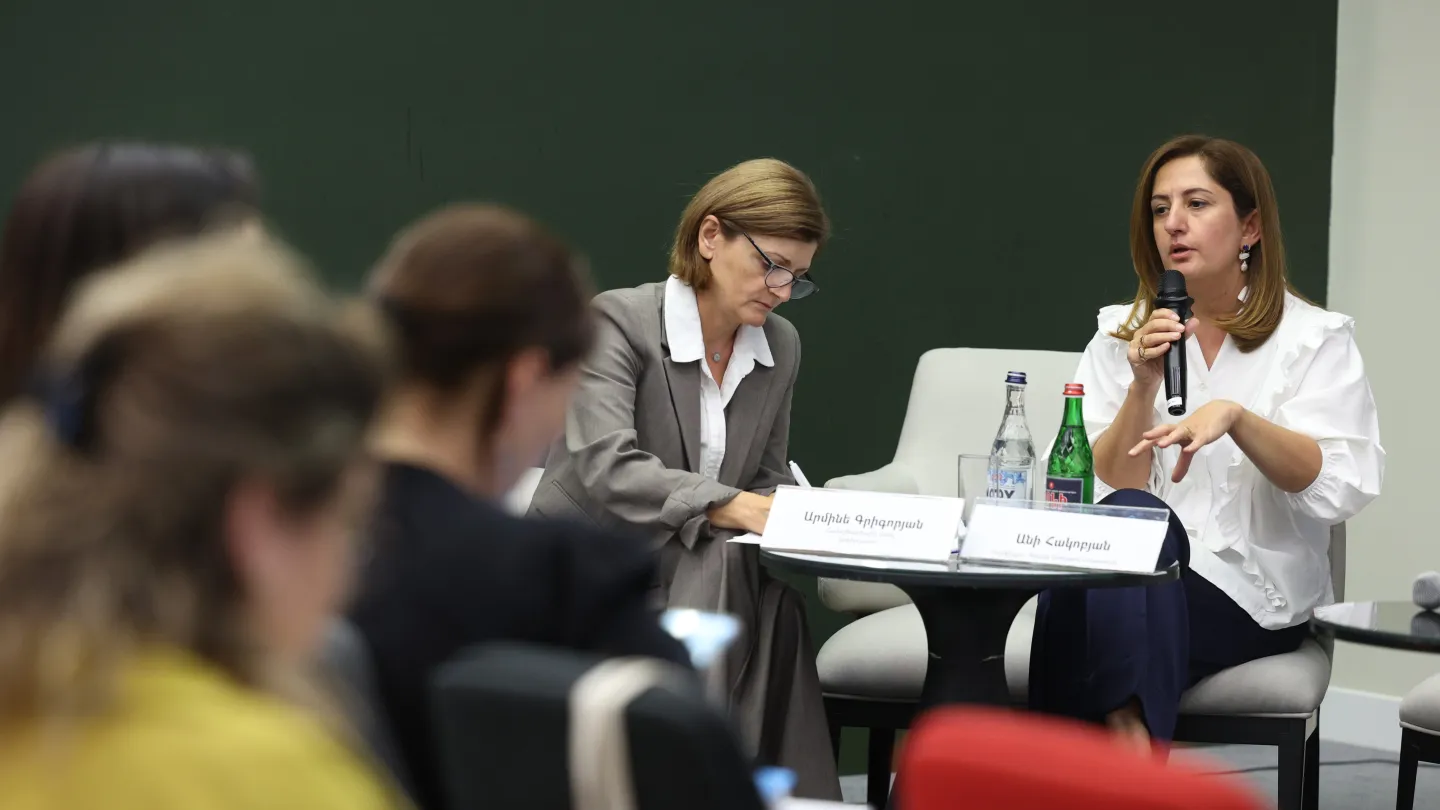
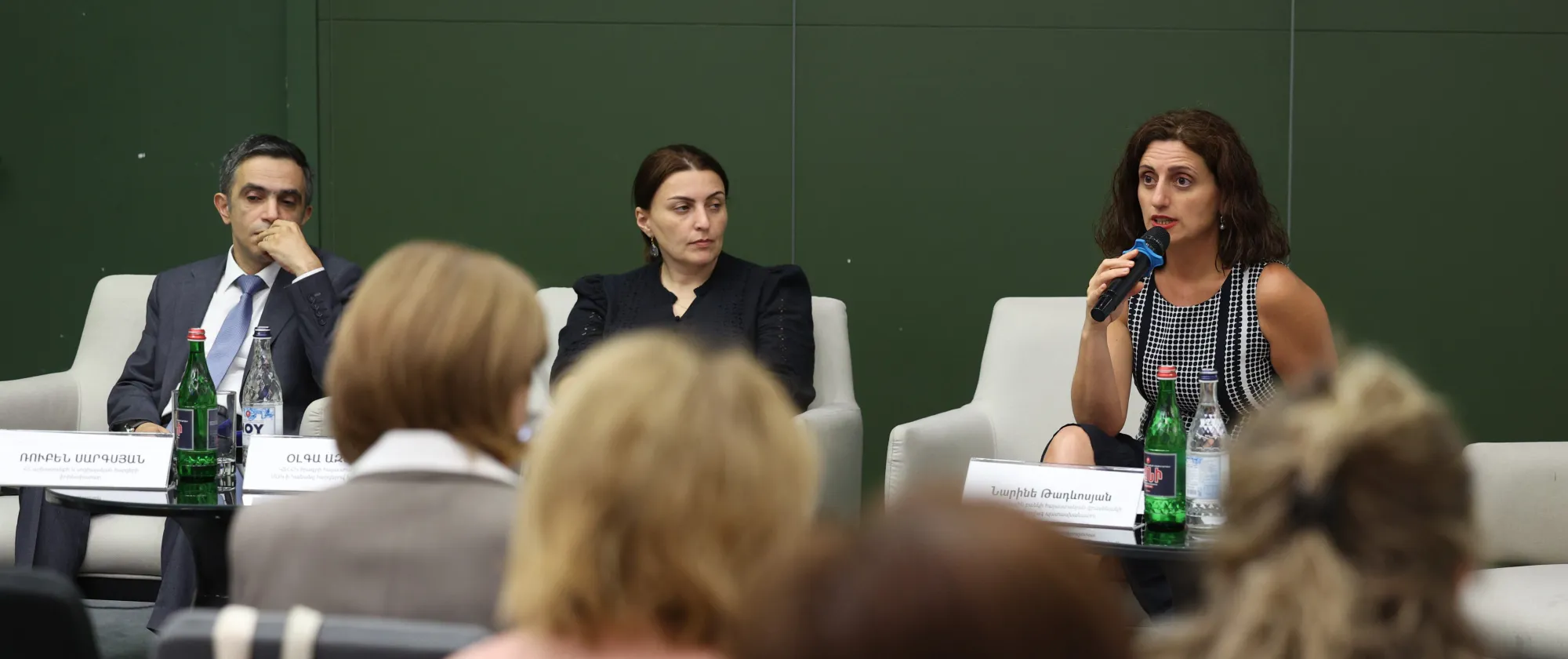
To discuss these issues, on 10 September a public dialogue was held among representatives of the government, the private sector, international organizations, civil society, and institutions dealing with the rights of workers and employers. The discussion, entitled “Equal Pay, Decent Work: Dialogue on Gender Justice”, was organized by UN Women, ILO and the World Bank.
According to Saida Ismayilakhunova, Senior Economist and Lead of the South Caucasus Poverty and Equity Program Working Group at the World Bank, the gender pay gap in Armenia is driven by several factors, such as the number of working hours, the type and sector of employment, as well as work experience, which is also affected by women’s unequal caregiving responsibilities for children and families. However, 60–80 per cent of this gap cannot be explained by these factors. This may be linked to less visible drivers, such as social norms, risk aversion and possible discrimination.
Although Armenia’s legislation generally stipulates the requirement of equal pay, mechanisms for pay transparency and enforcement of equal remuneration are still needed. It would also be beneficial to improve parental leave policies aimed at more equally distributing childcare responsibilities by ensuring flexibility in maternity leave, introducing shared parental leave and expanding paternity leave.
According to a UN Women and Statistical Committee analysis of the gender pay gap in the labour market, employers — and the labour market in general — sometimes assess women and men with the same skills and abilities differently, influenced by prevailing perceptions, expectations, stereotypes, and biases in society. Social expectations about what women can or cannot do significantly affect their willingness to apply for jobs, participate in the labour market, and even negotiate salaries. The same analysis also revealed the existence of normative discrimination, rooted in the cultural belief that mothers should stay at home and care for children. However, this by no means implies that women are less experienced or less effective in paid employment.
Deputy Minister of Labor and Social Affairs Ruben Sargsyan, addressing the issue of unequal pay, recalled that Armenia has adopted the Employment Strategy (2025–2031), which outlines certain pathways for involving competitive individuals in the labour force and leveraging women’s potential in the labour market. According to him, the aim of the strategy’s measures is to increase productivity and competitiveness in Armenia, reduce gender disparities in the labour market and enhance the effectiveness of state employment policies.
Arpi Karapetyan, President of the Armenian Human Resources Association, emphasized that one of the reasons for unequal pay is the absence of established grading systems for wages in the private sector. According to her, only a small number of companies in Armenia have structured internal compensation systems, making the public availability of wage market research particularly important.
Özge Berber-Agtaş, Gender Equality and Non-Discrimination Specialist at the ILO Decent Work Technical Support Team and Country Office for Eastern Europe and Central Asia, noted that the implementation of ILO Convention No. 100 requires multifaceted solutions based on a deep understanding of the root causes. “This requires involvement of governments, employers’ and workers’ organizations and calls for transparent wage-setting systems and gender-neutral job evaluations, free from gender stereotypes. It also requires stronger enforcement of non-discrimination laws in line with ILO Conventions, the collection of reliable gender-disaggregated data and extension of care policies and services,” said Berber-Agtaş.
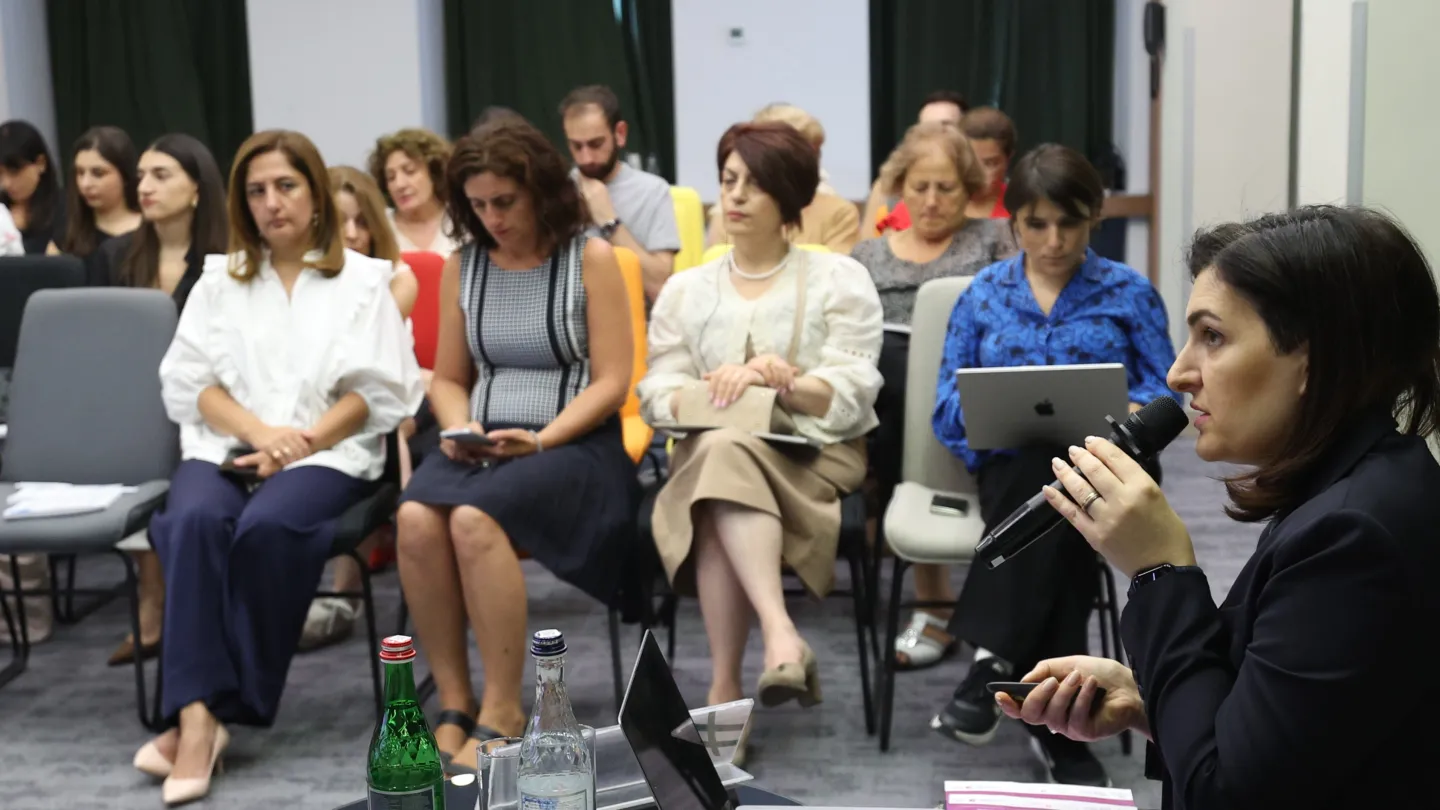
The dialogue underlined that addressing gender pay gaps benefits from collaboration between government, employers, workers and civil society, with attention to transparent wage policies and fair enforcement of non-discrimination measures.
Related content
Country portal
Armenia
Topic portal
Gender equality