

Uzbekistan strengthens labour inspection ahead of the 2026 cotton harvest
An ILO training focused on practical approaches to labour rights, inspection and monitoring during Uzbekistan’s cotton harvest.
26 August 2026
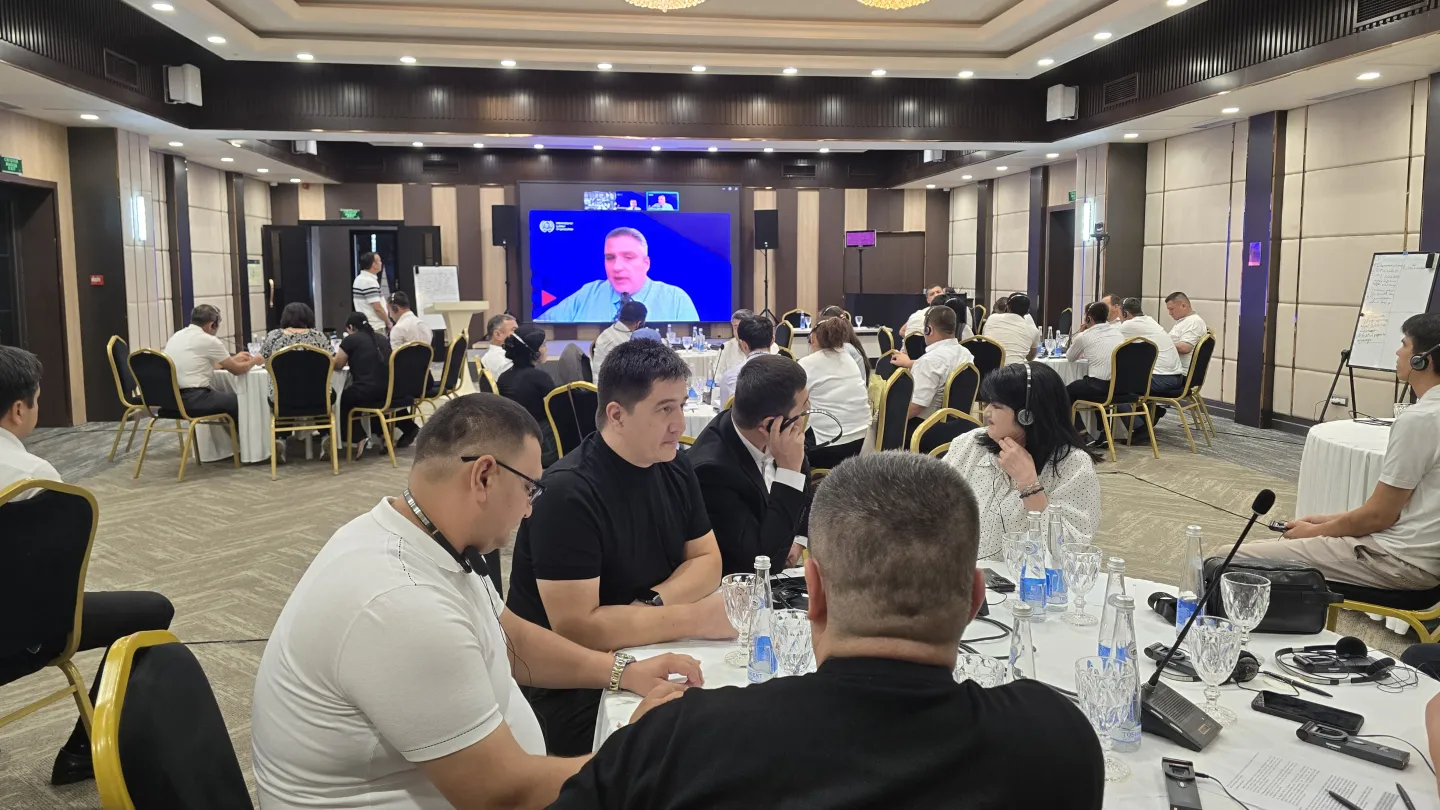
TASHKENT (ILO News) – The International Labour Organization (ILO) conducted a three-day training in Tashkent from 24 to 26 August 2026, bringing together state labour inspectors, representatives of trade unions and civil society activists to strengthen practical approaches to labour inspection and monitoring.
Organized by the ILO RISE for Impact project, at the request of the Ministry of Employment and Poverty Reduction of the Republic of Uzbekistan, the three-day programme combined technical presentations with case studies, role play, group work and discussions.
The training comes ahead of Uzbekistan’s cotton harvest, when labour inspectors and other monitoring actors will be working in seasonal agricultural settings.
Strengthening knowledge of fundamental labour rights
Participants examined the ILO’s fundamental principles and rights at work and their application to cotton-harvest monitoring, with a focus on forced labour and child labour. Uzbekistan has ratified all ten of the ILO’s fundamental Conventions.
The training strengthened participants’ skills in planning and conducting interviews during monitoring. Anne Ziebarth, ILO BETTERWORK Legal Technical Officer, covered questioning techniques and common challenges, with particular attention to effective, ethical and victim-centred interviewing. Participants applied the techniques through case studies and role-play exercises.
Strengthening effective labour inspection
The second part of the training focused on the role of labour inspection in protecting workers’ rights and ensuring compliance with labour legislation. Darko Dochinski, Specialist on Labour Administration, Labour Inspection and Occupational Safety and Health at the ILO Office for Eastern Europe and Central Asia, addressed the functions, powers and responsibilities of labour inspectors.
Particular attention was given to the role of labour inspectors in combating forced labour. While labour inspectors do not investigate criminal offences, they can be among the first public authorities able to identify potential forced labour, protect potential victims and trigger an appropriate response.
Participants also examined approaches and methodologies for effective labour inspection in agriculture, with a focus on labour rights and occupational safety and health.
Learning from international inspection campaigns
Changyou Zhu, Labour Administration and Inspection Officer at the ILO Social Dialogue, Labour Relations and Governance of Work Branch, presented good practices for planning and implementing labour inspection campaigns, drawing on the experience of the Senior Labour Inspectors Committee of the European Union.
Participants explored how coordinated and time-bound activities can combine enforcement with communication, awareness-raising, partnership and evaluation, and how these approaches can be adapted to cotton-harvest monitoring in Uzbekistan.
Preparing for the 2026 cotton harvest
The training concluded with group work to identify key challenges, inspection priorities and opportunities for stronger coordination. Participants discussed strategic issues and practical approaches to strengthening the organization and implementation of labour inspection and monitoring during the 2026 cotton harvest. The training also provided an opportunity for stakeholders involved in labour monitoring to exchange experience and strengthen coordination ahead of the harvest.
The training was organized by the ILO RISE for Impact: Fundamental Principles and Rights at Work in the Cotton Supply Chain – A New Phase, A New Vision project, which supports efforts to promote fundamental principles and rights at work in Uzbekistan’s cotton supply chain.
Relevant projects

Project country page (Uzbekistan)
RISE for Impact: Fundamental Principles and Rights at Work in the Cotton Supply Chain – A New Phase, A New Vision (UZBEKISTAN)