

Care economy
United Nations Joint Programme on care economy supported Türkiye to advance a transformative vision for inclusive growth
The closing event of the UN Joint Programme on Transformative Growth of the Care Economy in Türkiye highlighted the country’s growing commitment, in collaboration with the United Nations Türkiye, to position the care economy as a foundation for inclusive and sustainable development.
11 November 2025
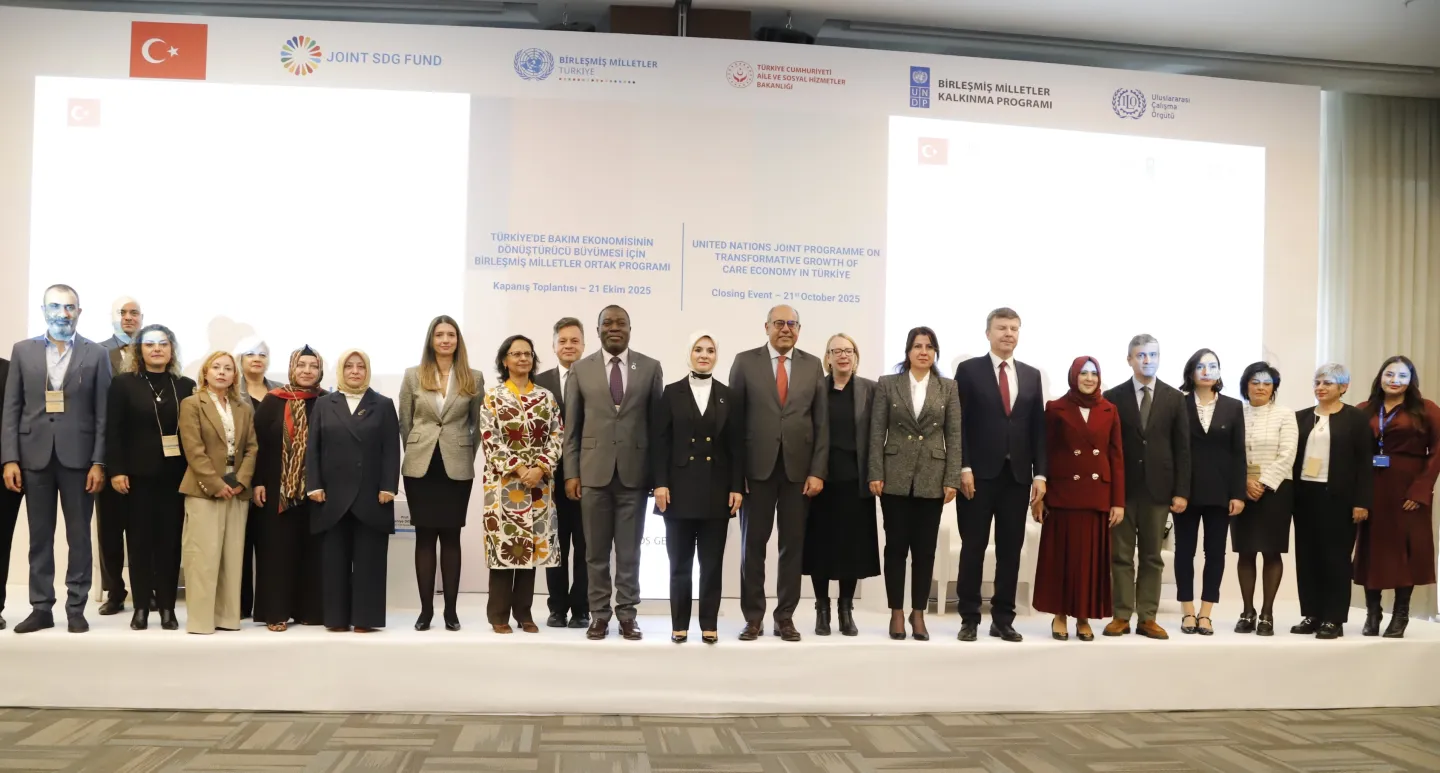
ANKARA (ILO News) — Care is the invisible foundation of every society as it sustains life, families, and communities from birth to old age. Yet, while it underpins economies and social well-being, care work remains undervalued, underfunded, and disproportionately carried by women. Recognizing this critical role of care, Türkiye—together with the United Nations—has taken important steps to make care visible in policy, planning, and the public agenda.
Representatives from government institutions including the Minister of Family and Social Services, UN agencies, workers’ and employers’ organizations, and civil society gathered in Ankara on 21 October for the closing event of the UN Joint Programme on Transformative Growth of the Care Economy in Türkiye. The event celebrated key achievements, shared innovative models, and reaffirmed Türkiye’s commitment to advancing care as a strategic priority for inclusive growth, ahead of the first-ever International Day of Care and Support on 29 October.
The event opened with welcoming remarks from Mr. Yasser Hassan, Director of the ILO Office for Türkiye; Dr. Babatunde Ahonsi, UN Resident Coordinator in Türkiye; and H.E. Mahinur Özdemir Göktaş, Minister of Family and Social Services.
Care economy as a strategic enabler of inclusive and sustainable development
“Care is not only a social imperative, but also an economic strategy,” said Yasser Hassan, Director of the ILO Office for Türkiye at his opening speech. “Our shared vision is clear: to ensure universal access to quality care services, and to guarantee that all those engaged in paid or unpaid care work can do so under decent conditions. Realizing this vision will not only improve people’s well-being, but also create decent jobs, help close the gender pay gap, and foster inclusive and sustainable economic growth in Türkiye. We see the care economy as a strategic enabler of inclusive and sustainable development.”
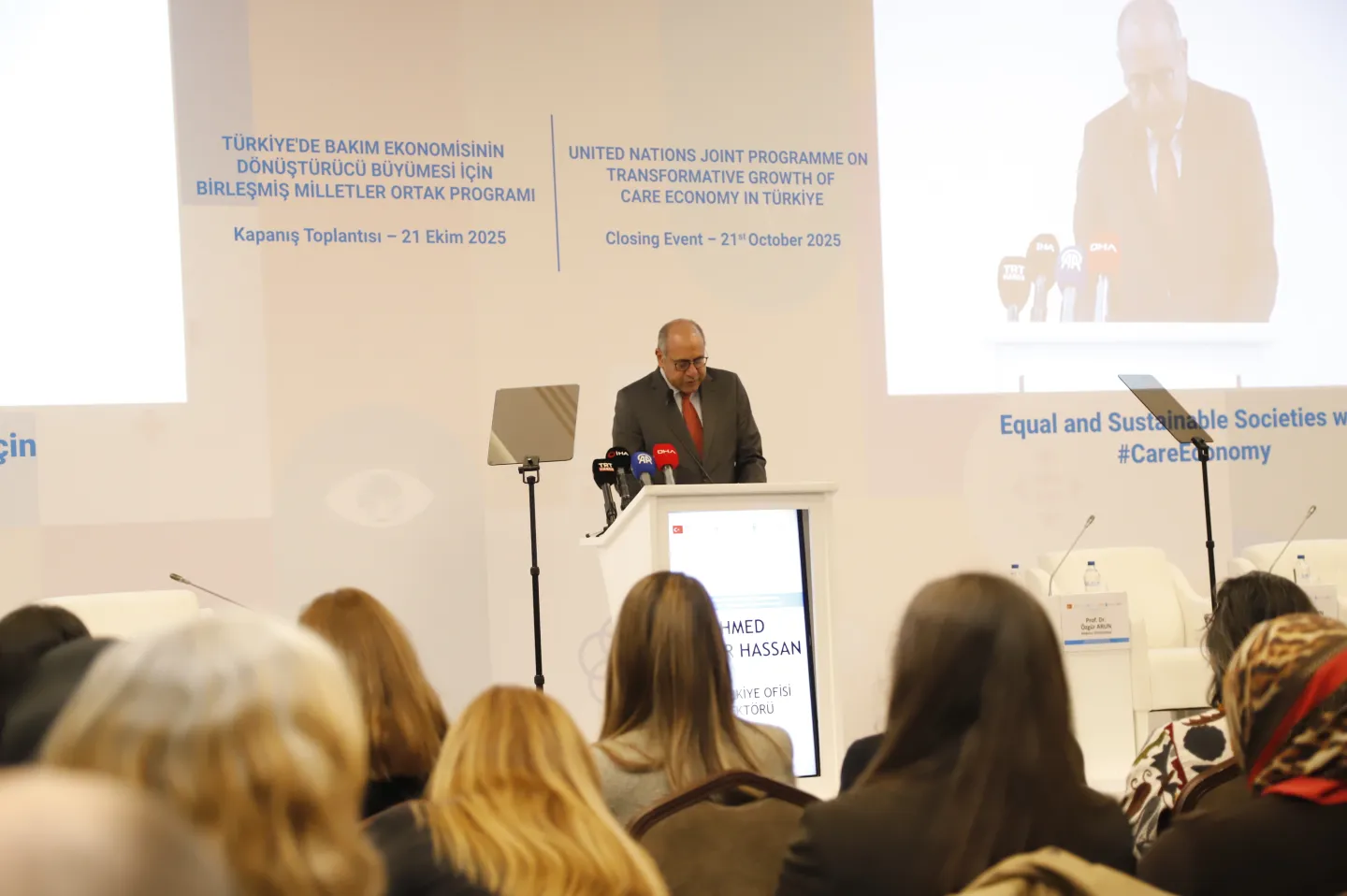
“The care economy is not a cost, it is an investment in human potential,” highlighted Hassan, emphasizing the importance of inclusive, rights-based approaches to care.
Speaking at the event, H.E. Mahinur Özdemir Göktaş, Minister of Family and Social Services, underlined the long-overdue recognition of care work. “Care work has been excluded from economic indicators for many years,” she said. “It has been undervalued far below its social worth. Any investment in the care economy is important for sustainable development, social equality, and economic growth. Investing in this area creates jobs, reduces inequalities, and strengthens social protection. It improves the quality of life for children, the elderly, and people with disabilities. “stated Ms. Göktaş.
Minister Göktaş added, “This joint program, carried out under the umbrella of the United Nations, has added international strength to Türkiye's social policy vision.”
In Türkiye, the care economy is increasingly recognized as a strategic pillar of national development. The 12th National Development Plan (2024–2028), the Women’s Empowerment Strategy and Action Plan (2024–2028), and the upcoming National Employment Strategy (2025–2028) all highlight the expansion of care services as key to boosting women’s labour force participation, creating decent jobs, and strengthening social protection.
Against this background, The UN Joint Programme was coordinated by the UN Resident Coordinator’s Office and led by the International Labour Organization (ILO) in collaboration with UNDP and with technical support from UN Women, UNICEF, and UNFPA. The Joint Programme supported the Ministry of Family and Social Services and national stakeholders in developing inclusive, sustainable, and rights-based care policies. It strengthened institutional capacities, utilizing digital transformation, and fostered national dialogue on the care economy in alignment with international labour standards and the Sustainable Development Goals (SDGs).
Over the past year (October 2024-October 2025), the Joint Programme has:
- Established a Multi Sectorial Working Group on Care Economy
- strengthened institutional capacities to design and implement inclusive care policies.
- developed models for efficient and equitable care service delivery.
- promoted national awareness on the economic and social value of care work.
Dr. Babatunde Ahonsi, UN Resident Coordinator in Türkiye, highlighted the UN’s continued engagement beyond the Joint Programme: “As the UN system in Türkiye, our role does not end with this Joint Programme,” he said. “We commit to continued advisory, technical, and capacity-building support; to facilitation of partnerships; to knowledge sharing; to leveraging global UN platforms; and to exploring funding opportunities to sustain and expand care economy work across Türkiye.”
“Care is the thread that weaves together equality, growth, and social justice,” concluded Dr. Ahonsi. “As Türkiye continues to strengthen its care infrastructure, the lessons and partnerships from the UN Joint Programme will serve as a foundation for future policy and investment. Türkiye’s experience shows that when we make care visible and valuable, we move closer to a world where everyone can thrive.”
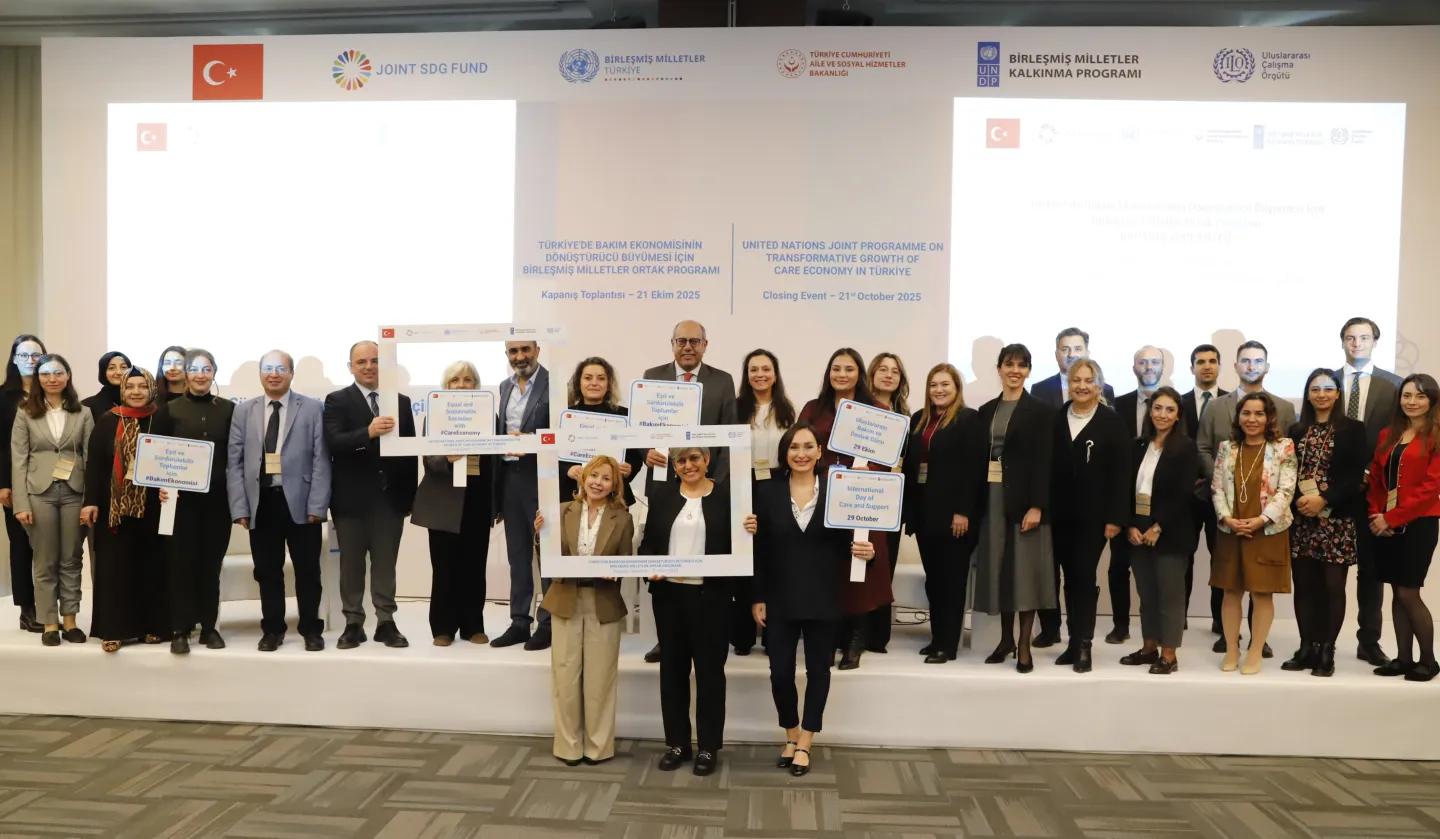
Efforts unite to ensuring long-term sustainability of outcomes
At the closing event, participants reflected on the achievements and sustainability of the programme’s initiatives. The event continued with a panel discussion on sustaining and scaling up the project results, moderated by Ms. Burcu Ayhan Ekenci, Head of Department at the Ministry of Family and Social Services. The discussion featured Prof. Dr. Saniye Dedeoğlu from Muğla Sıtkı Koçman University, Prof. Dr. Özgür Arun from Akdeniz University, and Mr. Barış İyiaydın, Social Security Consultant at TÜRK-İŞ Confederation (The Confederation of Turkish Trade Unions). Panellists exchanged insights on the role of academia, social dialogue, and policy innovation in strengthening Türkiye’s care infrastructure and ensuring long-term sustainability of project outcomes.