

Just transition
Timor-Leste’s key labour actors identify actions on climate change and Just Transition
The ILO supports Timor-Leste’s key labour actors to promote Just Transition in the country for business sustainability and decent work for workers.
5 June 2025
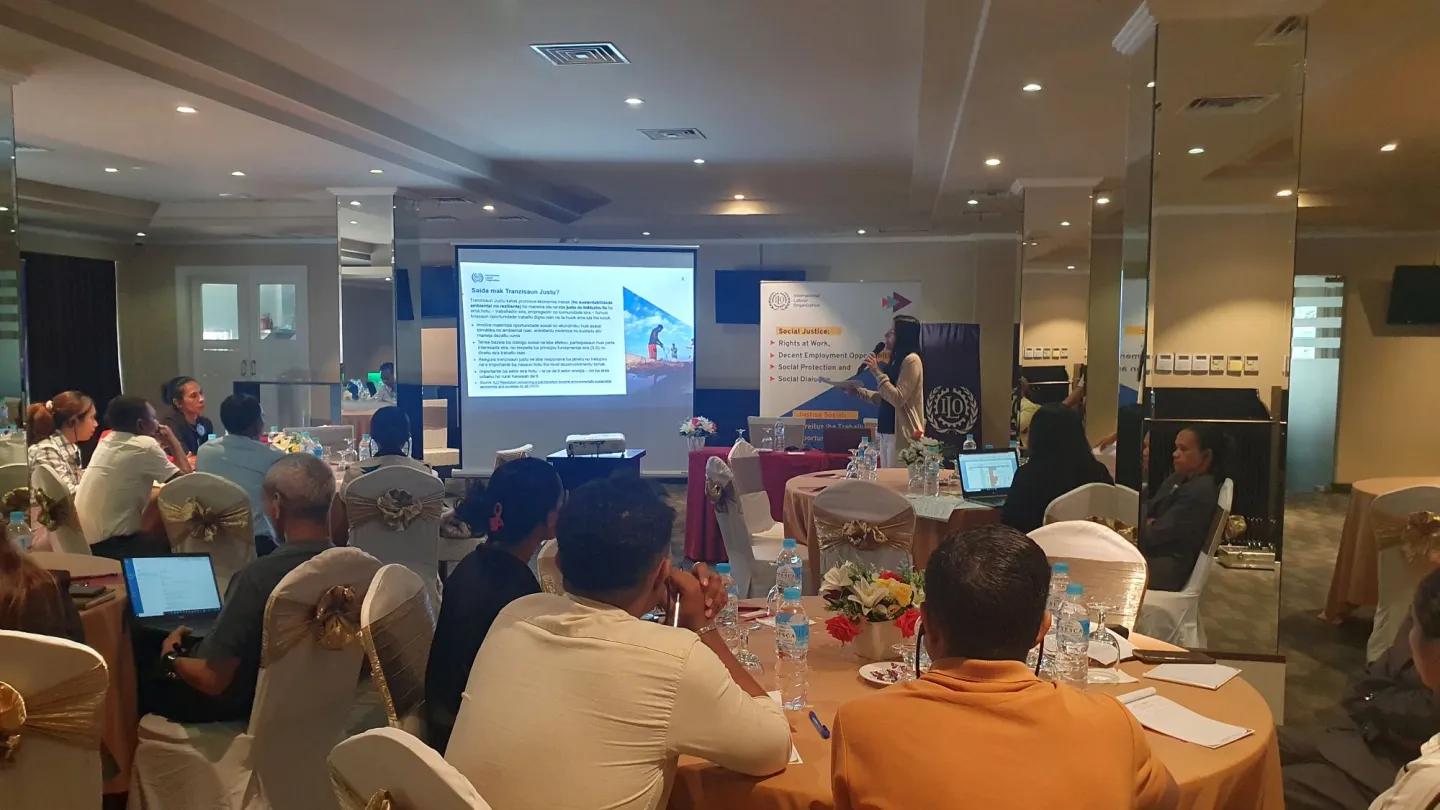
DILI, Timor-Leste (ILO News) - The ILO convened a two-day meeting from 28-29 May in Dili to raise awareness among Timor-Leste’s key labour actors about the challenges posed by climate change in the country. Although the country has adopted a national policy on climate change, there have not been many consultations with employers’ and workers’ organizations regarding this policy.
Bringing together 29 representatives from the Secretariate of State for Vocational Training and Employment (SEFOPE), the Ministry of Tourism and Environment, the Timor-Leste Trade Union Confederation (KSTL) and the Chamber of Commerce and Industry Timor-Leste (CCI-TL), the meeting was facilitated by the ILO’s Collective Bargaining and Social Dialogue Specialist, Arun Kumar and the ILO’s Technical Officer for Just Transition, Ananda Alonso Nacher.
We need all relevant stakeholders to develop a better understanding of the impact of climate change on people’s livelihoods and the economy in general and to reach a joint agreement on just transition.
Franquelino da Costa Freitas, Vice President of CCI-TL
Arun presented the ILO’s Guidelines for a Just Transition towards Environmentally Sustainable Economies and Societies for All, adopted by governments, employers’ and workers' organizations in 2015. These Guidelines provide a policy framework and a practical tool for countries to manage the transition to low-carbon economies while ensuring social justice and promoting decent work creation.
“The key is social dialogue among relevant stakeholders. Thus, it is important for all key labour actors to collaborate and make the best use of these ILO Guidelines to develop a framework for national actions that tackle climate change, promote just transitions and build greater business resilience,” he stated.
Meanwhile, Ananda led a session on understanding climate change, its challenges, and the opportunities it presents for businesses and workers. Through this session, participating labour actors learned about the economic and social dimensions of climate change and the crucial role of effective social dialogue in achieving a Just Transition.
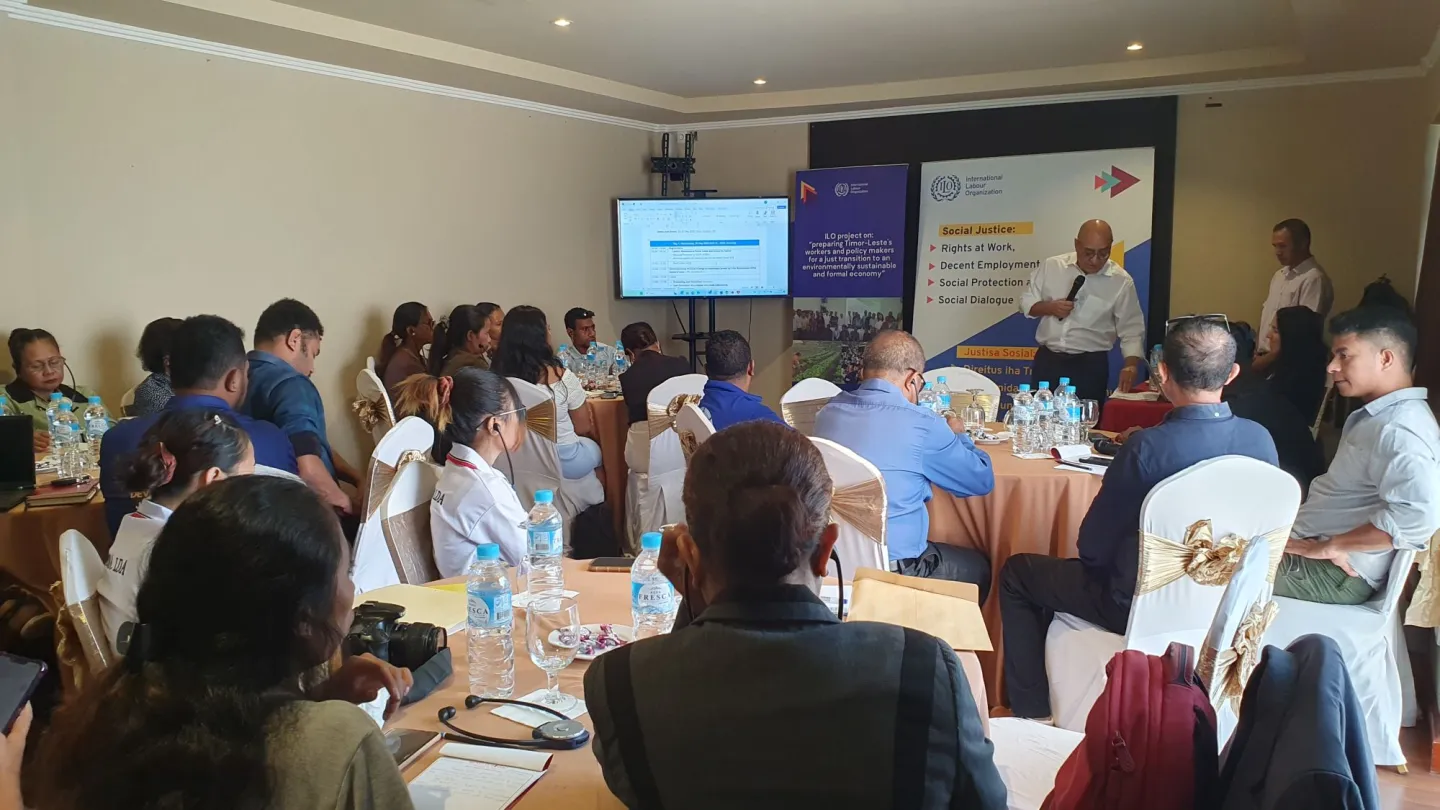
During the discussion session, employers emphasized environmental harms—such as deforestation and water pollution—on rural livelihoods as pressing labour issues. Meanwhile, workers stressed the need for social protection policies, capacity building, and worker participation in decision-making.
Franquelino da Costa Freitas, Vice President of CCI-TL, pointed out that businesses play a major role in the country's economic growth and employment. "From a business perspective, this important issue should be discussed in the National Labour Council. We need all relevant stakeholders to develop a better understanding of the impact of climate change on people’s livelihoods and the economy in general and to reach a joint agreement on just transition.”
Just Transition is not just about greening the economy. It is also about participation to ensure fair policies and social protection, enable workers to transition to decent jobs and make sure no one is left behind.
Almerio Vila-Nova, President of KSTL
From the perspective of workers, Almerio Vila-Nova, President of KSTL, emphasized the fundamental labour rights of workers, stating: “Just Transition is not just about greening the economy. It is also about participation to ensure fair policies and social protection, enable workers to transition to decent jobs and make sure no one is left behind."
The meeting concluded with several recommendations, highlighting the need to establish a tripartite mechanism for climate and labour policy dialogue, conduct wider consultations to identify and concretize the needs of businesses and workers, and develop a national framework agreement on Just Transition that promotes business sustainability and decent work for workers in Timor-Leste.
As part of the ILO’s initiative to equip Timor-Leste’s workers and policymakers for a Just Transition and the formal economy, the meeting set the stage for further discussions. Next, a tripartite-plus meeting will take place to address the country’s responses to climate change and Just Transition.
Related content

Just transition
Timor-Leste moves towards Just Transition for all and green economy