

In times of global uncertainty, Indonesia prioritizes productivity and decent work
The ILO assists Indonesia in fostering harmonious industrial relations by enhancing labour-management cooperation to address the challenges of an uncertain global landscape.
12 May 2025
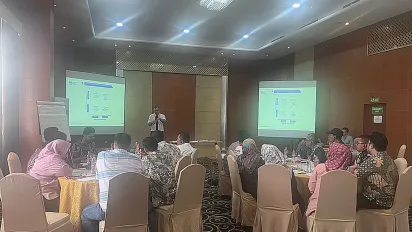
JAKARTA, Indonesia (ILO News) - Amid global economic uncertainty and rapid changes in the world of work, the ILO, in partnership with the Ministry of Manpower, hosted a one-day industrial relations workshop on productivity and decent work on 7 May in Jakarta. The event focused on emphasizing the importance of effective collaboration among workers, employers, and the government in fostering productivity and economic stability.
Indah Anggoro Putri, Director General of Industrial Relations and Labour Social Security, in her keynote speech, underscored that the expansion of employment opportunities and improved productivity are the top priorities of the current administration. “Therefore, the Ministry of Manpower is now focusing on labour transformation that explores human potential through productivity based on a people-centred approach through training and skills development,” she said.

To advance these priorities, the Ministry of Manpower, in collaboration with the National Tripartite Council (LKS Tripnas), has developed a programme to cultivate productivity cadres within companies, ensuring active participation from both employers and workers. “By 2027, Indonesia is expected to have a pool of productivity experts nurtured through a bottom-up approach at the enterprise level.”
The Ministry of Manpower is now focusing on labour transformation that explores human potential through productivity based on a people-centred approach through training and skills development.
Indah Anggoro Putri, Director General of Industrial Relations and Labour Social Security of the Ministry of Manpower
While recognizing Indonesia’s dedication, Simrin Singh, ILO Country Director for Indonesia and Timor-Leste emphasized the importance of enhancing productivity to reinforce decent work. “Achieving this goal requires stronger communication and collaboration to build trust and transparency, drive innovation and uphold fair and transparent labour practices. These efforts are essential for ensuring equitable employment treatment, effective dispute resolution and fostering a culture of respect and inclusion.”
Offering an overview of key strategies for Indonesia, Arief Anshory Yusuf, Professor of Economics at Padjadjaran University's Department of Economics, emphasized the nation's strengths—its large population and abundant natural resources—as critical assets for future development. He also underscored the need to strengthen the role of the bipartite forum, stating, “To enhance productivity at the enterprise level, we must reinforce labour-management collaboration and actively engage relevant stakeholders, including academia.”

Arun Kumar, ILO Specialist on Collective Bargaining and Social Dialogue, shared international best practices from various countries. He noted that while social dialogue is not a universal solution to all challenges, nations and companies that foster a strong culture of dialogue—such as Japan, Singapore, and several countries in Continental Europe—are often more resilient in addressing economic and social issues and tend to be more productive.
“Efficient social dialogue mechanisms facilitate fair wages, improved working conditions, and overall economic stability, benefiting both workers and enterprises,” Arun said.
The workshop served as a platform for representatives of both workers and employers to exchange perspectives. Afif Johan, Deputy Secretary General of KSPSI, and Henry S. Wibowo, HRD Manager of PT Toyota Motor Manufacturing Indonesia and representative of the Indonesian Employers’ Association (Apindo), both concurred that labour-management cooperation and collective bargaining play a crucial role in enhancing productivity.
The workshop wrapped up with group discussions exploring the roles of key labour stakeholders in advancing productivity and economic stability. Participants exchanged best practices, tackled existing challenges, and identified opportunities to foster a more dynamic and inclusive labour environment.
Related content
ILO introduces the Self-Assessment Method for Social Dialogue Institutions (SAM-SDI) in Indonesia