

ILO introduces the Self-Assessment Method for Social Dialogue Institutions (SAM-SDI) in Indonesia
A two-day workshop empowers Indonesia’s National and District Tripartite Councils with tools for improving the inclusiveness and effectiveness of their social dialogue institutions.
16 May 2025
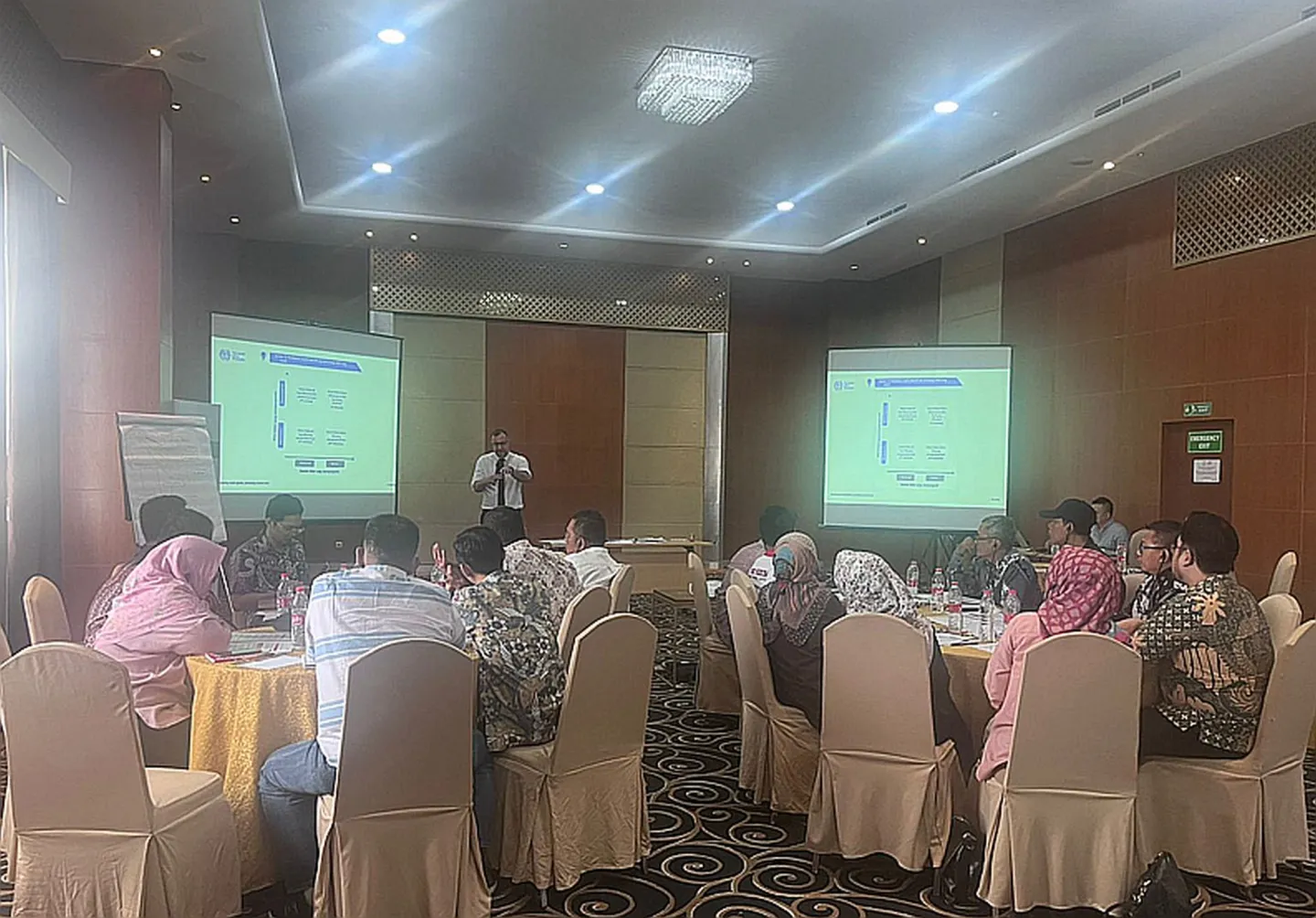
BOGOR, West Java, Indonesia (ILO News) - In a continued effort to reinforce the role of tripartite social dialogue in national social and economic policymaking, the ILO in collaboration with the Indonesian Ministry of Manpower conducted a workshop in Bogor, West Java, Indonesia from 8-9 May. This two-day workshop introduced the Self-Assessment Method for Social Dialogue Institutions (SAM-SDI) to selected members of the National Tripartite Council (LKS Tripnas) and the Bogor Tripartite Council to apply the SAM-SDI methodology.
The SAM-SDI, developed by the ILO, aims to support constituents in analysing and strengthening the inclusiveness and effectiveness of their social dialogue institutions. This tool is specifically designed for national-level social dialogue institutions. By applying SAM-SDI, institutional members can identify strengths and weaknesses, ultimately enabling them to formulate actionable plans for improvement.
Igor Zemlyanskiy, ILO Specialist on Social Dialogue, emphasized that the tool was developed in response to member states' requests for support in strengthening national social dialogue institutions. "The SAM-SDI method guides social dialogue actors through a structured process to analyze the inclusiveness and effectiveness of their institutions, enabling them to develop and implement action plans to strengthen them," he said.
The SAM-SDI encompasses a comprehensive six-step process designed to guide social dialogue actors through a self-evaluation of their institution, leading to the development and implementation of an action plan to enhance the institution's impact on policymaking: 1. Decision to apply the SAM-SDI; 2. Understanding the institutional and national context; 3. Assessing inclusiveness; 4. Assessing effectiveness; 5. Formulating an action plan; and 6. Implementing the action plan.
The workshop received positive feedback from participants, who identified key strengths, weaknesses, and opportunities within the SAM-SDI framework. They emphasized that SAM-SDI provided a comprehensive exploration of systemic issues while fostering collaborative solutions. However, they suggested improving data collection and strengthening engagement with external stakeholders to enhance transparency and inclusiveness.
This initiative marked a significant step forward in Indonesia’s commitment to fostering stronger, more effective social dialogue, ensuring that all voices are heard in shaping the future of work.
Related content

In times of global uncertainty, Indonesia prioritizes productivity and decent work