


Safety + Health for All
Strengthening occupational safety and health in Uzbekistan: key tripartite discussions
The ILO facilitates tripartite discussions in Uzbekistan to validate OSH priorities, identify legislative gaps, and promote improved data reporting and compliance.
11 March 2025
TASHKENT (ILO News) - Two tripartite roundtable discussions to advance occupational safety and health (OSH) reforms in Uzbekistan were held in Tashkent in February and March, bringing together representatives of the Government, workers’ and employers’ organizations, and international experts. These events were organized under the "Improving Labour Inspection and Occupational Safety and Health Systems in Uzbekistan" project, implemented within the International Labour Organization (ILO) flagship programme "Safety + Health for All" and supported by the German Federal Ministry of Economic Cooperation and Development (BMZ).
Validating Uzbekistan’s National OSH Profile
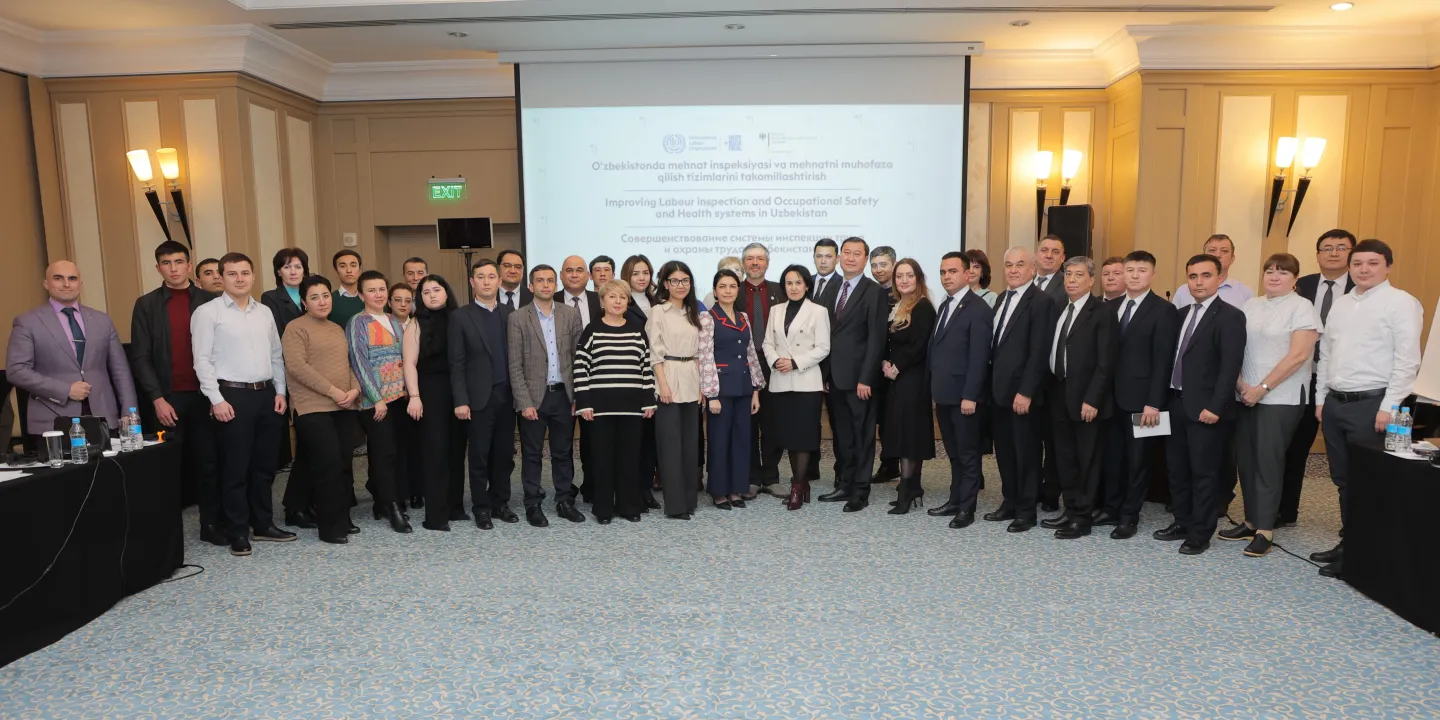
The first roundtable on 17 February 2025 focused on the review and validation of the updated National OSH Profile for Uzbekistan. The session opened with remarks by Mr. Milan Petkovski, ILO Project Manager, followed by a presentation of key conclusions and recommendations by an ILO expert. Participants engaged in a Q&A session, exchanging insights on strengthening OSH governance, improving data accuracy, and aligning national policies with international standards. The event concluded with a discussion on the key elements for implementation, highlighting the need for greater coordination among stakeholders to ensure a safer and healthier working environment.
Strengthening accident reporting and assessing legislative gaps
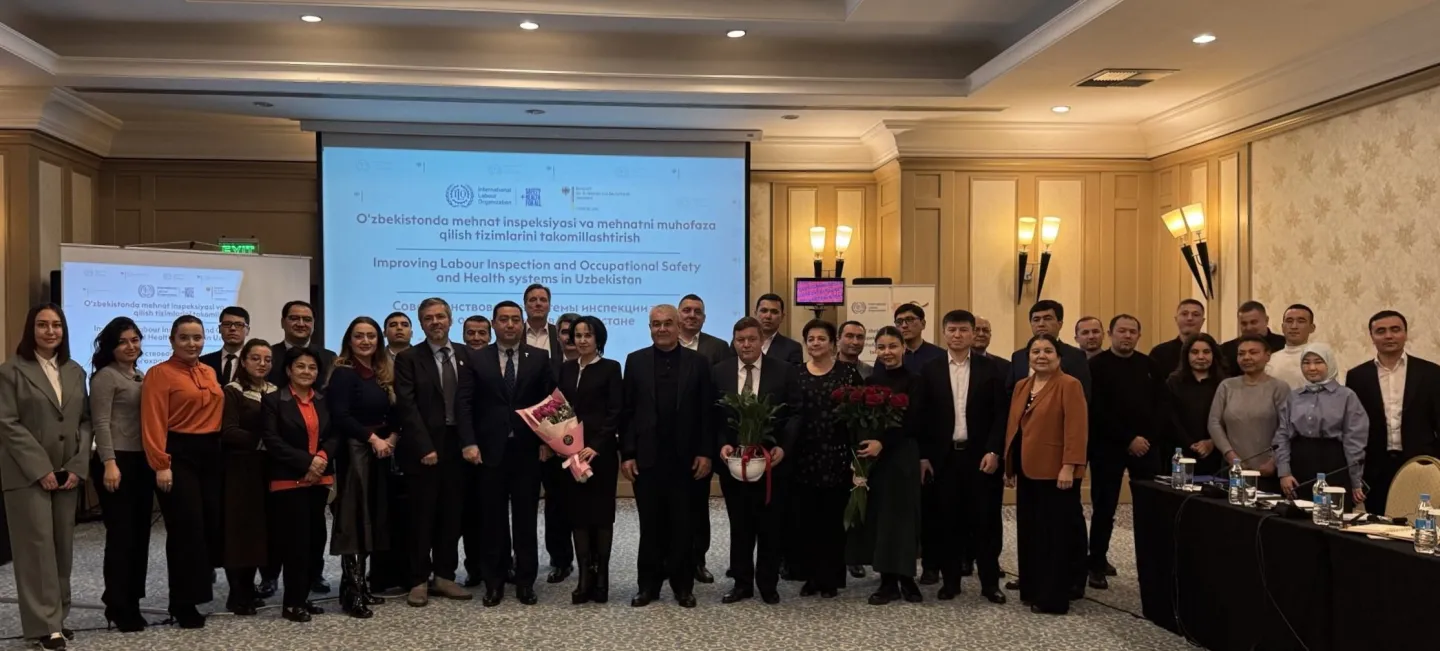
The second roundtable on 5 March 2025 focused on enhancing Uzbekistan’s recording and notification systems for occupational accidents and diseases. The event also featured the presentation of a gap analysis of national legislation in relation to ILO Occupational Safety and Health Convention, 1981 (No. 155), Promotional Framework for Occupational Safety and Health Convention, 2006 (No. 187), and Occupational Health Services Convention, 1985 (No. 161). Following the presentation on key findings and recommendations for improving reporting mechanisms, the discussion continued with a legislative gap analysis. Professor Elisaveta Stikova provided a detailed assessment of Uzbekistan’s compliance with Convention No. 161, and Mr. Zlatko Popovic examined the alignment of national legislation with Conventions No. 155 and No. 187.
Key conclusions for advancing OSH governance
The roundtable discussions provided essential platforms for tripartite constituents to validate national OSH priorities, identify legislative gaps, and explore practical steps for strengthening data collection, reporting accuracy, and regulatory compliance. A key takeaway from both events was the importance of integrating and unifying statistical data to ensure evidence-based decision-making and improved workplace safety across Uzbekistan.
Next steps for sustainable OSH systems
These analyses will contribute significantly to a deeper understanding of the current issues and challenges facing labour inspection and the OSH system in Uzbekistan. This will serve as a basis for developing a sustainable national OSH programme that meets the needs of all stakeholders and supports Uzbekistan’s long-term OSH objectives.
Relevant projects

Safety + Health for All
Improving labour inspection and occupational safety and health systems in Uzbekistan