

Social media campaign boosts Indonesian public’s awareness on care economy
ILO’s social media training for influencers on care work has reached hundred thousand of viewers with more than a million impressions.
14 August 2024
JAKARTA. Indonesia (ILO News) - Timmy Malachy, a Key Opinion Leader in X/Twitter, has been actively raised awareness and sparked discussions about how women typically spend disproportionately more time on unpaid care work than men. His threads of tweets have reached 1.1 million impressions with more than 8,900 engagements, opening a rich discussion and debate on social media.
Through this account @timmymalachi with 7.4K followers, he questioned, for example, about pros and cons on paternity leave issues, saying “Many pros and cons about the paternity leave and quite a few of those who are against are women. Ironic. The paternity leave is developed to lighten women’s tasks by sharing roles with their husbands.”
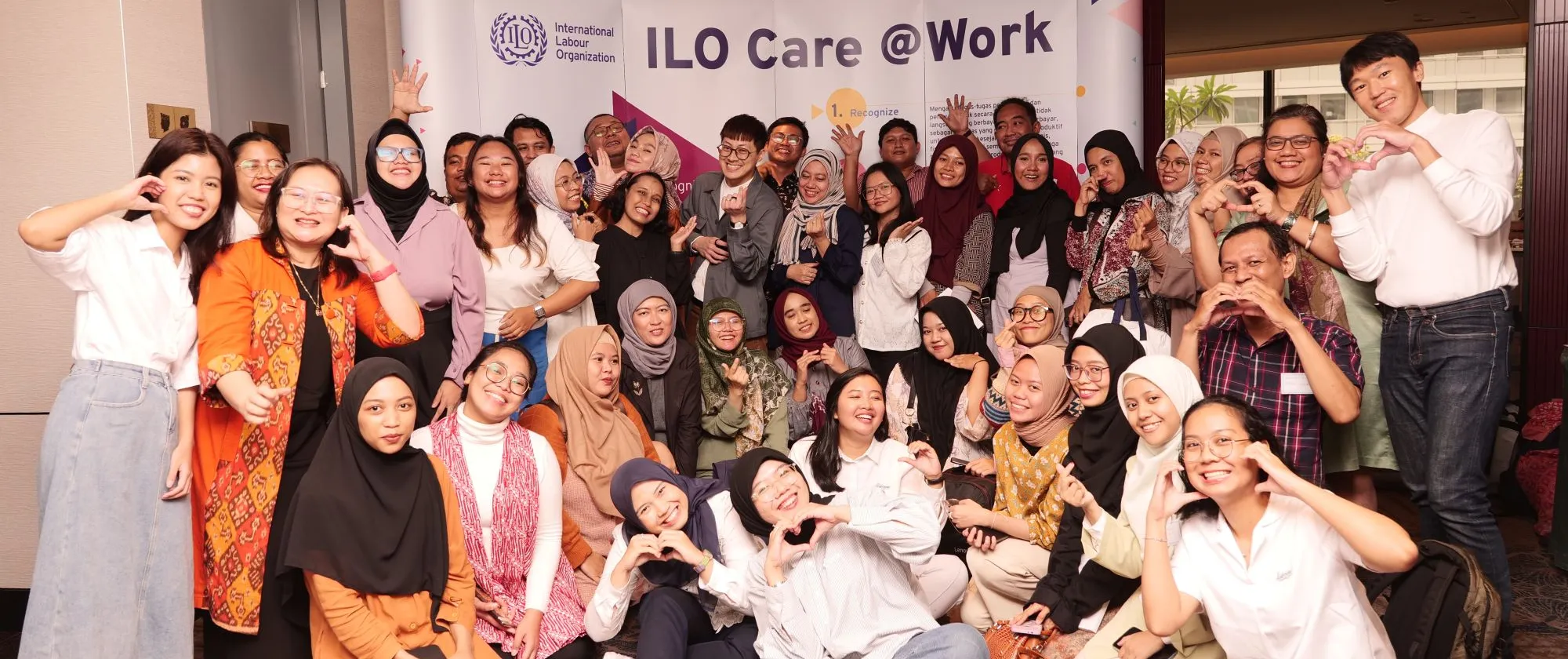
Timmy was one of the 30 social media influencers participated at the ILO’s two-day social media training on care economy, conducted in collaboration with VosFoyer, a creative agency for an integrated marketing strategy. Held in Jakarta in January, the training aimed to raise the influencers’ awareness about the importance of care work both paid and unpaid so that they could support boosting public’s discussions about this issue.
The training sessions provided a venue for the participating influencers to learn about the ILO’s 5R framework of decent care work—Recognize, Reduce, Redistribute, Reward, and Represent—that supports the needed social changes for equal responsibility in care giving and responsibilities. They also learnt how to craft interesting messages through storytelling and short-video techniques, raising various issues related to care work such as gender and employment, decent working condition for care workers, maternity leave, paternity leave and taking care of elderly.
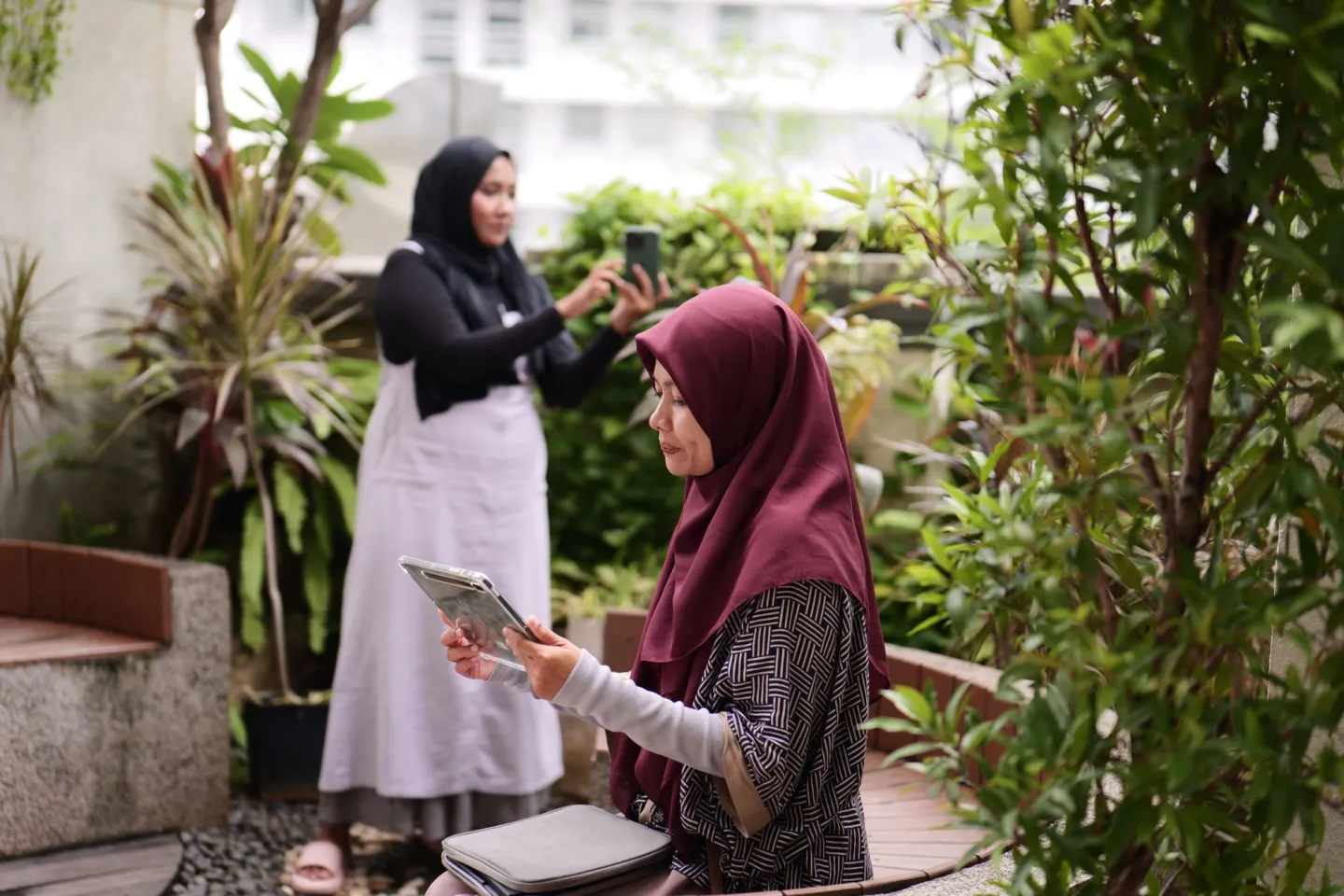
During the interactive discussion, most of the married women influencers shared their own experiences of juggling double burdens as worker and mother. Some of them admitted that they had to resign from their professional work to focus more on doing care work tasks at home. Meanwhile for some single female and male participants shared their responsibility to take care of their elderly parents.
Resi Prasasti, one of the social media influencers, for example, shared her every day experience being entrusted by her flat neighbours to take care of their children. “I happy doing this voluntary community services childcare as I understand that they must work and they could not afford daycare services; while at the same time, my work is flexible and I could work while caring the children,” she said.
Similarly, Bambang Irwanto Ripto said that for years, he has been acted as a caregiver for his elderly mother, including taking care of hospital medical. “My job as writer and blogger gives me more flexible working hours. However, I need support and there is an urgent need for accessible institutions or services that can help me and other people like me to better care of our parents by having their health, for example, being monitored by affordable, skilled nurse at home.” Bambang’s full story during the campaign can be click here.
It is timely now to start raising awareness on unpaid care work. I hope the campaign to promote more equal world of work continues with support from the influencers.
Early Dewi Nuriana, ILO’s National Programme Coordinator for Care Economy
After the workshop, the influencers began their care work campaign by regularly creating and uploading their care messages for four weeks. Each participant could also choose different social media platforms based on their existing audience and followers. The campaign yielded with two TikTok contents, 22 written contents, 19 Instagram Carousels and 15 Instagram Reels, reaching 115,080 with a total impression of 1,387,782 and engagement of 28,479.
Early Dewi Nuriana, ILO’s National Programme Coordinator for Care Economy, greatly appraised the results of the training programme and social media campaign. She also emphasized the importance of policy transformation in Indonesia to support workers with family responsibility. “It is timely now to start raising awareness on unpaid care work. Indonesia just recently launches its Road Map on Care Economy highlighting seven priorities that will provide more accessible and affordable services related to care work. I hope the campaign to promote more equal world of work continues with support from the influencers,” she stated.
Related content
ILO-Magdalene social experiment: Women spend 100 hours of unpaid care work a week

ILO and Jurnal Perempuan examine the role of women in work and care economy
Project
The Care Economy in Indonesia
Relevant projects
Project
The Care Economy in Indonesia