


Launch of Phase II
The social dimension of the Ecological Transition Project : promoting decent work and advancing social justice in the ecological transition
On 26 February 2026, the launch workshop for Phase II of the Social Dimension of the Ecological Transition Project was held in Dakar, under the theme “Ecological Transition, Protection of Fishing Communities and Just Transition”.
2 March 2026
DAKAR (ILO News) - This multi-stakeholder consultation brought together representatives from public institutions, the private sector, professional organizations, local authorities, technical and financial partners, and community actors. It marks a strategic milestone in establishing a coordinated institutional response to the economic and environmental transformations currently underway in Senegal.

A phase aligned with the government’s vision
Phase II of the DSTE Project takes place within a context of structural transformation, characterized by the development of oil and gas projects, the implementation of Senegal’s international climate commitments — notably its Nationally Determined Contributions (NDC.3) — and the growing vulnerability of communities dependent on fisheries resources.
On this occasion, Mr. Olivier Boucal, Minister of Public Service, Labour and Public Service Reform, emphasized:
“The second phase of the project, covering the period from 2026 to 2030, introduces a new strategic component addressing the impact of oil and gas exploitation on communities, particularly those living in coastal areas and dependent on fishing activities. This orientation seeks to anticipate the socio-economic effects of energy resource exploitation while preserving the livelihoods of the affected populations and strengthening social cohesion. It is fully aligned with the vision of the Government of Senegal, which places the valorization of natural resources at the service of sustainable development, the creation of decent jobs, and social justice.”
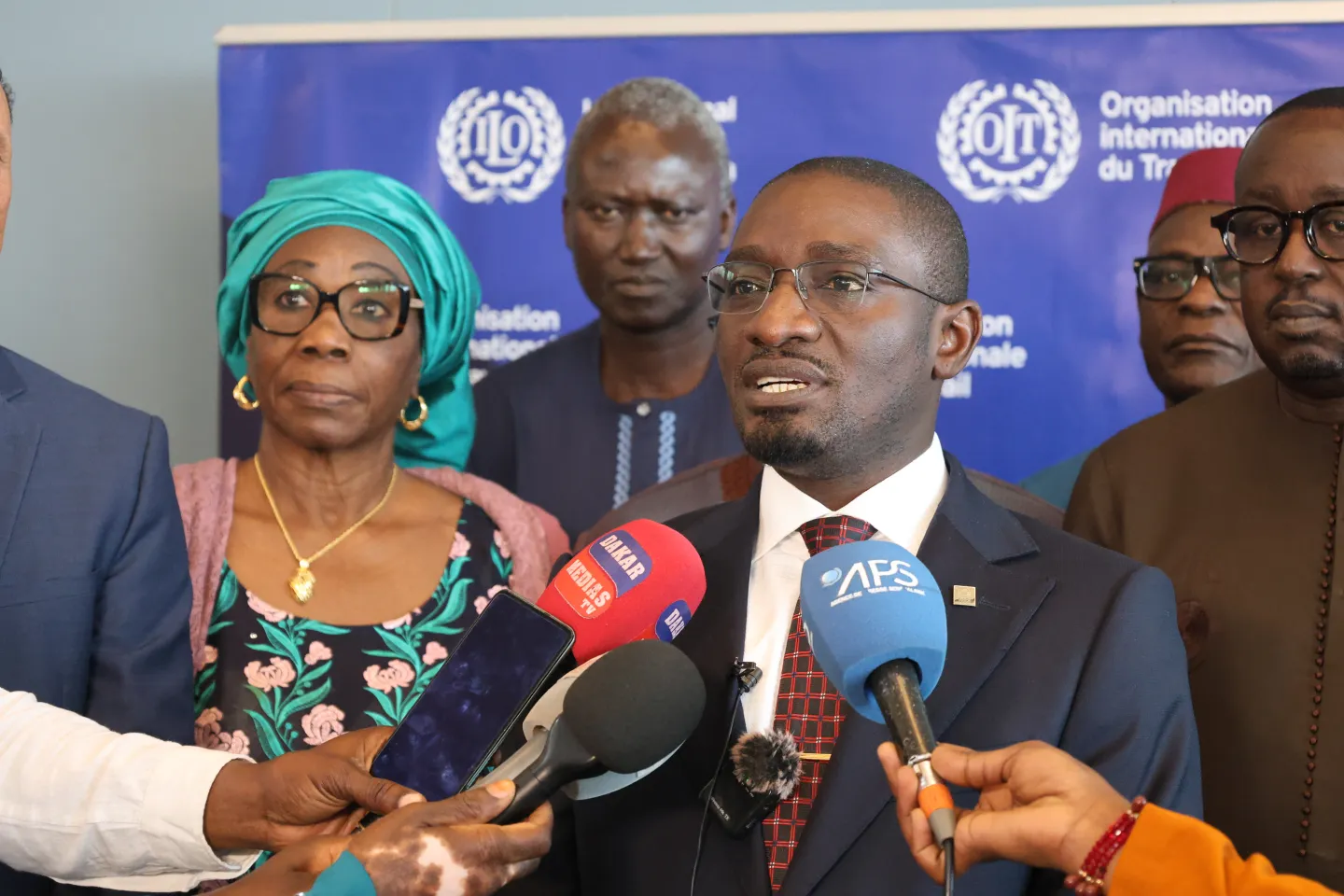
This statement reaffirms the Government’s commitment to reconciling the development of natural resources with the protection of marine ecosystems and social justice.
Key challenges identified
Discussions highlighted several major priorities:
- Protecting jobs and securing workers’ livelihoods, particularly considering the potential impacts of oil and gas activities on artisanal and industrial fisheries ;
- Strengthening governance, through the establishment of a structured intersectoral dialogue mechanism and improved institutional coordination ;
- Anticipating economic transformations, including mapping vulnerable occupations and developing reskilling programmes towards green jobs and the blue economy ;
- Engaging the private sector
-
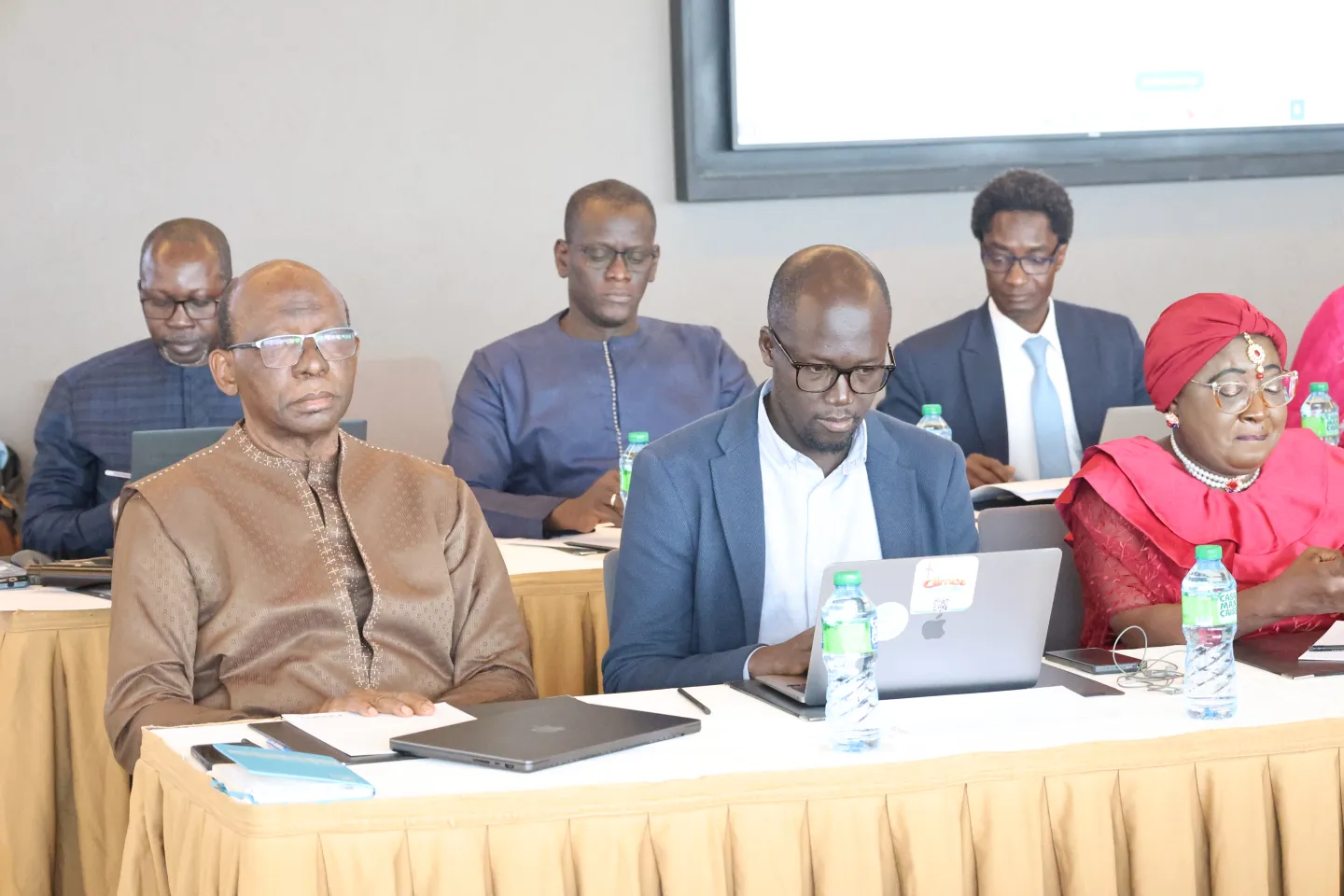 © ilo© ilo
Participants
Strategic directions adopted
At the conclusion of the workshop, several structuring priorities were validated. The establishment of a National Just Transition Mechanism (NJTM) will provide a coordination framework among sectoral ministries (Environment, Labour, Fisheries, Industry, Vocational Training) and ensure the formal participation of fishers’ organizations and the private sector.
A national mapping of vulnerable jobs will be launched to guide training and reskilling policies. A national reskilling programme, supported by a Transition Fund and temporary social protection mechanisms, will be progressively implemented.
Regional participatory forums and simplified information materials translated into local languages will promote community ownership and transparency.
Towards a sustainable and inclusive transition
Participants emphasized that, without coordinated action, social tensions, community resistance to energy projects, and declining trust in public institutions could emerge.
Phase II of the DSTE Project therefore aims to consolidate an ecological transition that is anticipatory, inclusive, socially secure, and scientifically grounded.
The transition of the fisheries sector is emerging as a structuring issue at the intersection of environmental, social, economic, and territorial dimensions, serving sustainable and equitable development for all affected communities.
Related content
The social dimension of the ecological transition – Phase II
Relevant projects
The social dimension of the ecological transition – Phase II